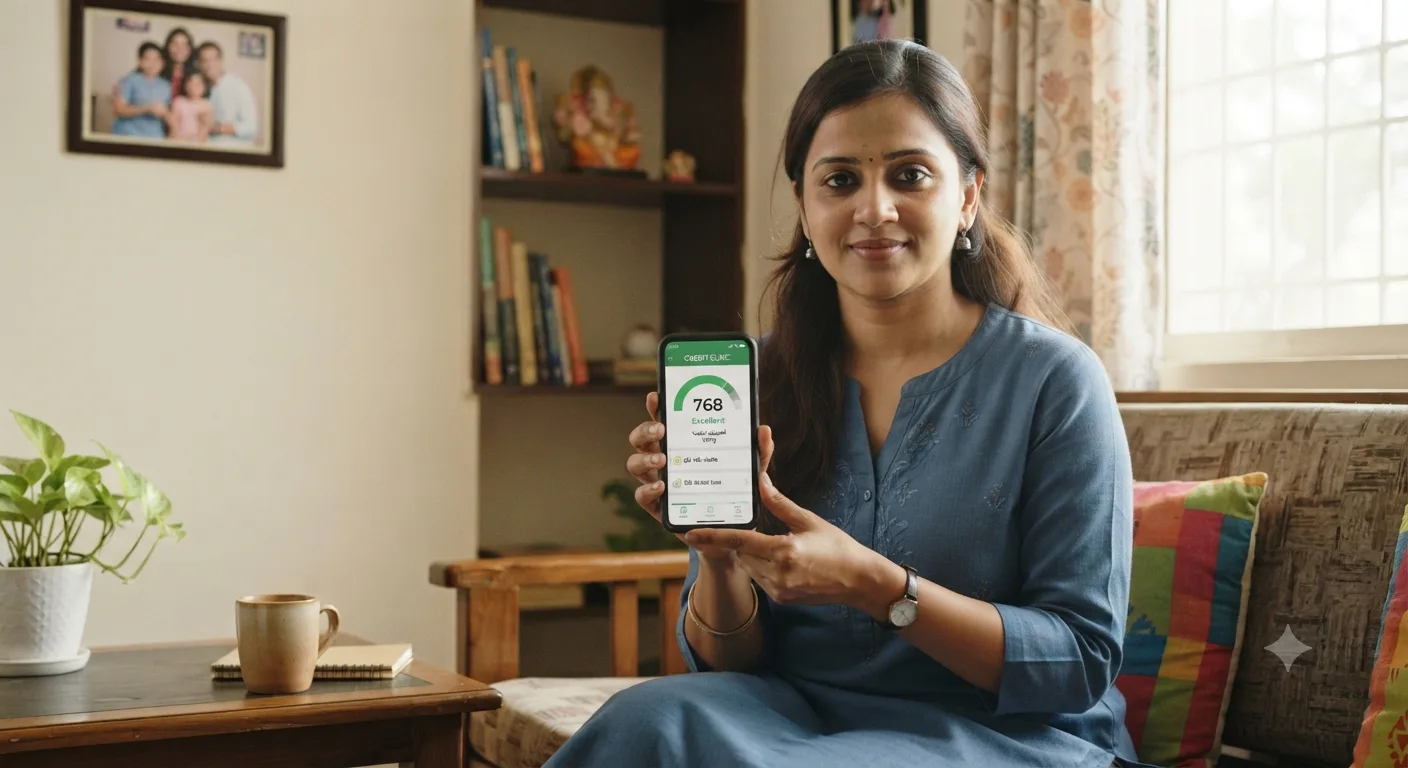
Loan Options for a 500 Credit Score
Loans for a 500 credit score are possible but limited. Banks mostly reject applicants below 600. NBFCs and lending apps may approve smaller amounts at high interest, often 24 to 36% a year. Secured loans against gold or FD work better. Fixing the score first is usually cheaper than borrowing around it.

Mohit Juneja
Reviewed by FREED India, Debt Resolution Specialists
 4.7/5
4.7/5 ₹3,200Cr+
 20,000+
 20,00,000+4.7/5₹3,200Cr+20,000+20,00,000+
KEY TAKEAWAYS

Loans for a 500 credit score exist mainly through NBFCs, lending apps, and secured options, not traditional banks.
Interest rates at this score commonly run 24 to 36% a year, against 10 to 15% for a healthy score.
A 500 score usually comes from missed EMIs, high credit utilisation, or an existing settled or written-off account.
A bounced EMI cheque can trigger Section 138 of the Negotiable Instruments Act, a criminal complaint is possible, with up to 2 years imprisonment or a fine up to twice the cheque amount. NACH/ECS bounces take a different legal path, but banks can still act.
Fixing what caused the 500 score often costs less than taking a new high-interest loan around it.
What Does a 500 Credit Score Mean
On the 300 to 900 CIBIL scale, 500 sits in the band most lenders classify as poor. Most banks start getting comfortable somewhere above 650 to 700, which means a 500 score falls well below where a standard bank application clears easily.
A 500 score usually traces back to one of three things:
- Missed EMIs or credit card bills, showing up as DPD (Days Past Due) entries on the report.
- High credit utilisation (often above 30% of the available limit) , sustained over several months.
- An existing settled or written-off account still weighing the score down.
None of these reflect a moral failing, and it's worth saying that plainly. A 500 score is a data point, not a verdict on your character or judgement.
What it does mean is fewer options, and costlier ones, not zero options. A 500 score does not mean no loan is possible. It means the loans available to you look different from what a healthy-score borrower sees, in amount, in cost, and in who's willing to lend at all.

Find Out What's Really Hurting Your Score
Experian-based report with clear next steps.
Check your scoreWho Will Lend to a 500 Credit Score Borrower
A handful of realistic categories exist, each with a clear trade-off attached:
- NBFCs. Often more flexible than banks, weighing income and employment alongside score rather than relying on score alone. Trade-off: smaller loan amounts, shorter tenures, higher rates than a bank would offer at a healthy score.
- Digital lending apps. Fastest approval, often within a day or two. Trade-off: the smallest amounts and the highest cost of any category here, along with steeper penalty structures if a payment slips.
- Secured loans against gold or a fixed deposit. Generally the safer route for the borrower, since the collateral lowers the lender's risk regardless of score. Trade-off: the asset itself is on the line if EMIs are missed.
- A loan with a co-applicant or guarantor. Adding someone with a healthier score genuinely improves approval odds. Trade-off: that person's credit profile is now tied to your repayment too.
This is deliberately kept at the category level rather than naming specific NBFCs or apps, since terms shift constantly and any list would go stale quickly. What matters more than which specific lender you approach is understanding what you're trading for approval at this score, which brings us to the actual cost.
What a 500 Credit Score Loan Actually Costs
This is the part most guides on this topic skip, and it's worth sitting with for a moment.
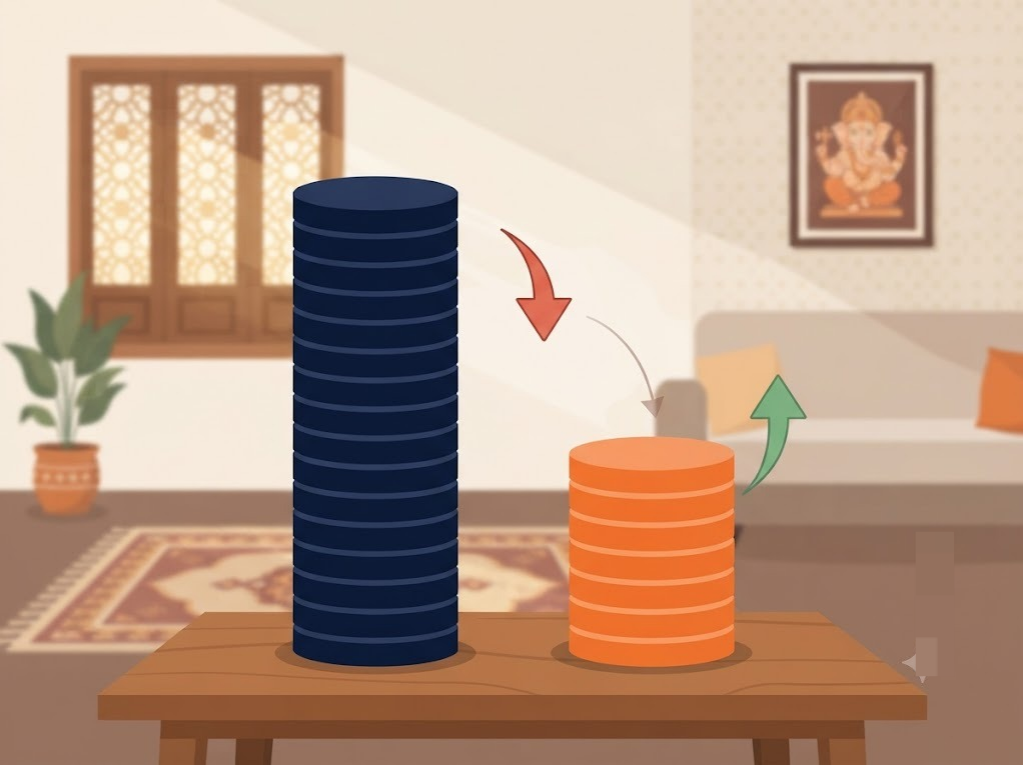
At a 500 score, interest rates commonly run 24 to 36% a year, compared to 10 to 15% at a healthy score. That's an 18 to 21 percentage point gap, on the exact same amount borrowed.
Here's what that gap looks like in practice, without pretending to know your exact rate: a ₹50,000 loan at 30% over 12 months costs meaningfully more in interest than the identical loan at 12%, several thousand rupees more, just from the rate difference alone. Multiply that gap across a larger loan amount or a longer tenure, and the difference stops being a rounding error and starts being real money.
This is also exactly how debt traps start. Repeated small, high-interest loans, especially from apps with short tenures and steep penalty structures for a missed payment, can quietly stack into a bigger problem than the one that sent you looking for a loan in the first place.
So before going further into where to borrow, it's worth asking a more useful question first: is a new loan actually the right move here, or is there a cheaper problem underneath it worth fixing first?
Should You Take a New Loan or Fix What Caused the Score
Most content on this topic just funnels you toward a lender. It's worth being more honest than that, because the right answer genuinely depends on why your score is at 500 in the first place.
Path 1: an old settled, written-off, or unresolved account is dragging the score. A new loan does not fix this. The old entry keeps weighing on your score regardless of how well you repay something new, since it's a separate, unresolved item sitting on your report.
Path 2: the score is from utilisation or a few missed payments, with no unresolved account behind it. Responsible repayment on a new loan contributes to your credit history and may be considered by future lenders. This only works, though, if the EMI is something you can actually afford without stretching further, since a missed payment on this new loan makes things worse, not better.
The honest problem is that most people can't tell which path applies to them just by guessing. That's exactly what FREED's Credit Insights, the "Check My Credit" subscription, is built to answer. Get flat 50% off on subscription or you avail the subscription at flat 50% off. It pulls your report from Experian and provides a plain-language explanation of the factors reflected in your Experian credit report, along with practical recommendations to help you better understand and manage your credit profile. It's open to everyone, whether or not you're enrolled in any FREED program, and no minimum income or existing score applies.

Freed Expert Tip
Run a free Credit Insights check before applying anywhere. Knowing what's dragging your score down saves more than any single loan approval.
Find out which path applies to you
If an Old Unresolved Loan Is Dragging Your Score
If Credit Insights, or your own reading of your report, points to Path 1, an old unresolved account rather than just utilisation, where you go next depends on whether you're still able to pay something or not.
If you're still paying, just juggling too many loans at once, FREED's Debt Consolidation Program may combine eligible unsecured debts into a single repayment, depending on the approved loan amount, tenure, and lender terms. FREED assesses your financial profile and matches you to a lending partner from its network. That new loan pays off your existing eligible loans instantly, leaving you with one EMI, one date, and a lower monthly amount than what you were juggling before. Handled this way, your CIBIL generally improves rather than drops further. FREED charges a success-based fee, only once consolidation actually completes.
If you've already defaulted with no realistic path to repaying in full, that's a different situation. Settlement is not something a borrower chooses out of preference. FREED's Loan Settlement Plan (LSP), also called the Debt Resolution Program (DRP) or "Settle My Loans," exists specifically for this scenario. FREED assesses your full financial picture, builds a personalised plan, and guides structured monthly savings into a dedicated settlement account until there's enough to negotiate with the bank. FREED helps borrowers settle their unpaid/overdue loans at up to 50% less, and the resulting "Settled" tag stays on your report for up to 7 years. It's worth being honest about the trade-off here too: settlement resolves the debt, but your score typically dips further before recovery starts, this isn't an instant fix, and it's a last-resort path, not a shortcut for someone whose actual issue is just utilisation.
How to Improve a 500 Credit Score Without a New Loan
- Check your report first and identify the exact cause. Whether it's DPD entries, a settled tag, a written-off account, or utilisation, the fix looks different depending on which one it actually is.
- Clear any overdue amounts immediately to stop new DPD entries from stacking on top of old ones.
- Keep card utilisation under 30% of your limit across every card, not just one.
- Set up auto-debit, a NACH mandate, so no future EMI gets missed by accident.
- Avoid applying for multiple loans in a short window. Multiple loan applications in a short period may result in several hard enquiries, which future lenders may consider alongside your overall credit profile.
- Give it time through consistent clean months. Recovery is real, but gradual, typically 6 to 18 months of on-time payments and stable utilisation before a meaningful shift shows up.
500 is not permanent. It reflects something specific, and specific problems, once identified, are fixable.

What the Law Says
Under India's Credit Information Companies (Regulation) Act, 2005, every borrower is entitled to one free detailed credit report per bureau each calendar year, on request. You don't need to guess at what's on your file, or pay to find out the basics.
Get your Experian-based reportComparison: 500 Score Borrowing Path vs Score Repair Path
Factor | New Loan at 500 Score | Fixing the Root Cause First |
Typical cost | 24–36% interest a year | Credit Insights: get flat 50% off on subscription or avail the subscription at flat 50% off. |
Speed | Fast, often same day | Slower, 6–18 months for real recovery |
Risk | Debt trap risk if repeated | Low risk, addresses cause not symptom |
Best for | Genuine urgent need, affordable EMI | Score dragged by an old fixable issue |
Keep neutral on all NBFCs and lending apps, no "best" or "worst" implied. FREED is not a Loan Provider and does not guarantee any specific score outcome.
Sources
Claim in blog | Source | |
|---|---|---|
1 | Every borrower is entitled to one free detailed credit report per bureau each calendar year, on request | Master Direction RBI (Credit Information Reporting) Directions, 2025 §9(1)(i) |

Mohit Juneja
Mohit Juneja writes educational content at FREED on debt management, credit scores, loan repayment, and borrowing best practices. His content is shaped by expert insights and industry knowledge, helping readers better understand their financial options and make informed decisions.
mohit.juneja@freed.care

FREED is India's trusted loan management platform. Founded in 2020 and headquartered in Gurugram, FREED has counselled 20 lakh+ people on personal loans, credit cards, and app loans. FREED charges fees only on successful settlement, not upfront. FREED does not handle secured loans (home loans, car loans, gold loans).
Media Mentions