Wilful Defaulter: Meaning, Rules, and Consequences in India
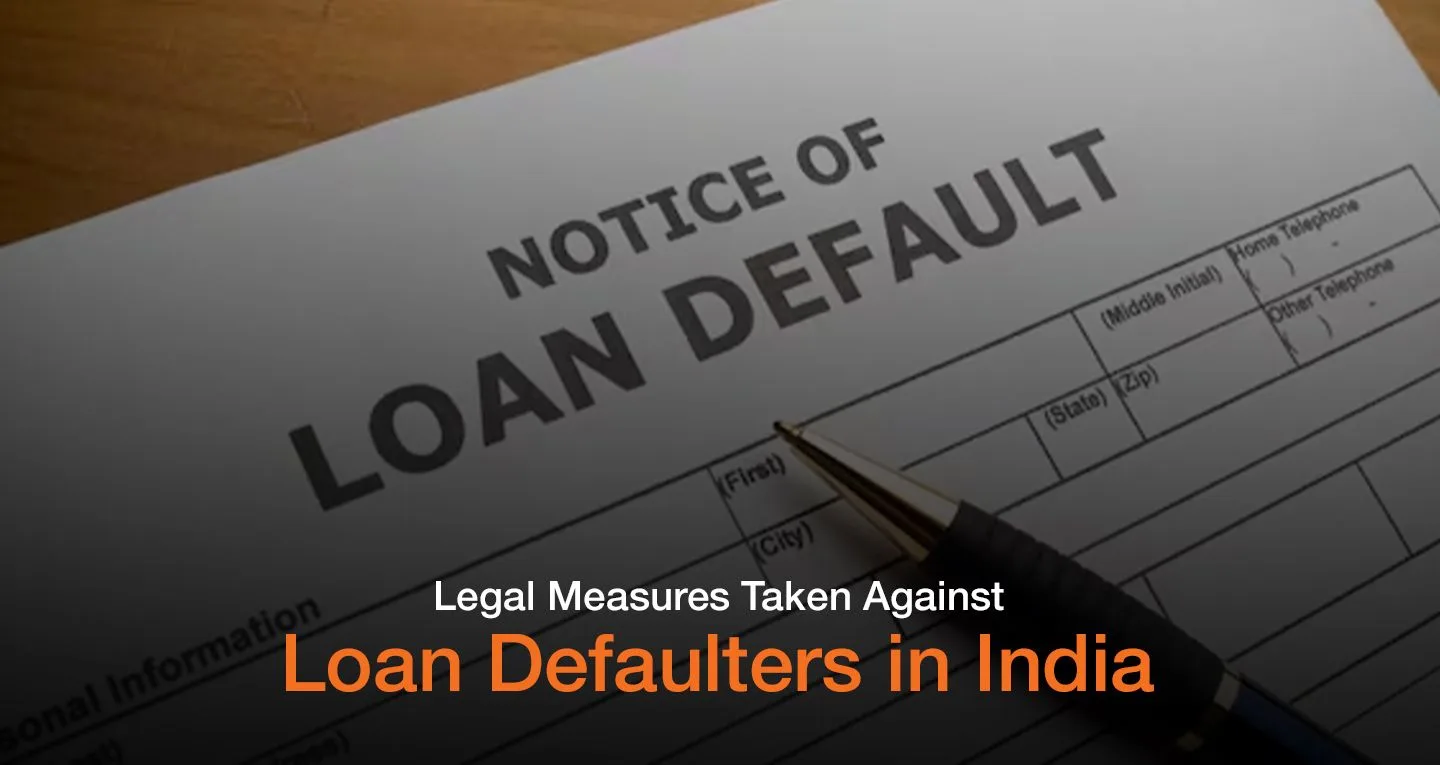
A wilful defaulter, as defined by the RBI, is a borrower who has the financial ability to repay a loan but deliberately refuses to do so, or who diverts, siphons, or misuses the borrowed funds. The focus is on intent, not hardship. Genuine inability to repay due to job loss, medical emergency, or business failure is not wilful default.
Mohit Juneja
Reviewed by FREED India, Debt Resolution Specialists

 4.7/5
4.7/5 ₹3,200Cr+
 20,000+
 20,00,000+4.7/5₹3,200Cr+20,000+20,00,000+
KEY TAKEAWAYS

A wilful defaulter can pay but chooses not to. A genuine defaulter cannot pay due to real financial difficulty. These are different classifications with very different legal consequences.
RBI's 2024–25 Directions require a two-committee process. Identification Committee, then the Review Committee, before anyone is classified as a wilful defaulter.
The wilful default threshold is ₹25 lakh and above. Below this, no wilful default classification applies.
As of March 31, 2025, 1,629 corporate borrowers owed approximately Rs. 1.62 trillion and were listed as wilful defaulters by public-sector banks.
Most retail borrowers personal loan, credit card, and BNPL borrowers who default due to genuine hardship are not classified as wilful defaulters.
What Is a Wilful Defaulter? The RBI Definition Explained
The RBI does not classify every borrower who misses payments as a wilful defaulter. The word that matters is intent.
A wilful defaulter is a borrower who has the money or the means to arrange it but deliberately refuses to repay. The bank's own records, cash flow data, and asset details show that repayment was possible. The borrower simply chose not to.
But deliberate refusal is only one of four ways a borrower can be classified as a wilful defaulter under the RBI framework. The other three involve what was done with the loan money itself.
The first condition is straightforward: the borrower has the capacity to repay but does not. The second is called fund diversion, the borrower took a loan for a specific purpose (say, buying machinery for a business) but used it for something else entirely, without telling the bank. The third is fund siphoning, which goes further than diversion. The money is not just redirected it is removed from the business entirely, with no trace left in the company's books. The fourth condition is when a borrower sells or transfers assets that were pledged as security for the loan, without getting the bank's written approval. Once that pledged asset is gone, the bank has nothing to recover against.
There is also a guarantor angle under the 2025 Directions. If someone has signed as a guarantor on a loan and the bank invokes that guarantee, the guarantor is expected to pay. A guarantor who refuses to honour the guarantee despite having the financial means to do so can now be classified as a wilful defaulter on the same basis as the borrower.
The minimum threshold for any of this to apply is an outstanding amount of Rs. 25 lakh and above. As of March 2024, gross NPAs in Indian banks stood at ₹4.8 lakh crore, with a significant portion attributed to wilful defaults.
If you lost your job, faced a medical emergency, or ran out of money and missed EMIs because of that, none of these four conditions apply to you.
Wilful Defaulter vs Genuine Defaulter: What Is the Difference?
This is the question most people reading this page actually need answered.
A genuine defaulter is any borrower who misses payments. The reason can be anything job loss, a medical bill, a business that stopped working, income that dropped. The test the RBI applies is intent plus capacity. Did the borrower have the money and refuse to pay? Or did the borrower not have the money at all? Those two situations lead to completely different places.
A genuine defaulter faces real consequences. The loan gets marked as NPA (loan marked as bad by the bank) after 90 days of missed payments. The default is reflected in the borrower's credit history. The bank can take civil recovery action. But options remain open: changing the repayment plan, consolidating loans (merging all loans into one lower EMI), or in cases of genuine hardship, exploring settlement for unsecured loans.
A wilful defaulter faces all of that and more. Criminal proceedings become possible under the IPC (Indian Penal Code). No new credit from any bank or NBFC anywhere in India.
Reporting to SEBI and the RBI. In large-value corporate cases, travel restrictions through Lookout Circulars (LOC orders that prevent a person from leaving India). As of March 2024, 2,664 borrowers in India were classified as wilful defaulters, owing a total of Rs. 1.94 lakh crore. The vast majority are large corporates, not retail borrowers.
The Rs. 25 lakh outstanding threshold is significant. Personal loans and credit cards below this amount are not subject to formal wilful default classification under the current RBI framework.
If you missed EMIs because your income stopped or a financial emergency hit not because you diverted funds or hid assets, you are a genuine defaulter, not a wilful one. That distinction opens up restructuring and settlement options that are not available to wilful defaulters.

What Are the 4 Conditions That Make Someone a Wilful Defaulter?
The RBI does not leave this to guesswork. There are four specific conditions. If none of them apply to a borrower, the borrower cannot be classified as a wilful defaulter regardless of how long the loan has been unpaid.
- 1
Has the capacity to repay but deliberately does not.
The bank looks at the borrower's income, assets, and cash flow. If the numbers show the borrower could pay and still hasn't this condition is met. The key word is could. A borrower who genuinely lost their income and cannot pay does not meet this condition.
- 2
Diverts loan funds to a purpose other than what was approved.
A business loan sanctioned for buying machinery is used instead to buy property or to fund personal expenses. The diversion is usually found through forensic audit or bank statement review. Note the distinction for personal borrowers: using a personal loan for a different personal expense than you initially mentioned is not fund diversion in the technical sense. This condition applies
- 3
Siphons off funds.
This goes further than diversion. The money is not just redirected it is removed from the business in a way that leaves no trail. No assets, no cash, no paper trail. The funds simply disappear from the company's books. Where diversion means the money went somewhere else, siphoning means the money is gone entirely.
- 4
Disposes of pledged assets without the bank's consent.
If a borrower pledged machinery, property, or gold as security against a loan and then sells it without informing the bank, this triggers wilful default classification. The security no longer exists if the bank later tries to recover.
- 5
Guarantor addition 2025 update.
Under the November 2025 RBI Directions for AIFIs (All India Financial Institutions, including NABARD, SIDBI, EXIM Bank, NHB, and NaBFID), a guarantor who refuses to honour the guarantee when invoked by the bank, despite having the financial means to pay can be classified as a wilful defaulter. The same two-committee process applies. Guarantors on loans of Rs. 25 lakh and

FREED Expert Tip
If you have missed EMIs because income stopped or a financial emergency hit, document everything. A termination letter, hospital bill, or bank statement showing your income dropped is evidence that your default is genuine, not wilful. Banks look at intent and capacity when assessing default.
Get Help With Missed EMIsRBI's 2025 Rules on Willful Defaulters: What Changed?
The RBI's framework on wilful defaulters has been tightened and formalised over the past two years in a way most competitors have not yet written about.
The original framework came from Master Circulars issued annually. These were consolidated into Master Directions covering banks and NBFCs, which came into effect on November 1, 2024, for commercial banks. This was a significant update it replaced the older patchwork of circulars with one clear, comprehensive document.
Then, on November 28, 2025, the RBI extended the same framework to AIFIs, All India Financial Institutions, specifically NABARD, SIDBI, EXIM Bank, NHB, and NaBFID. These institutions now follow the same identification process, the same two-committee requirement, and the same natural justice protections as commercial banks.
The 2025 framework mandates two internal committees before anyone can be tagged. The Identification Committee (IC) examines the evidence and makes an initial finding. Then a show-cause notice must be sent to the borrower. The bank must disclose the material evidence it is relying on. The borrower gets a chance to submit a written response. A personal hearing is then given before the Review Committee (RC). Only after all of this can the classification be confirmed.
A separate category also exists: the "large defaulter." This is a borrower with an NPA outstanding of Rs. 1 crore or above who has not yet been classified as a wilful defaulter. The consequences are different and lesser. The wilful default classification is a distinct, more serious step that requires the full four-condition and two-committee process.
As of March 31, 2025, 1,629 corporate wilful defaulters at public-sector banks owed approximately Rs. 1.62 trillion.

Worried About Your Loan Default Status?
Get a free assessment of your situation. No commitment, no pressure.
Get My Free AssessmentWhat Are the Consequences of Being Classified as a Wilful Defaulter?
The consequences below are real, but it is important to separate what happens automatically from what requires court or government action.
- 1
No new credit from any bank or NBFC anywhere in India.
Once classified, the borrower is barred from receiving any fresh loans, credit cards, or credit facilities from any regulated financial institution in India. This is not a suggestion; it is mandatory under the RBI 2025 Directions. It applies until the classification is removed.
- 2
Monthly reporting to all credit bureaus.
Banks must report wilful defaulters to CIBIL and other credit information companies every month. The record stays on the credit report until the classification is formally removed.
- 3
Severe and lasting CIBIL score damage.
Wilful default classification results in a major negative mark on the credit report. Future credit access is effectively eliminated while the classification stands. This is different in degree from the impact of a regular NPA.
- 4
Settlement is possible but restricted.
A bank can still do a compromise settlement with a wilful defaulter under the 2025 Directions but only if it meets the specific conditions in the RBI's Resolution of Stressed Assets Directions 2025. It is not a standard settlement process. Approval requirements are stricter, and not all banks will engage.
- 5
Criminal proceedings are possible.
Banks can initiate criminal action under the IPC (Indian Penal Code) for fraud, cheating, or criminal conspiracy, depending on what the bank found during its investigation. This is especially likely where funds were siphoned.
- 6
SARFAESI Act action on secured loans.
For loans secured by property or other assets, banks can seize and sell those pledged assets under the SARFAESI Act 2002 (a law that lets banks recover secured loans without going to court first). No court order is needed for this step.
- 7
Insolvency proceedings for large corporate defaults.
Banks can initiate proceedings under the IBC (Insolvency and Bankruptcy Code, a law that allows creditors to initiate resolution or liquidation of a defaulting borrower's assets) for large corporate defaulters.
- 8
Travel restrictions in large corporate cases only, not automatic.
Lookout Circulars (LOC orders that prevent a person from leaving India) can be issued for large-value wilful defaulters. This requires government or court involvement. A bank classification alone does not automatically justify an LOC. In the 2024 case Viraj Chetan Shah v. Union of India, courts confirmed that travel restrictions require proper legal basis beyond the bank's internal classification.
Wilful Defaulter vs Genuine Defaulter Key Differences
Factor | Wilful Defaulter | Genuine Defaulter |
Reason for default | Can pay but deliberately refuses or diverts/siphons funds | Cannot pay due to income loss, medical emergency, or business failure |
RBI classification | Formal two-committee process under 2025 Directions | NPA classification after 90 days of missed payments |
Minimum threshold | Outstanding of Rs. 25 lakh and above | No minimum threshold |
CIBIL impact | Severe and lasting negative mark, monthly reporting to bureaus | Score drop per missed EMI |
Criminal action | Possible under IPC for fraud, cheating, or siphoning | Not applicable unless fraud is proven |
Restructuring options | Highly restricted only under RBI's Resolution Directions 2025 | Available EMI reduction, repayment plan change, consolidation |
Settlement options | Conditional must meet RBI Resolution Directions 2025 criteria | Available loan settlement for genuine hardship cases |
Travel restrictions | Possible via LOC in large corporate cases, not automatic | Not applicable |
New credit access | Barred from all regulated lenders while classification stands | Difficult but possible after resolution or score recovery |
These are general indicators based on RBI framework as of June 2026. Classification depends on individual account circumstances. FREED is not a Loan Provider. Please verify directly with your bank or legal counsel.

How Does the RBI's Two-Committee Process Work?
Most borrowers and even many banking professionals do not know that a formal process must be followed before anyone can be tagged as a wilful defaulter. A bank cannot simply decide and file. Every step below is mandatory.
- 1
Step 1: The bank detects signs of deliberate default.
Bank statement analysis, forensic audit, or asset verification raises a flag. The review process begins at this point.
- 2
Step 2: The Identification Committee (IC) examines the evidence.
An internal bank committee looks at the material gathered and makes an initial determination of whether a wilful default has occurred.
- 3
Step 3: A show-cause notice is sent to the borrower.
The bank must tell the borrower what it found. The borrower is informed of the specific evidence being relied on.
- 4
Step 4: The borrower submits a written representation.
The borrower gets a formal opportunity to respond in writing explaining their position, providing documents, or challenging the bank's findings.
- 5
Step 5: A personal hearing is given.
The borrower can appear before the Review Committee (RC) and present their case in person.
- 6
Step 6: The Review Committee confirms or overturns the classification.
If the RC confirms, the borrower is formally classified and reported to credit bureaus. If the RC overturns, the matter is dropped. This process exists because the consequences of wilful default classification are severe. A bank that skips any of these steps, particularly the show-cause notice or the personal hearing has not followed the RBI's mandated process. Borrowers who believe
What If You Have Missed Payments But Are Not a Wilful Defaulter?
Missing EMIs because your income stopped, a medical emergency hit, or your business went through a bad patch is not wilful default. The RBI is clear on this. Intent and capacity are the tests, not the fact of missing payments itself.
If you are in this situation, the right path is:
Communicate with your bank in writing immediately. Document the hardship, a termination letter, medical bill, or bank statement showing your income dropped. Written communication is evidence that your default is genuine. Borrowers who go silent are the ones who end up looking like they are hiding something.
Ask about changing your repayment plan. A lower EMI over a longer period can make repayment manageable again. Banks do consider this for borrowers who reach out.
Consider consolidation. If you have multiple loans and the combined EMI has become difficult to manage, consolidating them into a single repayment plan through FREED's Loan Consolidation Plan may simplify repayments before considering settlement.
If repayment has become genuinely impossible, settlement may be worth discussing. For unsecured loans, personal loans, credit cards, BNPL, loan apps, loan settlement is an option when repaying in full is genuinely no longer possible. This does not apply to home loans or car loans.
The moment a borrower stops communicating with the bank and starts avoiding contact is the moment genuine hardship starts to look like wilful default. Communication, with documentation, is the borrower's clearest protection.
How Loan Settlement Helps When Repayment Has Become Genuinely Impossible
Settlement is not something a borrower chooses out of preference. Banks and financial companies only consider it when you are in genuine financial difficulty and are truly unable to repay the full amount. It is a last resort, not a shortcut.
For borrowers who have reached that point where repaying in full is simply not possible anymore, settlement means the bank agrees to accept a reduced lump-sum amount as the full and final payment. The loan is then marked as "Settled" on the credit report.
The waiver can be up to 50%* of what you owe. The "Settled" mark stays on your CIBIL report for up to 7 years. These are real consequences, and they should be understood before deciding.
What FREED does in this process: FREED prepares your documents, drafts the letters to the bank, handles the back-and-forth through the negotiation, and guides the process from assessment to the final settlement letter. FREED's fee is success-based, charged only when a settlement is completed.
This option covers unsecured loans only: personal loans, credit cards, BNPL, and loan apps. It does not apply to home loans, car loans, or any other secured debt.
Rates and ranges shown are indicative. Final terms decided by the bank. FREED is not a Loan Provider. No outcome is guaranteed. Please verify directly with your bank.
Are You in a Loan Trap? Quick Check
Move the slider to your total EMIs as a % of monthly salary. See your debt stress level instantly.
EMIs as % of Monthly Salary
What Can Prevent a Wilful Defaulter Classification?
For borrowers who are going through financial difficulty and want to make sure they are never at risk of being classified as a wilful defaulter, these steps matter.
Use the loan funds only for what was stated in the loan agreement. This is the clearest protection against a fund diversion or siphoning finding. If circumstances change and you need to use the funds differently, inform the bank in writing before doing so.
Communicate with the bank before repayment becomes impossible. Proactive communication even when the news is bad is documented evidence of good faith. A borrower who tells the bank, "my income has dropped and I may miss next month's EMI" is in a very different position from a borrower who disappears.
Do not sell or transfer any pledged assets without written bank approval. This is a direct trigger for wilful default classification. If you need to sell something that was pledged as security, get written consent from the bank first.
Keep honest and up-to-date financial records. If a bank conducts a forensic audit and finds that your records are accurate, the findings will reflect that.
If you are a guarantor, take the obligation seriously. Under the 2025 RBI Directions, guarantors who have the means to pay but refuse to honour the guarantee when invoked can be classified as wilful defaulters.
Maintaining transparent communication and complying with the loan terms can help demonstrate that any default is due to genuine hardship rather than wilful intent. Clear intent, clearly documented, is the defence.


Mohit Juneja
Mohit Juneja writes educational content at FREED on debt management, credit scores, loan repayment, and borrowing best practices. His content is shaped by expert insights and industry knowledge, helping readers better understand their financial options and make informed decisions.
mohit.juneja@freed.care

FREED is India's trusted loan management platform. Founded in 2020 and headquartered in Gurugram, FREED has counselled 20 lakh+ people on personal loans, credit cards, and app loans. FREED charges fees only on successful settlement, not upfront. FREED does not handle secured loans (home loans, car loans, gold loans).
Media Mentions