Tips to Effectively Manage & Pay Off Credit Card Debt
Credit card debt sneaks up on most people. One missed payment, one month of minimum dues-and suddenly the bill feels impossible to clear. These practical tips will help you take back control-starting today.
FREED India
Reviewed by FREED India, Debt Resolution Specialists
 4.7/5
4.7/5 ₹3,200Cr+
 20,000+
 20,00,000+4.7/5₹3,200Cr+20,000+20,00,000+
Key Takeaways

The biggest reason credit card debt grows-paying only the minimum due. It barely covers the interest, leaving your principal untouched.
Paying even ₹500–₹1,000 extra above the minimum every month can cut your repayment timeline by years and save thousands in interest.
Stop using your credit card for daily expenses while you are actively trying to pay off the debt-otherwise you are filling a leaking bucket.
If you have 2 or more credit cards with outstanding-consolidation can combine them into one lower EMI and cut total interest significantly.
If you have already defaulted and genuinely cannot repay-a one-time settlement through FREED can help you close the debt for less than what you owe.
Why Credit Card Debt is So Hard to Clear
Credit cards are designed to be easy to use. Swipe now, pay later. Earn rewards. Get cashback.
But the fine print is dangerous. Credit card interest in India is 36% to 42% per year. That is the highest rate on any common financial product.
Most people don't feel this until it's too late. They pay the minimum due every month-thinking they're on track-while interest quietly piles up on the remaining balance.
Here's the reality of paying only the minimum:
Outstanding | Monthly Minimum Paid | Time to Clear | Total Paid |
₹50,000 | ₹2,500/month | 10+ years | ₹1,50,000+ |
₹1,00,000 | ₹5,000/month | 10+ years | ₹3,00,000+ |
You end up paying 3 times what you originally owed-just in interest.
The good news: there are clear, practical steps to break this cycle. Here they are.
Tip 1: Know Exactly What You Owe-All of It
You cannot manage what you don't fully understand.
Sit down today. Write out every credit card you have. For each one, note:
The bank / card name
Total outstanding balance right now
Interest rate (monthly rate × 12 = annual rate)
Minimum amount due this month
Payment due date
Add everything up. That total number-however uncomfortable-is your starting point. Once you see the full picture clearly, you can build a real plan.
Most people with multiple credit cards have a vague sense of what they owe. Vague sense leads to vague plans. Vague plans don't work.
Tip 2: Always Pay More Than the Minimum Due-Every Single Month
This is the single most impactful change you can make.
The minimum due keeps your account active. That's all it does. It does not meaningfully reduce your debt. Every month you pay only the minimum-new interest that is added is almost as large as what you paid.
Even paying ₹500 or ₹1,000 more than the minimum every month makes a real difference over time.
Here's what extra payments do on ₹50,000 outstanding at 38% annual interest:
Monthly Payment | Time to Clear | Total Interest Paid |
Minimum only (₹2,500) | 10+ years | ₹1,00,000+ |
₹4,000/month | ~2 years | ₹45,000 |
₹6,000/month | ~1 year | ₹25,000 |
₹10,000/month | ~6 months | ₹10,000 |
Every extra rupee goes directly towards reducing your principal-which reduces the interest charged next month. The snowball effect works in your favour when you pay more.
Tip 3: Never Miss a Due Date-Set Up Auto-Debit Today
One missed payment causes:
A late fee (typically ₹500–₹1,000)
Penalty interest on the full outstanding
CIBIL score damage-even one missed payment can drop your score by 25–50 points
Loss of your grace period-new purchases start attracting interest immediately
None of these are reversible quickly. All of them are preventable.
The fix is simple: set up auto-debit for at least the full minimum due on every credit card. Better still-set it up for the full statement amount.
Auto-debit takes 10 minutes to set up through your bank's mobile app or internet banking. Once done-you never have to manually track a credit card due date again.
If auto-debit isn't possible for some reason-set a phone reminder 3 days before every due date. Enough time to make sure the money is in the right account.
Tip 4: Stop Using Your Card for Daily Expenses
This is the hardest tip-but one of the most important.
If you are actively trying to pay off credit card debt-using the card for groceries, petrol, eating out, or online shopping every day is counterproductive. You're paying off old debt on one side while adding new debt on the other.
Make a firm decision: credit cards are for planned, budgeted purchases only-not daily expenses.
Switch to cash, debit card, or UPI for your day-to-day spending. If the money isn't in your savings account-don't spend it.
Some people find it helpful to physically remove their credit cards from their wallet. Put them at home. Use them only when you've decided in advance to make a specific purchase you can pay off in full.
This one habit alone can significantly slow the growth of your outstanding balance-giving your extra payments room to actually make a dent.
Tip 5: Pick a Repayment Strategy and Stick to It
If you have multiple credit cards with outstanding balances-you need a clear strategy for which one to attack first.
Two methods work well:
The Avalanche Method-Highest interest first List all your cards from highest to lowest interest rate. Put all extra money towards the highest interest card. Pay minimum on the rest.
This saves you the most money in total interest. It's mathematically the most efficient method.
The Snowball Method-Smallest balance first List all your cards from smallest to largest outstanding balance. Clear the smallest one first. Pay minimum on the rest.
This gives you faster wins. Clearing one card completely feels motivating and keeps you going.
Method | How It Works | Best For |
Avalanche | Clear highest interest card first | Maximum interest savings |
Snowball | Clear smallest balance first | Motivation and momentum |
Pick one and commit to it for at least 6 months. Switching strategies mid-way slows your progress.
Tip 6: Keep Your Credit Card Usage Below 30%
Even while you're paying off debt-how much of your credit limit you're using affects your CIBIL score.
Credit utilisation-the percentage of your total limit you're using-is 30% of your credit score.
If your combined credit card limit is ₹1,50,000 and you're using ₹1,20,000-that's 80% utilisation. That actively hurts your score.
If you can bring it below 30% (₹45,000 in this example)-your score improves. This matters because a better score opens doors to better loan rates in the future.
During your debt repayment period-avoid adding new charges that push utilisation up. Every rupee you pay down moves your utilisation in the right direction.
Tip 7: Consider Debt Consolidation-If You Have Multiple Cards
Managing 3–4 credit card bills, due dates, and interest rates simultaneously is stressful-and expensive.
Debt consolidation solves this by combining all your credit card balances into one single loan at a lower interest rate. Instead of multiple minimum dues-you pay one fixed EMI.
How it helps:
Interest drops from 36–42% to around 14–20%
One payment, one due date-much easier to manage
More of each payment goes towards the principal-you get out faster
Example: 3 credit cards with combined outstanding of ₹75,000 at 38% average interest. Consolidation loan at 16% for 2 years: EMI of approximately ₹3,700/month. Total interest saved: over ₹12,000.
Who it works for: People still making payments, CIBIL score above 650, and 2 or more credit card dues to manage.
FREED's Debt Consolidation Program does this end-to-end through our network of lending partners.
Tip 8: Consider One-Time Settlement-If Repayment is Genuinely Impossible
This tip is for people who have already missed multiple payments and genuinely cannot repay the full outstanding amount.
A one-time settlement means you negotiate with the bank to pay a reduced amount-and the bank agrees to close the account and waive the remaining balance.
Banks agree to settle when:
You've missed payments for 90+ days
You can prove genuine financial hardship-job loss, medical emergency, income collapse
They believe you cannot pay in full and prefer recovering something over nothing
Example: You owe ₹1,50,000. You've missed payments for 5 months. You negotiate and the bank settles for ₹75,000. You pay ₹75,000 in a lump sum. The remaining ₹75,000 is waived off. The account is closed.
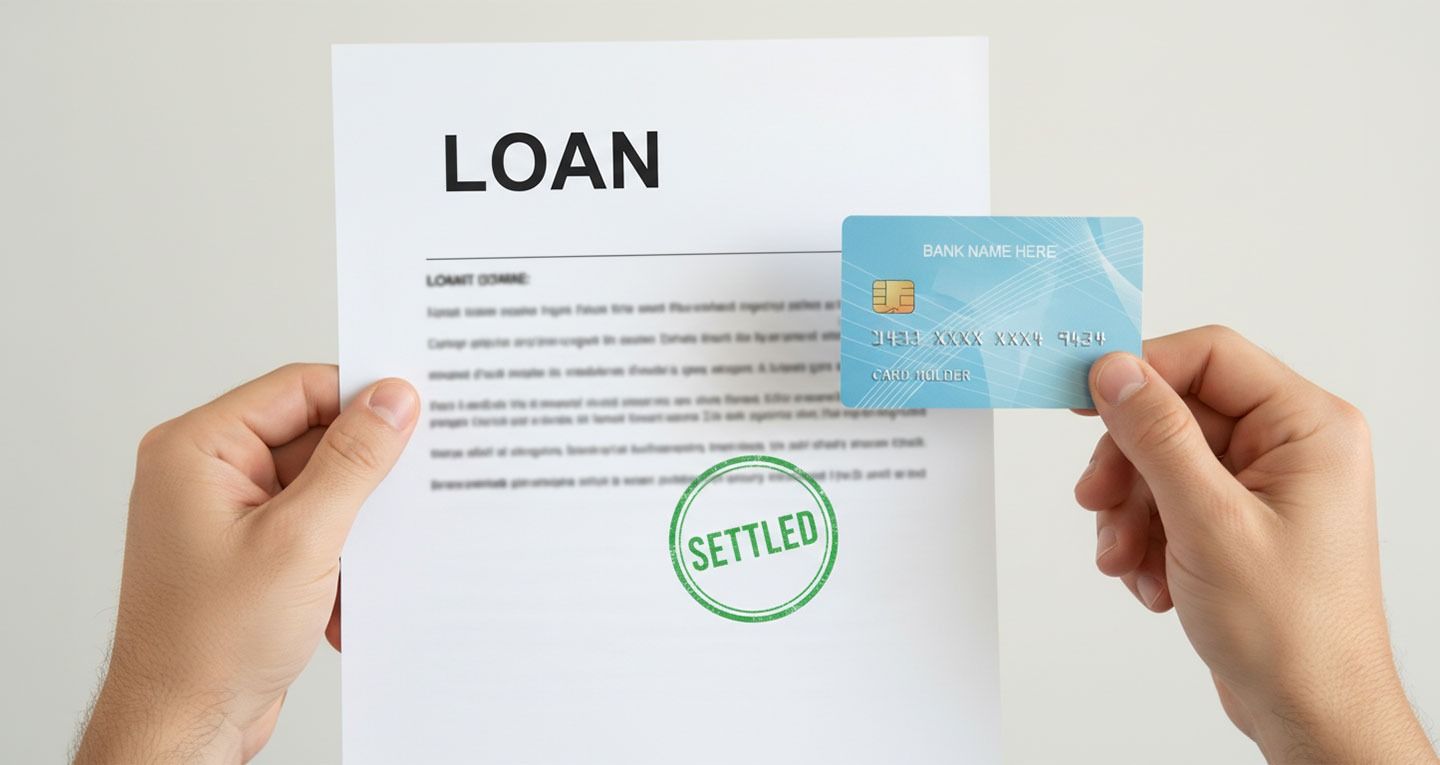
Important: This does affect your CIBIL score-the account shows "Settled" instead of "Closed." But it stops further damage from an ongoing default.
Always get the settlement agreement in writing before paying. FREED negotiates on your behalf and reviews every settlement letter before you pay a rupee.
Tip 9: Build a Monthly Budget-Right Now
You cannot pay off credit card debt without knowing where your money goes.
A monthly budget is just a plan. Here's the simplest version:
Step 1: Write your monthly take-home income. Step 2: List fixed expenses-rent, EMIs, school fees, utilities. Step 3: List variable expenses-groceries, travel, phone, eating out. Step 4: Subtract both from income. What's left goes towards credit card repayment.
Most people discover ₹2,000–₹5,000 per month of spending they weren't fully tracking. Redirecting even half of that towards your credit card outstanding accelerates your payoff significantly.
Do this every month. Even a rough budget is better than no budget.
Tip 10: Build a Small Emergency Fund
This feels counterintuitive-why save when you have debt to pay?
Because most credit card debt grows because of emergencies-a hospital bill, a broken appliance, an unexpected expense-with no savings to cover them.
When there's no buffer, the credit card comes out. The outstanding grows. All your repayment progress is undone.
Even ₹500 saved per month into a separate account builds a small cushion over time. After 6 months-₹3,000. After a year-₹6,000. It won't cover every crisis. But it stops small ones from derailing your debt payoff plan.
When to Get Professional Help
Try the tips above first. Many people successfully clear credit card debt with discipline and a clear plan.
But if:
- Your combined credit card outstanding is more than 4–6 months of your salary
- You've missed multiple payments and collection calls have started
- You've tried budgeting but the interest keeps growing faster than you pay
- You feel completely overwhelmed and don't know where to start
- then it's time to call FREED.
Getting professional help is not a sign of failure. It is the smartest move when the situation is genuinely beyond self-management.
How FREED Helps With Credit Card Debt
Debt Consolidation-if you can still pay but multiple card bills are overwhelming: FREED combines all your credit card dues into one lower EMI through our lending partners. One payment. One date. Lower interest. Less stress.
Debt Resolution (Settlement)-if you've defaulted and can't repay in full: FREED negotiates with your credit card company to settle for less than what you owe. On average, clients settle at 56% less than their original outstanding. You save in a Special Purpose Account. We handle all negotiations and protect you from harassment through FREED Shield.
FREED Shield-if recovery agents are harassing you: Activate at freed.care/freed-shield-our team helps you report harassment immediately
Are You in a Loan Trap? Quick Check
Move the slider to your total EMIs as a % of monthly salary. See your debt stress level instantly.
EMIs as % of Monthly Salary
About FREED
FREED is India's first and leading Debt Relief Platform. We help people who are overwhelmed by credit card bills, personal loans, and EMIs find a legal, stress-free path to becoming debt-free.
We offer Debt Consolidation (one lower EMI for multiple credit card dues) and Debt Resolution (settle for less when you genuinely cannot repay in full). We protect you from recovery harassment through FREED Shield-trusted by over 15,00,000 Indians.
Over 60,000 Indians-from Lucknow to Surat, Patna to Bhopal-have used FREED to clear their credit card debt.
No hidden charges. No judgement. Just honest, practical help.

FREED is India's trusted loan management platform. Founded in 2020 and headquartered in Gurugram, FREED has counselled 20 lakh+ people on personal loans, credit cards, and app loans. FREED charges fees only on successful settlement, not upfront. FREED does not handle secured loans (home loans, car loans, gold loans).
Media Mentions