SBI CIBIL Score Requirement for Personal Loans
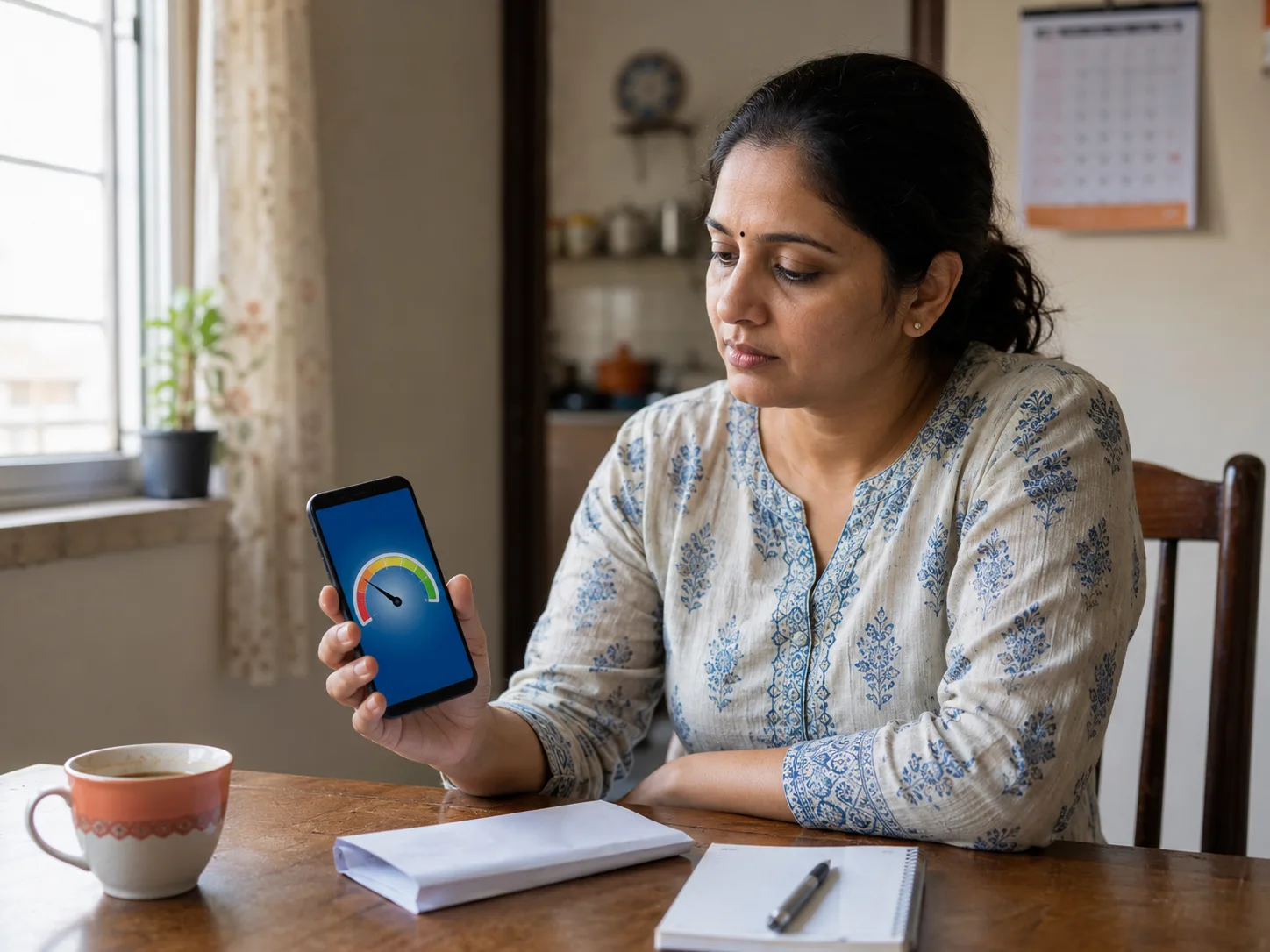
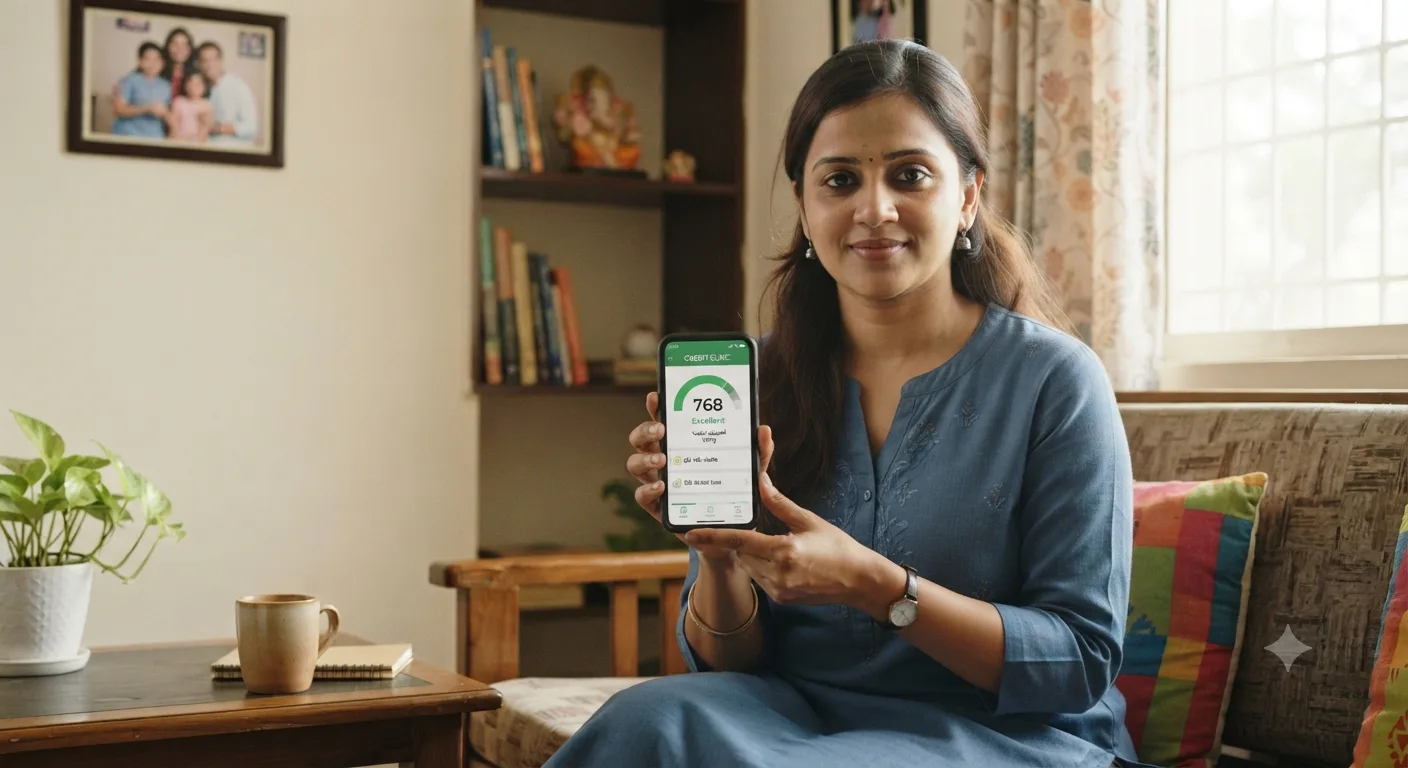
SBI's CIBIL score requirement for a personal loan varies by scheme. Government and defence applicants generally need 650+, corporate salaried applicants 670+, and SBI Xpress Credit's best rates need 700+. SBI does not publish one universal cutoff. Approval also depends on your income, employment, and existing EMIs.
Mohit Juneja
Reviewed by FREED India, Debt Resolution Specialists
 4.7/5
4.7/5 ₹3,200Cr+
 20,000+
 20,00,000+4.7/5₹3,200Cr+20,000+20,00,000+
Key Takeaways

SBI's CIBIL score requirement generally starts at 650 for government/defence applicants, 670 for corporate salaried applicants.
SBI Xpress Credit's most competitive rates typically need a score of 700 or higher.
SBI evaluates income, EMI-to-income ratio, and employment alongside the score, not the score alone.
A bounced cheque EMI can trigger Section 138 NI Act, criminal complaint possible, up to 2 years jail or fine up to 2x cheque amount. NACH/ECS bounces take a different legal path but banks can still act.
Falling short of SBI's threshold does not mean no loan is possible. It changes which lender and terms apply.
What CIBIL Score Does SBI Need for a Personal Loan
SBI does not publish one single, fixed CIBIL score that applies to every personal loan applicant. The requirement shifts depending on which scheme you're applying under and which category you fall into.
Here's how it typically breaks down:
- Government and defence applicants: generally 650 and above
- Corporate salaried applicants: generally 670 and above
- SBI Xpress Credit (best rates): typically needs 700 or higher to access the most competitive pricing
- SBI Pension Loan: no fixed CIBIL requirement. This scheme is evaluated on pension income and age instead
These figures follow SBI's internal policy, which can shift over time and isn't published as a single fixed rulebook.
Here's the part worth underlining: a higher score doesn't just improve your odds of a yes. It also changes the interest rate you're offered. Someone at 670 and someone at 780 might both get approved for the same regular personal loan, but the person at 780 will very likely see a noticeably lower rate on the sanction letter. The score isn't a pass-fail gate alone, it's also a pricing lever.
So if your score sits below these numbers right now, the loan isn't necessarily off the table. But your options do narrow, and it's worth understanding exactly what that means before you apply.

What Else Does SBI Look at Besides CIBIL Score
Your score is one input, not the whole decision. SBI weighs several factors together, and a strong score alone won't carry you through if the rest of your profile is stretched.
- Net monthly income. Most schemes require a minimum NMI of ₹25,000. Government and defence applicants have a slightly lower bar, ₹20,000. Fall short of this and even a 750+ score may not be enough to get you approved for the amount you want.
- EMI-to-income ratio. SBI generally wants your total EMI obligations, including the new loan, to stay within roughly 50% to 65% of your net monthly income, depending on the scheme. If you're already paying off two other loans, this ratio can quietly disqualify you even with a healthy score.
- Employment tenure. Most schemes ask for at least 1 year with your current employer. Government and defence applicants get a shorter bar of 6 months.
- An existing SBI salary account. This doesn't replace any of the above, but it speeds things up considerably, sometimes to a near-instant, pre-approved offer, since SBI already has your salary and transaction history on file.
The takeaway here is simple: a good score gets you in the room, but income, EMI load, and employment history decide what happens once you're in it. If your score is fine but your EMI ratio is already tight, the fix isn't a better score. It's addressing the existing debt load first.
FREED Expert Tip
Pull your SBI-facing CIBIL report before applying. The score a free app shows can sometimes differ slightly from what the bank actually pulls and sees.
Check My ScoreWhat Happens if Your Score Falls Below SBI's Requirement
If your score sits below the published range for your category, the realistic outcome is one of two things: rejection, or approval at a significantly higher interest rate if the bank chooses to offer it at all. Neither outcome is guaranteed either way, since SBI weighs the full profile, not the score in isolation.
Here's what's easy to overlook: every application itself counts as a hard inquiry on your credit report, whether it's approved or not. A rejection doesn't show up as a black mark by itself, but the inquiry that came with it does shave off a few points. Apply speculatively to three or four banks hoping one says yes, and you can end up with a lower score than when you started, on top of no loan.
If your score is below threshold right now, three paths are worth considering instead of applying blind:
- Add a co-applicant with a stronger score and income. This can bring the combined profile above SBI's cutoff even if your individual score doesn't clear it.
- Wait and rebuild the score before reapplying, rather than testing your luck now.
- Check SBI's pre-approved offers if you already hold a salary or banking relationship with them. These sometimes run on softer internal criteria than a fresh, cold application.
Before choosing any of these, though, it helps to understand why the score sits where it does in the first place.
Why Is Your CIBIL Score Below SBI's Threshold
The fix depends entirely on the cause, so it's worth being specific instead of reaching for a generic "improve your score" checklist. Three causes show up most often:
- Missed EMIs or credit card bills (DPD entries). Even a payment slipping by a few days gets logged as Days Past Due, and a pattern of these over a few months is often the single biggest reason a score sits stuck below 650.
- High credit utilisation, over 30% of your limit. Using more of your card limit than that signals to lenders that you're stretched, even if every bill gets paid. This alone can hold a score down even with a clean payment record.
- An old settled or written-off account still sitting on the report. If a past loan was settled or marked as a write-off, that tag actively weighs the score down for years, and no amount of good behaviour on new accounts fully offsets it while the tag is live.
Since these three causes need different fixes, the first real step is finding out which one is actually yours. FREED's Credit Insights does exactly this: get flat 50% off on subscription. It pulls your Experian report and shows you, in plain terms, what's impacting your score, along with actionable, step-by-step recommendations to improve it. It's available to everyone, whether or not you're enrolled in any FREED program.
If the diagnosis points to an old, unresolved account still dragging things down, that's a different conversation from simply tightening up your card usage, and it's worth knowing which one you're actually dealing with before you plan your next move.
Find Out What's Really Hurting Your Score
Experian-based report with clear next steps.
Check Your Credit InsightHow FREED Helps if an Old Unresolved Loan Is Blocking Your SBI Application
If multiple EMIs are pushing your utilisation up, but you're still current on payments: FREED's Loan Consolidation Plan (LCP), "Reduce My EMI," is built for exactly this. It's for people who can still repay but need a smarter way to manage their debt. FREED assesses your financial profile and matches you to a lending partner from its network. That lending partner disburses one new loan, which instantly pays off your existing eligible unsecured debt. You're left with one loan, one EMI, one lender. This doesn't damage your CIBIL score, in fact, it tends to improve it, since your utilisation drops and you move to a single, regular repayment.
If the real issue is an existing account you're genuinely unable to repay: Settlement is not something a borrower chooses out of preference. Banks and financial companies only consider it when you're in genuine financial difficulty and truly unable to repay the full amount. For this situation, FREED's Loan Settlement Plan (LSP), "Settle My Loans," helps you move from financial distress to a structured path toward resolving the debt. FREED assesses your full financial picture, builds a personalised plan, and guides you through a monthly savings routine into an SPA, an independently held savings account. Once enough is built, FREED negotiates with the bank, working toward a waiver of up to 50%*, with the final number decided by the bank. The account gets a "Settled" mark on your CIBIL report for up to 7 years. Be clear-eyed here: settlement dips your score further before recovery begins. It's a longer-term fix for genuine hardship, not a shortcut to qualifying for an SBI loan quickly.
These two paths solve very different problems, so it's worth matching yourself honestly to the one that actually fits, rather than the one that sounds faster.
Rates and ranges shown are indicative. Final terms are decided by the bank. FREED is not a Loan Provider. No outcome is guaranteed. Please verify directly with your bank.
How to Improve Your Score Before Reapplying to SBI
- Check your credit report first and pinpoint the exact drag. Whether it's a DPD entry, a settled tag, a written-off account, or plain high utilisation changes what you do next, so start here, not with a generic tip list.
- Clear any overdue amounts immediately. An account sitting overdue right now is actively working against your score every single day it stays that way.
- Keep card utilisation under 30% of your limit. This is one of the fastest, most controllable levers you have, often showing movement within one or two billing cycles.
- Set up a NACH mandate (auto-payment permission) so no future EMI slips through simple forgetfulness. A single accidental miss can undo months of steady repair.
- Avoid applying to multiple banks in a short window. Each fresh application adds a hard inquiry, and stacking several together compounds the cost right when you're trying to recover.
Realistic recovery typically takes 6 to 18 months of clean, consistent behaviour, faster if the drag was a simple fixable habit, longer if an old settled or written-off account is still sitting on the report. Either way, SBI's threshold is a specific, known number, not a mystery. That makes it fixable, one deliberate step at a time.

What the Law Says
Under the RBI's Credit Information Companies (Regulation) Act, 2005, every borrower is entitled to one free, detailed credit report per bureau, per calendar year.
Check your scoreSBI Personal Loan Score Thresholds by Scheme
Scheme | Minimum CIBIL Score | Notes |
Regular Personal Loan, Government/Defence | 650+ | Also needs min. ₹20,000 NMI |
Regular Personal Loan, Corporate | 670+ | Also needs min. ₹25,000 NMI |
SBI Xpress Credit (best rates) | 700+ | Salary account with SBI helps speed |
SBI Pension Loan | No fixed score | Based on pension income and age instead |
Every figure above follows SBI's internal policy and is subject to change without notice. This table is a general reference, not a guarantee of approval. FREED is not a Loan Provider and does not guarantee any specific approval outcome.
The table is worth reading as a starting filter, not a final verdict. If your income and employment tenure are strong but your score sits just under a scheme's threshold, that's a different situation from a score and an EMI ratio that are both stretched thin. The first might be one clean billing cycle away from clearing. The second usually needs the debt load itself addressed before the score moves.
Sources
Excellent, found SBI's own official FAQ page. Here's the table:
Claim | Source |
|---|---|
SBI's official minimums: 650 for Defence/Government salary account holders, 670 for corporate salary account holders | SBI Bank's own official FAQ page |
EMI/NMI ratio capped at 65%, loan amount up to 30 times NMI, max ₹50 lakh | SBI Bank's own official FAQ page |
Minimum net monthly income ₹20,000 for Defence/Government, ₹25,000 for corporate | SBI Bank's own official FAQ page |
SBI does not publish one universal cutoff, actual approvals seen slightly below or above stated thresholds depending on other factors | Paisabazaar, CreditMantri, Urban Money |
SBI Xpress Credit sometimes approved below the stated floor for salary account holders with consistent, long-standing inflows | Urban Money |
An existing SBI salary account speeds approval and enables pre-approved offers | CreditMantri, Urban Money |
SBI Pension Loan evaluated on pension income and age rather than a fixed score | SBI Bank's own official FAQ page |
High utilisation, missed payments, and old settled/written-off accounts are the common drags on a score | Consistent with sourcing already verified across earlier articles this session |
Every fresh loan application generates a hard inquiry, whether approved or rejected | Consistent with sourcing already verified across earlier articles this session |
RBI mandates one free full report per bureau per year, RBI/2016-17/58, effective Jan 1, 2017 | RBI official notification, verified in earlier articles this session |
A "Settled" account carries a mark on the CIBIL report for up to 7 years | FREED internal brand facts |

Mohit Juneja
Mohit Juneja writes educational content at FREED on debt management, credit scores, loan repayment, and borrowing best practices. His content is shaped by expert insights and industry knowledge, helping readers better understand their financial options and make informed decisions.
mohit.juneja@freed.care

FREED is India's trusted loan management platform. Founded in 2020 and headquartered in Gurugram, FREED has counselled 20 lakh+ people on personal loans, credit cards, and app loans. FREED charges fees only on successful settlement, not upfront. FREED does not handle secured loans (home loans, car loans, gold loans).
Media Mentions