RBI Wilful Defaulter List: What It Means, Who It Applies To, and What Happens Next
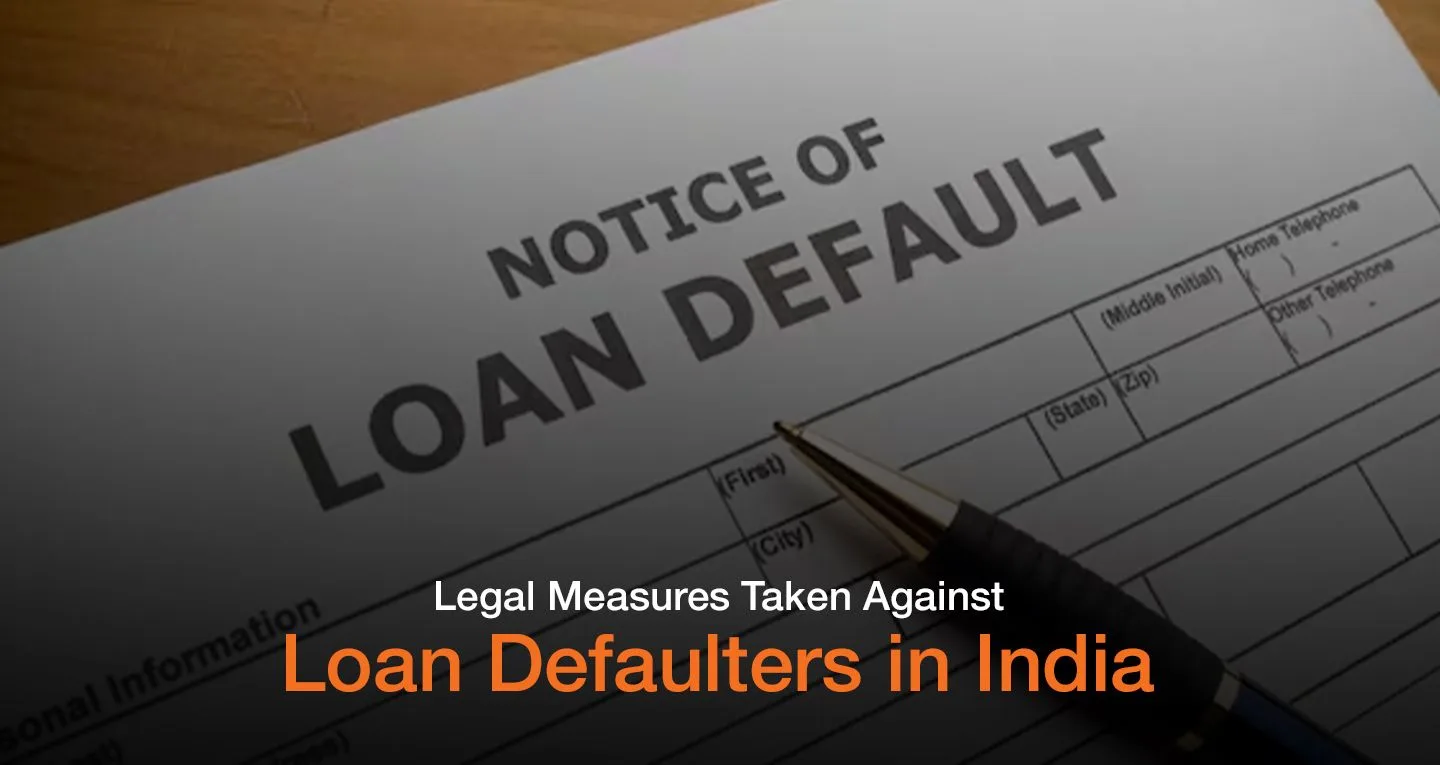
The RBI wilful defaulter list isn't one public database. It's a classification banks and NBFCs apply, under rules set by the Reserve Bank of India, to borrowers who had the money to repay a loan but chose not to, or who misused loan funds. It only applies to dues of ₹25 lakh and above. Most personal loan and credit card borrowers never come near this classification. Being on it is far more serious than an ordinary default, and can mean a total credit ban and even criminal proceedings.
Mohit Juneja
Reviewed by FREED India, Debt Resolution Specialists
 4.7/5
4.7/5 ₹3,200Cr+
 20,000+
 20,00,000+4.7/5₹3,200Cr+20,000+20,00,000+
KEY TAKEAWAYS

The formal wilful defaulter classification applies only to dues of ₹25 lakh and above, so most personal loan and credit card borrowers are not in scope.
As of March 2024, around 2,664 borrowers were on the formal wilful defaulter list, owing roughly ₹1.94 lakh crore between them. These are mostly large corporate and business borrowers, not individual retail borrowers.
No one can be classified as a wilful defaulter without a show-cause notice and a two-stage review by an Identification Committee and a Review Committee.
The governing rules are the RBI (Treatment of Wilful Defaulters and Large Defaulters) Directions, 2024, effective October 28, 2024, applying across commercial banks, NBFCs, urban co-operative banks, and All India Financial Institutions.
Wilful default and genuine default are legally different things. Intent is what separates them, not the amount unpaid.
A bounced-cheque EMI payment can trigger Section 138 of the NI Act, a criminal complaint that applies specifically to cheque-based repayments and can mean up to 2 years in jail or a fine of up to twice the cheque amount. If your EMI is on NACH or ECS instead, a failed auto-debit follows a different, contractual recovery path rather than Section 138, though the bank can still pursue other legal or recovery action.
What Is the RBI Wilful Defaulter List and Who Maintains It?
Here's the part most people get wrong: the RBI itself doesn't run a searchable public list of wilful defaulters. What it does is set the rules. Under the RBI (Treatment of Wilful Defaulters and Large Defaulters) Directions, 2024, individual banks and NBFCs identify and classify a borrower as a wilful defaulter using a fixed, formal process. Once a lender classifies someone, it reports the details to Credit Information Companies (CICs) like TransUnion CIBIL and Experian, every month. From there, any regulated lender checking your credit history can see it. Lenders are also required to publish wilful defaulter names on their own websites.
Here's a common confusion worth clearing up directly: CIBIL does not maintain its own separate "wilful defaulter list." What shows up on your CIBIL report is a "Wilful Default" tag, and it got there because a lender reported it, not because CIBIL made an independent call.
As of March 2024, roughly 2,664 borrowers carried this classification, owing about ₹1.94 lakh crore combined. A separate, later 2025 figure shows 1,629 corporate borrowers owing around ₹1.62 lakh crore to public-sector banks alone, a different dataset and reporting period from the 2024 figure above. These are overwhelmingly large, corporate accounts, not everyday personal loan or credit card cases.

Struggling with loan repayments and not sure where to start?
Talk to FREED's team. One call, no pressure, honest answers.
Book My Free CallWhat Is the Legal Definition of a Wilful Defaulter?
Here's the part most people get wrong: the RBI itself doesn't run a searchable public list of wilful defaulters. What it does is set the rules. Under the RBI (Treatment of Wilful Defaulters and Large Defaulters) Directions, 2024, individual banks and NBFCs identify and classify a borrower as a wilful defaulter using a fixed, formal process. Once a lender classifies someone, it reports the details to Credit Information Companies (CICs) like TransUnion CIBIL and Experian, every month. From there, any regulated lender checking your credit history can see it. Lenders are also required to publish wilful defaulter names on their own websites.
Here's a common confusion worth clearing up directly: CIBIL does not maintain its own separate "wilful defaulter list." What shows up on your CIBIL report is a "Wilful Default" tag, and it got there because a lender reported it, not because CIBIL made an independent call.
As of March 2024, roughly 2,664 borrowers carried this classification, owing about ₹1.94 lakh crore combined. A separate, later 2025 figure shows 1,629 corporate borrowers owing around ₹1.62 lakh crore to public-sector banks alone, a different dataset and reporting period from the 2024 figure above. These are overwhelmingly large, corporate accounts, not everyday personal loan or credit card cases.

What the Law Says
The current rulebook is the Reserve Bank of India (Treatment of Wilful Defaulters and Large Defaulters) Directions, 2024, issued July 30, 2024 and in force from October 28, 2024. It replaced the older annual Master Circulars and applies to commercial banks, NBFCs (middle layer and above), co-operative banks, and All India Financial Institutions.
Read MoreWhat Is the Legal Definition of a Wilful Defaulter?
The RBI's rules lay out specific conditions that add up to wilful default. None of them is simply "you missed your EMIs."
You had the money but didn't pay. If your bank statements or income clearly show you could have repaid, but you didn't, that's the first trigger.
You diverted the loan money. This means you used the loan for something other than what it was sanctioned for, without telling the bank. A working capital loan meant to run day-to-day business, used instead to buy a long-term asset, is a textbook example.
You made the money disappear. If funds were siphoned off so there's no trace of them and no visible benefit to show for it, that counts as wilful default too.
You sold or removed the security without permission. If you gave an asset as collateral and then disposed of it without the bank's knowledge, that's the fourth trigger.
Two more things worth knowing. Guarantors can now be classified as wilful defaulters too, if they had the means to honour a loan guarantee and chose not to. And when the borrower is a company, its promoters and directors can be brought into the same classification.
The test running through all four conditions is intent. If you genuinely could not pay, that's not wilful default, no matter how large the amount owed.

FREED Expert Tip
If you've received a show-cause notice from your bank, don't ignore it. You have the right to respond in writing within the window given. Getting legal advice before you respond is worth doing. FREED offers pre-litigation support for unsecured loan borrowers, for the stage before any court case is filed.
Learn more about FREED ShieldWhat Is the Formal Process Before Someone Is Classified as a Wilful Defaulter?
This classification isn't something a bank can hand out on a whim. There's a defined, two-stage process, and it comes with real rights for the borrower.
Stage 1: the Identification Committee. The bank's internal committee looks at the evidence and decides whether wilful default has actually happened. If it thinks so, it issues a show-cause notice, and you get 21 days to respond in writing.
Stage 2: the Review Committee. This is a separate, senior committee that independently looks at the case and your response. If the Identification Committee still believes the classification should go through after your reply, you get another 15 days to make a written representation to the Review Committee, plus a chance at a personal hearing here as well. The Review Committee then passes a final, reasoned order.
One detail that surprises people: you cannot bring a lawyer into these committee hearings, since it's treated as an in-house proceeding, not a court case. You can still get legal help to prepare your written response beforehand. And importantly, classification can't be based on one isolated slip. The committee has to look at your full track record.
What the Law Says
Under the RBI Directions, 2024, the borrower must be given a show-cause notice with the material evidence disclosed, a minimum of 21 days to respond, and, if the case proceeds, a further 15 days to represent to the Review Committee along with an opportunity for a personal hearing. A single transaction cannot be the sole basis for classification.
Know Your Rights Before ClassificationWhat Are the Consequences of Being on the RBI Wilful Defaulter List?
These consequences are real, and it's worth being accurate about them rather than dramatic.
No new credit, anywhere. Once classified, no RBI-regulated bank or NBFC can sanction you, or any entity you're linked to, a fresh loan. This restriction on fresh credit continues for at least one year after your name is removed from the list, and five years for setting up new ventures.
No restructuring of what you already owe. A wilful defaulter isn't eligible to have an existing loan restructured.
Criminal proceedings are possible. Lenders can pursue criminal action under applicable law where the facts justify it. This is decided case by case, not automatically.
The tag follows you across every bureau. A Wilful Default classification is viewed much more seriously by future lenders than an ordinary repayment default. Where a routine missed-payment history might cost you 75 to 100 points over time, a wilful default classification is treated as a much more serious red flag by anyone reading your report.
Your name may be published. Lenders must have a policy for publishing wilful defaulter names on their own websites.
In large or serious cases, courts can go further. Lookout circulars and passport impoundment are possible, but only through a court order, not automatically by the RBI or the bank.
One qualifier that matters: these are the consequences for someone formally classified as a wilful defaulter. A regular defaulter, even one with a large outstanding loan, does not face this same severity unless the classification process above has actually been completed.
What Is the Difference Between a Wilful Defaulter and a Genuine Defaulter?
If you're reading this because you've missed EMIs and you're worried about what happens next, this is probably the section you came for.
A wilful defaulter had the ability to pay and chose not to, or misused the loan money. Intent is the entire test.
A genuine defaulter couldn't pay because of something outside their control: a job loss, a medical emergency, a business that failed, a sudden drop in income. The law treats these two situations completely differently. Even a large NPA (a loan marked bad by the bank, usually after 90 days of missed EMIs) doesn't automatically become a wilful default case.
The ₹25 lakh threshold does real work here. If your total outstanding dues with a lender are below that amount, the formal wilful defaulter classification simply does not apply to you, regardless of your circumstances. The worst tag a smaller borrower typically sees on their CIBIL report is "Written Off" or "Suit Filed," not "Wilful Default." Those are serious in their own right, but they are not the same thing, and they don't carry the same consequences.
For context on how common financial strain has become: unsecured retail loan defaults (GNPA) rose from 1.56% in March 2024 to 1.82% in March 2025, according to RBI's Financial Stability Report. And RBI data from December 2024 shows roughly 11% of small-ticket personal loan borrowers, those borrowing under ₹50,000, already had an overdue loan at the time they took the new one. Genuine financial strain is common. Wilful default, as defined by law, is not.
Missed loan payments and not sure what it means for your CIBIL?
FREED's Credit Insights shows your full Experian credit picture with a step-by-step fix plan.
Check your Credit InsightsHow Can Someone Get Removed From the RBI Wilful Defaulter List?
The honest answer here is that the path is narrow, and it starts with resolving the actual debt.
Removal requires either full repayment of the outstanding dues, or a formally agreed One Time Settlement (OTS) with the lender. A partial payment, or a settlement for a reduced amount that isn't formally documented as full and final, does not automatically get the tag removed.
Once repayment or OTS is complete, the lender is responsible for updating the credit information companies, and the "Wilful Default" tag should be corrected on your CIBIL report. Bureau updates like this commonly take a few weeks to reflect once the lender reports the change, though the exact timing varies by lender. Even after the update, a historical record of the classification may still remain visible.
Legal counsel is worth having through this entire process. FREED provides pre-litigation guidance for unsecured loan borrowers, but doesn't offer legal representation in court. If a case has already been filed against you, you'll need a lawyer. FREED's role stops at the pre-litigation stage.
What Should a Genuine Defaulter Do Who Is Worried About This Classification?
Most people reading this are not wilful defaulters. Here's how to think about your situation depending on where you stand.
If your dues are below ₹25 lakh and you missed payments because of genuine hardship: the formal wilful defaulter classification simply doesn't apply to you. Your focus should go toward the debt itself, through restructuring (changing the loan plan with your bank), consolidation if you're still able to pay something, or settlement if repaying in full has genuinely become impossible.
Settlement is not something a borrower chooses out of preference. Banks and financial companies only consider it when you are in genuine financial difficulty and are truly unable to repay the full amount.
If your dues are above ₹25 lakh and you've received a show-cause notice: get legal counsel immediately. Submit your written response within the window given, and document your financial hardship thoroughly, salary slips, medical bills, anything that shows the circumstances weren't of your choosing. FREED can offer pre-litigation guidance here, but at this level, you need a lawyer alongside you.
If you've already been classified and want to resolve it: full repayment or a formal OTS is the path, and legal counsel is essential given what's at stake.
FREED's Loan Consolidation Plan may combine eligible unsecured debts into a single repayment, depending on the approved loan terms. FREED helps borrowers settle their unpaid/overdue loans at up to 50%* less. The "Settled" status this leaves on your CIBIL report stays for up to 7 years, and that trade-off is worth understanding clearly before choosing this path.
*Rates and ranges shown are indicative. Final terms are decided by the bank. FREED is not a Loan Provider. No outcome is guaranteed. Please verify directly with your bank.

Are You in a Loan Trap? Quick Check
Move the slider to your total EMIs as a % of monthly salary. See your debt stress level instantly.
EMIs as % of Monthly Salary
What to Do If You Have Missed Loan Payments and Are Worried About the Wilful Defaulter List
Check your outstanding amount against the ₹25 lakh threshold.
If your total dues with the lender are below ₹25 lakh, the formal RBI wilful defaulter classification does not apply to you. Your CIBIL report may still show a missed payment or NPA tag, but not "Wilful Default."
Pull your CIBIL report and read it carefully.
Go to cibil.com, or use FREED's Credit Insights for your Experian report. Look for exactly which tag is on there: NPA, Written Off, Suit Filed, or Wilful Default. Each one has a different fix.
Don't ignore a show-cause notice from your bank.
If you've received one, respond in writing within the window given. Silence is treated as accepting the facts stated in it. Get legal advice before responding if the amount is above ₹25 lakh.
Document your financial hardship in writing.
Gather proof: salary slips showing an income drop, medical bills, a job-loss letter, business closure paperwork. This is what separates genuine hardship from wilful default on paper, not just in your own mind.
Communicate with your lender directly and in writing.
Staying silent almost never helps. Banks generally prefer resolving things over going to court. A written request for restructuring or settlement, with your hardship laid out, works far better than avoidance.
Explore the right debt resolution option for your situation.
Still paying but over-leveraged? FREED's Debt Consolidation Program may bring your EMI down. Genuinely unable to repay? Talk to FREED's team about a structured settlement path. Facing legal action above ₹25 lakh? Get a lawyer involved now.
Wilful Defaulter vs. Genuine Defaulter: Key Differences
Factor | Wilful Defaulter | Genuine Defaulter |
Defining test | Had the capacity to pay but chose not to, or misused funds | Genuinely unable to pay due to hardship |
RBI threshold for formal classification | ₹25 lakh and above | No specific threshold for NPA classification |
CIBIL tag | "Wilful Default" reported by lender | "NPA," "Written Off," or "Suit Filed" |
Access to future credit | Completely banned from all RBI-regulated lenders (min. 1 year after removal from list) | Restricted, but not banned; can improve over time |
Restructuring eligibility | Not eligible | Eligible; bank may offer EMI reduction, moratorium, or a longer tenure |
Criminal proceedings | Possible under the RBI 2024 Directions | Not applicable for a standard default |
Publication of name | Lender must publish name on its website | Not published |
Path to resolution | Full repayment or a formal OTS; lender updates the bureaus | Repayment, settlement, or restructuring; CIBIL improves over time |
With FREED | Pre-litigation legal notice support only, via FREED Shield | Debt Consolidation Program (still paying) or Loan Settlement Plan (unable to pay) |
In practice, the table tells you where you stand fastest by looking at just two rows: the amount owed, and whether the shortfall was a choice or a circumstance. Most people searching this topic land firmly in the right-hand column.
How FREED Can Help With This
If you've read this far because you're worried about missed payments, here's where FREED actually fits into your situation, not as a general promise, but as specific help at the stage you're at.
If your loan is still manageable but you're feeling stretched across multiple EMIs, FREED's Loan Consolidation Plan works with a lending partner who pays off your existing unsecured loans and credit card dues through one new loan. You end up with one EMI, one due date, one lender, and a repayment structure that's easier to manage than what you were juggling before.
If repaying in full has genuinely become impossible, FREED's Loan Settlement Plan builds a structured savings plan around your real financial picture, using a Special Purpose Account (SPA) held independently in your own name. Once enough is saved, FREED negotiates with your bank toward a settlement, aiming for the most favourable terms available given your circumstances. You authorise every settlement before any money moves. The account is reported as 'Settled' on the credit report. The reporting period depends on the credit bureau's policies. It does affect your CIBIL score, with the "Settled" status showing for up to 7 years, and that's a trade-off worth going in with eyes open about.
If a recovery call has crossed into abusive or threatening territory, or an agent has shown up at your home or office without following protocol, FREED Shield helps you understand your rights and prepare a complaint through the right channel. It's available to everyone, not just enrolled customers.
And if you've received a legal notice and aren't sure what it means, FREED's in-house legal team can check whether it's genuine, tell you whether it needs a reply, and help you draft one if it does. This is pre-litigation support only. Once a case is filed in court, FREED steps back and you'll need a lawyer.
None of this is a fix for an actual wilful defaulter classification, that requires full repayment or a formal OTS, and legal counsel alongside it. But for the much larger group of people dealing with genuine hardship, this is the practical, honest starting point.
Sources
Claim | Source |
RBI (Treatment of Wilful Defaulters and Large Defaulters) Directions, 2024; effective October 28, 2024 | |
₹25 lakh threshold for formal wilful defaulter classification | ksandk.com — RBI Wilful Defaulters and Large Defaulters newsletter |
21-day show-cause notice response window; 15-day Review Committee representation window | |
No legal representation in Identification/Review Committee proceedings | |
1,629 corporate borrowers owing ~₹1.62 lakh crore to public-sector banks (as of March 2025) |
Figures on GNPA trends and small-ticket loan overdue rates are cited from RBI's Financial Stability Report and have been softened in the body copy where a specific standalone document link wasn't independently verified. FREED's team should confirm the exact FSR edition before publish.

Mohit Juneja
Mohit Juneja writes educational content at FREED on debt management, credit scores, loan repayment, and borrowing best practices. His content is shaped by expert insights and industry knowledge, helping readers better understand their financial options and make informed decisions.
mohit.juneja@freed.care

FREED is India's trusted loan management platform. Founded in 2020 and headquartered in Gurugram, FREED has counselled 20 lakh+ people on personal loans, credit cards, and app loans. FREED charges fees only on successful settlement, not upfront. FREED does not handle secured loans (home loans, car loans, gold loans).
Media Mentions