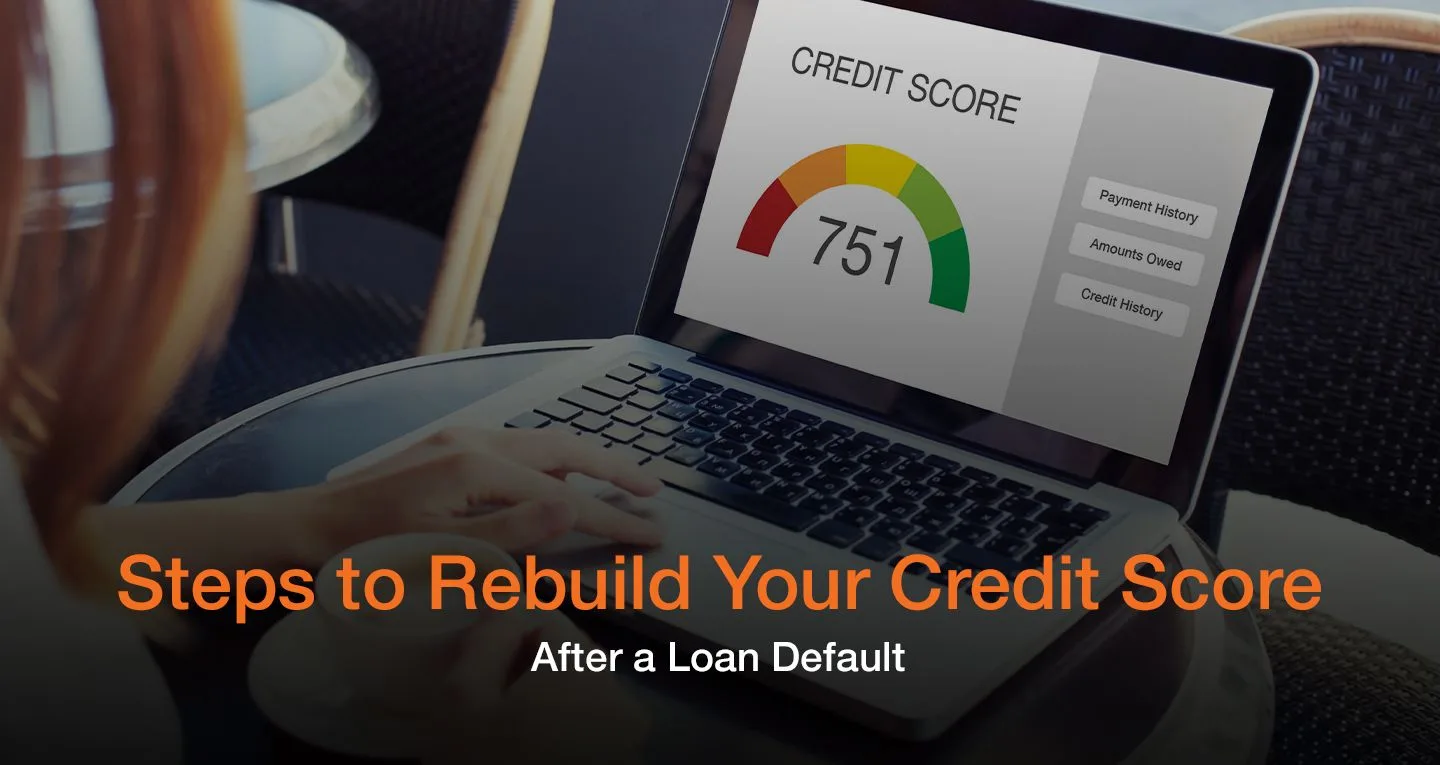
Personal Loan Options for a 550 CIBIL Score in India
What is a personal loan for a CIBIL score of 550? Getting a personal loan with a CIBIL score of 550 is possible but difficult. Most banks reject applications below 650 automatically. At 550, unsecured personal loans are available mainly through select NBFCs (non-bank loan companies) at high interest rates, typically 24%–36% per year. Gold loans and FD-backed loans remain accessible at any score, at far lower rates.
Mohit Juneja
Reviewed by FREED India, SEO Intern
 4.7/5
4.7/5 ₹3,200Cr+
 20,000+
 20,00,000+4.7/5₹3,200Cr+20,000+20,00,000+
Key summury

A CIBIL score of 550 is classified as subprime, below the 650 threshold most NBFCs set and well below the 700–750 minimum most banks require for unsecured personal loans.
Many banks may have stricter eligibility criteria for applicants with weaker credit profiles, although requirements vary by lender. NBFCs and select digital lenders are the main route for unsecured credit at this score.
At lower CIBIL scores, NBFCs that do lend typically charge higher interest rates than they would for stronger credit profiles. Rates vary by lender and depend on your overall credit profile, income, and repayment history. If the score drop came from existing loans that are already hard to manage, a new high-interest loan typically makes things worse, not better.
Gold loans require no minimum CIBIL score. Rates start from 8.25% per year at major banks as of June 2026.
If the 550 score came from existing loans that are already hard to manage, a new high-interest loan typically makes things worse, not better.
What Does a CIBIL Score of 550 Actually Mean?
CIBIL scores run from 300 to 900. A score of 550 puts you in the subprime band. That means automated systems at most banks flag your application as high risk before a human reviewer ever sees it.
Here is how the bands work in practice:
- 750 and above: Most banks approve personal loans without difficulty.
- 650–749: Acceptable to most NBFCs. Some banks will also consider.
- Below 650: Most approvals stop here.
- 550: Closer to the 500 floor than the 650 threshold. Even NBFC options are limited.
There is something important that most articles on this topic miss. There are two very different kinds of people with a 550 CIBIL score.
The first is someone whose score dropped because of a rough patch, a job loss, a medical emergency, or a period of instability. The situation has since improved, but the score still reflects the old damage.
The second is someone whose score is at 550 because existing loans are still unmanageable and payments are still being missed today.
These two situations call for completely different responses. A new loan may be appropriate for borrowers whose financial situation has stabilised and who meet the lender's eligibility criteria. A new loan may help the first person bridge a gap while the score recovers. For the second person, adding a new high-interest loan on top of already unmanageable debt almost always makes the situation worse.
A missed EMI appears on your CIBIL report and can significantly affect your credit profile. A 90-day default (when a loan is marked as bad by the bank after 90 consecutive days of missed payments) typically causes more lasting damage to how lenders assess your application.

Is 550 the Score Keeping You Stuck?
Talk to a FREED counsellor. Free, confidential, no commitment.
Book My Free CallWhy Does a 550 CIBIL Score Make Personal Loan Approval So Difficult?
A personal loan is unsecured. The bank has no assets to recover if you cannot pay for a house, no gold, no vehicle. Their only protection is your track record of repaying past debts.
A 550 CIBIL score tells the bank that the track record has problems. Common reasons a score sits at 550:
Multiple missed EMIs on existing loans or credit cards in the last 12 to 24 months
A loan or credit card account marked as bad by the bank (after 90 consecutive days of missed payments)
Credit card usage consistently above 75%–80% of the card limit
A previous loan showing "Settled" on the credit report, which signals to future banks that the full amount was not repaid
Most banks use automated scoring systems. At 550, the application is rejected without a human reviewing it. NBFCs have more flexibility. They look at additional signals such as income, bank statement cash flow, and employment type. But even NBFCs get cautious below 600.
Late payments stay on a CIBIL report for up to 7 years from the date of default. And since January 2025, banks and NBFCs now report to credit bureaus every 15 days. A missed payment shows up on your report much faster than it used to.
High credit utilisation may influence how lenders assess your credit profile. It is also one of the easiest to fix once you know it.

What Personal Loan Options Are Available with a 550 CIBIL Score?
Here are the options that exist at 550, ordered from lowest cost and risk to highest. None should be treated as a recommendation. Use these as a framework to evaluate any offer you receive.
1. Gold loan
No minimum CIBIL score required. The bank or NBFC looks at the value and purity of your gold, not your credit history. As of April 2026, RBI's tiered LTV (loan-to-value, meaning the percentage of your gold's market value the bank will lend you) is 85% for loans below Rs. 2.5 lakh, 80% for Rs. 2.5 to 5 lakh, and 75% for amounts above Rs. 5 lakh. Rates start from 8.25% per year at major banks as of June 2026. Same-day disbursal is common.
One important caveat: a gold loan is a secured loan. If you cannot repay, the bank can auction the pledged gold after a notice period. Secured loans are outside FREED's settlement scope.
2. Loan against fixed deposit (FD)
If you have an existing FD, you can borrow up to 90% of its value at the FD rate plus 1%–2%. No CIBIL check. This is the cheapest credit available in India at any score level. The catch: it is only available if you have an FD sitting idle.
3. NBFC personal loan (unsecured, income-based assessment)
Some NBFCs and digital lenders approve below 650 CIBIL if your income is stable, employment is verified, and the loan amount requested is small. At 550 CIBIL, typical rates run from 24%–36% per year. Loan amounts are usually Rs. 25,000 to Rs. 1 lakh with a repayment period of 12 to 24 months.
Before signing anything: every RBI-registered NBFC must provide a KFS (Key Fact Statement, a document showing the real APR, all fees, and your repayment schedule) before the loan is sanctioned. Processing fee is typically 1%–3% of the loan amount, plus 18% GST on the fee. If a platform does not provide a KFS before you sign, do not proceed.
4. Co-applicant route
Adding a family member, such as a spouse, parent, or sibling, A co-applicant with a stronger credit profile can improve how lenders assess a joint application. The loan is a shared obligation. If you miss payments, the impact falls on both credit profiles. Understand this fully before adding anyone. The loan is assessed jointly. Rates are tied to the co-applicant's profile. If you miss payments, the co-applicant's CIBIL score is also affected. This must be understood before adding anyone.
5. Existing bank relationship
If you hold a salary account, recurring deposit, or long-standing account with a bank, that bank may extend a small loan based on your transaction history and account conduct. Worth trying before approaching a new bank or NBFC. Not guaranteed.
Personal Loan Options at a CIBIL Score of 550: at a Glance
Option | CIBIL Score Needed | Typical Rate | Loan Amount | Key Caveat |
Gold loan | None, gold value decides | 8.25%–9.30% per year (banks) | Rs. 20,000–Rs. 50 lakh | Gold can be auctioned if you default. Secured loan, outside FREED scope. |
Loan against FD | None | FD rate + 1%–2% | Up to 90% of FD value | Only available if an FD exists |
NBFC personal loan | 550+ with stable income | 24%–36% per year | Rs. 25,000–Rs. 1 lakh typically | Read the KFS carefully. High rate means high total cost. |
Co-applicant route | Co-applicant needs 700+ | Tied to co-applicant profile | Varies | Default affects co-applicant's CIBIL too |
Existing bank relationship | Bank's discretion | Varies | Small amounts typically | Not guaranteed. Depends on account history. |
These are general indicators. Final terms vary by bank or NBFC. FREED is not a Loan Provider. No outcome is guaranteed. Please verify directly with your bank or NBFC.

What the Law Says
Under RBI Digital Lending Directions (2025), every RBI-registered bank and NBFC must provide a Key Fact Statement (KFS) showing the full Annual Percentage Rate, all fees, and the repayment schedule before any loan is sanctioned. If a platform does not provide this before you sign or accept the loan, it may not be RBI-registered. Do not proceed.
Talk to FREEDWhat Does a Personal Loan Actually Cost at a 550 CIBIL Score?
This is where most articles stop short. They list the options. They don't show you what you'll actually pay.
Here is the same Rs. 2 lakh loan over 2 years at three different rates the rate a 750+ borrower gets, the lower NBFC rate at 550, and the higher NBFC rate at 550.
Rs. 2 Lakh Personal Loan Over 2 Years: Total Cost by CIBIL Score
CIBIL Range | Typical Rate | Monthly EMI (approx.) | Total Interest (approx.) | Total Repayment (approx.) |
750+ (banks) | 12% per year | Rs. 9,415 | Rs. 25,960 | Rs. 2,25,960 |
650–700 (NBFCs) | 24% per year | Rs. 10,641 | Rs. 55,384 | Rs. 2,55,384 |
550 CIBIL (select NBFCs) | 36% per year | Rs. 11,957 | Rs. 86,968 | Rs. 2,86,968 |
Indicative figures based on reducing balance calculation. Actual rates and EMIs depend on each bank or NBFC's assessment. Processing fee, GST, and other charges are additional. Verify all terms directly before signing.
At 36% per year, you pay back approximately Rs. 2.87 lakh for a Rs. 2 lakh loan. That's Rs. 61,000 more in interest alone At 36% per year, you pay back approximately Rs. 2.87 lakh for a Rs. 2 lakh loan. That is Rs. 61,000 more in interest alone compared to what a borrower with a stronger credit profile may pay for the same loan. Actual rates depend on the lender's assessment and your overall credit profile.
Add the processing fee. At 2% on Rs. 2 lakh: Rs. 4,000 upfront, plus 18% GST of Rs. 720. Total upfront cost: Rs. 4,720 before you receive a rupee.
One more check before you apply: add up all your existing EMIs and divide by your take-home monthly salary. This is how much of your salary already goes toward EMI repayments. If a significant share of your monthly income is already committed to EMIs, carefully assess whether taking on additional debt is affordable.
Score at 550 and Not Sure What to Do?
Talk to a FREED counsellor. Free, confidential, no commitment.
Book My Free CallWhen Should You Not Take a Personal Loan at a 550 CIBIL Score?
This is the section most articles skip. It matters more than the list of options.
There are three situations where you should not take a new personal loan at 550 CIBIL, even if one is approved.
When existing loans are already causing missed payments. If your 550 score came from loans you are already struggling to repay, a new loan adds a fresh EMI on top. This makes default more likely across all your accounts, not less.
When your existing EMI burden already exceeds 40% of your take-home salary. A new loan at 36% per year adds another EMI. That pushes your total repayment burden past 50%, which is the point where repayment becomes genuinely dangerous.
When the plan is to use the new loan to pay off missed EMIs on old loans. This creates a cycle. The new loan covers the shortfall today, but adds more debt for tomorrow. The total outstanding keeps growing even as new credit is taken.
The honest message: if the reason your CIBIL score is at 550 is existing debt you cannot manage, the right conversation is not about a new loan. It is about what to do with the debt you already have. That is where FREED can genuinely help.
How to Apply for a Personal Loan with a 550 CIBIL Score, Step by Step
If gold is available, a gold loan is almost always the better choice at this score: cheaper rate, no CIBIL check, same-day disbursal. If you have an FD, borrow against it first. These steps are for the NBFC unsecured route only when neither secured option is available.
Step 1: Check your CIBIL report before applying anywhere
Download your free annual report at cibil.com. Look for errors: a closed loan still showing as "Active," a paid EMI still marked "Overdue," or an account you don't recognise. Dispute any errors directly with CIBIL. Correcting reporting errors helps ensure lenders assess accurate credit information. Fixing an error can lift your score before the first application goes in. It costs nothing.
Step 2: Check how much of your income already goes to EMIs
Add up all current EMI payments and divide by your take-home monthly salary. If this is already above 40%, a new loan EMI will push your total repayment burden to a risky level. Fix the existing burden first.
Step 3: If gold or FD is available, use that first
A gold loan at 8.25%–9.30% per year with no CIBIL check is always cheaper than an NBFC personal loan at 24%–36%. If an FD exists, borrow against it at the FD rate plus 1%–2%. Only if neither is available should the NBFC unsecured route be considered.
Step 4: Find 1–2 NBFCs that approve at 550 CIBIL with stable income
Research before applying. Multiple applications in a short period may affect how lenders assess future applications. This can drop the score by another 25–50 points. Identify the right 1–2 options first, then apply.
Step 5: Prepare your bank statement this carries more weight than the score
Your last 6 months of bank statements showing consistent salary credits matter more than your CIBIL score at this level. Avoid zeroing out the account after every salary credit. If you are self-employed, have ITR filings or GST returns ready to show that income is real and regular.
Step 6: Read the KFS before agreeing to anything
Every RBI-registered NBFC must provide a KFS (Key Fact Statement a document showing the real APR, all fees, and the repayment schedule) before the loan is sanctioned. Check the processing fee, bounce charge, and prepayment penalty. If no KFS is offered, do not proceed. FREED can help review loan terms and documents if needed.

What Are Your Options If Existing Debt Is the Real Problem?
If your 550 score came from loans you can no longer manage, a new loan is not the answer. Here is the right order of steps.
Talk to your bank first. Ask if the existing loan can move to a lower EMI or a longer repayment period. Banks do offer this for borrowers in genuine difficulty. It keeps your account current and helps keep the account in good standing where possible.
Convert credit card outstanding to an EMI plan. Most banks will convert a large credit card balance to a fixed monthly EMI at a lower rate than the standard card rate. Ask your bank directly.
Merge all loans into one lower monthly payment. This is called debt consolidation (merging all your loans into one new loan, explained in brackets). One payment, one bank, one due date, at a lower combined EMI. FREED's Loan Consolidation Plan handles this for borrowers who are still paying but struggling to keep up.
Balance transfer once your score reaches 670 or above. Once the score improves, moving a high-interest loan to a lower-rate bank becomes possible.
If all of the above have been tried and repayment is genuinely impossible, loan settlement may be worth discussing for unsecured loans only: personal loans, credit cards, BNPL, loan apps. This does not apply to home loans, car loans, or gold loans.
How Loan Settlement Helps When Repayment Has Become Genuinely Impossible
Settlement is not something a borrower chooses out of preference. Banks and financial companies only consider it when you are in genuine financial difficulty and are truly unable to repay the full amount. It is a last resort, not a shortcut.
When someone has tried changing their repayment plan, looked at consolidation, and still cannot keep up, settlement is the remaining option for unsecured debt. That includes personal loans, credit cards, BNPL, and loan apps. It does not apply to secured loans like home loans, car loans, or gold loans.
In a settlement, the bank agrees to accept a one-time payment that is less than the total amount owed. FREED helps borrowers settle their unpaid/overdue loans at up to 50% less.* The exact figure ultimately depends on your bank.
The cost to know about: the "Settled" mark stays on your CIBIL report for up to 7 years. This affects future credit access. Settlement is not a clean exit. It is an honest exit when nothing else works.
FREED handles the paperwork, prepares the documents, drafts the settlement letters, and manages the back-and-forth with the bank. A counsellor explains what to expect at every stage.
Rates and ranges shown are indicative. Final terms decided by the bank. FREED is not a Loan Provider. No outcome is guaranteed. Please verify directly with your bank.
Are You in a Loan Trap? Quick Check
Move the slider to your total EMIs as a % of monthly salary. See your debt stress level instantly.
EMIs as % of Monthly Salary
How to Improve a 550 CIBIL Score Before Applying for a Personal Loan
If you have decided to fix the score before borrowing, that is the right call. Here is what actually moves the number.
Pay every current EMI on time, starting this month. Maintain responsible credit utilisation. One month of on-time payment will not fix a 550 score overnight. But every missed payment from here makes recovery slower.
Keep credit card usage below 30% of the card limit. If your card limit is Rs. 1 lakh and you consistently use Rs. 75,000 of it, your score takes a hit every month. Bring usage below Rs. 30,000 and keep it there.
Do not apply for any new credit during the recovery period. Every application creates a hard enquiry that may be considered by lenders during future credit assessments. At 550, you cannot afford more enquiry damage while trying to rebuild.
Check your report 45 days after clearing any overdue amount. Banks now report to credit bureaus every 15 days, so improvements reflect faster than they used to. If a cleared overdue is still showing as unpaid after 45 days, raise a dispute with CIBIL directly.
There is no shortcut. But every month of clean repayment moves the score in the right direction.

550 CIBIL Score and Existing Loans Getting Harder to Manage?
Talk to a FREED counsellor. Free, confidential, no judgement.
Book My Free Call

Mohit Juneja
Mohit Juneja writes educational content at FREED on debt management, credit scores, loan repayment, and borrowing best practices. His content is shaped by expert insights and industry knowledge, helping readers better understand their financial options and make informed decisions.
mohit.juneja@freed.care

FREED is India's trusted loan management platform. Founded in 2020 and headquartered in Gurugram, FREED has counselled 20 lakh+ people on personal loans, credit cards, and app loans. FREED charges fees only on successful settlement, not upfront. FREED does not handle secured loans (home loans, car loans, gold loans).
Media Mentions