How Personal Loan Eligibility Depends on CIBIL Score
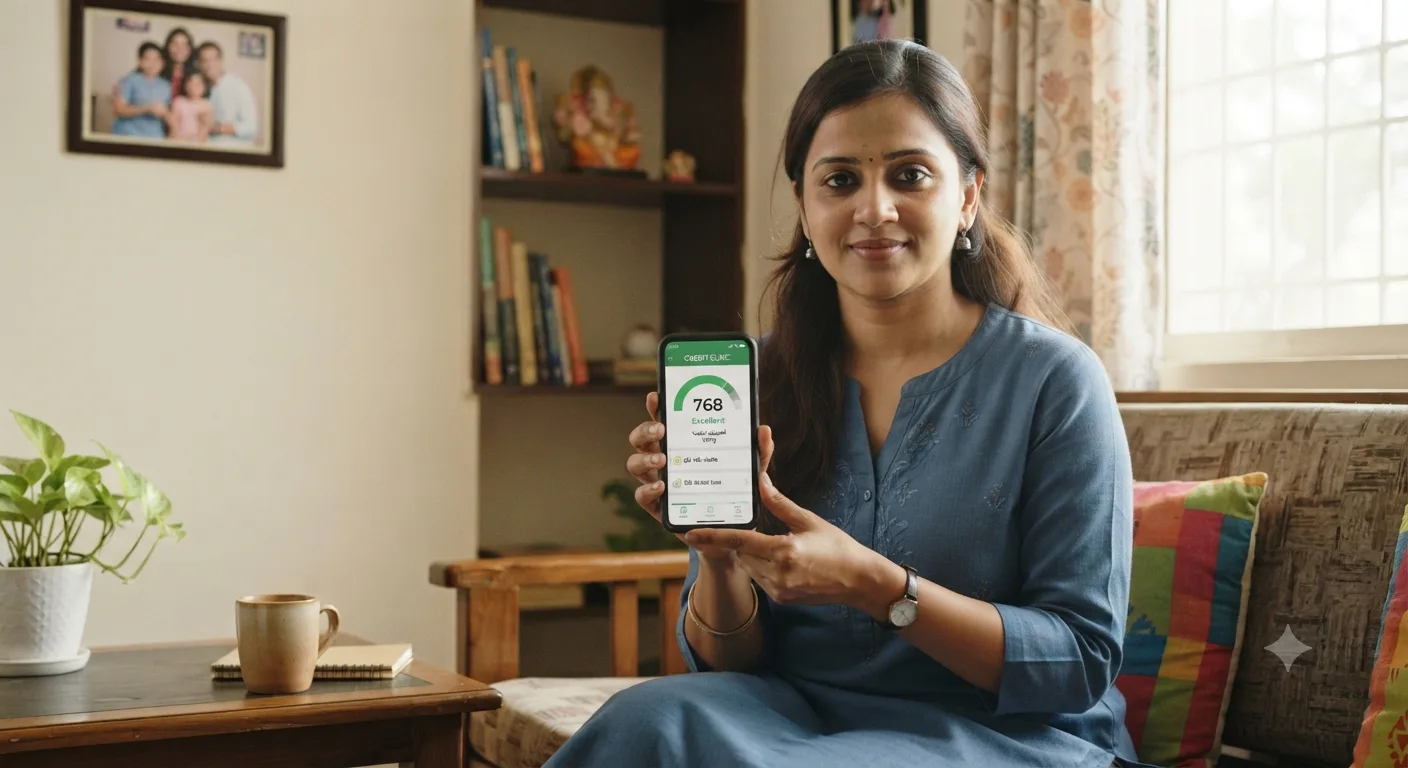
Your personal loan eligibility based on CIBIL score comes down to one number banks check first: your 3-digit score, somewhere between 300 and 900. A score of 750 or above usually means faster approval and a better rate. Below 650, most banks hesitate, and you may need to look at an NBFC or bring in a co-applicant. But the score alone doesn't decide anything. Your income, your existing EMIs, and your job type get checked right alongside it.
Mohit Juneja
Reviewed by FREED India, Debt Resolution Specialists
 4.7/5
4.7/5 ₹3,200Cr+
 20,000+
 20,00,000+4.7/5₹3,200Cr+20,000+20,00,000+
Key Takeaways

Borrowers with stronger credit profiles generally qualify for more competitive interest rates and loan terms, depending on the lender.
Banks look at four things together: CIBIL score, income, FOIR (how much of your salary already goes to EMIs), and employer category.
Some NBFCs will consider applicants at 650+. Banks usually want 700 or above.
FOIR above 50% of your take-home salary can sink an application even when your score is strong.
Every formal loan application creates a hard enquiry that future lenders may consider during credit assessment.
What Is a Good CIBIL Score for a Personal Loan?
Nothing below 750 is automatically "bad," and nothing above it is an automatic yes. But the score does sort applicants into rough bands that most lenders use as a first filter.
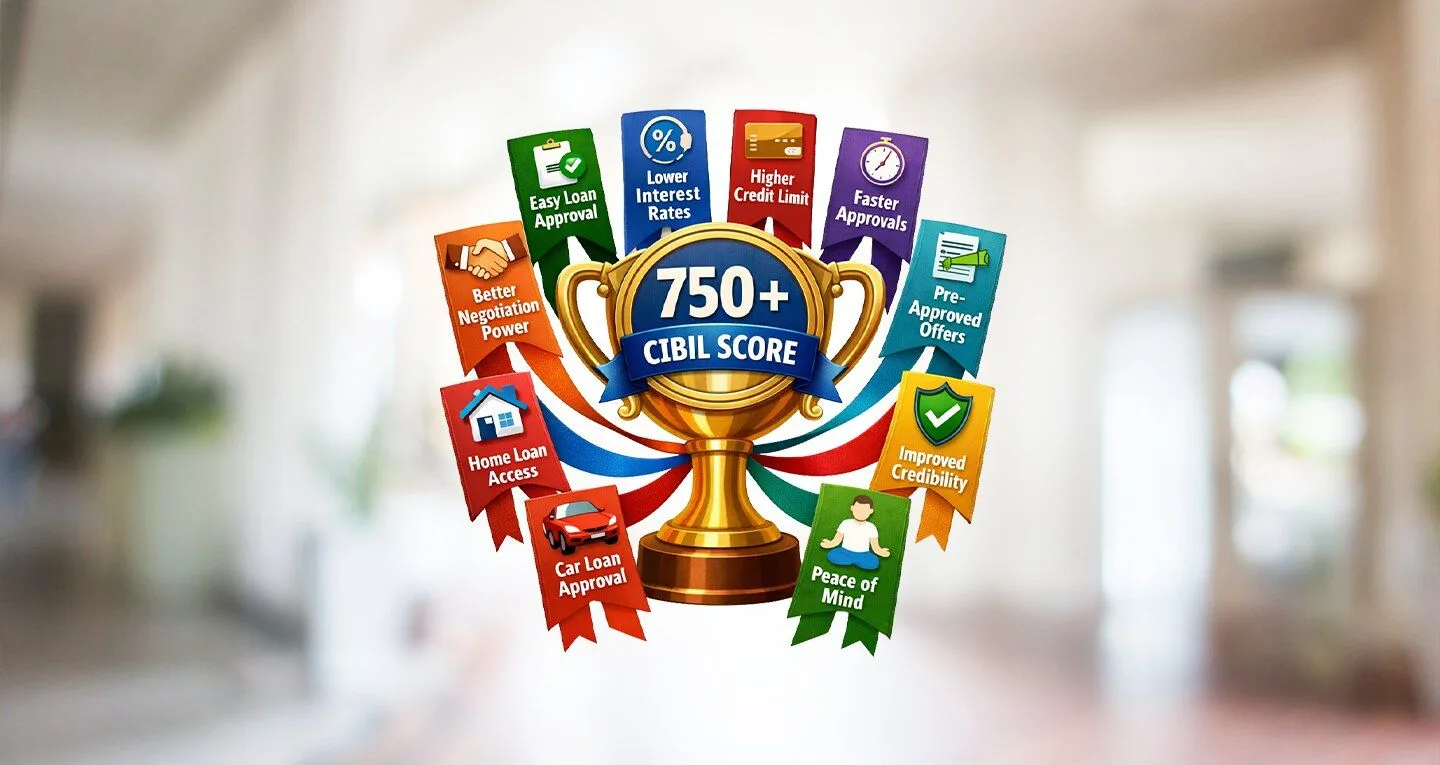
A score of 750 and above usually places you in the best pricing tier: quicker approval, larger loan amounts on offer, and access to the lower end of a bank's interest rate range. Between 700 and 749, you're still in reasonably good shape. Approval is likely, though the rate offered may sit a bit higher than what a 750+ applicant gets. Between 650 and 699 is where things start to tighten. Banks may still lend, but usually at a higher rate, a smaller amount, or with extra conditions attached. Below 650, a straightforward bank approval becomes difficult. Most people in this band end up looking at NBFCs, secured options, or a co-applicant with a stronger score.
Here's the part that surprises a lot of people: there's no single, official minimum CIBIL score for a personal loan that applies across every bank. Each lender sets its own internal floor based on its own risk appetite, and that number isn't published anywhere. One bank's cutoff might sit at 700, another's at 720, and a smaller NBFC might work with 650 if the rest of your profile is solid. So when someone asks "what's the minimum score I need," the honest answer is: it depends on who you're asking.

Comparison: CIBIL Score Bands and Personal Loan Approval Odds
Why Does CIBIL Score Affect Loan Approval?
Think of your CIBIL score as a report card, except the subject is money you've already borrowed and how consistently you paid it back. Banks didn't invent this system to judge you personally. They use it because they're about to hand over their own money, and they need some way to estimate the risk before they do.
The score is built from a handful of factors, and no single one of them dominates on its own. Repayment history carries the most weight: did your EMIs and card bills go out on time, or did some slip. Credit utilisation, how much of your available card limit you're actually using, matters too. Someone using ₹45,000 out of a ₹1,00,000 card limit is sitting at 45% utilisation, which is already past the level lenders consider comfortable. Credit mix (a blend of secured and unsecured credit tends to read better than only credit cards), the age of your oldest credit account, and the number of times you've applied for new credit recently all feed into the final number.
None of this is about whether you're a "responsible" or "irresponsible" person. It's closer to how a bank reads a spreadsheet than how a person reads your character. A rough patch that affected repayment for a few months will show up in the score. It doesn't erase everything else you've done right, and it isn't a permanent verdict either. Credit reports are updated as lenders report repayment information to the credit bureaus.

FREED Expert Tip
Check your CIBIL report for free before you apply anywhere. Submitting multiple loan applications creates multiple hard enquiries that future lenders may consider during credit assessment.
See your full credit picture firstSigns Your CIBIL Score May Hurt Your Loan Application
A few patterns tend to show up together whenever an application gets rejected on credit grounds. None of them, alone, guarantees a rejection. But if more than one applies to you, it's worth checking your report before you submit anything.
Missed or late EMIs are the most direct hit. Recent missed repayments and high credit utilisation may influence how future lenders assess your credit profile.
High credit utilisation, generally anything above 30 to 40% of your card limit, signals to a lender that you may already be stretched thin. Keeping utilisation lower is generally considered a good credit-management practice that supports a stronger credit profile, even when every bill technically gets paid, because it changes how risky your existing debt load looks on paper.
Too many recent loan or credit card applications in a short window each trigger a hard inquiry, and a cluster of them close together reads as a red flag, as if you're actively hunting for credit because something has gone wrong.
A "Settled" or "Written Off" tag anywhere on your report is one of the heavier flags a bank sees. It tells them a previous lender accepted less than the full amount owed, or gave up trying to recover it, and new lenders read that as elevated risk on any fresh application.
And FOIR above 50% of your take-home salary, meaning more than half your monthly income is already committed to existing EMIs, can sink an otherwise decent application on its own, independent of what your score says.
How Banks Check Personal Loan Eligibility, Step by Step
The exact process varies a little from one bank to the next, but the general sequence is fairly consistent across the industry.
- 1
The bank pulls your CIBIL report.
This happens as soon as you submit an application, using your PAN as the identifier. This single pull is what determines every step that follows.
- 2
Your score gets checked against the bank's internal band.
Where you land, excellent, good, fair, or poor, decides whether you clear the first filter at all, and roughly what interest rate range you'll be offered if you do.
- 3
FOIR gets calculated.
The bank adds up everything you're currently paying toward existing EMIs and credit card minimums, then checks what percentage of your net monthly income that represents. Most banks want this to stay under 50 to 55%, though the exact comfort level differs by lender and by how much you earn overall.
- 4
Employment and job stability get reviewed.
Salaried applicants are generally viewed as lower risk than self-employed ones, largely because income is easier to verify. Time spent at your current employer and industry type both factor in here too.
- 5
Age is checked against the bank's lending window.
For salaried applicants, this is typically 21 to 60 years. Self-employed applicants sometimes see a slightly different range depending on the lender.
- 6
The bank decides on amount, tenure, and rate.
Everything from the previous steps gets combined into one final call: how much you can borrow, over what period, and at what interest rate. A strong score with a clean FOIR usually gets the best combination. A strong score paired with a high FOIR often gets a smaller amount or a flat rejection, even though the score itself looked fine.

What the Law Says
RBI's Master Direction on Credit Information Reporting, 2025 requires credit bureaus to send you an SMS or email alert every time a bank or NBFC pulls your CIBIL report. The same rules also entitle you to one full credit report, including your score, free every year, just by requesting it. You don't have to wait for a rejection to know who's been checking your file.
Check Your Options
Beyond CIBIL: What Else Decides Your Loan Amount
A high score gets your application taken seriously. It doesn't decide the outcome by itself.
Income sets the ceiling on what you can realistically borrow, independent of score. A ₹40,000 monthly salary and a ₹1,20,000 salary don't get offered the same loan amount even with identical scores, because the bank is sizing the loan against your capacity to repay it, not just your history of repaying past debt.
Existing EMI load works against you even when the score is excellent. Here's a concrete case: someone earning ₹40,000 a month with a 780 CIBIL score, easily "excellent" by any bank's standard, is already paying ₹24,000 a month across two ongoing loans. That's a FOIR of 60% before a single new rupee is borrowed. Add a new personal loan EMI of even ₹5,000, and the FOIR crosses 70%. Most banks will decline this application, not because of the score, but because the income simply can't absorb one more commitment safely.
Employer stability and credit mix round out the picture. A salaried applicant at a well-established company with two years in the role generally reads as lower risk than someone recently self-employed, even at the same score and income. A mix of loan types on your report (say, one personal loan and one credit card, both handled well) tends to read better than five open credit cards and nothing else.
Age matters too, mostly at the edges. A 24-year-old with a short credit history and a 58-year-old close to typical retirement age both face extra scrutiny, for different reasons: one has limited data for the bank to judge by, the other has a shrinking window of working income ahead.
None of these factors override the others completely. They're weighed together, which is exactly why two people with the same CIBIL score can get very different offers, or why one gets approved and the other doesn't.
What Are Your Options If CIBIL Score Is Low or FOIR Is High
If your score isn't where you'd like it, or your FOIR is already stretched thin, jumping straight to a settlement conversation isn't the right move here. That's a different situation entirely, meant for people who genuinely cannot repay what they owe. If you're still managing your EMIs, even if it's tight, there are steps before that.
Balance transfer is usually the first thing worth checking if your score is reasonably healthy but you're paying a high rate on one existing loan. Moving that loan to a bank offering a lower rate can reduce what you pay each month, without touching your overall debt structure.
Debt consolidation is the next step, and it's built specifically for people juggling multiple loans and credit card dues across different banks, different due dates, and different EMI amounts. Instead of tracking three or four separate payments every month, all of it gets replaced by a single new loan that pays off the existing debts at once, leaving you with one EMI, one lender, one due date. For someone whose FOIR is high mainly because of scattered, smaller obligations rather than one large unaffordable loan, this is often the difference between constantly feeling behind and actually having room to breathe.
Both of these are meant for people who are still paying, just paying too much, in too many directions, at once. If you've already missed a couple of EMIs and you're not sure where you stand, the honest next step isn't guessing. It's getting your situation assessed properly.

How FREED Helps If Your Existing EMIs Are Blocking a New Loan
FREED's Debt Consolidation Program may combine eligible unsecured debts into a single repayment, depending on the approved loan amount, tenure, and lender terms. What you're left with is a single EMI, to a single lender, on a single date, and that EMI is lower than the combined total you were paying across multiple loans before.
This is not the same thing as settlement, and it's important to keep the two apart. Consolidation is generally viewed as responsible repayment management, since your outstanding accounts drop and your on-time payment history on the new, single loan starts building, which supports future lender assessments over time.
FREED charges you no fee for this service; any processing or foreclosure cost involved sits with the lending partner, not with FREED. If you're not sure whether you'd qualify, that's a normal thing to be unsure about. FREED's team can look at your situation on a free call and tell you where you stand, rather than you having to guess from a blog post.
Are You in a Loan Trap? Quick Check
Move the slider to your total EMIs as a % of monthly salary. See your debt stress level instantly.
EMIs as % of Monthly Salary
Tips to Improve Loan Eligibility Before You Apply
None of these are quick fixes, but each one supports good credit-management practice, and together they add up faster than people expect.
Pay every due on time, without exception, going forward. This sounds obvious, but recent payment behaviour carries more weight in the score than older history, so consistency over the next few months matters more than you'd think.
Keep credit card utilisation under 30% of your limit wherever possible. If your limit is ₹1,00,000, try to keep the running balance under ₹30,000 rather than letting it climb close to the cap, even if you're paying it off in full each month.
Space out loan or card applications instead of applying to several lenders in the same window. Each application triggers a hard inquiry, and a cluster of them within a short period reads as a warning sign even if every application was for a legitimate reason.
Check your report for errors before you apply anywhere. Wrong account details, an account that isn't yours, or a loan shown as active when you've already closed it can all drag your score down for no real reason, and correcting these can sometimes lift your score without you changing a single financial habit.
Reduce your existing EMI load where you reasonably can before applying for anything new. Closing a small personal loan a few months early, or paying down a card balance that's been sitting high, directly improves your FOIR and gives a new application a much better shot.

Mohit Juneja
Mohit Juneja writes educational content at FREED on debt management, credit scores, loan repayment, and borrowing best practices. His content is shaped by expert insights and industry knowledge, helping readers better understand their financial options and make informed decisions.
mohit.juneja@freed.care

FREED is India's trusted loan management platform. Founded in 2020 and headquartered in Gurugram, FREED has counselled 20 lakh+ people on personal loans, credit cards, and app loans. FREED charges fees only on successful settlement, not upfront. FREED does not handle secured loans (home loans, car loans, gold loans).
Media Mentions