One-Time Settlement of Credit Card Dues: Step by Step
One-time settlement of credit card dues means you and the bank agree on one amount, you pay it in a single payment, and the bank accepts it as settling what you owe. The bank has to agree, and your report will show the account as Settled.

Mohit Juneja
Reviewed by FREED India, Debt Resolution Specialists
 4.7/5
 ₹3,200Cr+
 20,000+
 20,00,000+4.7/5₹3,200Cr+20,000+20,00,000+
Key Summary

A one-time settlement (paying once, as agreed) is a written deal with the bank, not a phone promise.
The usual order is: gather papers, write to the bank, get the offer in writing, pay, then collect the settlement letter.
RBI's 2025 directions say a compromise settlement isn't a matter of right. The bank decides.
Pay only through the bank's own channels, and only after you hold the offer in writing.
Your report will show Settled. CIBIL says that affects your access to credit in the future.
Keep every paper. You'll need them if the report is wrong later.
What Is One-Time Settlement of Credit Card Dues?
One-time settlement of credit card dues means you and the bank agree on one amount, you pay it in a single payment, and the bank accepts it as settling what you owe. The bank has to agree, and your report will show the account as Settled.
A one-time settlement of credit card dues is a deal where you pay the bank one amount, once, and the bank agrees to treat the card dues as settled. The amount is less than the full balance.
RBI's 2025 directions call this a compromise settlement: a negotiated arrangement to fully settle the bank's claims in cash. Same idea, formal wording.
It's meant for people who've reached a point where paying in full has become genuinely hard. It isn't a way to skip a bill you can pay.
How Does One-Time Settlement of Credit Card Dues Work, Step by Step?
Here's the usual order. Banks differ in the details, so treat this as a map, not a rulebook.
Check what you owe. Get the latest statement. Note the principal, the interest and the late fees separately.
Write down why you can't pay. Job loss, a pay cut, illness, a family emergency. Keep proof where you have it.
Work out the lump sum you can raise. Be honest. A promise you can't keep makes things worse.
Write to the bank. Send a short request by email and keep the sent copy.
Wait for the bank's reply in writing. It may accept, counter or refuse.
Read the offer line by line. Check the amount, the last date to pay and what it says happens to the account.
Pay in one go, through the bank's own channel. Keep the receipt.
Collect the settlement letter. Check that it says the account is settled and that nothing more is due.
If the money can't be paid in one go, RBI says a settlement payable over more than three months is treated as restructuring. That's a different path, with different rules.

Not Sure Which Option Fits You?
Open the FREED app, add your details and see which plan fits you.
See My Options on FREEDWhat Papers Do You Need for a One-Time Settlement?
The bank won't ask for the same papers every time. But having these ready saves days:
Your latest credit card statement and the last 6 months of statements.
Your ID and the card number's last four digits.
Proof of the change in income: a termination letter, salary slips before and after, or medical bills.
Your last 3 to 6 months of bank statements.
Every notice, email and message from the bank, in date order.
Put them in one folder, on paper and as scans. You'll use the same folder if you ever need to raise a dispute.
What Should Your Settlement Request Say?
Keep it short and factual. Here's an outline you can copy.
Subject: Request for settlement of credit card account ending [last four digits].
Who you are: your name, the card's last four digits, your registered phone number.
What happened: two or three sentences on what changed in your income, with dates.
What you can pay: one amount, in one payment, and by when.
What you want back: a written reply, and a settlement letter after payment.
Attachments: list them.
Don't write long stories. Don't threaten. And don't admit anything beyond the facts. Send it to the branch or the grievance email on the bank's site, and keep the sent copy.
What Should the Settlement Letter Say?
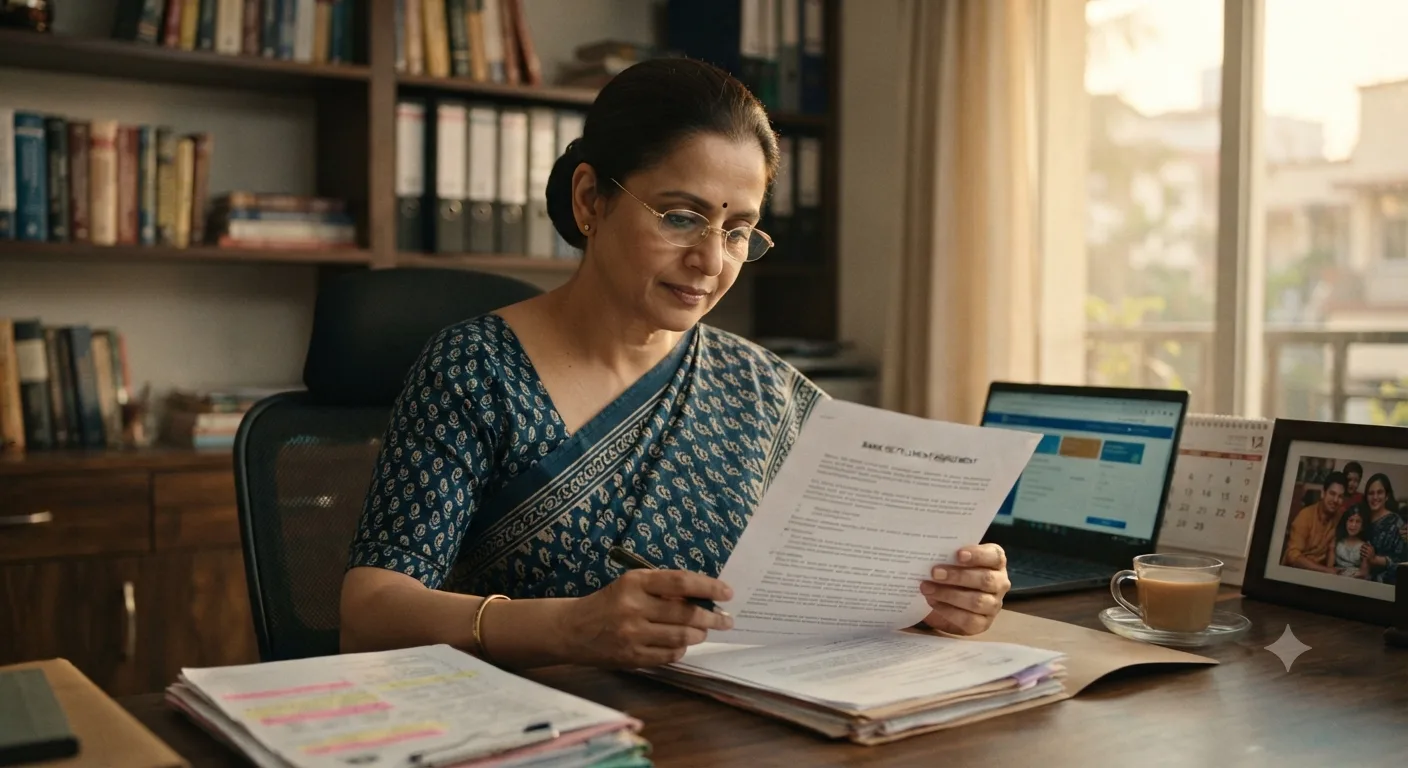
The settlement letter is the paper that matters most. Read it before you pay, and again after. A clear letter usually carries:
The card account it covers.
The exact amount you'll pay, and the last date to pay it.
A line that the account will be treated as settled once you pay.
A line that nothing else is due on that account.
The bank's name, date and an authorised signature.
This list is our checklist, not an RBI form. Banks word these letters differently. If something looks missing, ask the bank to add it before you pay.
See Your Credit Report First
Check your credit report with FREED Credit Insights.
Check My Credit Insights
What If the Bank Refuses or Counters Your Settlement Request?
That can happen. RBI's 2025 directions say a compromise settlement is not a matter of right, so the bank can say no.
If the bank counters with a higher amount, don't answer on the phone. Ask for the counter in writing, work out what you can really pay, and reply with one figure.
If the bank refuses, ask for the reason in writing. Then check whether anything has changed that you could show: a new job loss letter, a medical bill, a lower income. You can ask again with new proof.
How Long Does a One-Time Settlement of Credit Card Dues Take?
There's no fixed timeline we could verify. It depends on the bank, how long the account has been overdue and how fast you reply.
What you can control: reply on the same day, keep your papers ready, and ask the bank for a date by which it will respond. Note that date and follow up in writing if it passes.

What the Law Says
Under RBI's 2025 directions, a one-time settlement means clearing your dues in cash for an agreed amount. It isn't your right, and if it's paid over more than three months, it's treated as restructuring.
Check My EMI ScoreWhat Happens After You Pay a One-Time Settlement?
After you pay, three things should follow. You get the settlement letter. The bank updates your account status with the credit bureaus. And the dues on that account are treated as settled, so there should be no further recovery activity for it.
Check each one. If the letter doesn't arrive in the time the bank promised, write and ask. If calls continue for an account you've settled, keep a log and complain in writing.
How Do You Check Your Credit Report After a One-Time Settlement?
Wait a few weeks, then pull your credit report.
Find the card account. Check the status, the amount and the dates.
If something is wrong, raise an online dispute with the bureau and attach the settlement letter and payment receipt.
Follow up. CIBIL's FAQ says an online dispute takes about 30 days.
You can get one Free Full Credit Report a year from each credit bureau, as RBI requires. Use it, then check again in a few months.
Can the Bank Keep Calling You While You Talk About a One-Time Settlement?
Recovery calls can continue until the dues are repaid or settled. But the calls have rules. RBI's August 2022 instructions bar intimidation and harassment, bar calls before 8 am and after 7 pm, and bar threatening or anonymous calls and false statements.
From 1 January 2027, RBI's new rules for commercial banks (RBI/2026-27/223) add more: calls must be logged and recorded, and a borrower's request to avoid a particular time should be honoured in normal circumstances.
Keep a log of every call. Date, time, number and what was said. It helps if you ever need to complain.

FREED Expert Tip
Photograph or scan the settlement letter and the payment receipt the day you get them, and email them to yourself. Paper gets lost. A dated email doesn't.
Check My EMI ScoreYour Checklist for a One-Time Settlement of Credit Card Dues
Split the dues into principal, interest and late fees.
Collect proof of the change in your income.
Fix the one amount you can pay in a single payment.
Send your request in writing and keep the sent copy.
Get the offer, the amount and the last date, in writing.
Pay through the bank's own channel only.
Check the settlement letter before and after you pay.
Pull your report a few weeks later.
This list is our planning aid, not a bank form.
Tips for a Smoother One-Time Settlement
Keep it short. A one-page request gets read.
Be exact about the amount. One figure, one payment, one date.
Use the same email thread. It builds a record.
Ask what happens to the account after you pay. Get the answer in writing.
Don't pay a third person. Pay the bank directly.
Scan every paper the day you get it.
Check the report. Don't assume the update happened.
Not Sure Where to Start?
See your options in the FREED app. Clear answers, no guesswork.
See My Options on FREEDHow Does FREED Help With a One-Time Settlement of Credit Card Dues?
FREED isn't a loan provider. It's a platform that helps you understand your credit and manage your loans. Over 20 lakh people trust FREED.
If you genuinely can't repay your card dues in full, FREED's settlement programme is made for that. It starts with a look at your whole financial picture: loans, income, expenses and what you can repay. FREED then builds a plan with a monthly savings routine. The money you save sits in a settlement account in your own name, held by an independent trustee, and you authorise every settlement.
FREED negotiates with the lender once enough is saved. The lender's decision is final. If it accepts, you pay the agreed amount and receive a settlement letter from the lender. It takes patience. It isn't a quick fix. FREED's service fee is success-based.
Credit Insights reads your Experian report and shows your accounts, enquiries and payment history in one place. Over 30,000 borrowers have used it.
What If You Have More Than One Card or Loan to Deal With?
If most of your salary goes towards paying multiple EMIs, FREED's Loan Consolidation Plan helps you combine multiple loans into a single monthly EMI. This can reduce your monthly EMI burden by up to 50%.* It's only for people who are still paying. Read more about the Loan Consolidation Plan.
Rates and ranges shown are indicative. Final terms decided by the bank/lender. FREED is not a Loan Provider. No outcome is guaranteed. Please verify directly with your bank.
Settlement is not something a borrower chooses out of preference. If you genuinely cannot repay your loans, FREED negotiates with your lenders to settle them for less than 50%* of your outstanding dues. Read more about the settlement programme.
Outcomes vary by lender and borrower profile. Settlement terms are decided by the lender. No percentage is guaranteed.
Settlement leaves a settled status on your report, which CIBIL says will affect your access to credit in the future. Weigh that before you choose it.

See Your Credit Report First
Check your credit report with FREED Credit Insights.
Check My Credit Insights
Mohit Juneja
Mohit Juneja is FREED’s Content & Communication Lead with 12+ years of experience across content, media, advertising and digital communications. He holds a postgraduate diploma in Communications from Xavier Institute of Communications, Mumbai, and has worked with organisations including NDTV, The Indian Express, McCann Worldgroup and NABARD.
At FREED, he leads content and communication across loan management, debt resolution, debt consolidation and financial well-being. His work combines research, storytelling and consumer-focused communication to make complex financial topics easier to understand and act on. He has also scripted and produced 11 documentaries on rural development and agriculture for NABARD, with film's selected for the Mumbai International Film Festival.
mohit.juneja@freed.care

FREED is India's trusted loan management platform. We help India settle their loans, consolidate their EMIs, improve their credit score, and manage their loans better. Over 20 lakh people trust FREED. We have managed more than ₹3,500 crore in loans and saved our users over ₹450 crore.
Media Mentions