NPA Loan Restructuring: Can a Defaulted Personal Loan Be Restructured?
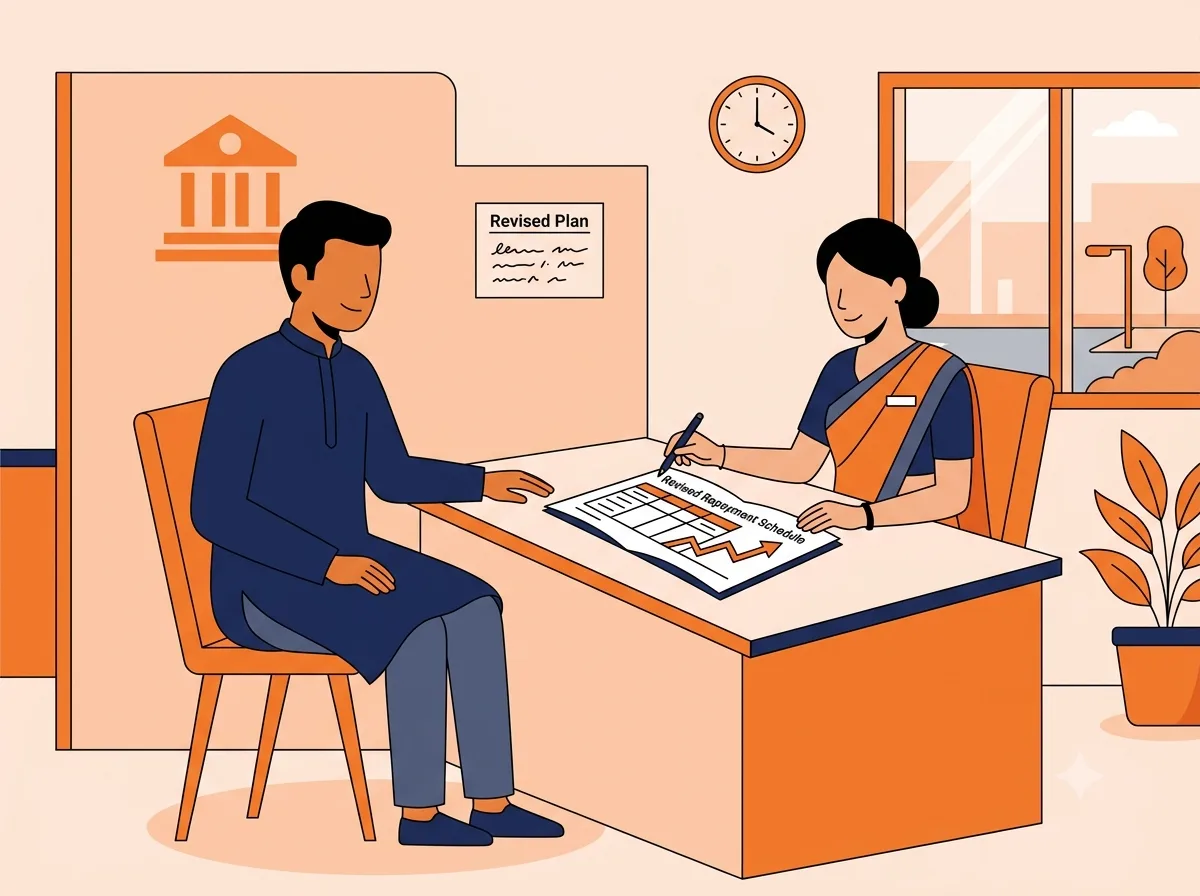
NPA loan restructuring is when a bank changes the terms of a loan it has already marked as bad, because the borrower is in financial difficulty. It might change the EMI, the tenure or the interest rate. The bank decides. Restructuring doesn't wipe out the dues, and the loan stays an NPA until RBI's conditions for moving it back are met.

Mohit Juneja
Reviewed by FREED India, Debt Resolution Specialists
 4.7/5
 ₹3,200Cr+
 20,000+
 20,00,000+4.7/5₹3,200Cr+20,000+20,00,000+
Key Summary

NPA loan restructuring is possible in principle. RBI's 2025 directions say restructuring is when a bank, because of the borrower's financial difficulty, grants concessions. A default counts as a sign of financial difficulty "irrespective of reasons for the default."
RBI's text has no separate rules for personal loans. It leaves the details to each bank's Board-approved policy, so the bank's own policy decides your case.
An NPA that is restructured keeps the same classification it had before. RBI's paragraph 53 says so. It can move up only after satisfactory performance, and not before one year from the first payment of interest or principal.
Borrowers marked as wilful defaulters or fraud are not eligible for restructuring.
A settlement paid over more than three months counts as restructuring under RBI's text, so the two ideas overlap.
No source we read promises a bank will agree. The bank decides.
What Is NPA Loan Restructuring?
NPA loan restructuring is when a bank changes the terms of a loan it has already marked as bad, because the borrower is in financial difficulty. It might change the EMI, the tenure or the interest rate. The bank decides. Restructuring doesn't wipe out the dues, and the loan stays an NPA until RBI's conditions for moving it back are met.
NPA loan restructuring means changing the plan of a loan that the bank has already marked as bad. NPA stands for non-performing asset. It's the label for a loan where payments have been missed for a long time, usually 90 days.
The change might be a longer tenure, a lower EMI, a different rate or a rolled-over amount. RBI calls these concessions. They are given because you're in financial difficulty.
It isn't the same as a settlement. In a settlement, the bank accepts less than you owe as the final payment. In restructuring, you still owe the full dues, just on a new plan.
What Is an NPA and When Does a Loan Become One?
A loan becomes an NPA when the bank marks it as bad. For term loans, this usually happens when the EMI is overdue by more than 90 days. The 90-day line sits in RBI's separate asset-classification rules.
Before that, RBI uses early-warning labels. SMA-0 means up to 30 days overdue. SMA-1 is 31 to 60 days. SMA-2 is 61 to 90 days. RBI's 2025 text says these labels apply to all loans, including retail loans.
So restructuring can come before the NPA stage, when the loan is still a standard one, or after it. The rules differ, and we explain them next.
Can a Defaulted Personal Loan Be Restructured?
It can be, but you can't demand it. RBI's definition of restructuring has no borrower application in it. It describes concessions that a bank "grants." So the choice is the bank's.
RBI's text doesn't set out separate conditions for personal loans. It asks every bank to have a Board-approved policy with a list of signs of financial difficulty, and a default is one of them. Your bank's policy then decides who is offered what.
So the honest answer is: it depends on your bank's policy and your situation. Ask the bank in writing and ask for its decision in writing.

Not Sure Where You Stand?
Open the FREED app, add your details and see which plan fits you.
See My Options on FREEDWhat Does RBI Say About NPA Loan Restructuring?
The rules sit in the Reserve Bank of India (Commercial Banks – Resolution of Stressed Assets) Directions, 2025, number RBI/DOR/2025-26/165, dated 28 November 2025 and updated as on 1 October 2026. Here is a plain reading of the parts that matter:
Paragraph 6(12), the meaning. Restructuring is when a bank, for economic or legal reasons tied to the borrower's financial difficulty, grants concessions. Examples include changes to payment terms, the interest rate and roll-overs.
Paragraph 52, a standard loan. A standard account that is restructured is immediately downgraded to NPA, starting as sub-standard.
Paragraph 53, an NPA. An NPA that is restructured keeps the same classification as before.
Paragraph 58, moving back up. An account can be upgraded only when it shows satisfactory performance, and not before one year from the first payment of interest or principal.
Paragraph 84, who is left out. Borrowers classified as fraud or wilful defaulters are not eligible, with limited exceptions.
These Directions are for commercial banks. NBFCs have their own directions, which we haven't summarised here.
Does a Restructured NPA Stop Being an NPA?
Not straight away. This is the point most people miss. Paragraph 53 says a restructured NPA keeps the same classification. So changing the plan doesn't clean the label.
To be upgraded, the account must show satisfactory performance. RBI defines that as not being in default with any lender during the period. And paragraph 58 says not before one year from the first payment of interest or principal.
Here's what that means in practice. If a loan was restructured and you pay every EMI on time for the whole period, the bank can consider an upgrade after that year. If you miss a payment, the clock doesn't carry on as before, and the bank may need a fresh plan.
See Your Credit Report First
Check your credit report with FREED Credit Insights.
Check My Credit Insights
How to Ask Your Bank for NPA Loan Restructuring
There's no form in RBI's text, so follow the bank's own process. These steps work in most cases, and each has a reason.
Write down your situation. Note what changed, such as a job loss or lower income, and since when. The bank's policy looks for signs of financial difficulty, so be clear about yours.
Get your loan statement. Ask for the full statement. Check the dues, interest and fees.
Work out what you can pay. Take your monthly income, subtract your basic costs and see what's left. A plan built on a number you can keep is the only plan worth asking for.
Apply in writing. Send an email or a letter to the branch and to the grievance officer. Ask for a revised repayment plan and say why.
Ask for the decision in writing. If the bank agrees, get the new EMI, tenure, rate and fees on paper before you sign.
Keep paying what you agreed. Every on-time payment counts towards the upgrade rules below.
The bank may say no. If it does, ask for the reason in writing and ask what else it can offer.
What Does a Longer Tenure Cost? A Worked Example
The most common change is a longer tenure. It lowers the EMI, but you pay more interest overall. Here's a simple example. It isn't a real offer.
Say you owe ₹3,00,000 at 15% a year (an illustrative rate).
Tenure | Monthly EMI | Total interest paid |
|---|---|---|
36 months | about ₹10,400 | about ₹74,400 |
60 months | about ₹7,100 | about ₹1,28,200 |
Moving from 36 to 60 months cuts the EMI by about ₹3,300 a month. But you pay about ₹53,800 more in interest. That's the trade-off. A lower EMI buys breathing room, and it costs more over time.
Rates and ranges shown are indicative. Final terms are decided by the bank/lender.FREED is not a Loan Provider. No outcome is guaranteed. Please verify directly with your bank.
Who Is Not Eligible for NPA Loan Restructuring?
RBI's 2025 text says borrowers classified as fraud or wilful defaulters, and entities linked to a wilful defaulter, are not eligible for restructuring, with limited exceptions (paragraph 84).
Beyond that, the bank's own policy sets the rules. Banks usually look at whether you can repay on a new plan, so be ready to show income. If the bank thinks you could repay on the old plan but won't, expect a no.
What Happens if You Miss a Payment After NPA Loan Restructuring?
It can undo the progress. RBI says an upgrade needs satisfactory performance, which means not being in default with any lender during the period. A missed payment breaks that.
RBI's text also says that a default before the end of the specified period needs a fresh resolution plan (paragraph 62). In plain words, the bank may have to start again, and a second plan isn't guaranteed.
So don't accept a plan you can't keep. A smaller change you can honour beats a bigger one that falls apart in three months.

What the Law Says
A restructured NPA keeps its NPA status. It can be upgraded only after a year of satisfactory payments. Fraud cases and wilful defaulters aren't eligible.
Check My EMI ScoreNPA Loan Restructuring, Settlement or Consolidation: Which One Fits?
Three different options, for three different situations.
Restructuring | Settlement | Consolidation | |
|---|---|---|---|
What it is | Bank changes your repayment plan | Bank accepts less than the full dues as final payment | One new loan pays off several, leaving one EMI |
Who it's for | Borrowers in difficulty who can repay on a new plan | Borrowers who genuinely cannot repay in full | Borrowers who are still paying but have too many EMIs |
What you still owe | The full dues | Only the agreed amount | The amount of the new loan |
Who decides | The bank | The bank | The lending partner |
If you've already defaulted, consolidation may not be open to you. Speak to a FREED expert to see what applies. Settlement isn't for everyone. It's for people who have reached a point where full repayment is no longer possible, and it leaves a settled status on your report.
How Does NPA Loan Restructuring Show on Your Credit Report?
We couldn't find a CIBIL page that says how a restructured account is shown, so we won't guess. A FREED page says the lender may add a "restructured" remark or flag. CIBIL's card-payment blog says a missed payment stays visible for 36 months.
What we know for sure: your report shows your payment history for the last 36 months, including a days-past-due marker. Get your report and look at the line for this loan. You're entitled to one Free Full Credit Report a year from each credit information company.
What Should You Ask Before You Agree to a New Plan?
What is the new EMI, and for how many months?
What interest rate applies now?
Are there any fees for the change?
What is the total I will pay by the end?
When will the bank review the account for an upgrade?
How will the bank report this to the credit bureaus?
What happens if I miss one payment?
Write the answers down. If anything is unclear, ask again before you sign.

FREED Expert Tip
Ask your bank one specific question: "If I pay every EMI on this plan, when will you review the account for an upgrade?" Get the answer in writing.
Check My EMI ScoreYour NPA Loan Restructuring Checklist
Get your loan statement and check the dues, interest and fees.
Write down what changed in your income and since when.
Work out a monthly figure you can keep.
Apply to the bank in writing to the branch and the grievance officer.
Ask for the decision and the new terms in writing.
Ask when the account will be reviewed for an upgrade.
Pay every EMI on the new plan on time.
This list is our planning aid. The bank's own policy decides your case.
Tips for a Better NPA Loan Restructuring Request
Be specific about the difficulty. Say what happened, when, and what your income is now.
Ask for a figure you can keep. A realistic EMI is more convincing than a hopeful one.
Show documents. Salary slips, bank statements and notices help.
Don't skip payments while you wait. Pay what you can and say so in writing.
Compare total cost. A longer plan lowers the EMI but raises the interest paid.
Read the new agreement. Check fees and what happens if you miss a payment.
Keep the folder. You'll need it for any later talk.
Not Sure Where to Start?
Add your details in the FREED app and see your options in minutes.
See My Options on FREEDHow Does FREED Help If Your Loan Has Become an NPA?
FREED isn't a loan provider. It's a platform that helps you understand your credit and manage your loans. Over 20 lakh people trust FREED.
FREED doesn't carry out restructuring. That's between you and your bank. What FREED offers is help for different situations. Credit Insights lets you read your report. The Loan Consolidation Plan is for people who are still paying. The settlement programme is for people who genuinely cannot repay in full. And FREED Shield helps with recovery pressure.
If settlement is the right path, here is how the process runs. FREED first looks at your whole financial picture: loans, income, expenses and what you can repay. It builds a plan with a monthly savings routine. The money you save sits in a settlement account in your own name, held by an independent trustee, and you authorise every settlement. FREED negotiates with the bank once enough is saved. The bank's decision is final. If it accepts, you pay the agreed amount and receive a settlement letter from the bank. The process is patient. It isn't a quick fix. FREED's service fee is success-based.
Credit Insights reads your Experian report and shows your accounts, enquiries and payment history in one place. Over 30,000 borrowers have used it.
What If You Are Still Paying Other EMIs?
If most of your salary goes towards paying multiple EMIs, FREED's Loan Consolidation Plan helps you combine multiple loans into a single monthly EMI. This can reduce your monthly EMI burden by up to 50%.* It's only for people who are still paying. Read more about the Loan Consolidation Plan.
Rates and ranges shown are indicative. Final terms are decided by the bank/lender. FREED is not a Loan Provider. No outcome is guaranteed. Please verify directly with your bank.
Settlement is not something a borrower chooses out of preference. If you genuinely cannot repay your loans, FREED negotiates with your lenders to settle them for less than 50%* of your outstanding dues. Read more about the settlement programme.
Outcomes vary by lender and borrower profile. Settlement terms are decided by the lender. No percentage is guaranteed.
Settlement leaves a settled status on your report, which CIBIL says will affect your access to credit in the future. Weigh that before you choose it.
Our guide on one-time settlement for NPA loans explains how a bank looks at it.
See Your Credit Report First
Check your credit report with FREED Credit Insights.
Check My Credit Insights
Mohit Juneja
Mohit Juneja is FREED’s Content & Communication Lead with 12+ years of experience across content, media, advertising and digital communications. He holds a postgraduate diploma in Communications from Xavier Institute of Communications, Mumbai, and has worked with organisations including NDTV, The Indian Express, McCann Worldgroup and NABARD.
At FREED, he leads content and communication across loan management, debt resolution, debt consolidation and financial well-being. His work combines research, storytelling and consumer-focused communication to make complex financial topics easier to understand and act on. He has also scripted and produced 11 documentaries on rural development and agriculture for NABARD, with film's selected for the Mumbai International Film Festival.
mohit.juneja@freed.care

FREED is India's trusted loan management platform. We help India settle their loans, consolidate their EMIs, improve their credit score, and manage their loans better. Over 20 lakh people trust FREED. We have managed more than ₹3,500 crore in loans and saved our users over ₹450 crore.
Media Mentions