What Is a Normal CIBIL Score in India?
A normal CIBIL score is one that falls in the middle of the 300–900 range, roughly 650 to 750, where most working Indians actually land. It is not the same as a "good" score. Normal simply means typical, not necessarily strong enough for the best loan terms.

Mohit Juneja
Reviewed by FREED India, Debt Resolution Specialists
 4.7/5
4.7/5 ₹3,200Cr+
 20,000+
 20,00,000+4.7/5₹3,200Cr+20,000+20,00,000+
KEY TAKEAWAYS

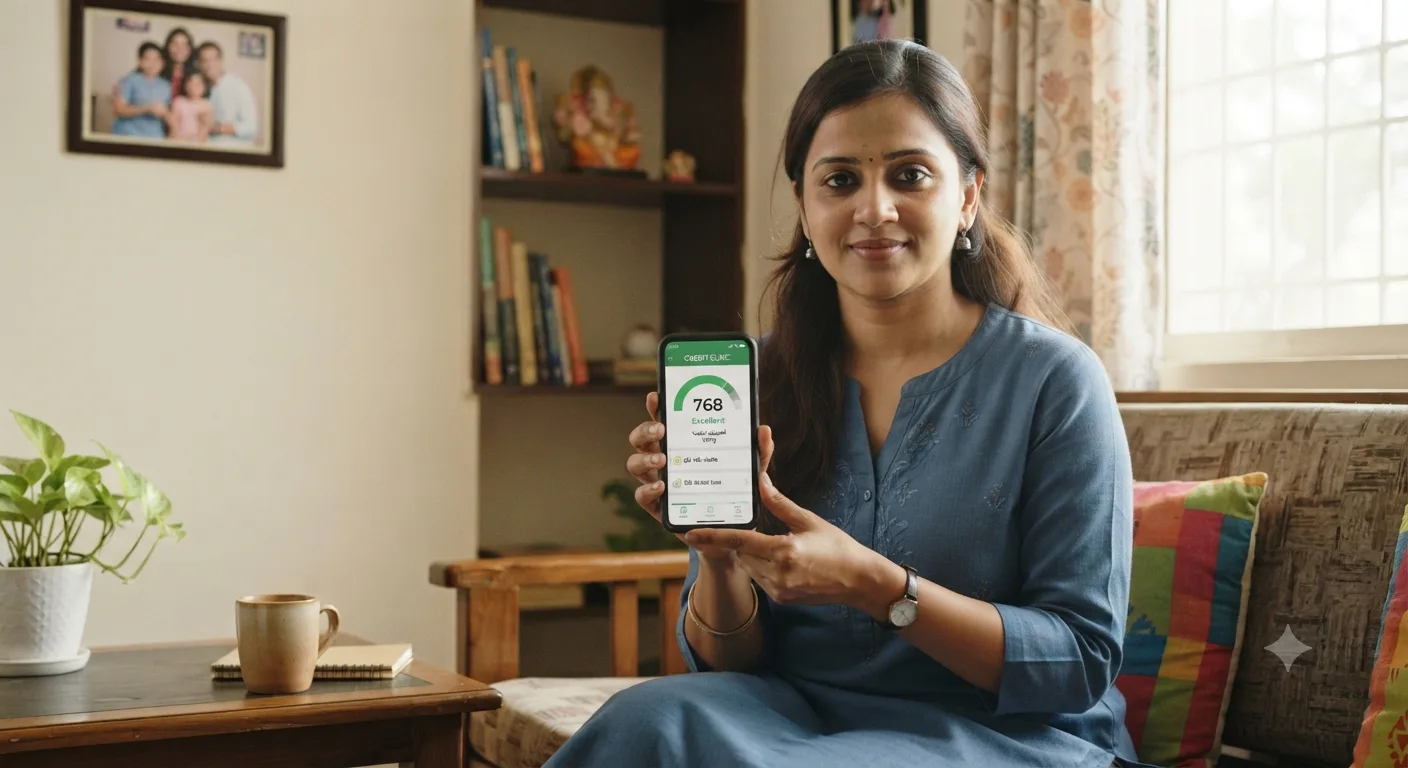
A "normal" CIBIL score in India is commonly considered to fall between 650 and 750, though this isn't an officially published bureau range, it's an indicative band widely used across the lending industry to describe scores that are workable but not top-tier. TransUnion CIBIL's own 2026 data puts the average score among actively monitoring consumers at 728.
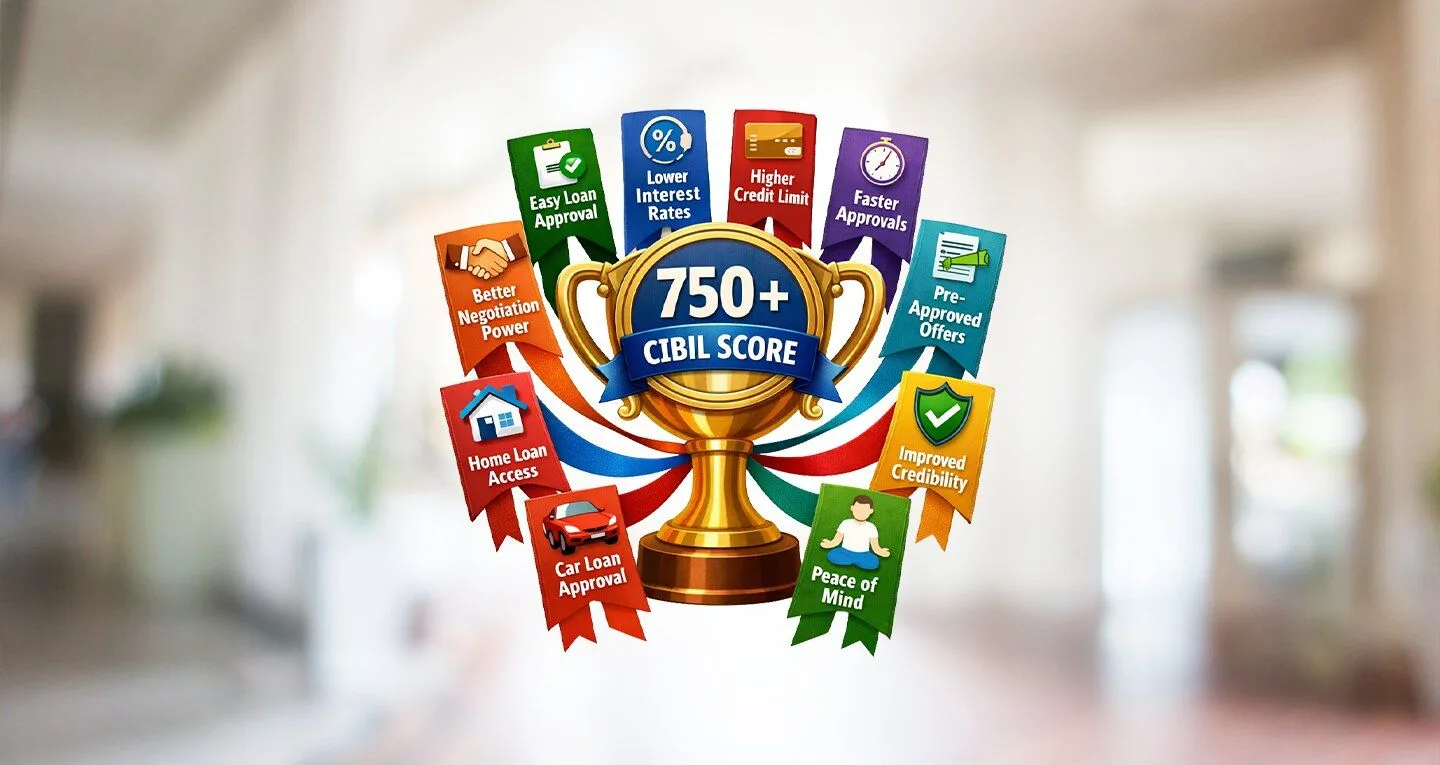
Normal is not the same as good. Lenders usually reserve their best rates for 750 and above.
Most first-time credit users start with no score at all, shown as NA or NH, not a low number.
A score in the 650–699 band can still get a loan approved, often with a guarantor or a higher rate.
What Is a Normal CIBIL Score in India?
When people ask what a normal score looks like, they usually mean one thing: am I typical, or am I an outlier. The honest answer is that a large share of Indian credit users sit somewhere in the 650 to 750 band, neither at the bottom of the scale nor at the very top.
That word, normal, is doing a specific job here. It describes where most people cluster statistically. It says nothing about whether a lender will hand you their best interest rate. That distinction matters more than it sounds like it should, because the three words people use loosely, normal, good, and excellent, actually mean three different things to a bank.
Normal is typical. Good is what gets a loan approved reliably. Excellent, usually 750 and above, is what gets you the lowest rate in the room. A score can be completely normal and still leave money on the table every time you borrow.
Normal vs Good vs Excellent, What's the Real Difference?
Band | Score Range | What It Usually Means |
Below Normal | Under 650 | Loan approval difficult, higher rates, may need collateral or a guarantor |
Normal | 650–749 | Loan approval possible, often with conditions like a guarantor or a lower amount |
Good | 700–749* | Reasonable approval odds, moderate terms |
Excellent | 750–900 | Fastest approvals, best interest rates, highest loan amounts |
*The Good and upper-Normal bands overlap in most published ranges. This is normal (no pun intended), since different bureaus and lenders draw the line slightly differently.
Picture two people applying for the same ₹5 lakh personal loan on the same day. One sits at 680, comfortably normal. The other sits at 780, comfortably excellent. The second person is likely to see a noticeably lower interest rate offered on the exact same loan amount, purely because of where their number falls on this scale. Same need, same bank, different cost.
So the real question worth asking isn't "is my score normal." It's "what's keeping my score in normal instead of good."
Disclaimer: Rates and ranges shown are indicative. Final terms are decided by the bank. FREED is not a Loan Provider. No outcome is guaranteed. Please verify directly with your bank.

Why Do Most People Land in the "Normal" Range Instead of "Good"?
None of the reasons below are unusual, and none of them mean you've done something wrong.
- A thin credit history. If you've only had a loan or a card for a year or two, the bureau simply doesn't have enough years of data to reward you the way it rewards someone with a decade of clean repayment behind them.
- A mix of on-time and occasional late payments. Most people aren't perfect. A late fee two years ago, a card bill paid three days after the due date once, these small slips add up to a score that's solid but not spotless.
- Running utilisation a little high some months. Using 40 to 50% of your credit card limit in a busy month, even if you clear the bill in full, may influence how lenders and credit bureaus assess your overall credit profile.
- Applying for two or three credit products close together. A card, then a personal loan, then another card, all within a few months, may influence how lenders and credit bureaus assess your overall credit profile, even if every application was genuine.
Moving from normal to good is rarely about fixing one dramatic mistake. It's usually a handful of small, fixable habits, sustained over a few months.
Does a Normal CIBIL Score Affect Your Loan Application?
Yes, but it doesn't usually mean rejection.
- You may be asked for a guarantor or co-applicant. A normal score often isn't strong enough on its own for a bank to lend without some added assurance.
- You may be sanctioned a smaller amount than you applied for. Banks sometimes approve the application but scale down the loan size to match the risk they're comfortable taking on.
- Depending on the lender, you may be offered different loan terms or interest rates than applicants with stronger credit profiles. This is the part that can cost real money over the life of the loan, not just at the approval stage.
Individual lender policy varies quite a bit here. Some NBFCs work with normal-range scores more comfortably than traditional banks do, though the trade-off usually shows up in the rate. None of this means a normal score locks you out of borrowing. It just means the terms won't be the best ones available.


How Can You Move from Normal to Good?
- Pay every EMI and card bill on or before the due date. This single habit carries more weight than almost anything else on your report. Consistent on-time payments over time support healthier repayment behaviour more than any other single action.
- Bring your credit utilisation down toward roughly 30% of your limit. If your card limit is ₹1 lakh, try to keep the outstanding balance under ₹30,000 at any point the bureau checks, even if you clear the full bill every month.
- Avoid closing your oldest active account. Credit age helps your score. An old card sitting mostly unused is still doing quiet work for you in the background.
- Space out new loan or card applications instead of bunching them. Each hard enquiry stays on your report and can affect your score for up to 2 years, so apply only when you actually need to.
- Check your credit report periodically for errors. A wrongly reported late payment or an account that isn't actually yours can hold a score down for reasons that have nothing to do with your real behaviour, and it's free to check.
With consistent habits like these, strengthening your credit profile over several months of clean behaviour can support how lenders and bureaus assess your overall profile. It isn't an overnight fix, but it also isn't a multi-year project for most people.

What the Law Says
You're entitled to one free CIBIL report every calendar year under RBI Notification RBI/2016-17/58 (DBR.CID.BC.No.11/20.16.042/2016-17), effective January 1, 2017, and no one can legally charge you to correct a genuine error on it.
Check your reportHow FREED Helps You Understand Where Your Score Really Stands
Most tools that show you a CIBIL number stop right there. You see 690, and you're left guessing whether that's fine, worrying, or somewhere in between, with no real explanation of what's pulling it down.
FREED's Credit Insights is built for exactly this gap. It's available to everyone, not just people enrolled in a FREED program. Get a flat 50% off on a subscription. It pulls your Experian credit report and gives you three things: your current score, a clear breakdown of what's actually affecting it, and step-by-step recommendations to move it toward the good band.
The difference is the second and third parts. Instead of a bare number, you get a specific answer to "why is my score stuck at normal" and a specific next step to change that, rather than generic advice that could apply to anyone.
See Exactly Where Your Score Stands
Get your score, what's affecting it, and what to do next.
Check your credit insightSources
Confirmed. Claim → Source table (no em dashes):
Claim in Article | Source |
|---|---|
Average CIBIL score among monitoring consumers is 728 (2026 data) | TransUnion CIBIL official newsroom, "CIBIL for Every Indian, Uncovering How India Owned Its Credit Journey in 2025," published March 18, 2026, newsroom.transunioncibil.com/credit-monitoring-goes-mainstream-183-million-indians-now-self-monitor-their-cibil-score |
750+ is where lenders give best rates and fastest approvals | tallysolutions.com/business-guides/credit-bureaus-india-business-guide, and finnable.com/finn-advice/cibil-transunion-score |
CIBIL score range is 300 to 900 | Consistent across all bureau sources reviewed in this project, uncontested |
Normal/good/excellent band definitions (650-749 normal, 750+ excellent) | Not from a single primary source, this is industry-consensus framing repeated across lender comparison sites, no official bureau-published band uses these exact labels, article already flags this correctly in its own disclaimer |
First-time users show as NA or NH, not a low score | Standard bureau terminology, consistent across all prior sourcing in this project, no single primary citation pulled |
One free CIBIL report per year, RBI Notification RBI/2016-17/58, effective Jan 1 2017 | RBI official notification, rbi.org.in/commonman/english/scripts/Notification.aspx?Id=1884 |
No one can legally charge to correct a genuine report error | Consistent with RBI grievance-redressal framework referenced in earlier sourced articles (30-day resolution, penalty for delay), no new primary source pulled this turn |
Hard enquiries can affect score for up to 2 years | Not sourced this session, commonly cited industry figure, worth checking against a primary bureau source before publishing |
Payment history carries the most weight in score calculation | finnable.com/finn-advice/cibil-transunion-score (cites roughly 35% weighting), consistent with all other bureau methodology sources reviewed earlier |
Keep utilisation under roughly 30% of limit | General financial-planning guidance, widely repeated, not a hard regulatory figure |
Some NBFCs work more comfortably with normal-range scores than banks do | finnable.com/finn-advice/cibil-transunion-score (NBFCs assess 675-749 range using income, employment, banking behaviour alongside score) |

Mohit Juneja
Mohit Juneja writes educational content at FREED on debt management, credit scores, loan repayment, and borrowing best practices. His content is shaped by expert insights and industry knowledge, helping readers better understand their financial options and make informed decisions.
mohit.juneja@freed.care

FREED is India's trusted loan management platform. Founded in 2020 and headquartered in Gurugram, FREED has counselled 20 lakh+ people on personal loans, credit cards, and app loans. FREED charges fees only on successful settlement, not upfront. FREED does not handle secured loans (home loans, car loans, gold loans).
Media Mentions