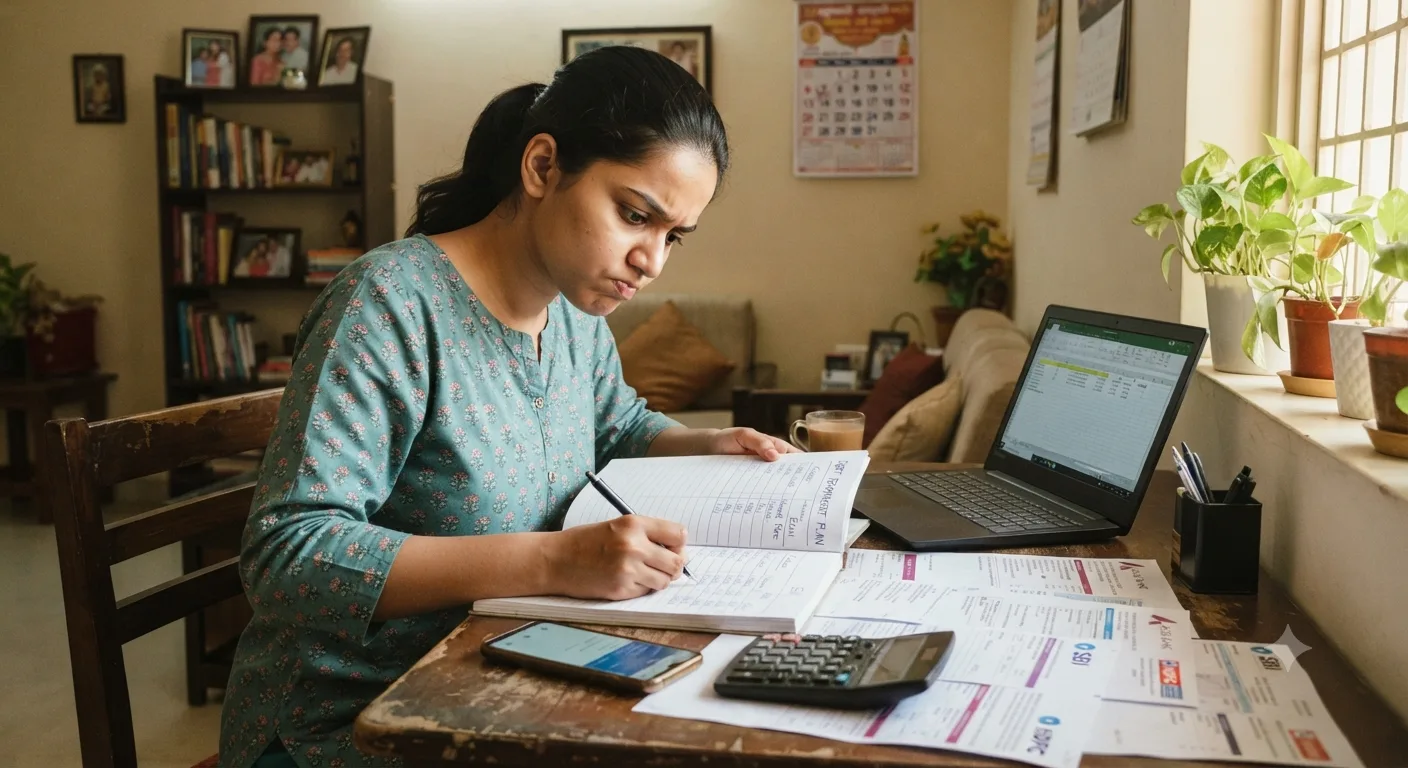
Money View Loan Settlement: Closing Your Loan at a Reduced Amount
Money view loan settlement is when you and MoneyView agree to resolve your loan by paying a reduced amount instead of the full outstanding balance. This is called an OTS, one-time settlement (paying it once, and the matter ends). MoneyView only considers this when you are genuinely unable to repay in full. The settled loan is reported to CIBIL as "Settled," not "Closed."

Mohit Juneja
Reviewed by FREED India, Debt Resolution Specialists
 4.7/5
4.7/5 ₹3,200Cr+
 20,000+
 20,00,000+4.7/5₹3,200Cr+20,000+20,00,000+
KEY TAKEAWAYS

MoneyView loan settlement lets you resolve a MoneyView loan by paying less than the full amount owed, but only when repaying in full has become genuinely impossible.
MoneyView is operated by Whizdm Finance Pvt. Ltd., an RBI-registered NBFC. Your settlement is governed by RBI's OTS guidelines.
A 'Settled' status may remain visible on your credit report for an extended period and can affect future borrowing decisions.
Recovery agents calling before 8 AM or after 7 PM, or contacting your family or colleagues, are violating RBI rules. You can file a complaint.
FREED helps people in genuine financial difficulty negotiate settlements with banks and NBFCs like MoneyView, handling paperwork and follow-up so you don't have to do it alone.
Why Do MoneyView Loans Become Hard to Repay?
Nobody plans to default. Most people miss their first EMI because something went wrong outside their control, a job loss, a salary cut that came without warning, a medical bill that wiped out savings, or a rough patch that stretched into months instead of weeks.
MoneyView's rate can go up to 36% a year. When you miss an EMI, the outstanding amount does not freeze; it keeps growing. Late fees get added. The NACH mandate (the auto-payment permission you gave the bank) tries to debit your account and fails. Each failed attempt adds a bounce charge. A ₹50,000 loan can reach ₹80,000 or more within a few months of default, just from these added charges.
By the time most people start looking for settlement options, they are already months in. The amount they owe is significantly higher than what they originally borrowed. And they know, honestly, without any doubt, that they cannot pay it all back. That is the situation that settlement is designed for.

FREED Expert Tip
If a large share of your take-home salary is already going toward loan repayments , you are heading into debt trouble, check your options before the next EMI is missed.
Check Your Debt Relief OptionsSigns That a Money View Settlement May Be Worth Considering
This is not a diagnosis. It is a checklist, a way to see clearly whether your situation has moved from "tight but manageable" into something that genuinely needs a resolution plan. Read each point as a question, not a verdict.
- You have missed 3 or more MoneyView EMIs in a row.
- Recovery agents are calling daily, some before 8 AM or after 7 PM.
- The outstanding amount is now higher than what you originally borrowed.
- You have no lump sum available to pay even 50% of what is owed.
- You have received a legal notice or arbitration summons from MoneyView or its NBFC partner.
- You tried calling MoneyView customer care but could not get a clear settlement offer.
If 3 or more of these apply to you, settlement is worth discussing with a counsellor. That is the right next step, not a self-decision. A free call takes 20 minutes and costs nothing.
How Does Money View Loan Settlement Work, Step by Step?
- 1
Check What You Actually Owe.
Pull your latest loan statement from the MoneyView app or call customer care. Write down 3 things: the principal (the original amount you borrowed), the interest added, and the late fees. This total is your starting point.
- 2
Gather Your Documents.
Put together a folder with your papers: your loan agreement, bank statements for the last 3 months, your ID proof, and any letter or notice you received from MoneyView. If you lost your job or had a medical issue, keep that proof ready too.
- 3
Make a Formal Settlement Request.
Contact MoneyView's collections or NPA (loan marked as bad by the bank, usually after 90 days of missed EMIs) team, not just the general helpline. Request a settlement offer in writing. State clearly that you are unable to pay the full amount due to a genuine financial difficulty.
- 4
Negotiate the Offer.
Settlement discussions may involve multiple rounds of negotiation. You can counter, but only with what you can genuinely arrange in one payment. Do not agree to a settlement amount you cannot actually pay on the agreed date.
- 5
Get the Settlement Letter Before Paying.
Before you transfer any money, get the formal settlement letter in writing from MoneyView's official email or letterhead. Verify the exact amount, the due date, and the terms. Pay only to MoneyView's official bank account, never to a recovery agent's personal account.
- 6
Collect the NDC and Check Your CIBIL.
After payment, collect the NDC (clearance letter, called NOC) from MoneyView. Then check your CIBIL report after 30–45 days to confirm the account status has been updated to "Settled."

Not Sure How Much You Can Offer MoneyView?
Run the free debt calculator. Get real numbers in 2 minutes.
Calculate My Settlement AmountWhat Are Your Rights When MoneyView Recovery Agents Call?
MoneyView is a digital lender, which means extra protections apply to you under RBI's Digital Lending Guidelines, on top of the standard Fair Practices Code that applies to all banks and NBFCs.
Here is what the rules say, clearly:
Calling hours. Recovery agents may only contact you between 8 AM and 7 PM. RBI draft guidelines, effective July 1, 2026, make this explicit for all banks and NBFCs. A call at 6 AM is a violation. A call at 9 PM is a violation. Note the time and the number.
Your contacts are off limits. Under RBI's digital lending guidelines, MoneyView and its NBFC partners cannot access your phone contacts list or gallery without your explicit consent. Recovery agents should not improperly disclose your loan information to unrelated third parties. to pressure repayment. This is a direct rule violation, not a grey area.
The NBFC is accountable. Recovery agents are usually third-party contractors. But remains responsible for overseeing authorised recovery agents for what their agents do. If an agent crosses the line, you do not have to chase the agent. You file against MoneyView or the NBFC.
How to file a complaint. If any of these rules are broken, you can file a complaint with the RBI Integrated Ombudsman Scheme at cms.rbi.org.in. Keep call recordings if possible. Note the date, time, and what was said.
RBI received over 13,000 complaints against banks and NBFCs via its Integrated Ombudsman Scheme between April 2021 and November 2022; harassment by recovery agents was a leading cause. These complaints are taken seriously.

What the Law Says
Under RBI Circular RBI/2022-23/108, the bank or NBFC is fully responsible for its recovery agents' conduct. If an agent harasses you, the bank has harassed you in the eyes of the law.
Read MoreWhat Are Your Options Before Choosing Settlement?
Settlement should be the last option you reach for, not the first. There are 3 paths worth trying before you get there, in order from least disruptive to most.
- Ask for an EMI reduction. Contact MoneyView and explain your situation. Request a revised repayment plan with a lower monthly amount. This keeps your total debt the same but makes the monthly bite manageable.
- Ask for a tenure extension. More months means a smaller EMI. The total you owe stays the same, but you have more time to pay it. This is a faster approval path than settlement and may have less impact on your credit profile when payments remain current.
- Ask for a moratorium (temporary pause in payments). If you've had a sudden income disruption, job loss, or hospitalisation, MoneyView may allow a short pause in payments. This is not available to everyone, but it is worth asking before defaulting.
Each of these options requires one thing: you call or write to MoneyView before missing more EMIs. The earlier you reach out, the more options stay open.
If none of these are available or you've already exhausted them, settlement may be the next step to consider. But start here first.
How Does Loan Settlement Help When MoneyView Dues Are Unmanageable?
When the outstanding amount has grown well past what you borrowed, and you know there is no realistic path to full repayment, this is where a debt resolution programme makes a real difference.
FREED works with people who are in genuine financial difficulty across unsecured loans, including personal loans from NBFCs like MoneyView. What FREED does is handle the work that most people find difficult to do alone: putting the documents together, managing the back-and-forth communication with MoneyView, drafting the formal settlement request, and making sure the settlement letter is worded correctly so your CIBIL update reflects the resolution properly afterwards.
Because FREED works with many banks and NBFCs regularly, the process is more structured than going alone. There are no surprises about what paperwork is needed or what a proper settlement letter looks like.
FREED can help reduce your total outstanding debt by up to 50%* across enrolled loans. The fees model is simple: FREED charges fees only when the settlement is successfully completed. No upfront payment. No charges on failed attempts.
Settlement is not a good situation. But if it is the right situation for you, having the process managed properly makes a real difference in time, in stress, and in what your CIBIL report looks like afterwards.
*Settlement figures are indicative. Actual waiver depends on the bank or NBFC, default duration, and your specific case.

Loan Settlement and Your CIBIL Score What Actually Happens?
This is the part most content skips over or softens. Here is the honest version.
When you settle a MoneyView loan, your CIBIL report shows the account as "Settled," not "Closed." These are not the same. "Closed" means full repayment. "Settled" means a reduced amount was paid and accepted. That "Settled" mark stays on your report for up to 7 years.
At the point of settlement, if you were at 650 before settlement, you may land below 550 afterwards. That will affect your ability to get new credit for a period.
But here is the honest comparison: if you are already deep in default, missing EMIs for months, and your account is approaching NPA (loan marked as bad by the bank, usually after 90 days) status, your score is likely already below 500. Continued default does not protect your score. It keeps it low indefinitely and removes any negotiation position you have.
Are You in a Loan Trap? Quick Check
Move the slider to your total EMIs as a % of monthly salary. See your debt stress level instantly.
EMIs as % of Monthly Salary
Tips That Help When You Are Going Through a Settlement
These are practical steps, things you can do right now, not advice to stay calm.
Document every recovery call. Note the date, time, and number. If the call happened before 8 AM or after 7 PM, that is a violation. Save it.
Never pay in cash or to a personal account. Every payment must go to MoneyView's official bank account. Get the account details directly from MoneyView's official communication, not from a recovery agent over a phone call.
Get everything in writing before paying. The settlement letter must come from MoneyView's official email or on their letterhead. Verify the exact amount, the due date, and the words "full and final settlement." Pay only after this letter is in your hands.
Collect the NDC the same week you pay. Do not wait months. Follow up immediately. An NDC (clearance letter, called NOC) is your proof the matter is fully resolved.
Check your CIBIL after 45 days. Pull your report and confirm the account shows "Settled." If it still shows "Active" or "Overdue," write to MoneyView with your NDC attached and ask for a correction.
If the FAQ below does not cover your specific situation, a free counsellor call is the fastest way to get a clear answer.
Money View Settlement vs Other Options: What to Expect
Option | What Happens to Your Outstanding | CIBIL Impact | Time to Resolve | Best For |
EMI Reduction Request | Reduced monthly amount, total stays the same | None if you keep paying | Immediate if approved | Early-stage difficulty, income disruption |
Tenure Extension | Same total debt, more months to pay | None if you keep paying | Immediate if approved | Temporary cash crunch |
Full Repayment | Full amount resolved, CIBIL shows "Closed" | Positive | Immediate | Those with lump sum available |
OTS / Settlement | Reduced total, resolved with waiver | "Settled" mark, up to 7 years | 45–120 days | Genuine inability to repay full amount |
*Settlement figures are indicative. Actual waiver depends on the bank or NBFC, default duration, and your specific case. FREED is not a lender and does not guarantee outcomes.
About FREED
FREED is India's first debt relief company, founded in 2020. FREED helps people in genuine financial difficulty negotiate settlements on unsecured loans, personal loans, credit cards, BNPL, and app loans. FREED has counselled 20 lakh+ people across India. Fees are charged only when a settlement is successfully completed. FREED does not handle secured loans.
What Is Money View Loan Settlement?
Settlement is not something a borrower chooses out of preference. Banks and financial companies only consider it when you are in genuine financial difficulty and are truly unable to repay the full amount. It is a last resort, not a shortcut.
MoneyView is a personal loan product operated by Whizdm Finance Pvt. Ltd., an NBFC (non-banking financial company) registered with the RBI (Reserve Bank of India). In some cases, MoneyView also disburses loans through partner banks like DMI Finance, IDFC FIRST Bank, and Aditya Birla Capital. Whoever disburses your loan, the process works the same way.
When you settle a MoneyView loan, you and the financial company agree on a reduced amount. You pay that amount in a single payment. The loan is resolved according to the settlement agreement. This is an OTS, one-time settlement (paying it once, and the matter ends).
"Settled" and "Closed" are not the same thing. "Closed" means you paid everything you owed. "Settled" means you paid less than the full amount, and the company agreed to accept it. A "Settled" mark stays on your CIBIL report for up to 7 years. A fully repaid loan is generally viewed more favorably than a settled account.
MoneyView's interest rate can go up to 36% per year. That is high. A missed EMI does not stay small, the balance grows quickly because late charges and daily overdue fees are added on top. Settlement timelines at MoneyView typically run from 45 to 120 days once a formal request is made.
Struggling With MoneyView EMIs?
Get a free, confidential assessment from a FREED counsellor. No paperwork. No commitment.
Book My Free Call
Mohit Juneja
Mohit Juneja writes educational content at FREED on debt management, credit scores, loan repayment, and borrowing best practices. His content is shaped by expert insights and industry knowledge, helping readers better understand their financial options and make informed decisions.
mohit.juneja@freed.care

FREED is India's trusted loan management platform. Founded in 2020 and headquartered in Gurugram, FREED has counselled 20 lakh+ people on personal loans, credit cards, and app loans. FREED charges fees only on successful settlement, not upfront. FREED does not handle secured loans (home loans, car loans, gold loans).
Media Mentions