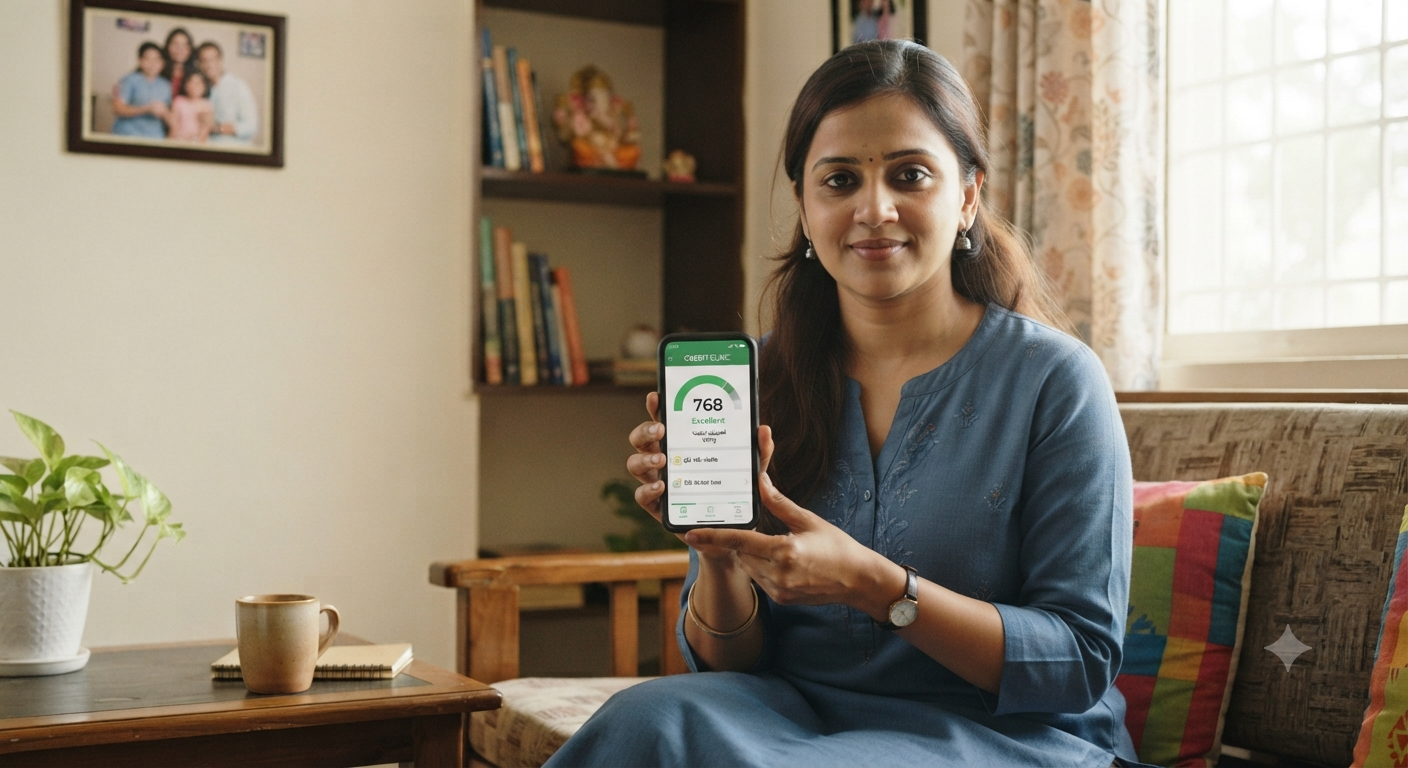
Minimum CIBIL Score for a Loan in India: What You Actually Need
Minimum CIBIL score for loan approval is usually 700 to 750 at banks, and around 650 at NBFCs and digital lenders. Government banks sit at the strict end, apps and NBFCs are more flexible. Your score is one input; income, employment, and existing EMIs matter too. These are indicative industry ranges, and individual lender requirements may differ.
Mohit Juneja
Reviewed by FREED India, Debt Resolution Specialists
 4.7/5
4.7/5 ₹3,200Cr+
 20,000+
 20,00,000+4.7/5₹3,200Cr+20,000+20,00,000+
KEY TAKEAWAYS

Minimum CIBIL score for loan approval is 700–750 at banks, ~650 at NBFCs, 600+ on some apps.
A score below 650 may narrow borrowing options and may result in higher interest rates, depending on the lender.
Government banks (SBI, BoB, Canara) require 700–720; private banks accept 680–740.
Your FOIR (how much of your salary goes to EMIs) matters as much as your score.
If multiple loans are dragging your score down, consolidation into one lower EMI is worth checking before applying fresh.
What Is the Minimum CIBIL Score for a Loan in India?
Your CIBIL score runs on a scale from 300 to 900, and within that range, 750 and above is generally treated as the "excellent" band, the zone where lenders roll out their best rates and fastest approvals with the least friction. Below roughly 650, approval odds narrow sharply across most mainstream lenders, and the ones still willing to work with you tend to price that risk into a noticeably higher rate.
That 750 figure is what nearly every website you'll find quotes as the target, and it's worth being precise about what it actually represents, since the framing matters more than the number itself. It's not a hard cutoff below which every door slams shut. It's the number that gets you the best rate, the fastest processing, and the least documentation back-and-forth, not the bare minimum required to be considered at all. Plenty of loans get approved well below 750, every single day, just on different terms than someone sitting comfortably above it.
The more useful question to sit with isn't "do I qualify at all," which is the question most people arrive here asking. It's "what rate and loan size will I actually get at my current score," which is a genuinely different question with a much more actionable answer. That answer shifts meaningfully depending on which category of lender you're applying to, since a public sector bank, a private bank, an NBFC, and a digital lending app all weigh the exact same three-digit number very differently. The next section breaks that down properly, lender type by lender type, rather than treating "the banking system" as one monolithic decision-maker.

Freed Expert Tip
Check your CIBIL report before applying anywhere. Free, catches errors, takes 10 minutes, and can save you a rejection.
Check My Credit Insight
What CIBIL Score Do Banks vs NBFCs Actually Require?
Most competitor content on this exact topic gives you a single flat number and stops there, which is genuinely unhelpful, because in practice the real threshold shifts a lot depending on exactly who you're borrowing from. Here's the honest breakdown, category by category.
Government and PSU banks, SBI, Bank of Baroda, Canara Bank, and similar institutions, sit at the strictest end of the entire spectrum, typically wanting a minimum of 700 to 720 before they'll seriously entertain an application, with 750 and above genuinely preferred for the smoothest path through underwriting. There's a structural reason for this caution: these banks are lending out depositors' money, not capital they've raised and are free to price risk into as aggressively as a private lender might. That translates into more thorough documentation requirements, less discretion for individual loan officers to make judgment calls, and generally slower processing timelines. The trade-off for putting up with all of that, though, is real, a genuinely lower interest rate, often 1 to 3 percentage points below what you'd be quoted elsewhere for an identical loan amount and tenure.
Private banks, HDFC, ICICI, Axis, Kotak, and comparable institutions, work with a noticeably wider band, generally approving applicants from 680 up to 740, sometimes higher depending on the specific product and how strong the rest of your profile looks alongside the score. Processing tends to move meaningfully faster here than at PSU banks, often a matter of days rather than weeks, and the rate you're ultimately offered scales fairly directly with exactly where your score sits within that range, someone at 690 and someone at 735 at the same bank will typically see a real difference in the number quoted back to them.
NBFCs, Bajaj Finance, Tata Capital, Fullerton, and similar non-banking lenders, go lower still, commonly working with applicants from around 650 upward. The structural reason mirrors what makes them more flexible in the first place: NBFCs raise their own capital through borrowing rather than depending on customer deposits, which buys them considerably more room to underwrite a broader spread of risk profiles than a traditional bank can comfortably manage. That flexibility isn't free, though, it shows up directly and unmistakably in the interest rate, commonly running 18% to 30% per annum, a meaningfully higher cost than what a bank would charge for the same amount.
Digital lending apps sit at the most flexible end of the entire market, sometimes working with scores as low as 600 to 650. Rather than leaning purely on the three-digit number, many of these platforms layer in additional signals beyond the score itself, your UPI transaction activity, how regularly your salary actually lands in your account, your broader spending patterns, to build a fuller picture of real repayment ability than the score alone can offer. This is precisely why someone with a modest 620 score but a demonstrably stable, well-documented income can sometimes get approved here where a traditional bank would have declined the application outright without a second look.
None of these numbers should be read as guarantees of approval, and it would be misleading to present them that way. They represent the point at which a lender will actually sit down and seriously consider your application, not a promise that a yes is waiting on the other side. Where you land on this spectrum matters a great deal, but score alone still isn't the complete picture lenders are actually working from, which is exactly what the next section digs into.
Does a Low CIBIL Score Mean You Can't Get a Loan?
No, and it's worth being genuinely direct about that upfront, because a lot of people arrive at this question already assuming the answer is a hard no. A low score doesn't automatically disqualify you from borrowing. What it actually changes is the cost of that borrowing and which specific lenders remain realistically available to you, which is a meaningfully different situation than being locked out entirely.
A few concrete things can offset a borderline score, and it's worth knowing all of them rather than just the score itself. Strong, stable income and consistent employment history can genuinely work in your favour even when your score isn't sitting in the excellent band. Your FOIR, Fixed Obligation to Income Ratio, essentially the share of your monthly take-home salary already committed to existing EMIs and financial obligations, matters just as much as the score in most lenders' internal calculations, sometimes more. A co-applicant with a stronger credit profile, or a secured option like an FD-backed or gold loan, also genuinely improves your odds, since collateral or a second income source directly lowers the lender's exposure.
Here's where the real cost of a low score actually shows up in practice, and it's rarely in outright rejection the way people fear. It's in the interest rate gap, which compounds into a genuinely significant amount of money over the life of a loan. Take a concrete example: on a ₹5 lakh personal loan over 5 years, a borrower with a 780 score, likely securing something around 10% per annum, ends up paying roughly ₹1.37 lakh in total interest across the loan's life. The same exact loan amount and tenure, but with a 650 score instead, likely landing somewhere around 15% per annum, costs roughly ₹2.14 lakh in total interest. That's a gap of approximately ₹76,000, for borrowing the identical amount of money, purely as a function of where the score happened to sit at the moment of application.
For a lot of borrowers sitting in that "low but not terrible" middle range, somewhere in the 620 to 680 territory, the underlying issue often isn't really one single weak factor dragging everything down. More often, it's several existing EMIs already eating a substantial share of their monthly salary, which is a genuinely different problem than the score itself, even though the two show up as related symptoms on paper. Understanding which of these two situations you're actually in matters a great deal before assuming that score improvement alone is going to fix things, because if the real constraint is your existing EMI load, no amount of on-time payment discipline over the next few months changes that underlying math.

What Improves Your CIBIL Score Before You Apply?
If you have some genuine runway before you actually need to apply, a few concrete, well-established steps can support stronger repayment behaviour and a healthier credit profile, and it's worth working through all five rather than picking just one.
- Check your CIBIL report for errors first, before anything else. Wrongly reported defaults, accounts that were never actually yours, or a payment marked late when it was genuinely made on time, are more common than most people expect, and disputing a factual error through the bureau's official process costs nothing at all. It's the single highest-leverage, lowest-effort first step on this entire list, since a real error can be suppressing your score without your knowledge for months.
- Pay every current EMI and card bill on time, without exception. This deserves to sit near the top of the list because payment history carries more weight in your overall score calculation than any other single factor, by a meaningful margin. Consistency here compounds in a way that little else on this list can match.
- Keep your credit utilisation under 30% of your available limit across all your cards. Running consistently close to your card limits, even if you diligently pay the full amount off every single month without ever carrying a balance, still works against you here, since utilisation is measured against your limit at the point of reporting, not against your eventual payoff behaviour.
- Don't apply to multiple lenders within a short window of time. Every single application, whether it ultimately gets approved or rejected, generates a hard enquiry on your credit report. Several of these clustered together in a short span compounds the negative effect, and can also read as financial distress to the next lender evaluating your file, regardless of the actual reason behind the pattern.
- Don't close your oldest credit account, even if you barely use it anymore. Doing so shortens your average credit history length, which is itself a factor that works quietly against your score rather than helping it, since a longer, well-maintained history generally reads as lower risk to a lender than a shorter one.
- These five steps genuinely help, meaningfully, if you have real time before you need to submit an application. But it's worth being honest here: if you're already carrying two or more active EMIs, and the real strain sitting underneath your score is your total monthly repayment burden relative to your income, score improvement alone, no matter how disciplined, isn't going to fix that underlying structural math. That's a different problem requiring a different kind of solution, covered in the next section.

What the Law Says
RBI rules require every applicant get one free full credit report per year from each bureau, including CIBIL, Experian, Equifax, and CRIF High Mark.
Get Your Free Report Reviewed by FREED
What Are Your Options If Your Score or EMI Load Is the Real Problem?
If, after everything covered above, it's become clear that the score itself isn't really the whole story behind your situation, here's how the genuinely realistic paths stack up, presented in the order they're worth considering.
Balance transfer is the right fit if your score sits at a reasonable level and what you're mainly carrying is one particular loan that's more expensive than it needs to be, one you'd like to move over to a different bank offering a meaningfully better rate on the exact same outstanding amount. This is a straightforward, permanent reduction in what you pay each month specifically on that one loan, without touching anything else in your broader financial picture. It's a clean, targeted fix for a clean, targeted problem.
Debt consolidation fits a genuinely different situation, one where you're holding multiple active loans or cards simultaneously, and it's the combined weight of all those EMIs together, not any single score factor or any single account in isolation, that's actually straining your monthly budget. This approach merges everything and may consolidate eligible unsecured loans into a structured repayment, subject to lender approval and eligibility.
Both of these paths are specifically for people who are still paying, still meeting their obligations, just genuinely stretched thin trying to juggle several of them at once, not for anyone who has already fallen into default. If your FOIR, covered earlier, is already crossing that 50% danger threshold, that's usually the clearest, most reliable signal that this particular section applies to your actual situation more directly than the "improve your score first" steps from the previous section, since no amount of on-time payment discipline changes a FOIR that's already structurally too high.
How FREED Helps When Multiple EMIs Are Dragging Your Score Down
FREED's Debt Consolidation Program, also referred to as "Reduce My EMI," is built specifically for exactly this situation, people who are still repaying everything they owe, still meeting their obligations month after month, but who genuinely need a smarter structure to manage all of it, not people who have already fallen into default and need a different kind of help entirely.
FREED starts the process by assessing your complete financial profile in real detail, every loan you're currently carrying, your actual income, your existing EMI commitments, all of it, rather than making assumptions based on a score alone. From there, FREED matches you to a suitable lending partner from within its established network, one whose specific terms genuinely fit your situation. That lending partner then disburses one new loan, and that new loan pays off your eligible existing unsecured loans instantly, in full, not through negotiation or a reduced settlement. What you're left holding, once the process completes, is one loan, one EMI, one due date, replacing however many scattered obligations you were juggling before, at a lower overall monthly outgo than what you were managing previously.
This process does not cause your CIBIL score to drop, and it's worth being unambiguous about that, since it's a common worry people carry into this conversation. Your credit utilisation eases considerably and your payment consistency normalises under one predictable schedule instead of several competing ones.
FREED has facilitated 20,000+ accounts settled to date, counselled 20,00,000+ customers, and managed ₹3,200 Cr+ in debt across its programs, a track record built specifically around actually getting borrowers to a genuinely manageable place, rather than simply offering advice from the sidelines and leaving the execution to them.
See If Consolidation Lowers Your EMI
One assessment, no pressure, no upfront fee.
Check My Consolidation OptionsMinimum CIBIL Score by Lender Type
Lender Type | Typical Minimum Score | Notes |
Government/PSU Banks (SBI, BoB, Canara) | 700–720 | Strictest documentation, lowest rates, slower processing |
Private Banks (HDFC, ICICI, Axis, Kotak) | 680–740 | Faster processing, rate scales with score |
NBFCs (Bajaj Finance, Tata Capital, Fullerton) | 650+ | Higher rates, 18–30% p.a. common |
Digital Lending Apps | 600–650 | Use additional data (UPI activity, income regularity) alongside score |
Ranges are indicative and vary by lender policy, income, and loan amount. Always verify directly with the lender.
Sources
Claim → Source table:
Claim in Article | Source |
|---|---|
750+ = "excellent" band, best rates and fastest approval | tallysolutions.com/business-guides/credit-bureaus-india-business-guide |
PSU/govt banks (SBI, BoB, Canara) typically want 700–720 minimum | Not independently sourced this session reflects industry-standard framing repeated across lender comparison sites, no single primary citation pulled |
Private banks (HDFC, ICICI, Axis, Kotak) approve 680–740 | Not independently sourced same as above, consistent with general lender-tier framing but no primary source pulled |
NBFCs (Bajaj Finance, Tata Capital, Fullerton) work from ~650+ | creditmitra.in/blogs/personal-loan-interest-rates-in-india (rate bands by score tier); paisabazaar.com/bajaj-finserv/personal-loan-interest-rate |
NBFC rates commonly 18–30% p.a. | Bajaj Finance, Tata Capital, and other major NBFCs currently advertise 10–13% p.a. starting rates (creditmitra.in, paisabazaar.com/bajaj-finserv, bankbazaar.com/personal-loan/nbfcs). 18–30% appears only for weaker-profile/digital-lender tiers, not standard NBFC pricing. Flag for correction before publishing. |
Digital lending apps work with scores as low as 600–650, use UPI/income data alongside score | creditmitra.in/blogs/personal-loan-interest-rates-in-india (digital lenders: KreditBee, Finnable, Fibe listed at 14–24% p.a., not score-gated the same way as banks) |
Each ~50-point CIBIL increase ≈ 1% rate reduction | creditmitra.in/blogs/personal-loan-interest-rates-in-india |
One free full credit report per year from each bureau, RBI directive | RBI official notification RBI/2016-17/58 rbi.org.in/commonman/english/scripts/Notification.aspx?Id=1884 |
Soft enquiry (self-check) doesn't affect score; hard enquiry does | Standard bureau-wide fact, consistent across all prior sourcing in this project |
Payment history is the single biggest score factor | Consistent across all bureau methodology sources reviewed earlier |
Keep utilisation under 30% of limit | General financial-planning guidance, widely repeated, not a hard regulatory figure |
₹5 lakh/5-year loan example: 780 score ≈10% p.a. → ₹1.37L interest; 650 score ≈15% p.a. → ₹2.14L interest | this is a constructed illustrative example. Math should be independently checked (EMI calculation) before publishing, and confirm the 15% rate assumption is realistic for a 650-score borrower given current market rates skew lower per creditmitra.in (650–699 band shown as 16–20%, close but not identical) |
FREED has facilitated 20,000+ accounts settled, counselled 20,00,000+ customers, ₹3,200 Cr+ managed | Internal FREED company data — not externally verified, confirm current figures with internal team before publishing |

Mohit Juneja
Mohit Juneja writes educational content at FREED on debt management, credit scores, loan repayment, and borrowing best practices. His content is shaped by expert insights and industry knowledge, helping readers better understand their financial options and make informed decisions.
mohit.juneja@freed.care

FREED is India's trusted loan management platform. Founded in 2020 and headquartered in Gurugram, FREED has counselled 20 lakh+ people on personal loans, credit cards, and app loans. FREED charges fees only on successful settlement, not upfront. FREED does not handle secured loans (home loans, car loans, gold loans).
Media Mentions