Minimum CIBIL Score for a Credit Card
What CIBIL score do you need for a credit card? See bank thresholds, card-tier requirements, and what to do if your score isn't there yet.

Mohit Juneja
Reviewed by FREED India, Debt Resolution Specialists
 4.7/5
4.7/5 ₹3,200Cr+
 20,000+
 20,00,000+4.7/5₹3,200Cr+20,000+20,00,000+
Key Takeaways

The practical minimum CIBIL score for credit card approval sits around 700 to 750 at most banks, with premium cards wanting 750 or above.
650 to 699 is a fair range: entry-level or secured cards are possible, though unsecured approval isn't guaranteed.
Below 650, unsecured approval is difficult. A fixed deposit backed secured card is the standard alternative.
No credit history is different from a low score, and it's often easier to work around with a secured card.
Score isn't the only factor. Income, employment stability, and existing debt all influence the final decision alongside it.
Is There an Official Minimum CIBIL Score for a Credit Card?
No, and this is worth clearing up before anything else. There's no RBI-mandated number, no industry-wide rule that says "you need exactly this score." Each bank sets its own internal threshold based on its own risk appetite, and that number generally isn't published anywhere.
What exists instead is a practical consensus. Across most major banks, 700 to 750 is the range where standard unsecured card approval becomes genuinely likely. Below that, approval odds start dropping, though "start dropping" doesn't mean "impossible," it means the bank leans harder on other parts of your profile to make up for the gap.
This is why two people can search "minimum CIBIL score for credit card" and get slightly different answers depending on the source. One bank's internal floor might sit at 700, another's at 730, and a smaller NBFC might work with less if the rest of the application looks solid. Treat 700 to 750 as a useful benchmark for where you stand, not a hard line that determines everything.
What CIBIL Score Do Major Banks Look For?
Banks don't publish their exact cutoffs, and confidential internal policy is exactly that, confidential. What's observable, based on how approvals generally pattern out across the industry, is a rough consensus.
For standard unsecured credit cards, most major private and public sector banks tend to look comfortable somewhere in the 700 to 760 range, though this varies by bank and is not a published threshold. [LEGAL FLAG — reviewing team to verify current bank-specific figures before publish] Premium, rewards, and travel cards typically expect the higher end of that range or above, since these cards come with larger credit limits and richer benefits, both of which raise the bank's exposure if the cardholder defaults.
Co-branded cards, the ones tied to airlines, retailers, or specific ecosystems, sometimes follow slightly different criteria depending on the partnership, but generally still expect a score comfortably above 700.
None of these numbers are fixed. A strong income, an existing relationship with the bank through a salary account, or a clean repayment history on an older loan can sometimes tip a borderline application either way. The score is the starting filter, not the entire decision.

What the Law Says
Under RBI's Credit Card and Debit Card – Issuance and Conduct Directions, 2022, every card-issuer must give you a one-page Key Fact Statement with your credit card application, showing the interest rate and charges clearly, regardless of your credit score. If your application is rejected, the issuer must also convey the specific reason in writing.
See what a rejection reason would tell youWhat Score Do You Need for Different Card Types?
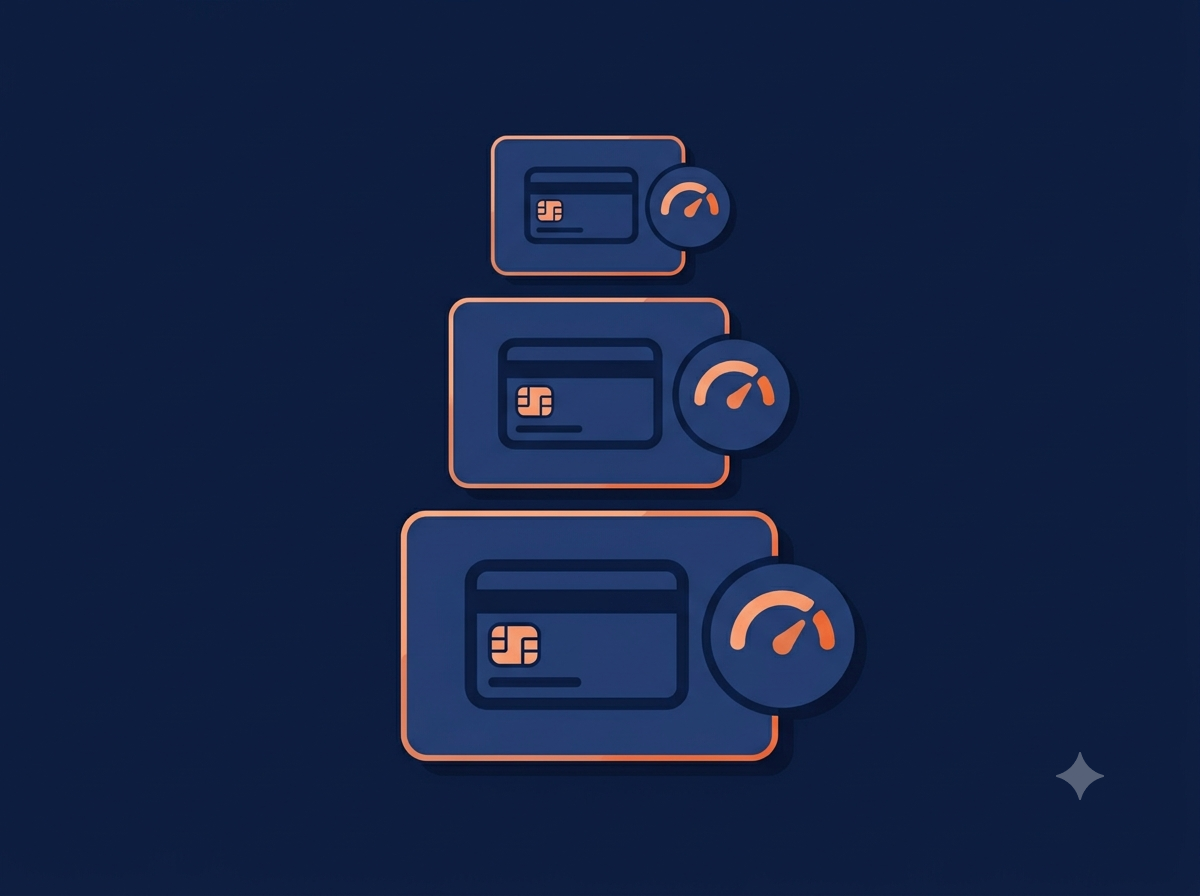
Not every credit card sits at the same bar, and knowing the tier you're aiming for helps set realistic expectations before you apply.
Comparison: CIBIL Score and Credit Card Access by Tier
Score Range | Card Access | Notes |
750–900 | Premium, rewards, travel cards | Best limits and approval odds |
700–749 | Standard unsecured cards | Premium cards may need extra income proof |
650–699 | Entry-level or secured cards | Limited unsecured options |
Below 650 | Secured (FD-backed) cards | Unsecured approval very difficult |
No credit history | Secured or income-based cards | Different from a low score, easier to work around |
Thresholds vary by issuer and card type. Confirm current criteria with the specific bank before applying.
Premium and rewards cards sit at the top of this ladder because they carry higher limits, richer benefits, and correspondingly higher risk for the bank if something goes wrong. Standard unsecured cards are the broad middle tier most first-time applicants aim for. Entry-level and secured cards exist precisely for the range below that, where a standard unsecured approval isn't reliable yet, but a card is still very much within reach.
Can You Get a Credit Card With a Low CIBIL Score?
Difficult, not impossible. Below 650, a standard unsecured application through most banks is unlikely to clear, but that isn't the end of the road.
A secured credit card, backed by a fixed deposit, is the standard workaround, and it exists specifically for this situation. You open an FD, often starting anywhere from ₹10,000 to ₹20,000, and the bank issues a card against it, typically with a limit set at 60% to 90% of the deposit amount. A ₹15,000 FD, for example, might get you a card with a ₹9,000 to ₹13,500 limit.
The reason this works even at a low score is straightforward: your own deposit is what's backing the card, so the bank isn't really taking on the same risk it would with an unsecured card. Because of that, most banks don't apply a strict CIBIL threshold to secured card applications at all.
This isn't a lesser product in any permanent sense. Responsible use of a secured credit card can help build a stronger credit history over time. A secured card used responsibly, kept at low utilisation, paid in full every cycle, builds exactly the repayment history that eventually gets you approved for an unsecured card, often within a year or so of consistent use.

FREED Expert Tip
A secured credit card, backed by a fixed deposit, is one of the practical ways to begin building a credit history. if your score isn't yet at the level a standard card needs.
Check where your score currently standsWhat If You Have No Credit History At All?
Having no credit history is a completely different situation from having a bad score, even though both can result in the same rejection letter. A low score means there's data, and the data isn't favourable. No history means there's simply nothing on file yet for a bank to judge.
Most first-time applicants find secured cards to be the natural entry point, for the exact same reason they work for low scores: the FD removes most of the bank's risk regardless of what your file does or doesn't contain. Some banks also offer income-based assessments for new-to-credit applicants, evaluating salary and employment stability instead of leaning on a score that doesn't exist yet.
Either route builds the credit history that a future unsecured application will eventually need. The starting point just looks different from someone rebuilding after a rough patch.
What Else Affects Credit Card Approval Besides the Score?
Score is the first filter, not the only one. A handful of other factors sit right alongside it in every application review.
Income level sets a practical ceiling on what limit you can be offered, sometimes independent of what your score alone would suggest. Employment stability matters too. Someone salaried for a couple of years at the same company generally reads as lower risk than someone recently self-employed, mostly because that income is easier for the bank to verify and predict.
Existing debt load gets weighed as well, not just reflected in the score. A bank looking at your application factors in how much you're already committed to paying each month across other loans and cards, since that shapes how much new credit it's comfortable extending on top of that.
Your existing relationship with the issuer can genuinely tip a borderline case. A salary account holder, or an existing customer with a clean track record on another product, sometimes gets approved where a completely new applicant with the identical score would not.

Existing Card Debt Behind Your Score?
See if consolidation or settlement fits before applying for anything new.
Check My OptionsHow FREED Helps You Understand What's Affecting Your Score
Everything above tells you the general thresholds and habits. It doesn't tell you what's specifically holding your own score back. That gap is what FREED's Credit Insights, the "Check My Credit" subscription, is built to close, and it's open to everyone, whether or not you're enrolled in any FREED program.
Credit Insights pulls your report from Experian, one of the four bureaus operating under the same RBI framework as CIBIL. Get flat 50% off on subscription or you avail the subscription at flat 50% off, and you get three things: your score, a plain-language breakdown of exactly a personalised explanation of the factors reflected in your credit report, along with practical recommendations to help you better understand and manage your credit profile.
Instead of guessing whether it's utilisation, a thin credit history, or a recent inquiry that's keeping you below the threshold you need, Credit Insights turns the general checklist above into something personal to your file, so you know exactly what to work on before your next application.

Are You in a Loan Trap? Quick Check
Move the slider to your total EMIs as a % of monthly salary. See your debt stress level instantly.
EMIs as % of Monthly Salary
Not Sure What's Affecting Your Score?
See the exact factors helping or hurting it.
Get Freed Assessment
Mohit Juneja
Mohit Juneja writes educational content at FREED on debt management, credit scores, loan repayment, and borrowing best practices. His content is shaped by expert insights and industry knowledge, helping readers better understand their financial options and make informed decisions.
mohit.juneja@freed.care

FREED is India's trusted loan management platform. Founded in 2020 and headquartered in Gurugram, FREED has counselled 20 lakh+ people on personal loans, credit cards, and app loans. FREED charges fees only on successful settlement, not upfront. FREED does not handle secured loans (home loans, car loans, gold loans).
Media Mentions