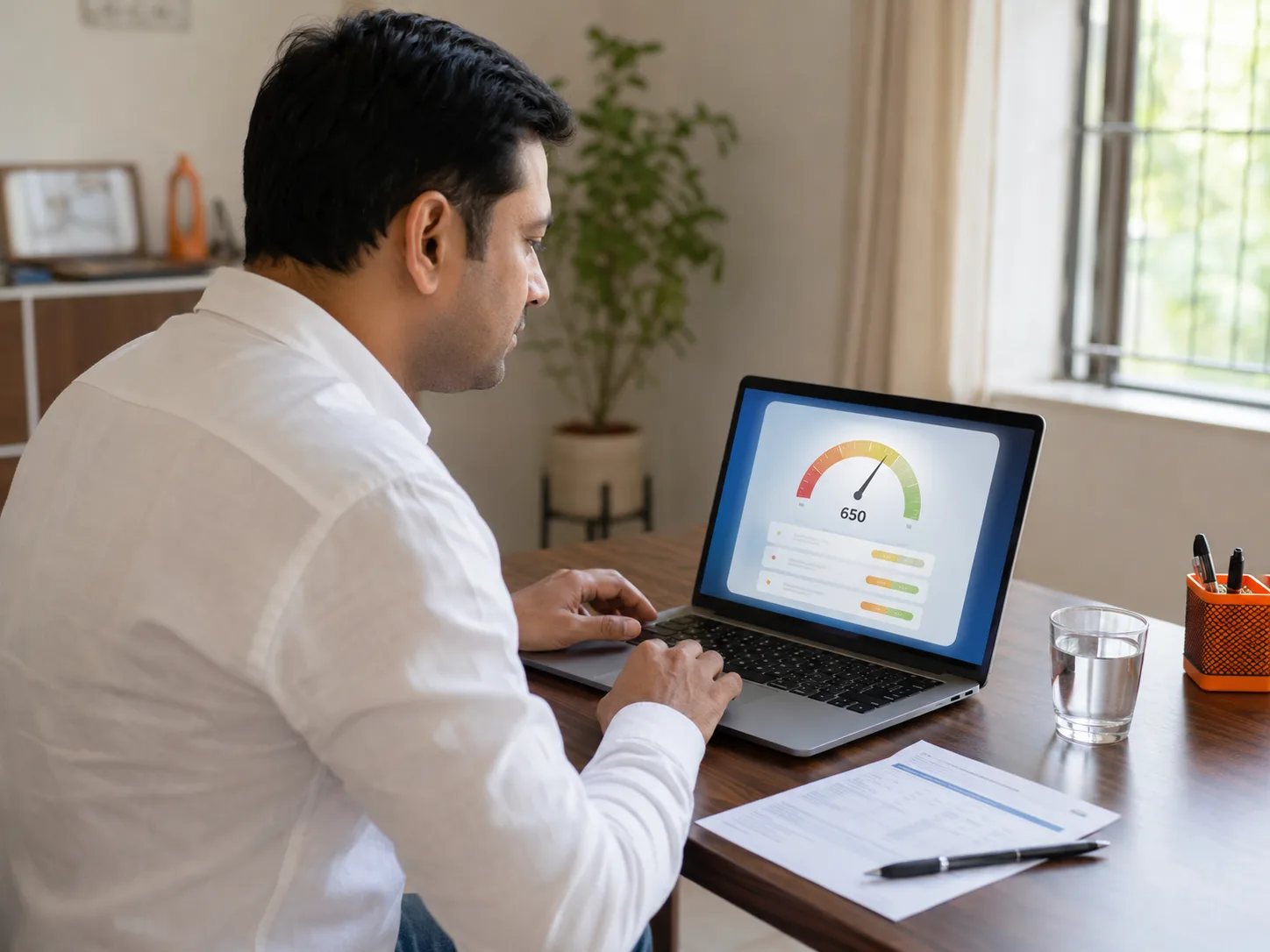
Loan Options for a Bad CIBIL Score in India
Many lenders have stricter eligibility criteria for applicants with weaker credit profiles, though approval requirements vary. The options that remain, including gold loans, FD-backed loans, and NBFC personal loans, typically carry higher interest rates than standard bank products. Exact rates depend on lender, profile, and prevailing market conditions. Verify directly before applying. Present as indicative market ranges, not universal figures.

Mohit Juneja
Reviewed by FREED India, Debt Resolution Specialists
 4.7/5
4.7/5 ₹3,200Cr+
 20,000+
 20,00,000+4.7/5₹3,200Cr+20,000+20,00,000+
KEY TAKEAWAYS

A lower CIBIL score generally reduces the options available. Many banks prefer stronger credit profiles and may not consider applications below certain internal thresholds. Some NBFCs consider lower scores based on income and other factors. These are indicative lender tendencies, not universal rules -- each lender sets its own criteria. Remove specific sub-bands (below 550, below 500) and the Bajaj Finserv / PaymeIndia source.
Gold loans require no minimum CIBIL score. Rates from 8.05% p.a. in 2026, the cheapest credit available regardless of credit history. (Source: ClearTax 2026)
On ₹2 lakh over 2 years: a borrower at 13% pays ₹28,000 in interest. At 32%, that becomes ₹74,000. The "bad CIBIL penalty" on the same loan: ₹46,000. (Source: FREED.care)
Some instant loan apps charge up to 54%–120% annually when fees are included. Bad-CIBIL borrowers in urgent need are the primary target of predatory platforms.
If the bad score came from existing debt that is already unmanageable, a new high-interest loan typically makes things worse, not better.
What Counts as a Bad CIBIL Score in India?
CIBIL scores run from 300 to 900. Below 650 is higher-risk credit profile. Their automated systems flag the profile before a human reviewer even sees it.
Within the bad-score range, options differ meaningfully across two sub-bands.
550–649 (poor but not hopeless). Some NBFCs approve with stable income. Secured loans are available. The path to a loan exists, but it costs more.
Below 550 (very poor). Unsecured options become rare. Secured loans are the primary route. Even some NBFCs close their doors here unless income is strong and the loan amount is small.
Scores below 600 are generally treated as high risk, with rare unsecured approvals unless supported by high income or collateral. (Source: Kissht 2026) Around 30–40% of Indian loan applicants face challenges due to low CIBIL scores. (Source: PaymeIndia 2026)
Now the distinction that almost no other blog makes: a bad CIBIL score is not a fixed character label. It came from somewhere. The two most common situations are different in a meaningful way.
Situation 1: The borrower hit a rough patch, a job loss, a salary cut, a medical emergency, and has since stabilised. Income is back. Payments are current. But the score still reflects the old damage.
Situation 2: The score is low because existing loans are still unmanageable. Payments are still being missed. The debt has not been resolved.
Situation 1 can potentially support a new loan. Situation 2 needs to address the existing debt first. A new high-interest loan on top of unmanageable debt makes the situation worse, not better. The rest of this blog is built around that distinction.
Bad CIBIL score breakdown: 300–549 is very poor, frequent defaults. 550–649 is poor, inconsistent repayment history.

Bad CIBIL Score and Urgently Need Help?
Get a free assessment of your situation before deciding. No commitment, no pressure.
Get My Free AssessmentWhy Did the Score Become Bad? The Real Causes
Most people with a bad CIBIL score did not make consistently reckless decisions. They hit a specific trigger, and it cascaded. Here are the most common real causes.
Missed EMIs from a life event. Job loss, salary cut, and medical emergencies are the most frequent triggers. A single missed EMI can drop the score by 50–100 points. A few consecutive misses can take a score from 720 to below 600.
Credit card usage above 30%–40% of the card limit. This signals risk to bureaus even when payments are technically on time. Many borrowers do not know this is happening until they check the report.
Too many loan applications in a short period. Every new application creates a hard enquiry (a credit check triggered by the new application). Each application creates a hard enquiry that lenders may consider during future credit assessments.
A previous loan settlement. The "Settled" mark on the CIBIL report can stay for up to 7 years from default.
Being a co-applicant on someone else's defaulted loan. If the primary borrower stopped paying, the co-applicant's credit took the same hit.
Errors on the report that were never disputed. A closed loan still showing as "Active" or a paid EMI still marked "Overdue" can drag the score down for years.
Since January 2025, CIBIL updates every 15 days instead of monthly. Missed payments now appear on the report faster than before. (Source: Business Standard 2025)
Knowing the cause matters because the remedy is different. A report error corrected can improve the score once the bureau reflects the update. A genuine default takes consistent positive credit behaviour over time to move past. No fixed timeline applies. Remove the 12-18 month figure.

What Loan Options Are Available for a Bad CIBIL Score?
Option | CIBIL Needed | Rate | Amount | Key Caveat |
Gold loan | None | 8.05%–9.30% p.a. | ₹20,000–₹50 lakh | Secured: gold auctioned if default. Outside FREED scope. |
Loan against FD | None | FD rate + 1%–2% | Up to 90% of FD | Only if FD exists |
NBFC personal loan | 550+ with stable income | 24%–36% p.a. | ₹25,000–₹2 lakh | Read KFS. Fees from disbursed amount only, never upfront. |
Co-applicant route | Co-applicant needs 700+ | Tied to co-applicant | Varies | Default affects co-applicant's CIBIL too |
Salary account bank | Bank's discretion | Varies | Small amounts | Not guaranteed |
Microfinance (MFI) | None | 15%–26% p.a. | ₹10,000–₹50,000 | Weekly repayment often required |
Note: General indicators only. Final terms vary by bank or NBFC. FREED is not a loan provider. No outcome is guaranteed. Please verify directly with your bank or NBFC.
What Does a Loan for Bad CIBIL Actually Cost? — Real Numbers
CIBIL Range | Rate | Monthly EMI (approx.) | Total Interest | Total Repayment |
750+ (banks) | 13% p.a. | ₹9,520 | ₹28,480 | ₹2,28,480 |
550–650 (NBFCs) | 24% p.a. | ₹10,641 | ₹55,384 | ₹2,55,384 |
Below 550 (fintech) | 36% p.a. | ₹11,957 | ₹86,968 | ₹2,86,968 |
Note: Indicative figures, reducing balance method. Processing fees, GST, and charges are additional. Verify all terms in the KFS before signing. FREED is not a loan provider.
The "bad CIBIL penalty" on the same ₹2 lakh loan: approximately ₹46,000 more in interest compared to a good-credit borrower. (Source: FREED.care)
Now add the processing fee. At 2.5% on ₹2 lakh: ₹5,000 plus 18% GST equals ₹5,900 deducted from the disbursed amount. The borrower receives ₹1,94,100 in hand but repays ₹2,74,000 at 32% p.a. Effective total cost: ₹79,900 on ₹1,94,100 actually received.
NBFC bad-CIBIL rates: 24%–36% p.a. (Source: DailyFinancial.in / Wishfin 2026) Processing fee: 2%–3% plus 18% GST. (Source: BankBazaar 2026)
The FOIR check matters here too. If a significant share of your monthly income is already committed to EMIs, carefully assess whether additional borrowing is affordable.

FREED Expert Tip
Before applying to any NBFC for a bad-CIBIL loan, check your salary account bank's app under "pre-approved offers." That bank already sees 6–12 months of income data and may approve a small loan at a better rate, with no hard enquiry until formal acceptance. Gold loan comes next if gold is available. NBFC unsecured loan is the third option, not the first.
Review Your Loan OptionsHow to Apply for a Loan With a Bad CIBIL Score: Step by Step
Salary account bank first. Gold or FD if available. NBFC unsecured route only when neither option exists. These steps cover the NBFC path.
- 1
Check CIBIL report for errors before applying anywhere
Download the free annual report from cibil.com. Look for: closed loans still showing "Active," paid EMIs marked "Overdue," or accounts you don't recognise. Dispute errors for free corrections take up to 30 days. Correcting reporting errors helps ensure lenders assess accurate credit information.
- 2
Check FOIR is there room for a new EMI?
Add all existing EMIs and divide by take-home monthly salary. If the number is already above 50%, a new loan is dangerous to manage even if it gets approved. Fix the existing EMI burden first.
- 3
Check the salary account bank's app for pre-approved offers
The bank seeing 6–12 months of consistent salary credits may extend a small offer at better terms. No hard enquiry until formal acceptance. Worth checking here before approaching any NBFC.
- 4
If gold or FD is available, use that first
A gold loan at 8.05%–9.30% p.a. with no CIBIL check is always cheaper than an NBFC loan at 24%–36%. If an FD exists, borrow against it at the FD rate plus 1%–2%. Only if neither option is available should the NBFC route follow.
- 5
Identify 1–2 RBI-registered NBFCs that accept the score range
Check the DLA Directory (Digital Lending Apps directory, operational since July 2025) at rbi.org.in. Apply to 1–2 only. Multiple applications in a short period may affect how lenders assess future applications.
- 6
Prepare income documents cleanly bank statement is the real signal
Have ready: last 6 months of bank statements showing consistent salary credits, PAN and Aadhaar, and last 3 months of salary slips. Avoid applying if the account balance zeroes out after every salary credit. Platforms flag this as a repayment risk signal.
- 7
Read the KFS before agreeing
The KFS must show the full APR, all fees, and the repayment schedule. If not provided before signing, do not proceed. FREED can help review loan terms if needed.
How to Spot a Predatory Loan App Targeting Bad-CIBIL Borrowers
Bad-CIBIL borrowers in urgent need are the primary target of fraudulent loan apps in India. The RBI removed 47 fake apps from app stores as of March 2026. (Source: AskDaman 2026) In December 2025 alone, 87 illegal apps were blocked under the IT Act. (Source: MoneyScore 2026) In 2025–26, RBI received thousands of complaints from borrowers who lost advance fees to fake "loan agents." (Source: DailyFinancial.in 2026) Some apps charge effective rates of 54%–120% annually when all fees are included. (Source: Lendingplate 2026)
Here is how to tell a legitimate NBFC platform from a scam.
Red flags that signal a fraudulent or unregistered platform:
- App charges any fee before releasing the loan, whether called "processing fee," "GST," "insurance," or "verification." Legitimate NBFCs only deduct fees from the disbursed amount, never before.
- Claims "100% approved regardless of CIBIL." No legitimate lender can guarantee approval before reviewing documents and income. This phrase is a fraud signal.
- No KFS provided before the loan is accepted. Every RBI-registered NBFC is legally required to give one.
- Loan money credited to a wallet, not a bank account. RBI rules require direct bank account disbursal.
- App requests access to full contact list, call logs, or photo gallery beyond what KYC needs.
- No RBI registration number or NBFC name visible anywhere in the app or on the website.
- App was downloaded from a WhatsApp link, SMS, or third-party APK site rather than the official Google Play Store or Apple App Store.
- Repayment window of 7–15 days. Extremely short terms are a hallmark of predatory platforms.
How to verify:
Visit rbi.org.in and check the NBFC register. Also check the DLA Directory (the RBI list of legitimate digital lending apps backed by registered entities, operational since July 2025). Any app not in this directory should not be used.
When Should You Not Take a Loan With a Bad CIBIL Score?
Most blogs tell you how to get a loan with a bad score. Almost none tell you when not to.
There are three situations where a bad-CIBIL borrower should not take a new loan, even if one is available.
When the bad score came from existing loans that are already unmanageable. If payments are still being missed on existing accounts, a new loan at 24%–36% adds to the total EMI burden. It makes default on all accounts more likely, not less.
When FOIR is already above 50%. Even if the loan is approved, the total monthly outflow at this level is genuinely risky. One difficult month can trigger missed payments across multiple accounts simultaneously.
When the plan is to use the new loan to pay off overdue EMIs on existing loans. This cycle typically grows the total outstanding rather than reducing it. It buys a few weeks of breathing room while the underlying debt gets larger.
If any of these three apply, the right conversation is not about a new loan. It is about the existing debt. That is where FREED can genuinely help.
What Are Your Options When Existing Debt Is the Real Problem?
If the bad CIBIL score came from existing unmanageable debt, a new loan is not the answer. Here is what to look at, in the correct order.
Talk to the bank about changing the existing loan repayment plan. Ask whether they can lower the EMI or extend the repayment time. Banks do not advertise these options, but many will discuss them if approached before the account tips into NPA (loan marked as bad after 90 days of missed payments).
Ask the bank to convert credit card outstanding to a lower-rate EMI plan. Most major banks allow this at a rate lower than the card's rollover rate. It reduces monthly outflow without adding new debt.
Merge all loans into one lower monthly payment -debt consolidation. Consolidation (combining all existing loans into one new loan at a lower EMI) is for borrowers still paying but stretched thin. One payment, one account, one due date. This does not hurt the CIBIL score. It typically improves over time. FREED's Loan Consolidation Plan can help if payments are still current but barely manageable.
Balance transfer once the score stabilises to 670 or above. Moving high-interest debt to a lower-rate bank makes more sense after several months of consistent repayment than it does right now.
If repayment has become genuinely impossible, loan settlement as a last resort. For unsecured loans only: personal loans, credit cards, BNPL, loan apps. Not for home loans, car loans, or gold loans.
How Loan Settlement Helps When Repayment Has Become Genuinely Impossible
Settlement is not something a borrower chooses out of preference. Banks and financial companies only consider it when you are in a genuine financial difficulty and are truly unable to repay the full amount. It is a last resort, not a shortcut.
What settlement means: you pay a reduced lump sum, and the bank accepts it as the full and final payment. The loan is then marked "Settled" on your CIBIL report.
FREED helps borrowers settle their unpaid/overdue loans at up to 50% less*. The bank decides the final number based on your actual situation.
The "Settled" mark stays on your CIBIL report for up to 7 years. Future lenders may consider the account's reported status while evaluating new credit applications. This consequence is real and must be understood before deciding.
Settlement applies only to unsecured loans: personal loans, credit cards, BNPL products, loan apps. FREED does not handle secured loans.
FREED handles the back-and-forth with the bank, helps prepare the documents, and gets the settlement letter worded correctly. FREED charges a fee only when a settlement is successfully completed. If the bank refuses, no service fee is charged and the initial evaluation fee is refunded.
Disclaimer: Rates and ranges shown are indicative. Final terms are decided by the bank. FREED is not a loan provider. No outcome is guaranteed. Please verify directly with your bank.
Are You in a Loan Trap? Quick Check
Move the slider to your total EMIs as a % of monthly salary. See your debt stress level instantly.
EMIs as % of Monthly Salary
How to Recover From a Bad CIBIL Score: Practical Steps
There is no shortcut. But these specific actions move the number faster than others.
Pay every current EMI on time from this month forward. Payment history is one of the most significant factors in your CIBIL score. Every on-time payment is a positive signal. Remove the 35% figure and the Axis Bank / Bajaj Finance citation.
Set up auto-payment (NACH mandate, the auto-deduction permission given to the bank) for all EMIs. This removes the risk of a payment slipping because of a busy week or a forgotten due date.
Keep credit card usage below 30% of the card limit at all times. This is the fastest way to improve the score without taking on any new credit. High utilisation drags the score down even when payments are on time.
Check the CIBIL report for errors and dispute them. Free at cibil.com. Takes up to 30 days to correct. A closed loan still marked "Active" or a paid EMI still marked "Overdue" can be disputed at no cost.
Do not apply for any new credit during the recovery period. Every application creates a hard enquiry. During rebuilding, consistency is the only strategy.
CIBIL reporting frequency has increased in recent years, so positive behaviour reflects faster than before. Score improvement depends on the individual's starting point, history, and consistency. No fixed timeline or score target applies universally. Remove all specific month ranges and score bands, and all source citations on this point.
Sources
Topic / Claim | Source Link |
CIBIL score bands and lender approval patterns | |
RBI's tiered gold loan LTV framework, effective April 2026 | |
NPA classification at 90 days | |
FOIR and lender risk assessment | https://www.rbi.org.in/Scripts/BS_ViewMasCirculardetails.aspx?id=9859 |
'Settled' status duration up to 7 years | |
RBI registration verification for NBFCs |

Mohit Juneja
Mohit Juneja writes educational content at FREED on debt management, credit scores, loan repayment, and borrowing best practices. His content is shaped by expert insights and industry knowledge, helping readers better understand their financial options and make informed decisions.
mohit.juneja@freed.care

FREED is India's trusted loan management platform. Founded in 2020 and headquartered in Gurugram, FREED has counselled 20 lakh+ people on personal loans, credit cards, and app loans. FREED charges fees only on successful settlement, not upfront. FREED does not handle secured loans (home loans, car loans, gold loans).
Media Mentions