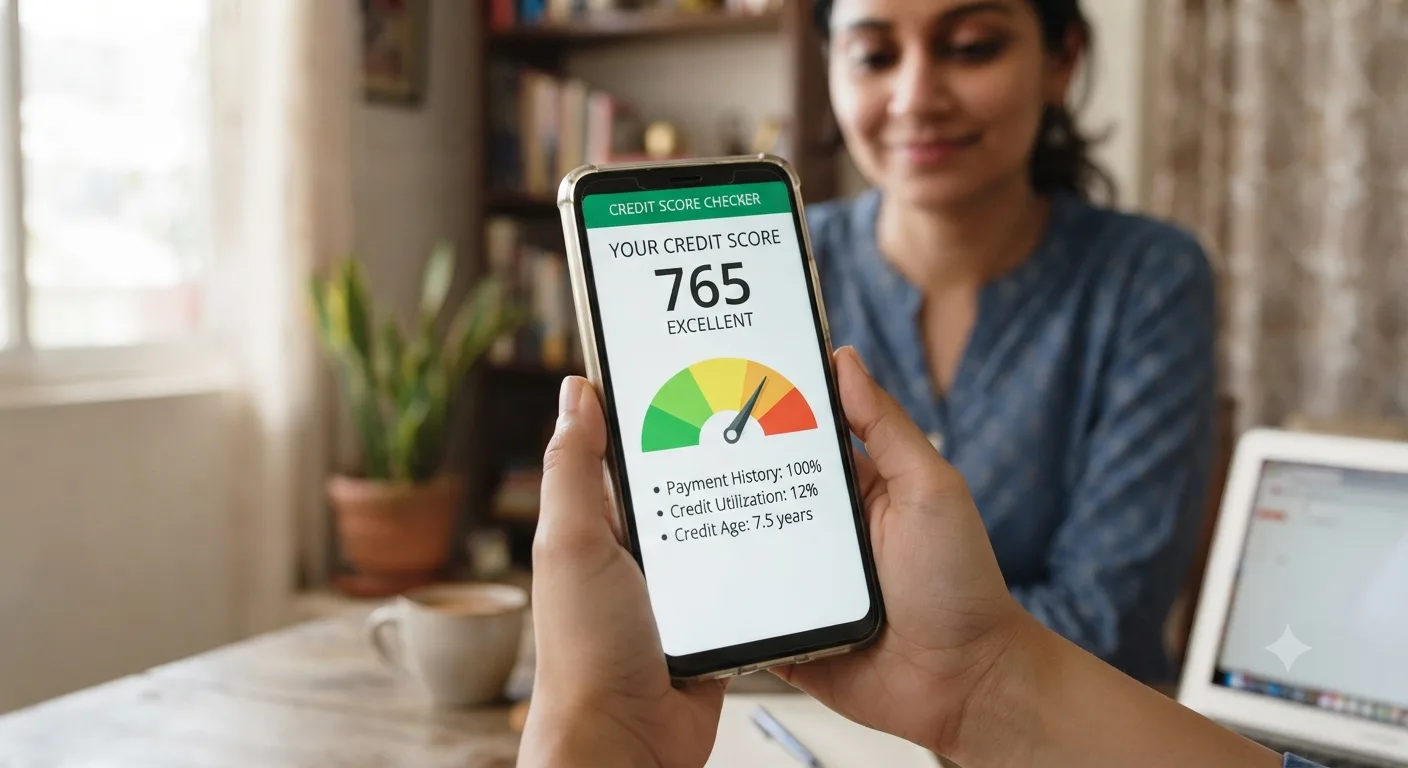
Personal Loan for CIBIL Score of 650: Which banks and financial companies Will Approve & at What Rate?
You searched this because something already feels off. Maybe a few EMIs slipped over the last few months. Maybe a credit card bill kept rolling for a while. And now your CIBIL says 650 and you're wondering if anyone will still lend to you. Yes, they will. But before you take another loan, you deserve to know what it actually costs, and whether it actually helps.
Mohit Juneja
Reviewed by FREED India, Debt Resolution Specialists
 4.7/5
4.7/5 ₹3,200Cr+
 20,000+
 20,00,000+4.7/5₹3,200Cr+20,000+20,00,000+
Key Takeaways

A CIBIL score of 650 falls in the "fair" range. Big banks usually reject below 700, but NBFCs and digital lenders approve loans here at higher rates.
Expect interest rates of around 18–24% per year at 650 CIBIL, compared to 11–13% at 750+. On a ₹3 lakh loan, that's roughly ₹55,000 in extra interest.
Loan amounts are usually smaller (₹50,000 to ₹3 lakh) and tenure shorter (12 to 36 months) at this score.
The real question isn't who will approve you. It's whether a new loan actually helps or just adds to the debt cycle.
If you're already juggling 2 to 4 loans, taking a new one to pay older ones makes the maths worse, not better.
Debt settlement, where FREED negotiates directly with your lenders, can reduce what you owe without taking any new loan.
A 650 CIBIL can recover to 700+ in 4 to 6 months with clean payment behaviour and lower credit card usage.
What a 650 CIBIL Score Really Means
The CIBIL score range goes from 300 to 900. A 650 sits in the "fair" zone, not "good," not "poor." It's the in-between space that confuses people the most.
To a bank or financial company, 650 says one thing: this person had a slip somewhere. Maybe two missed EMIs. Maybe a credit card running at 90% usage. Maybe too many loan applications in a short time. You're not a defaulter. But you're not a safe bet either.
Here's the thing most articles won't tell you. People at 650 usually didn't get there by being careless with money. They got there because of one rough patch. A job change. A medical bill. One credit card that quietly spiraled while life happened.
As per CIBIL data, scores between 650 and 749 are considered acceptable by many NBFCs, but you face stricter terms than someone with 750+. That gap is where the real cost hides.
650 CIBIL Score: Can I Get Personal Loan?
Short answer: Yes. But mostly from the NBFCs and the digital banks and financial companies, not the big banks. And the price will be higher than you would like.
Here’s what you can expect:
● Generally, big banks such as HDFC, SBI, ICICI, Axis, and Kotak prefer 720+ score for unsecured personal loans
● NBFCs and digital banks and financial companies are more flexible. They observe your income, bank statement and employer patterns and CIBIL score
● Loan amounts generally are limited to the lower end (usually ₹50,000 to ₹3 lakh, not the ₹10 lakh you might see advertised)
● Tenure is usually shorter (12 to 36 months)
What Interest Rate Will You Get at 650 CIBIL?
The single biggest cost of a 650 score is the interest rate jump.
At 750+, the same loan might come at 11–13%. At 650, you're looking at 18–24% from NBFCs. Instant loan apps can go even higher.
Let's make this real with numbers.
On a ₹3 lakh personal loan over 3 years, the difference between 12% and 22% is roughly ₹55,000 in extra interest. That's almost an entire month's salary for many people. For the same loan. For the same 3 years.
This isn't to scare you. It's just to make the cost visible before you sign.
Disclaimer: Rates shown are indicative ranges based on publicly available information. Actual rates depend on the bank or financial company's internal assessment. FREED is not a bank or financial company.
Banks and Financial Companies That Approve Personal Loans at 650 CIBIL
Different types of banks and financial companies look at a 650 score very differently. Here's the broad picture without naming specific rates (because those change all the time):
Large private and public banks: Usually need 720+. They rarely approve at 650. If they do, expect strict income proof and a small ticket size.
NBFCs: Much more flexible. They look at your full profile. Rates will be higher than banks.
Digital-first banks and financial companies: Fastest approval, smallest paperwork, highest rates. Often approve within hours, but watch the fine print.
Co-applicant or secured route: Adding a co-applicant with a stronger score, or pledging an asset, can change the picture. This is a different decision altogether and not always the right move.
To make this easier, use the tool below to see your approval picture based on your actual situation.
5 Things Banks and Financial Companies Check Besides Your CIBIL Score
The score is one part of the story. Here's what else banks and financial companies look at:
Monthly income stability regular salary credits in your bank statement
Employer category MNC, PSU, or government jobs score higher than small private firms
Debt-to-income ratio how much of your salary is already going to EMIs
Recent loan applications too many in the last 3 months drops your chances even at the same CIBIL
Credit card behaviour paying only the minimum due tells banks and financial companies you're stretched
If any of these are weak in your profile, even a 650 score won't be enough.

FREED Expert Tip
If your total EMIs already eat up more than 50% of your take-home salary, taking another personal loan, even if approved, will tip you into a danger zone. The maths simply doesn't allow recovery. A free 10-minute call with a FREED counsellor can show you exactly where you stand before you sign anything.
Talk to a FREED ExpertThe Real Question No One Is Asking: Should You Take Another Personal Loan at 650?
This is the section most blogs skip. Let's not.
If your CIBIL is 650, ask yourself why before you ask where.
Most people at 650 fall into one of three groups:
Group A: You built credit responsibly, missed a couple of EMIs during a rough patch, and your score will recover in 6 months on its own.
Group B: You're already juggling 2 to 4 loans or credit cards, and you're thinking of a new loan to pay an older one.
Group C: Your EMIs have already started to slip one or two missed in the last few months. Recovery calls have started. EMIs are eating most of your salary. You're losing sleep over money
For Group A, a personal loan is fine if you genuinely need it. Plan repayment first.
For Group B and C, and this is most people searching this query, taking another loan at 22% to pay an older loan at 16% adds cost, not relief. The maths doesn't work. You're not solving the debt. You're moving it and adding interest on top.
If you're in Group B or C, the answer isn't borrowing more. It's reducing what you already owe. At FREED, we sit with people in this exact spot every day. We work directly with your banks and financial companies to bring down your total debt, often by up to 50%, without you having to take any new loan.

Stuck with multiple EMIs at 650 CIBIL?
FREED has helped 60,000+ Indians reduce their debt without taking a new loan.
Get My Free Debt Assessment →Quick Self-Check: Are You Borrowing to Repay?
Before you compare banks and financial companies, ask yourself one honest question. If your new loan is going to pay off an older loan, you may already be in a debt cycle. A debt counsellor can spot this in 10 minutes and tell you whether a new loan helps or hurts your specific situation.
How Debt Settlement Works When You're Stuck at 650
Settlement is not something a borrower chooses out of preference. Banks and financial companies only consider it when you are in a genuine financial difficulty and are truly unable to repay the full amount. It is a last resort, not a shortcut.
Settlement is not the same as paying everything off. It is negotiating with the bank or financial company to accept a smaller final amount as full closure on the loan.
Sounds simple. It isn't. Here's why most people can't do it alone:
● Banks and financial companies usually don't negotiate with the borrower directly until the account is seriously delinquent
● You don't know what percentage each bank or financial company typically settles at. It varies by bank, by account age, and by your repayment history
● The wrong wording on a settlement letter can mean the bank or financial company reports it as "written off" instead of "settled," which is far worse for your CIBIL
● Recovery teams use heavy pressure tactics on solo borrowers
This is exactly where FREED comes in. At FREED, we negotiate with your banks and financial companies for you. Our team knows how to structure the conversation, and how to get the closure documented correctly so your CIBIL recovers faster afterward. We've helped 60,000+ Indians get out of unsecured debt this way.
What the Law Says
Settlement is a legally recognised option in India. Under RBI guidelines, banks and financial companies are allowed to settle accounts with borrowers who genuinely cannot repay the full amount, and they are not allowed to use threats, abuse, or harassment during recovery. They cannot contact your family or employer without your permission. If any bank or financial company or recovery agent is doing this, you have the right to file a complaint with the RBI Ombudsman. FREED's team can guide you through this process if needed.
Talk to a Debt Expert Today
Want to know how much of your debt can actually be settled? One free call. No judgment. Just clear answers.
Book My Free Call →What Happens to Your CIBIL After Settlement (And How It Recovers)
After settlement, your CIBIL report shows the account as "settled." This is a negative remark and stays on your report for around 7 years.
But here's the part most people don't see clearly.
Once an account is settled, the bleeding stops. No more interest piling up. No more recovery calls. No more fear of legal notice. Your score actually starts recovering after 12 to 18 months of clean credit behaviour.
Compare that honestly to the alternative. A settled account hurts your score for a while. An unpaid account that keeps defaulting hurts it much longer, keeps adding interest and penalties, and can follow you into legal trouble.
At FREED, we don't stop at settlement. We guide you through the recovery roadmap afterward so your score comes back to a healthy range as quickly as it can.
When Improving Your CIBIL to 700+ Is the Better Step
If you fall into Group A and have a small manageable amount of debt, don’t add to it. Concentrate on improving the score. Here’s how:
Pay each EMI on time for 6 months. Set up auto-debit so you never miss one.
Use your credit card below 30% of available credit. If your limit is Rs 1 lakh, try to keep it below Rs 30,000.
Do not apply for any new credit during this time. Each app leaves its footprint.
Check your CIBIL report for any errors. Wrong entries are more common than you think. Argue against them.
Hold on. Normally, a 50 point jump requires 4 to 6 months of clean behaviour.

Mohit Juneja
Mohit Juneja writes educational content at FREED on debt management, credit scores, loan repayment, and borrowing best practices. His content is shaped by expert insights and industry knowledge, helping readers better understand their financial options and make informed decisions.
mohit.juneja@freed.care

FREED is India's trusted loan management platform. Founded in 2020 and headquartered in Gurugram, FREED has counselled 20 lakh+ people on personal loans, credit cards, and app loans. FREED charges fees only on successful settlement, not upfront. FREED does not handle secured loans (home loans, car loans, gold loans).
Media Mentions