How Do Lenders Evaluate Your Loan Credit Score?
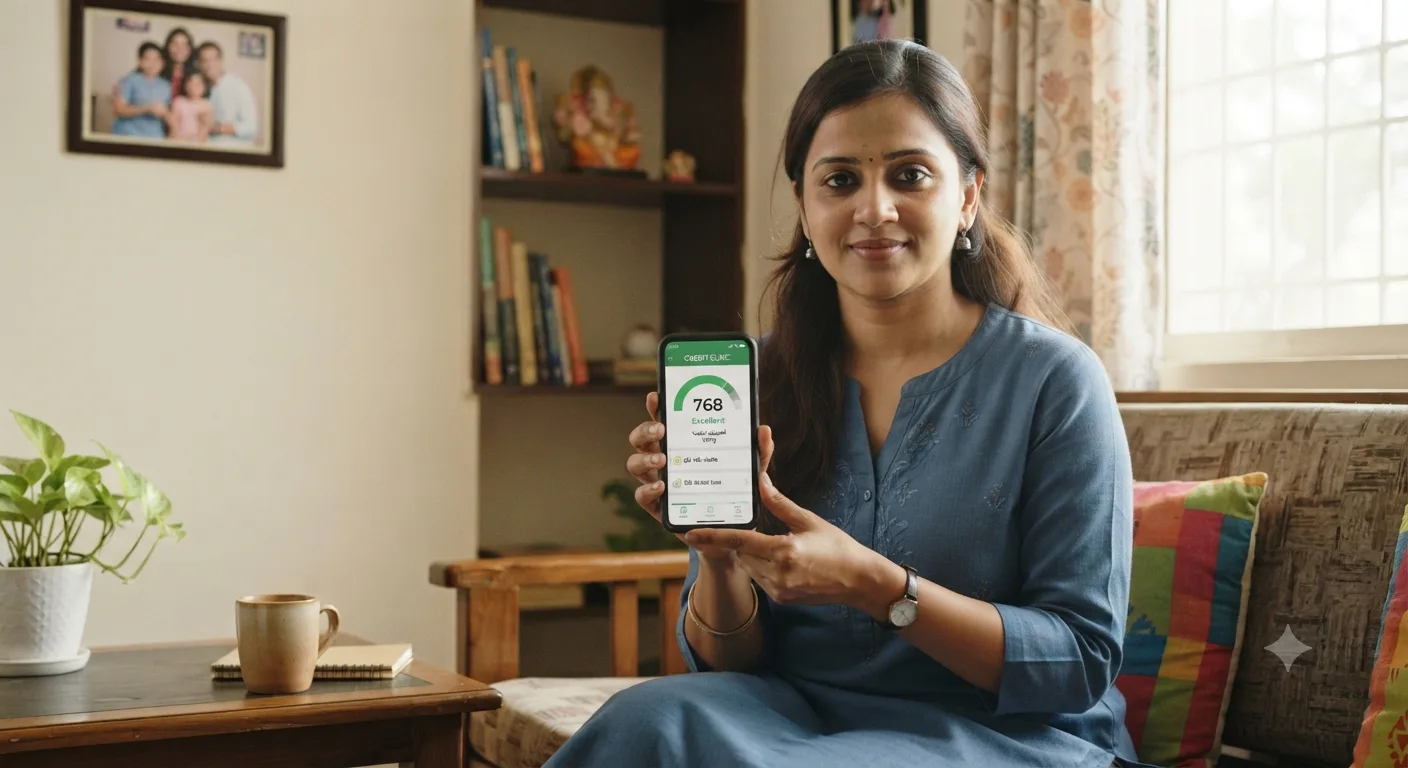
Loan credit score evaluation is the process banks and NBFCs use to check your repayment history, outstanding debt, and credit behaviour before approving a loan. Lenders pull your score from a credit bureau, compare it against their internal lending criteria, and consider it alongside factors such as your income and existing EMIs when assessing your loan application.

Mohit Juneja
Reviewed by FREED India, Debt Resolution Specialists
 4.7/5
4.7/5 ₹3,200Cr+
 20,000+
 20,00,000+4.7/5₹3,200Cr+20,000+20,00,000+
KEY TAKEAWAYS

Your loan credit score is one input lenders use, not the only one, alongside income and existing EMIs.
Most lenders want 750+ for the best rates; many still approve between 700-749 on stricter terms.
Payment history is widely considered one of the most important factors in credit scoring.
FOIR (how much of your salary goes to EMIs) above 50% can sink an application even with a decent score.
Multiple loan or card applications in a short window count as hard inquiries and can pull your score down.
What Is a Loan Credit Score and Why Do Lenders Check It
In short, a loan credit score is a lender's fast, standardised way of estimating how likely you are to repay before they extend credit. Before scoring systems existed, lenders judged applications largely by hand, inconsistently, and often slowly. The score gives every application a common, comparable starting point.
In India, this number runs from 300 to 900, and it comes from a credit bureau, built off your credit report, not from the lender you're applying to directly. TransUnion CIBIL is one of four RBI-licensed bureaus operating in the country, alongside Experian, Equifax, and CRIF High Mark, and "CIBIL score" has become the generic term most people use for "credit score" in India, similar to how a brand name sometimes stands in for the category. Our dedicated explainer on [Credit Score vs CIBIL Score] covers that distinction in full if you want the deeper dive.
With the basics out of the way, the more useful question is what a lender is actually looking at when they pull this number, which is where the real detail lives.
Why Do Lenders Rely So Heavily on Your Credit Score
From a lender's side, the reasoning is fairly straightforward, and it's worth understanding without reading it as judgment on the borrower.
Unsecured loans, personal loans, credit cards, and BNPL come with no collateral behind them. If repayment stops, there's nothing physical the lender can recover. That absence of a safety net is exactly why the score carries so much weight for these specific products; it's the lender's primary signal of risk before any money moves.
A higher score generally means faster approval and a lower interest rate, since the lender is pricing in less perceived risk. A lower score doesn't mean approval is impossible; more often, it means stricter terms, a smaller approved amount, or a co-applicant requirement rather than an outright no.
Here's the part worth sitting with: someone paying every EMI on time but juggling several loans across different lenders isn't automatically "high risk" in any meaningful sense. But the score alone can't fully capture that nuance, which is exactly why other factors sit alongside it in a lender's actual decision. What those factors are is covered next.

What Factors Do Lenders Actually Look At
Five factors build your score, and they don't all carry the same weight.
- Payment history, about 35% of your score. This tracks whether your EMIs and credit card bills have gone out on time, consistently. Picture it concretely: two missed payments on a credit card over the past year will weigh far more heavily here than one card sitting close to its limit.
- Credit utilisation is about 30%. This measures how much of your available credit you're actually using. If your total limit across cards is ₹1,00,000 and you're regularly carrying ₹70,000, that reads as high utilisation, even if you pay it off in full every month.
- Credit history length. Older, well-maintained accounts help here. Closing your oldest credit card, even one you rarely use, shortens your average account age and works against this factor.
- Credit mix. A profile with both secured credit, a home or auto loan, and unsecured credit, cards or personal loans, generally reads better to a lender than a profile built entirely on unsecured debt alone.
- Recent inquiries. Applying for several loans or cards in a short window signals what lenders call "credit hunger," and each of those applications pulls your score down a little, regardless of whether they're eventually approved.
Worth noting: these factors interact with each other rather than sitting in isolation. A genuinely strong payment history can't fully offset a consistently high utilisation ratio, and vice versa; both need to be working in your favour together. A late payment may negatively affect your credit profile and future lender assessments.
How Lenders Evaluate Your Application Step by Step
Here's the general mechanism most lenders follow once you actually submit an application.
- The lender pulls your credit report from one or more bureaus, depending on their internal process.
- Your score gets checked against the lender's internal cutoff for that specific loan product, since different products within the same bank can carry different thresholds.
- Income, employment stability, and FOIR get assessed alongside the score, not instead of it. FOIR, Fixed Obligations to Income Ratio, measures how much of your monthly income is already committed to EMIs, and most Indian lenders treat anything above 50% as a real risk signal, regardless of how strong the score itself looks.
- Existing loan exposure and recent inquiries get reviewed as a fuller picture of your current credit behaviour, not just a historical snapshot.
- The lender decides on approval, amount, and interest rate, or issues a rejection with a stated reason if declined.
One bit of context worth knowing: for larger secured loans like a mortgage, lenders sometimes pull scores from more than one bureau and work off the lower of the two. This applies specifically to secured lending, a category FREED doesn't work with, so treat this as background rather than something directly relevant to FREED's programs. With the mechanics covered, the natural next question is what score you actually need.

Freed Expert Tip
Space out loan and card applications by at least 3-6 months; clustered inquiries hurt your score even if every application gets approved.
Check Your Enquiry Impact with FREEDWhat Credit Score Do You Need for a Personal Loan in India
Score Band | What It Generally Means | What to Expect |
750-900 | Considered excellent/ideal by most lenders | Fastest approval, best interest rates |
700-749 | Considered acceptable | Approval likely, but not the best rate |
650-699 | Considered borderline | Approval possible via NBFC/fintech, higher interest |
Below 650 | Considered difficult by most banks | Traditional bank approval unlikely, alternate lenders or a co-applicant needed |
Bands vary by lender and loan type; treat as general orientation, not a guarantee. FREED is not a lender and does not set these thresholds. Rates and ranges shown are indicative. Final terms decided by the bank. FREED is not a Loan Provider. No outcome is guaranteed. Please verify directly with your bank.
Requirements also shift meaningfully by lender category, not just by score band. Public sector banks generally sit around 700-720 as a minimum, with stricter documentation but genuinely better rates in exchange. NBFCs and fintech lenders often go lower, working in the 650-700 range, but at meaningfully higher interest, commonly 18% to 30% per annum.
Here's the nuance worth holding onto: a 730 score paired with stable employment and a low FOIR can often outperform a 760 score weighed down by several existing loans. The score alone is never the complete picture that a lender is actually working from. So if your own score falls short of what you're seeing here, what actually helps next is worth walking through properly.

See Which Path Fits Your Loans
Get a free assessment to understand which options may be appropriate for your financial situation.
Start My Debt AssessmentWhat Are Your Options If Your Score Is Holding You Back
The next right step depends entirely on why your score or application is falling short, and the order here matters.
Step 1: Check your credit report for errors first. A wrongly reported late payment or an account that isn't yours can be quietly suppressing your score, and this is the cheapest possible fix if it applies to you. Our guide on [How to Check Your Correct CIBIL Score & Dispute Errors] walks through that process in full.
Step 2: If you're current on every payment but finding it difficult to manage multiple EMIs, debt consolidation may be an option, depending on your financial situation and the lending partner's assessment. If eligible, a consolidation loan may help combine eligible debts into a single repayment plan. Final loan terms, including the EMI, depend on the lending partner.
Step 3: Only if repayment has become genuinely impossible, not simply stressful, does loan settlement become the relevant option. This is a last-resort path, and it comes with a real, lasting cost to your CIBIL report.
These three steps solve genuinely different problems, and it's worth not skipping from step one straight to step three. A recoverable error or a manageable-but-stretched EMI load calls for something entirely different from a genuinely unpayable debt, and jumping past the middle rung means reaching for a heavier solution than your actual situation requires.

What the Law Says
RBI requires banks to classify overdue accounts into SMA categories starting day 1 past due (SMA-0), escalating through SMA-1 at 31 days and SMA-2 at 61 days, and as NPA after 90 days, all of which get reported to credit bureaus.
See Where Your Accounts Stand with FREED
How FREED Helps, Whichever Path Fits You
If you're still paying, just stretched across multiple EMIs:
FREED's Loan Consolidation Plan starts by assessing your financial profile and, where eligible, connects you with a lending partner. If approved by the lending partner, a consolidation loan may help combine eligible unsecured debts into a single repayment plan. Final loan terms, including the EMI, depend on the lending partner's assessment. FREED charges a success-based fee only if the consolidation is completed.
If repayment has genuinely become impossible:
FREED's Loan Settlement Plan or "Settle My Loans," is a different tool for a different situation. FREED may support eligible borrowers through a structured loan settlement process, subject to the lender's willingness to negotiate. Settlement is generally considered only when repaying the full amount has become genuinely difficult. Any settlement outcome depends on the lender's decision, and the account may be reported as "Settled" in accordance with the credit bureau's reporting practices.
FREED has facilitated over 20,000 accounts settled, counselled more than 20,00,000 customers, and managed over ₹3,200 Cr in debt across both programs, built specifically to get you to a resolution, not just offer advice on one.
Check Your Real CIBIL Impact Before Deciding
Rather than guessing how a specific decision might play out, you can see the directional effect before committing to it. This won't give you a guaranteed, exact number, no tool genuinely can, but it gives you a realistic sense of where things are headed.
Are You in a Loan Trap? Quick Check
Move the slider to your total EMIs as a % of monthly salary. See your debt stress level instantly.
EMIs as % of Monthly Salary
Simple Habits That Keep Your Score Loan-Ready
A few consistent habits do more for your score over time than any single dramatic move.
- Automate your EMI and credit card payments, so payment history stays clean without relying on memory each month.
- Keep utilisation under 30% of your limit, rather than running close to it even if you clear the balance regularly.
- Keep old accounts open, even ones you rarely use. Closing them shortens your average credit history, which works against you.
- Space out new loan or card applications, avoiding multiple inquiries clustered in a short window.
- Check your credit report every few months, catching errors early rather than after they've compounded into a bigger problem.
Your score reflects your credit behaviour over time rather than defining your financial future. Consistent, responsible credit habits can help you build a stronger credit profile over time.
Sources
Claim in Article | Source |
|---|---|
Loan credit score runs 300 to 900, comes from a credit bureau built off your credit report | Consistent across all bureau sources reviewed in this project |
TransUnion CIBIL is one of four RBI licensed bureaus, alongside Experian, Equifax, CRIF High Mark | poonawallafincorp.com/blogs/credit-score/credit-information-companies-in-india |
CIBIL score has become the generic term for credit score in India | indialends.com/blogs/cibil-vs-experian-vs-equifax-vs-crif |
Payment history is about 35% of your score | freed.care/blog/the-impact-of-a-late-payment-on-your-credit-score-explained; finnable.com/finn-advice/cibil-transunion-score |
Credit utilisation is about 30% of your score | Widely repeated industry estimate across bureau explainer sources, no bureau has published this exact number officially, treat as informed estimate consistent with payment history weighting above |
Credit history length, credit mix, and recent inquiries make up the remaining factors | Consistent across all bureau methodology sources reviewed in this project, no single primary citation, bureaus do not publish exact weightings |
FOIR above 50% is treated as a real risk signal by most Indian lenders | General lending-industry practice, widely repeated across NBFC and bank explainer content, no single regulatory source, this is an internal risk threshold each lender sets, not an RBI mandated figure |
Public sector banks generally sit around 700 to 720 minimum | Not independently sourced this session, consistent with the lender tier framing used in the earlier minimum CIBIL score article, no single primary citation pulled |
NBFC and fintech lenders often work in the 650 to 700 range at 18 to 30% per annum | this rate range does not match current advertised NBFC rates (10 to 13% p.a. for Bajaj Finance, Tata Capital per creditmitra.in and paisabazaar.com/bajaj-finserv). 18 to 30% appears to apply mainly to weaker-profile or digital-lender tiers, not standard NBFC pricing. Worth correcting before publishing. |
A single missed payment can drop your score by roughly 25 to 100 points, depending on severity and how overdue it stayed | bajajhousingfinance.in/resources/impact-of-late-payment-on-cibil-score; tatacapital.com/blog/credit-score/does-credit-card-late-payment-affect-cibil-score; freed.care/blog/the-impact-of-a-late-payment-on-your-credit-score-explained |
Late payment marks stay on your report for years even after the amount is paid | tatacapital.com/blog/credit-score/does-credit-card-late-payment-affect-cibil-score (up to 7 years cited); paisabazaar.com/cibil/missing-single-payment-can-affect-cibil-score (at least 3 years cited) |
Overdue accounts get classified SMA-0 from day 1, SMA-1 at 31 days, SMA-2 at 61 days, NPA after 90 days | Sourced data (hdbfs.com/customer-services/npa-classification-norms, per RBI IRACP directions updated Feb 2026) states SMA-0 up to 30 days, SMA-1 more than 30 up to 60 days, SMA-2 more than 60 up to 90 days. NPA after 90 days confirmed separately (groww.in/p/non-performing-assets). Your draft's "SMA-1 at 31, SMA-2 at 61" phrasing is directionally consistent with these bands, but "SMA-0 starting day 1" should read as "up to 30 days" to match the current RBI framing precisely. |
Soft inquiry (self-check) has zero impact on score, only hard inquiry does | Standard bureau wide fact, consistent across all prior sourcing in this project |
Debt consolidation does not automatically affect credit score, distinct from settlement | Internal FREED program mechanic, not externally sourced |
FREED has facilitated 20,000+ accounts settled, counselled 20,00,000+ customers, managed ₹3,200 Cr+ in debt | Internal FREED company data, not externally verified, confirm current figures with internal team before publishing |

Mohit Juneja
Mohit Juneja writes educational content at FREED on debt management, credit scores, loan repayment, and borrowing best practices. His content is shaped by expert insights and industry knowledge, helping readers better understand their financial options and make informed decisions.
mohit.juneja@freed.care

FREED is India's trusted loan management platform. Founded in 2020 and headquartered in Gurugram, FREED has counselled 20 lakh+ people on personal loans, credit cards, and app loans. FREED charges fees only on successful settlement, not upfront. FREED does not handle secured loans (home loans, car loans, gold loans).
Media Mentions