L&T Finance EMI Moratorium: Latest Rules and Process
L&T Finance EMI moratorium is a temporary, lender-approved pause on loan repayments for borrowers facing genuine income disruption. EMIs stop for an agreed period, interest keeps accruing on outstanding principal, and repayment resumes after with a revised schedule.

Mohit Juneja
Reviewed by FREED India, Debt Resolution Specialists
 4.7/5
4.7/5 ₹3,200Cr+
 20,000+
 20,00,000+4.7/5₹3,200Cr+20,000+20,00,000+
KEY TAKEAWAYS

L&T Finance EMI moratorium pauses payments 3-6 months, case-by-case, not automatic.
Interest keeps building on outstanding principal throughout the pause. No waiver.
A formally approved moratorium, when correctly reported by the lender, is generally reflected according to applicable credit bureau reporting practices. Stopping payments without approval may be reported as missed payments and may influence future lender assessments.
A bounced cheque EMI can trigger Section 138 NI Act. Criminal complaint possible, up to 2 years jail or fine up to 2x cheque amount. NACH/ECS bounces take a different legal path but banks can still act.
Applies per loan account. Two-wheeler, tractor, home loan (secured) don't have the same options as personal loan (unsecured).
What Is L&T Finance EMI Moratorium
A moratorium is a lender-approved pause on your EMI. Not a waiver, not something you get automatically just by asking. That distinction matters more than anything else in this article.
There's a real difference between a moratorium and a grace period. A grace period is a few automatic days past your due date, no approval required. A moratorium runs for weeks or months, and it needs a yes from the lender before it means anything.
Kill this misconception now: India ran a blanket, nationwide moratorium during COVID, March 1, 2020 through August 31, 2020, up to 6 months, open to everyone. That scheme closed in August 2020 and never came back. What's available now looks different, an individual request, reviewed one case at a time, granted at L&T Finance's discretion. If you landed here expecting a live national scheme, that's not what exists anymore. Today's approved moratoriums typically run 3 to 6 months.
Knowing this upfront sets your expectations correctly for everything else in this guide, including why RBI's rules still matter even though the blanket scheme is long gone.
RBI Framework vs L&T Finance's Own Policy
Two separate layers sit on top of each other here.
RBI sets the framework, the permission slip. It allows banks, NBFCs (L&T Finance falls under this), housing finance companies, and microfinance institutions to offer moratoriums under defined circumstances. What RBI doesn't do is force automatic approval on every request. That call sits entirely with L&T Finance.
A few things hold steady no matter which lender you're dealing with. The moratorium follows the terms of your specific loan agreement. Interest keeps building through the pause, RBI's own stance backs this, nothing here freezes interest. And L&T Finance can say no, even to a real hardship case. No automatic entitlement exists, just a process the lender runs on its own terms.
Setting that expectation now beats finding out the hard way later, applying assuming automatic approval only sets up a harder landing if the answer comes back no.
Who Qualifies, Eligibility Signs
L&T Finance hasn't published one fixed, public checklist, so take the following as general signals rather than guaranteed criteria.
- A genuine hardship reason. Job loss, a pay cut, a medical emergency, a natural calamity, these tend to be what lenders look for.
- An account in good standing when you apply. Getting in before you cross 90 days overdue goes smoother than applying once an account is already deep in default.
- Documents to back up the request. A bare request without proof is a harder sell than one with evidence attached.
- One request per account. Hold more than one L&T loan? Each needs its own separate moratorium application. Approval on one doesn't carry over to another.
FREED can't confirm L&T Finance's internal cutoffs or scoring criteria, none of that is public. For anything case-specific, L&T Finance's own team is who to ask directly.
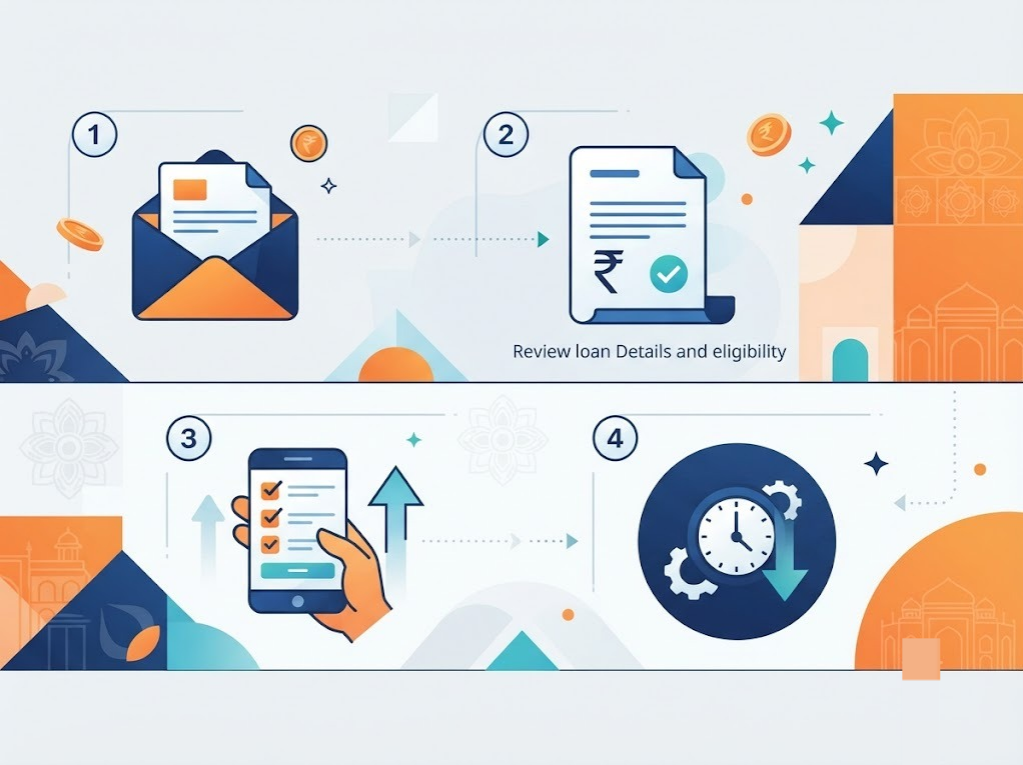
How to Apply, L&T Finance Moratorium Process

Freed Expert Tip
Get moratorium approval in writing before treating any EMI as paused. Verbal confirmation isn't protection.
Talk to FREED If You're Unsure What to Do NextDocuments L&T Finance May Ask For
- Recent salary slips, showing the drop if your income's taken a hit
- Termination or layoff letter, where job loss is the reason
- Medical bills, for health-related hardship
- Bank statement, showing the income decline over recent months
- A formal written request letter, laying out your reason
This list shifts by branch and loan type, so treat it as a starting point, not a checklist L&T Finance guarantees will match your exact case.
What Happens to Interest and EMI After Moratorium Ends
Your EMI pauses. Interest doesn't. It keeps building on your outstanding principal for the whole stretch of the moratorium, then folds back into the loan once repayment picks up again.
Once the pause ends, L&T Finance resolves that added interest one of two ways. Either your tenure stretches, keeping the EMI roughly where it was but running the loan longer, or the tenure holds and your EMI climbs to absorb the extra cost. L&T Finance makes that call and sends you the revised schedule.
Say it plainly: a moratorium eases your monthly burden right now, but adds to what you'll pay back overall. This isn't free relief, it's a deferral, and deferrals come with a price tag. Want the exact number for your loan? L&T Finance's own EMI calculator can run it against your actual amount and rate. That cost is exactly why moratorium deserves a second thought rather than being the first move, which the next section digs into.

What the Law Says
A formally approved moratorium isn't generally reported as a default on the borrower's credit report when correctly implemented by the lender, but the lender must report it correctly for protection to apply.
Get Your Report Reviewed by FREED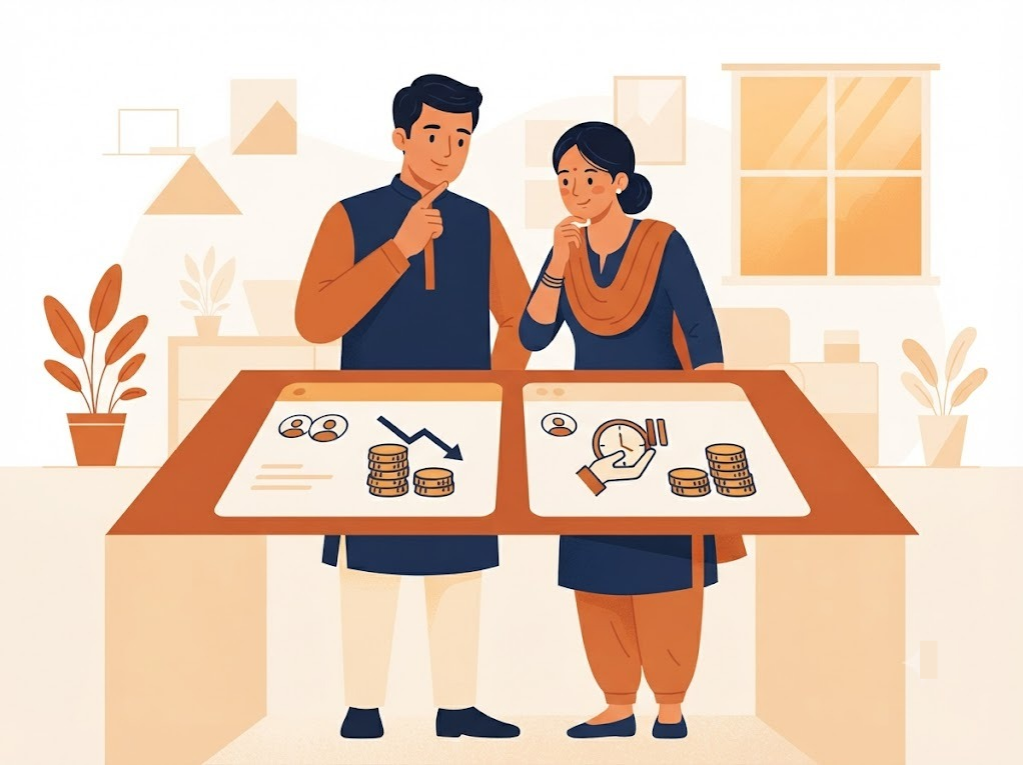
What Are Your Options, Not Just Moratorium
Moratorium isn't the only lever on offer, and depending on where you stand, it might not even be the right one to pull first.
Balance transfer fits if your CIBIL score sits around 700 or higher and you're carrying one expensive loan. Move that balance to a lower-rate lender, and your EMI drops permanently instead of just pausing. Rate cuts usually land around 2-4%, a real, lasting difference rather than a temporary breather.
FREED's Debt Consolidation Program fits if you're managing multiple unsecured loans and EMIs spread across different lenders and want one permanently lower payment instead. FREED's Debt Consolidation Program may combine eligible unsecured debts into a single repayment, depending on the approved loan amount, tenure, and lender terms.
Moratorium makes sense specifically when the income disruption is short-term, and when balance transfer or consolidation don't apply, or wouldn't fully fix things on their own.
Hold onto this distinction: moratorium delays the problem. Consolidation fixes the structural one underneath it. Which one's right for you comes down to whether you're dealing with a short dip in income, or a longer-running gap between what you owe and what you can actually pay each month.

Struggling With Multiple EMIs, Not Just One?
Get matched to one lower EMI instead of pausing payments.
Start My Consolidation AssessmentHow FREED Helps
One line before anything else: FREED's Debt Consolidation Program applies only if your L&T Finance loan is a personal loan, unsecured. Two-wheeler, tractor, farm equipment, and home loans from L&T Finance are secured products, and FREED doesn't touch secured loans. That line doesn't bend.
FREED's Debt Consolidation Program may combine eligible unsecured debts into a single repayment, depending on the approved loan amount, tenure, and lender terms. FREED starts by looking at your full financial picture, then matches you to a lending partner. The new loan clears your eligible unsecured debt instantly, including that L&T Finance personal loan, and replaces several EMIs with one, lower one. Your CIBIL score improves over time instead of taking a hit, and FREED works on a success-based fee, charged only once the consolidation actually goes through.
If your L&T Finance loan is secured instead, a two-wheeler, tractor, or home loan, and the hardship runs deeper than what a moratorium can cover, the right move is a direct conversation with L&T Finance about restructuring or moratorium options built for that loan type. FREED's programs stop at unsecured debt, and won't stretch that claim further than it holds.
Signs You Might Need More Than a Moratorium
A few patterns point to something deeper than a temporary pause can actually fix.
- EMIs were already eating 50% of your take-home salary before the hardship even hit. A moratorium buys time, it doesn't touch a structural mismatch that was there before the current disruption started.
- You're carrying 3 or more active loans or cards. Several obligations spread across different lenders points toward a consolidation conversation, not another pause.
- Recovery calls have already started. That's usually a sign things have moved past what a moratorium request alone can resolve.
- A moratorium request already got turned down once. A second try on the same account, on the same terms, rarely lands differently.
These point toward consolidation, or, where repayment has genuinely become impossible, a structured settlement conversation, rather than another request for the same kind of pause.
Are You in a Loan Trap? Quick Check
Move the slider to your total EMIs as a % of monthly salary. See your debt stress level instantly.
EMIs as % of Monthly Salary
Steps: L&T Finance EMI Moratorium
Step 1: Confirm Loan Type First
Check if your L&T loan is personal (unsecured) or secured (home, vehicle, tractor). Determines which relief paths apply.
Step 2: Write to L&T Formally
Email customercare@ltfs.com or your relationship manager stating the hardship reason. Creates a written record.
Step 3: Attach Proof of Hardship
Salary slips, termination letter, hospital bills, or bank statement showing income drop. Stronger proof, faster review.
Step 4: Wait for Written Approval
Do not stop paying until L&T confirms in writing. Verbal acknowledgment isn't approval.
Step 5: Get the Revised Schedule
Once approved, L&T issues new repayment terms: extended tenure or higher future EMI.
EMI Moratorium vs Balance Transfer vs FREED Consolidation
Option | Best For | EMI Impact | CIBIL Impact | Duration |
Moratorium | Genuine temporary income stop | Paused, resumes higher or longer | Neutral if approved in writing | 3-6 months typical |
Balance Transfer | CIBIL 700+, single loan | Permanently lower | Credit report reflects the revised repayment arrangement | Immediate, ongoing |
FREED Consolidation (DCP) | Multiple unsecured loans, stretched thin | One permanently lower EMI | Credit report reflects the revised repayment arrangement | Immediate, ongoing |
Note: Figures indicative, verify current terms directly with L&T Finance and FREED before deciding.
Sources
# | Claim in blog | Source |
|---|---|---|
1 | RBI framework permits banks/NBFCs (incl. L&T Finance) to grant loan moratoriums; interest keeps accruing on outstanding principal during pause resolves | RBI/2019-20/186, "COVID-19 – Regulatory Package," Mar 27, 2020, ¶2 |
2 | Nationwide moratorium ran Mar 1, 2020 – Aug 31, 2020 (initial 3 months + 3-month extension), then closed, never reinstated | RBI/2019-20/186 (initial period) + RBI/2019-20/244, May 23, 2020 (extension to Aug 31) |
3 | Formally approved moratorium isn't reported as default to CICs; bureau shouldn't reflect adverse credit history |

Mohit Juneja
Mohit Juneja writes educational content at FREED on debt management, credit scores, loan repayment, and borrowing best practices. His content is shaped by expert insights and industry knowledge, helping readers better understand their financial options and make informed decisions.
mohit.juneja@freed.care

FREED is India's trusted loan management platform. Founded in 2020 and headquartered in Gurugram, FREED has counselled 20 lakh+ people on personal loans, credit cards, and app loans. FREED charges fees only on successful settlement, not upfront. FREED does not handle secured loans (home loans, car loans, gold loans).
Media Mentions