HOW TO TRANSFER CREDIT CARD BALANCE: STEP-BY-STEP FOR BORROWERS
A clear, step-by-step process to transfer your credit card balance to a new card or lender, including eligibility, fees, and what to check first.

Mohit Juneja
Reviewed by FREED India, Debt Resolution Specialists
 4.7/5
4.7/5 ₹3,200Cr+
 20,000+
 20,00,000+4.7/5₹3,200Cr+20,000+20,00,000+
Key Takeaways

Start by checking your eligibility with the new issuer before applying anywhere.
You cannot transfer a balance between two cards from the same bank.
Transfer fees typically run 1% to 5% of the amount moved, on top of any interest.
Keep paying the old card until you get confirmation that the transfer is complete, usually 3 days to a few weeks.
A transfer only helps if you actually pay down the balance in the promotional window. Moving it without a repayment plan just delays the same problem.
What Does It Mean to Transfer a Credit Card Balance?
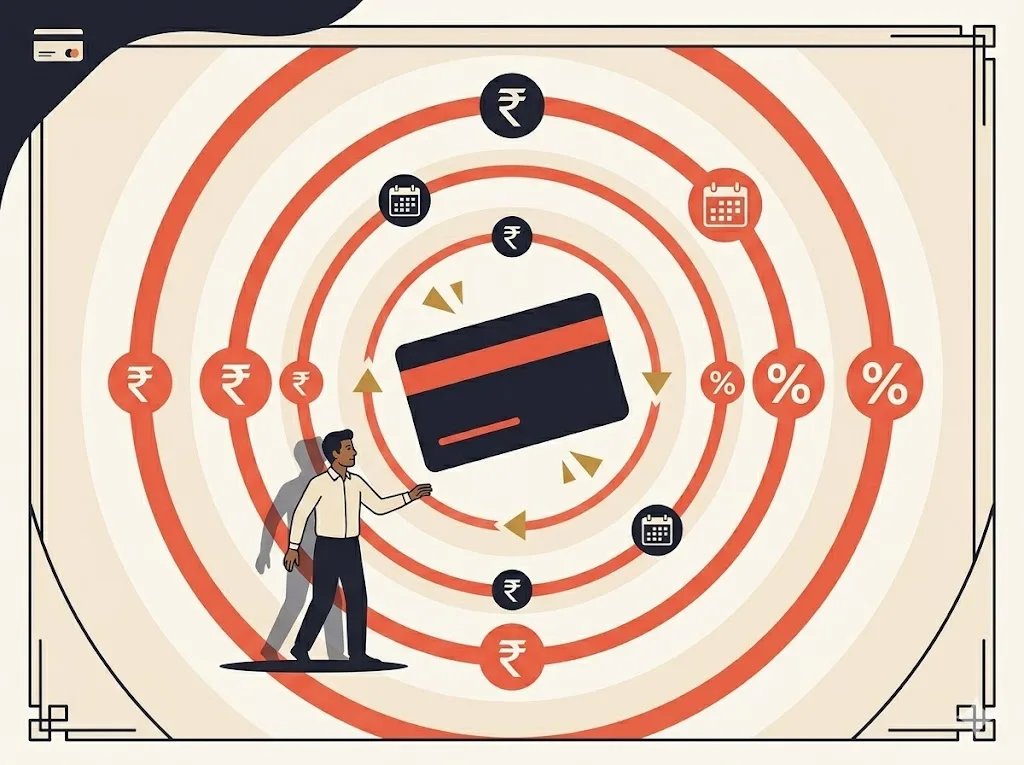
A balance transfer moves your outstanding credit card dues from your current card to a new card or lender, usually one offering a lower interest rate or a promotional low-rate window for a limited period. You apply with the new issuer, they pay off your existing balance up to a limit they set, and from that point on, you owe that amount to the new card instead of the old one.
This is worth separating clearly from something it often gets confused with in searches: a cash withdrawal from a credit card, sometimes called a cash advance. Withdrawing cash from your card at an ATM is a completely different product. It usually carries a higher interest rate that starts accruing from the moment of withdrawal, with no interest-free period at all, and often an additional cash advance fee on top. A balance transfer, on the other hand, is specifically about moving debt you already owe on one card over to another card, often at a temporarily reduced rate designed to help you pay it down faster than the original card's standard rate would allow.
It also helps to understand what a balance transfer is not. It is not a way to erase debt, and it is not free money. The total amount you owe does not change the moment it moves; only the rate and, sometimes, the repayment structure around it change. Some transfers come with a fixed promotional period at a very low or even 0% rate. Others simply move you to a card with a lower interest rate with no special window at all. Knowing which kind of offer you are looking at changes how you should plan around it.
A balance transfer is most effective when it's paired with a clear repayment plan. Using any promotional period to reduce your outstanding balance can help you make the most of the transfer. A transfer without a repayment plan behind it usually just delays the same problem by a few months, sometimes at the cost of a fresh processing fee for the privilege.
Are You Eligible to Transfer Your Balance?
Eligibility for a balance transfer depends mostly on how the new issuer views your existing repayment behaviour, not simply on how large your outstanding balance is.
A reasonably clean repayment track record on your current card matters more than almost any other single factor. If you have largely paid your dues on time over the last several months, even with a high outstanding balance, that history works strongly in your favour when a new issuer is deciding whether to take you on. Missed or late payments in recent months, on the other hand, make a new issuer considerably more cautious, since they are essentially being asked to take over a debt with a recent history of trouble attached to it.
Stable income matters too, for a fairly obvious reason. The new issuer wants some real assurance that you can manage the transferred balance going forward, not simply move the exact same repayment struggle from one card to another with their name on it instead. This is usually assessed through your existing relationship with the new issuer if you already have one, or through basic income documentation if you are applying as a fresh customer.
It is also worth knowing upfront that the best balance transfer offers, the lowest promotional rates and the longest interest-free windows are not extended equally to every applicant. Each issuer sets its own internal criteria for who qualifies for its top-tier offers, often based on your existing card network, your relationship history with that specific bank, and your broader credit profile. If you do not get the best available offer today, that is not a reflection of anything you did wrong. It usually just means the specific issuer's current criteria did not line up with where your profile sits at this particular moment, and a different issuer's criteria might.

FREED Expert Tip
Before applying for a balance transfer, review your credit report so you understand the factors affecting your credit profile. FREED's Credit Insights can help you identify reporting errors or areas that may be worth reviewing before you apply.
Subscribe NowSigns a Balance Transfer Could Be Worth It
A few signs, taken together rather than in isolation, suggest a balance transfer is genuinely worth pursuing rather than simply an appealing offer worth chasing out of habit.
Your current card's interest rate sits well above what a new issuer is offering, enough that the gap clearly outweighs the transfer fee you would pay to move the balance. A small rate difference, once you account for the fee, sometimes is not worth the effort of switching at all, so it is worth doing the actual math rather than assuming any lower number is automatically better.
A good repayment history on your existing card may improve your chances of approval. The interest rate and terms offered depend on the lender's assessment of your overall financial profile. You can realistically commit to paying down the transferred balance within the promotional window on offer, not just move it across and hope things work out from there without a concrete plan. And the amount you want to move fits comfortably within the new card's credit limit, since a partial transfer that only covers part of your balance can leave you juggling two active balances instead of consolidating into one.
If most of these apply to your situation, a transfer is genuinely worth pursuing, and the steps below will walk you through the full process. If your situation instead involves several cards at once, a recent missed payment, or a balance too large for any single new card's limit to absorb, it is worth reading further down to the section on when a transfer might not be enough, before you spend time and a processing fee applying anywhere.
How to Transfer Your Credit Card Balance, Step by Step
The process itself stays fairly consistent across issuers, even though the specific offers, limits, and promotional periods vary considerably from one to the next. Here is the full sequence, from comparing offers through to confirming the money has actually moved.
Compare offers from other issuers. Look at the interest rate, the length of any promotional period, and the transfer fee across a handful of different issuers, not just the first offer that happens to land in your inbox or your banking app. A slightly better rate from one issuer combined with a lower fee from another can add up to a meaningfully different total cost.
Confirm you are not transferring within the same bank. Most issuers do not allow a balance transfer between two of their own cards, since it does not actually change their exposure to your debt in any meaningful way. This needs to be a genuinely different issuer from the one holding your existing balance.
Apply with the new issuer. Submit the application online or by phone, providing your existing card's issuer name, your account details, and the specific amount you want transferred. Some issuers will ask for a recent statement from your existing card as part of this step.
Wait for approval and confirmation. Approval and transfer timelines vary depending on the issuer and your individual application. Continue making payments on your existing card until you receive confirmation that the transfer has been completed.
Keep paying with the old card until confirmed. Continue making your minimum or full payments on the old card right up until you receive explicit confirmation that the balance has moved. This step trips up more people than any other in the process, simply because applying feels like the finish line when it is actually only the starting point.
Set your repayment plan on the new card. Once the balance has landed, divide the total transferred amount by the number of months in any promotional period, so you know exactly what monthly payment is required to clear it before the standard rate kicks back in.

What the Law Says
Under RBI's Key Facts Statement rules, effective October 2024, lenders must disclose the full interest rate and every fee before sanctioning most retail loans. Credit card products are currently exempt from this specific requirement. If you are transferring your balance to a personal loan rather than another card, though, the new lender must still give you a Key Fact Statement covering the true annual cost, so it is worth asking for one regardless of which route you take.
Check Your OptionsWhat Fees and Costs Should You Check First?
The fees around a balance transfer are where the real decision actually gets made, and they are easy to skim past when a headline promotional rate is doing all the talking.
The transfer or processing fee typically runs 1% to 5% of the amount you are moving, charged upfront by the new issuer at the time the transfer goes through. On a one lakh rupee balance transfer at 3%, that works out to three thousand rupees taken off the top before any interest calculation even enters the picture, so this cost needs to be weighed against the interest you expect to save, not treated as an afterthought.
Then there is the promotional rate itself, which almost always comes with an expiry date. These windows commonly run anywhere from 3 to 18 months, depending on the specific offer, and the length of that window should shape how aggressively you plan your repayments, not just how attractive the headline rate looks on day one.
Here is the part that catches a lot of people off guard. Whatever balance remains outstanding once that promotional window closes usually starts accruing interest at the card's standard rate, which can run considerably higher than what you were paying on your original card before the transfer. Take a concrete example. A one lakh rupee balance transferred with a 6-month promotional period at a low rate, where only half of it, say fifty thousand rupees, gets paid down by the end of month 6. That remaining fifty thousand then reverts to a standard rate that could sit at 30% or more per annum, meaning the second half of the year could end up costing more in interest than the first half did, despite starting from a smaller balance. The math on a transfer only genuinely works in your favour if the full balance, or something very close to it, gets cleared inside the promotional window itself.

Are You in a Loan Trap? Quick Check
Move the slider to your total EMIs as a % of monthly salary. See your debt stress level instantly.
EMIs as % of Monthly Salary
What to Do While Waiting for the Transfer to Complete
The gap between applying and the transfer actually completing is where a surprising number of otherwise avoidable mistakes happen, mostly from assuming the job is already done a little too early.
Keep paying the old card's minimum or full due amount right up until you have explicit confirmation the balance has moved. Applying for a transfer is not the same thing as the transfer being complete, and missing a payment on the old card during this window, on the assumption it is already sorted, can create a fresh late payment mark on your report at exactly the moment you were trying to improve your situation. Watch specifically for the confirmation notice from the new issuer, whether that arrives as an email, an app notification, or a statement update, since that is the actual signal the balance has landed on the new card and the old one is genuinely clear.
Until you see that confirmation, treat the old card as fully active and keep it current, exactly as you would have before you applied.
When a Balance Transfer Might Not Be Enough
A balance transfer solves one card's problem. It is worth being honest with yourself about situations where that is not actually the problem you have.
This is a genuinely common situation, more common than most people realise until they sit down and add up every card they are carrying. If you are managing outstanding balances across several cards, transferring just one of them barely moves the overall picture, and you are left juggling the same set of due dates with one card slightly lighter than before. If you have already missed payments recently, that repayment history makes new issuer approval significantly less likely at exactly the point you need it most.
And if this is not your first balance transfer, if the pattern has been moving the same debt from card to card without ever actually paying down the principal underneath it, that is usually a sign that the underlying issue is the total debt load itself, not which specific card happens to be holding it at any given moment.
If a large share of your monthly income is already going towards card dues and EMIs, a balance transfer alone may not fully address the underlying repayment challenge.
Why This Is More Common Than You Might Think
If you recognised your own situation in the section above, you are far from alone. A large number of people who search for a balance transfer are not actually dealing with one card that has a slightly high rate. They are dealing with several cards at once, each with its own due date, its own minimum payment, and its own creeping balance, and a single transfer never quite gets to the root of that.
If you're still managing your repayments but finding it difficult to keep up with them, FREED's Loan Consolidation Plan may help eligible borrowers combine multiple card dues into a single loan through a lending partner. The final EMI and loan terms depend on the lender's assessment. Instead of transferring each card individually and tracking several promotional windows at once, all of it comes under one payment and one due date, which tends to be far easier to manage and actually stick to over time.
If the situation has gone further than that, if payments have already been missed and repaying in full genuinely is not possible anymore, that calls for a different plan altogether. Settlement is not something a borrower chooses out of preference. Banks and card issuers only consider it when someone is in real financial difficulty and truly unable to repay what they owe. If that describes your situation, FREED helps eligible borrowers explore loan settlement as an option. Settlement is a structured process carried out with the lender and depends on the lender's willingness to negotiate.
These are two distinct paths for two distinct situations. It is worth being honest with yourself about which one actually describes where you are before deciding what to do next, since the wrong path taken with good intentions can still leave you worse off than where you started.

What Helps After the Transfer Is Complete
Once the transfer has actually gone through, a few habits make the difference between it genuinely helping and quietly becoming another version of the same problem a year from now.
Set up autopay for at least the amount needed to fully clear the balance within the promotional window, not just the minimum due each month. Avoid putting new spending on the old card once the transfer is done, since a cleared card that starts filling up again defeats the entire purpose of moving the balance in the first place. If the old card carries no annual fee, it is worth keeping it open with a small recurring payment rather than closing it outright, since that supports the length of your overall credit history. And mark the exact date the promotional period ends somewhere you will actually see it again, so the rate does not quietly jump back up on a balance you thought you still had more time on.

Mohit Juneja
Mohit Juneja writes educational content at FREED on debt management, credit scores, loan repayment, and borrowing best practices. His content is shaped by expert insights and industry knowledge, helping readers better understand their financial options and make informed decisions.
mohit.juneja@freed.care

FREED is India's trusted loan management platform. Founded in 2020 and headquartered in Gurugram, FREED has counselled 20 lakh+ people on personal loans, credit cards, and app loans. FREED charges fees only on successful settlement, not upfront. FREED does not handle secured loans (home loans, car loans, gold loans).
Media Mentions