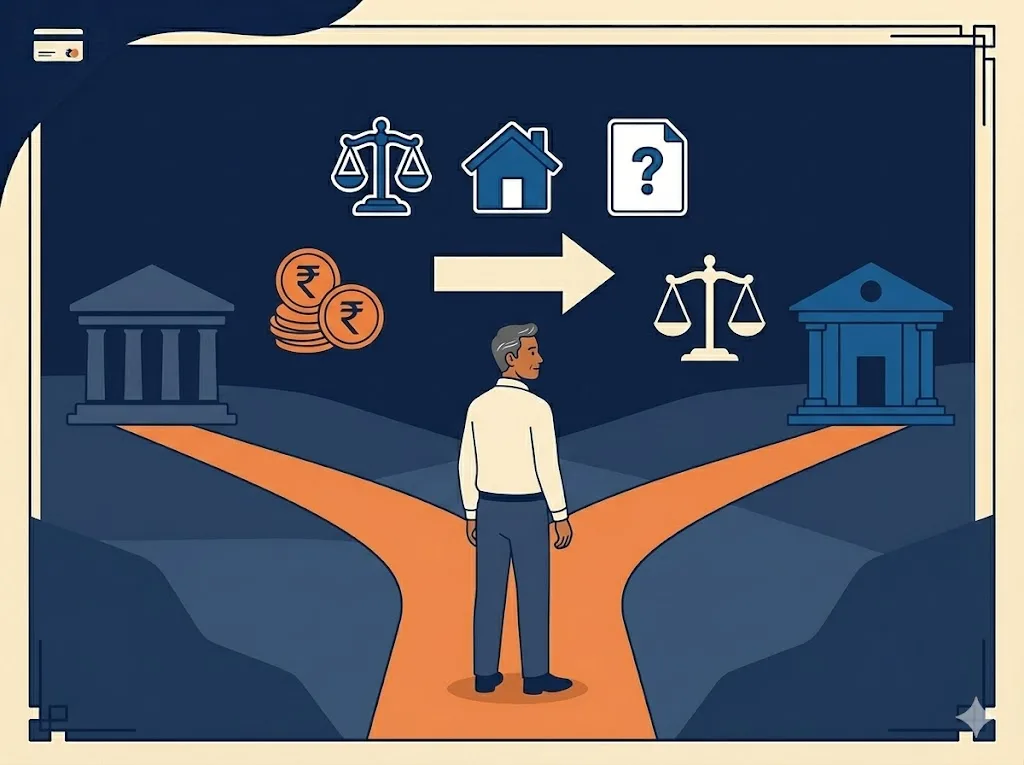
How to Negotiate Debt Settlement on Your Own
Negotiating debt settlement on your own means approaching your bank or NBFC (non-bank loan company) directly to ask for a reduced final payment on your unsecured loan. It is a formal process, not a phone argument. You show proof of genuine financial hardship and offer a lump sum lower than what you owe. Banks consider this only when full recovery looks unlikely. It is legal, and it is possible to do without a company, if you know the right steps.
Mohit Juneja
Reviewed by FREED India, Debt Resolution Specialists
 4.7/5
4.7/5 ₹3,200Cr+
 20,000+
 20,00,000+4.7/5₹3,200Cr+20,000+20,00,000+
Key Takeaways

Most banks will not seriously discuss settlement until your account has been overdue for 90 days or more (NPA status)
The final settlement amount depends on your hardship case and how long the loan has been in default. Genuine hardship cases can see waivers of up to 50%*
Banks have a dedicated settlement team. Reaching them, not general customer care, is the first real step
FREED helps borrowers settle their unpaid/overdue loans at up to 50%* less.
Doing this alone is workable for a single loan with one bank. If you owe multiple banks or NBFCs, the complexity and risk rise sharply
What Does Negotiating Debt Settlement on Your Own Actually Mean?
This is not the same as calling customer care to ask for more time. Negotiating a settlement yourself involves three things: putting your financial hardship in writing formally, understanding how the bank's internal process works once a loan is overdue, and making an offer backed by real documents that the bank's settlement team can actually approve.
Banks call this a one-time settlement (OTS), meaning you pay one lump sum and the matter ends there. A phased version, where you pay in a few instalments instead of one sum, exists too, but it is far less common for personal loans and credit cards.
Settlement is not something a borrower chooses out of preference. It happens when someone genuinely cannot repay the full amount, not as a smart money move or a way to save on interest. Banks only engage with a settlement conversation once that genuine difficulty is clear.
How Do You Know If You're in a Position to Negotiate?
Not every situation is one a bank will be open to settling, at least not through a simple, direct approach. A few signs suggest DIY negotiation could work for you: you owe one bank or NBFC, your loan is overdue or close to it, and you have a documented reason you cannot pay in full, such as job loss, illness, or a business that has shut down.
A few signs suggest the situation needs more than a phone call or a letter: you owe money to multiple banks or NBFCs at once, a legal notice has already arrived, or your income has stopped completely with no clear documentation to show it. In these cases, the risk of one creditor moving ahead with legal action while you are still negotiating with another rises sharply.
This guide focuses on a single unsecured loan with one bank. If your situation involves more than one bank or NBFC, the steps are similar but the risks are higher, and that is worth knowing upfront rather than discovering midway.
If your EMIs already take up more than 50% of your take-home salary, that is usually a sign the difficulty has become structural, not something a tighter monthly budget alone can fix.
Settlement is generally considered when a borrower is facing genuine financial hardship and cannot repay the full amount . If you are able to pay but are choosing not to, banks are not required to consider a settlement request.
What Should You Do Before You Make the First Call?
Pull together every loan statement you have and separate what you actually borrowed (the principal) from the interest and penalties added on top. Knowing this number clearly lets you make an offer that sounds credible rather than guessed at.
Next, work out the lump sum you can realistically raise. This might come from savings, help from family, or selling an asset. This number is your ceiling, the most you can commit to, not your opening offer.
It also helps to understand who you are dealing with at the bank. The collections team that calls you about a missed EMI usually has no authority to approve a settlement. The actual decision sits with the bank's settlement team, sometimes called the NPA resolution team.
Where possible, make your first contact in writing rather than over the phone. A written hardship letter, addressed to the bank's Nodal Officer (the bank's official contact for borrower grievances), creates a record. A phone call does not leave the same trail if the bank later denies any conversation took place.
How to Negotiate Debt Settlement on Your Own, Step by Step
This process usually takes 3 to 6 months from your first letter to your final clearance document. The bank will not agree on the first call, and that is normal. Patience and paperwork matter more here than negotiation skill.
- 1
Map Your Total Debt Clearly
Write down every loan you owe: the bank or NBFC name, the outstanding principal, the interest and penalties added, and the current status (regular, overdue, or NPA). Pull your latest CIBIL report. It shows every account you have, active or defaulted.
- 2
Calculate the Lump Sum You Can Raise
Settlement needs a lump sum, not monthly instalments. Work out what you can realistically gather from savings, family support, or selling an asset. This is your ceiling. Your opening offer should be lower than this number.
- 3
Write a Formal Hardship Letter
Do not call first. Write to the bank's Nodal Officer, by email or physical letter, explaining your financial hardship clearly with evidence, such as a salary slip showing reduced income, medical bills, or business closure documents. State that you cannot pay the full amount and would like to discuss a one-time settlement (OTS).
- 4
Reach the Right Team
General customer care cannot approve a settlement. Ask specifically for the settlement team or the NPA resolution team. At private banks, ask for the settlement manager handling your account. At public sector banks, ask whether any settlement scheme is currently open for your type of loan.
- 5
Make Your Opening Offer
Once you reach the right person, put your offer in writing, not over the phone. Start lower than your ceiling and explain your hardship clearly. Expect the bank to counter. A few rounds of back and forth before reaching a final figure is normal. Keep your actual ceiling to yourself until the final round.
- 6
Get the Settlement Letter in Writing
Never pay based on a verbal agreement. Once a number is agreed, ask for a formal settlement letter from the bank. Read it carefully: check the final amount, the payment deadline, any extra charges, and confirmation that a clearance letter (called NOC, or No Dues Certificate) will follow once you pay.
- 7
Pay and Collect Your Clearance Letter
Pay the agreed amount by the deadline, directly into your loan account. Collect your No Dues Certificate as soon as payment clears. This document proves the bank has no further claim against you on this loan. Keep it permanently.
- 8
Verify Your CIBIL Update
Check your CIBIL report 30 to 45 days after payment. The account should show as "Settled." If it still shows "Overdue" or under the old status, write to the bank's Nodal Officer with your No Dues Certificate and ask for the correction. Banks are required to report accurately.
What Do Banks Actually Look at When Reviewing a Settlement Offer?
Most guides tell you what to do without explaining what the bank is actually weighing on its side. Three things matter most to a bank's settlement team.
The first is proof of genuine inability to pay. A drop in income, a job loss, a medical emergency, or a business shutting down, backed by documents, not just stated in words.
The second is your offer itself, measured against what you owe. An offer that is significantly below what the bank considers reasonable may be less likely to be accepted. An offer that is too high may mean you end up paying more than you needed to.
The third is how long the account has been in default. Accounts that have been overdue for a long time, or are close to being written off, are sometimes viewed differently by the bank's internal process, since the bank's own expectation of recovering the full amount has already dropped over time.
One more thing worth knowing: banks are usually more willing to waive interest and penalties than to reduce the original principal you borrowed. Keeping this in mind helps you frame your offer realistically rather than expecting the impossible.

What the Law Says
Under RBI's Fair Practices Code, banks must issue a No Objection Certificate (NOC) once a settled amount is paid in full. This confirms no further dues remain. This is your right as a borrower, not something the bank is doing as a favour.
Know Your RightsWhere DIY Debt Settlement Gets Hard, and What to Do About It
Being honest about where this gets difficult matters more than pretending it is simple. A few real friction points come up often.
Banks sometimes respond differently to an individual borrower calling on their own than to a structured, written proposal, simply because individual calls can come across as urgent or emotional rather than as a clear, documented case. This is not a judgment on the borrower, it is just how the process tends to move faster with paperwork than with conversation alone.
If you owe more than one bank or NBFC, managing all of them at once is genuinely difficult. If one creditor decides to take legal action while you are still negotiating with another, it can disrupt the entire process.
Settlement letters sometimes include clauses that are easy to miss, around remaining dues, future charges, or conditions tied to the waiver. Agreeing to something without reading it fully can create problems later that are hard to undo.
And after payment, the CIBIL update does not always happen automatically or correctly. It needs active follow-up to confirm the bank has reported your account as "Settled" and not left it showing as overdue.
If any of this feels like more than you want to manage alone, FREED handles the paperwork, the back-and-forth with your bank, and gets the best settlement offer for you.

Worried About Getting This Wrong?
Talk to a FREED counsellor. Free, confidential, no pressure. [
Book My Free CallThings That Help When You're Negotiating on Your Own
A few habits make a real difference to how smoothly this goes.
- Put everything in writing. Emails and letters create a record. Verbal assurances do not hold up if there is a dispute later.
- Keep copies of everything. Every statement, every offer, every counter-offer from the bank.
- Only agree to an amount you can actually pay within the timeframe. A settlement you cannot honour creates more trouble than not settling at all.
- Read the settlement letter fully before signing. Check the final amount, the payment deadline, and whether the No Dues Certificate timeline is mentioned.
- Follow up within 30 days of payment. Confirm with the bank that your CIBIL report has been updated correctly.
Are You in a Loan Trap? Quick Check
Move the slider to your total EMIs as a % of monthly salary. See your debt stress level instantly.
EMIs as % of Monthly Salary
Negotiating on Your Own vs. Working With FREED
Factor | DIY Negotiation | With FREED |
Best suited for | A single loan, one bank | Multiple loans, NPA stage, or a legal notice already received |
Bank access | Customer care first, then the settlement team | Works with the bank's settlement team on your behalf |
Negotiation rounds | Usually more rounds, can take longer | Structured process that reduces back-and-forth |
Settlement outcome | Depends on your documentation and the bank's review | Up to 50%* |
Documentation | Managed by you | Prepared and managed for you |
Cost | No fee, only your own time | Fee charged only on a successful settlement |
Risk | Higher if you have more than one loan or any legal notice | Lower, since all your banks are tracked together |
Outcomes vary based on how long the loan has been overdue, which bank is involved, and your individual financial situation. "Up to 50%*" refers to the possible reduction in what you owe and depends on the specific case.
Rates and ranges shown are indicative. Final terms are decided by the bank. FREED is not a Loan Provider. No outcome is guaranteed. Please verify directly with your bank.

Mohit Juneja
Mohit Juneja writes educational content at FREED on debt management, credit scores, loan repayment, and borrowing best practices. His content is shaped by expert insights and industry knowledge, helping readers better understand their financial options and make informed decisions.
mohit.juneja@freed.care

FREED is India's trusted loan management platform. Founded in 2020 and headquartered in Gurugram, FREED has counselled 20 lakh+ people on personal loans, credit cards, and app loans. FREED charges fees only on successful settlement, not upfront. FREED does not handle secured loans (home loans, car loans, gold loans).
Media Mentions