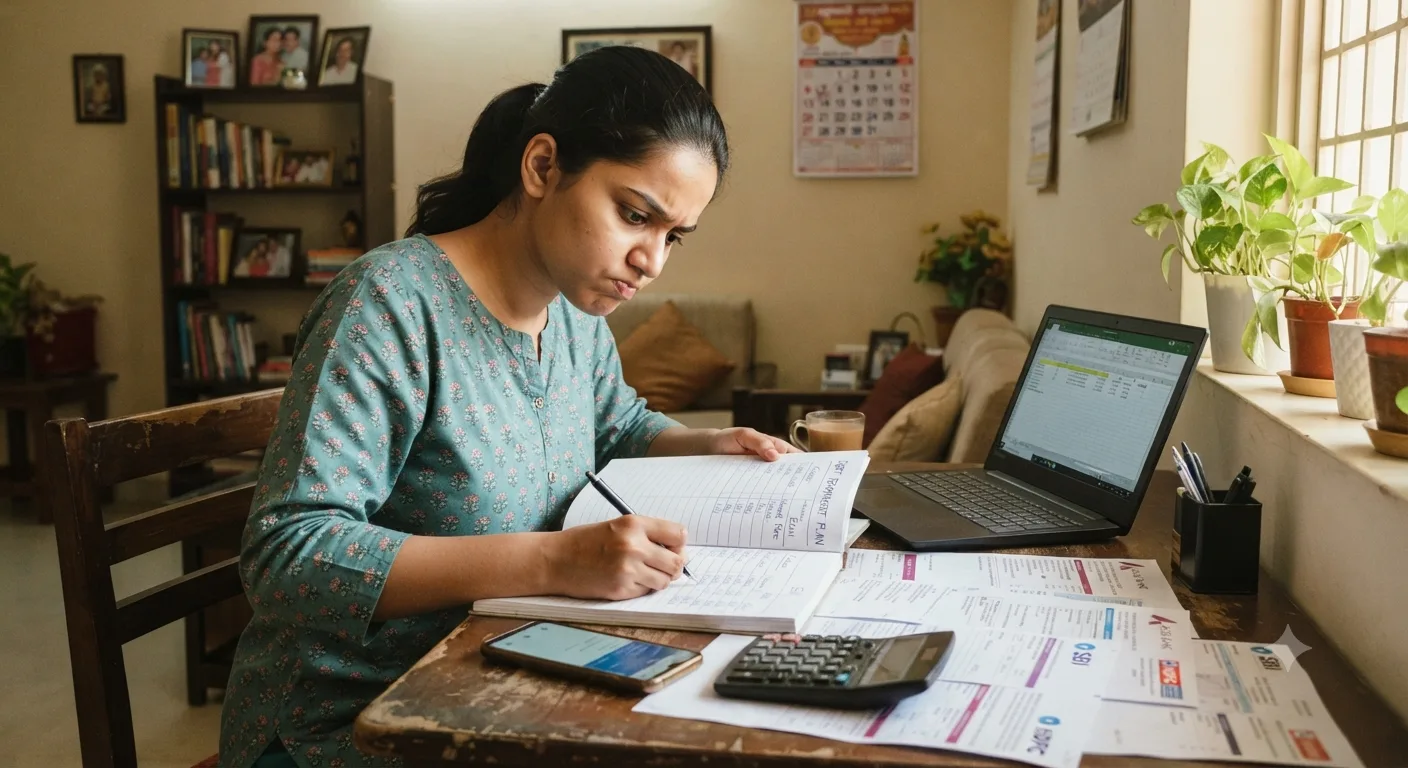
HDFC Recovery Agents: How to Handle Their Calls and File a Complaint
HDFC recovery agents are third-party collection staff appointed by HDFC Bank to follow up on overdue credit card bills, personal loans, or BNPL (buy now, pay later) payments. They operate under strict RBI rules on calling hours, language, and who they may contact. If an HDFC recovery agent crosses those lines, you have a documented right to complain and HDFC Bank is legally responsible for everything the agent does.
Mohit Juneja
Reviewed by FREED India, Certified Financial Counsellor

 4.7/5
4.7/5 ₹3,200Cr+
 20,000+
 20,00,000+4.7/5₹3,200Cr+20,000+20,00,000+
KEY TAKEAWAYS

HDFC recovery agents can only call between 8 AM and 7 PM. Calls outside this window are RBI violations.
RBI fined HDFC Bank ₹1 crore in September 2024 specifically for recovery agents contacting borrowers outside permitted hours.
HDFC Bank must respond to a formal complaint within 30 days. If they don't, you escalate free of cost to the RBI Ombudsman at cms.rbi.org.in.
Agents must carry a bank-issued photo ID and written authorisation. You have the right to verify both before any conversation.
Filing a complaint against HDFC recovery agents does not affect your loan account, CIBIL score, or debt status in any way.
Who Are HDFC Recovery Agents and What Are They Allowed to Do?
HDFC Bank does not always collect overdue payments in-house. It appoints third-party collection agencies to do this work. These agencies send out agents who call, message, or visit borrowers with overdue accounts. That's what an HDFC recovery agent is.
But here's what matters: under RBI Circular RBI/2022-23/108, HDFC Bank cannot transfer its legal responsibility to the agency. If the agent misbehaves, the bank is held responsible. Fully. The bank cannot say "that was the agency, not us."
What recovery agents are permitted to do:
- Call you between 7 AM and 7 PM only (RBI Master Circular DBR.LEG.BC.21/09.07.005/2024-25, July 2024)
- Visit your home or office with proper ID and written authorisation from HDFC Bank
- Send written notices about your outstanding dues
- Ask for repayment or discuss a payment plan politely
What recovery agents are NOT permitted to do:
- Call before 7 AM or after 7 PM
- Threaten, abuse, or use language meant to frighten
- Improperly disclose your loan information to family members, neighbours, employers, or unrelated third parties.
- Visit without prior notice and without showing valid ID
- Impersonate a police officer or government official
- Threaten you with arrest for a loan default
RBI draft norms (effective July 1, 2026) place an explicit ban on harsh methods, verbal or physical harassment, and contacting a borrower's family.
Banks must also send a written 30-day notice before deploying recovery agents.
If a call comes after 7 PM or before 8 AM, that alone is a documented violation. You don't need to wait for it to get worse before filing.
Why Are HDFC Recovery Agents So Aggressive Even When Rules Exist?
The rules are clear. So why does harassment still happen?
RBI fined HDFC Bank ₹1 crore on September 3, 2024 specifically for recovery agents contacting customers outside the permitted 7 AM–7 PM window. The RBI inspection covered HDFC Bank's financial position as of March 31, 2022. These weren't isolated incidents. The violations were systemic.
Collection practices may vary depending on the agency and internal processes. When commissions are tied to collections, some agents push past the rules, or not knowing how to file a formal complaint.
But the accountability chain is clear. The bank gets penalised, not just the agent. And here's the part that changes things for you: once a formal complaint is on record, HDFC Bank has strong regulatory reason to act. They were already fined ₹1 crore. A new complaint adds to a compliance record that RBI actively tracks.
According to an in-house survey, nearly 39% of borrowers reported abusive recovery calls. That number tells you two things. You are not alone. And the problem is common enough that regulators are watching closely.

What Counts as a Violation by HDFC Recovery Agents?
Not sure if what happened to you was actually a violation? Go through this list. If even one applies, you have documented grounds to file.
- Call before 7 AM or after 7 PM. RBI permits calls only between 7 AM and 7 PM.Any call outside those hours may violate RBI recovery guidelines. Any call outside those hours is a violation, full stop.
- Threatening language or abuse. Words meant to frighten, shame, or intimidate you are prohibited. This includes threats of "ruining your life" or "making sure everyone knows."
- Threatening arrest for a loan default. Loan default is a civil matter in India, not a criminal one. Any agent who threatens arrest is making a false and illegal claim.
- Contacting your family, employer, or neighbours. Recovery communication is permitted only with you or with a guarantor on your loan. Calling your mother, your boss, or your neighbour without your written consent is a violation.
- No ID or authorisation letter on visit. Every recovery agent must carry a bank-issued photo ID and a written authorisation letter from HDFC Bank. If they can't show both, you have the right to end the conversation.
- Using private mobile numbers or WhatsApp to avoid identification. This is a known tactic. Some borrowers report receiving calls from personal numbers or WhatsApp accounts. It doesn't protect them; those numbers and screenshots are still valid evidence. Business Standard's reporting on HDFC Bank's 2024 penalty noted this as a pattern.
Any one of these is enough to file. You don't need a "bad enough" story. One violation is sufficient.

What the Law Says
Under RBI Circular RBI/2022-23/108, HDFC Bank is fully and solely responsible for every action taken by its recovery agents. The bank cannot pass blame to the third-party collection agency. The bank remains responsible for the conduct of its authorised recovery agents.
Read MoreHow to File a Complaint Against HDFC Recovery Agents Step by Step
You don't need a lawyer. You don't need to know complex legal language. You need dates, call logs, and a step-by-step process. Here it is.
- Call HDFC Customer Care First Call HDFC Bank's toll-free number and report the agent's name, number, and what they did. Ask for a complaint reference number before you hang up. If the agent used WhatsApp or a private number, take screenshots before you call.
- Write to HDFC's Grievance Redressal Officer (GRO) Send a written complaint by email to HDFC's GRO team Include dates, times, the agent's contact details, call recordings, screenshots, and a short description of each incident. Send the same complaint by registered post on the same day. This creates a stronger record of your complaint. HDFC is expected to respond within 10 working days at this level, per their own grievance redressal policy.
- Escalate to HDFC's Principal Nodal Officer If the GRO response is unsatisfactory, or you get no reply, write to the Principal Nodal Officer: HDFC Bank Ltd., 5th Floor, Tower B, Peninsula Business Park, Lower Parel West, Mumbai 400013. State clearly that you are escalating because the earlier complaint was unresolved. Include your complaint reference number from Step 2. This creates the formal paper trail required before you go to RBI.
- File With the RBI Ombudsman If 30 days pass from your first complaint with no satisfactory resolution, go to cms.rbi.org.in. The Integrated Ombudsman Scheme 2021 is free and fully online. Upload your earlier complaints and any bank responses. The RBI can direct HDFC Bank to act, impose penalties, and award compensation for harassment. FREED's counsellors can help you organise your documentation before you file, if that's useful.
The RBI Ombudsman can award compensation up to ₹1 lakh for mental anguish under the Integrated Ombudsman Scheme 2021.

Getting Harassment Calls From HDFC? Let's Help You Document It Right.
Free assessment. No commitment. A counsellor explains exactly what to file and where.
Talk to a Free CounsellorWhat Happens After You File a Complaint Against HDFC Recovery Agents?
Most competitors tell you how to file. Almost none explain what happens next. Here's the realistic picture.
Once your complaint is logged at HDFC's GRO level, the bank opens an internal inquiry. The bank may review the complaint and its recovery processes during the investigation. Banks know the RBI is monitoring. A borrower with a formal, timestamped complaint on record is a regulatory risk the bank would rather not carry.
HDFC has 10 working days to respond at GRO level. If 30 days pass from the date of your first complaint without a satisfactory resolution, you are fully entitled to go to the RBI Ombudsman no permission needed, no fees, no lawyer required.
The RBI Ombudsman's decisions are binding. The RBI can direct HDFC Bank to respond, take action against the agent, and order compensation. It can also take disciplinary action against the bank if the violations are found to be systematic.
Here's the part worth remembering: HDFC Bank was already fined ₹1 crore in September 2024 for this exact behaviour. Each new formal complaint on this issue contributes to the documented compliance record that regulators track. A second penalty is a serious regulatory consequence. Banks know this.
Outcomes vary; RBI Ombudsman timelines can stretch. But a filed complaint gives you something real. It creates a paper trail. It gives you standing. And it signals clearly that you know your rights. That changes the dynamic.
One important note: A complaint creates a formal record that can be reviewed by the bank and regulators. It does not make the underlying debt disappear. You still need a plan for the actual loan. That part comes after you've handled the calls.
FREED Expert Tip
Save every HDFC recovery agent call as a dated audio file and screenshot every WhatsApp or SMS threat. These exact files become your evidence if you escalate to the RBI Ombudsman.
Read MoreWhat Documents Do You Need Before Filing a Complaint Against HDFC?
Having the right documents ready makes the process faster and stronger. Here's what to gather before you file.
- Call recordings Recording a call you are a party to is generally accepted as evidence by the RBI Ombudsman and consumer courts in India. Start recording from the very next call you receive. Don't wait.
- Call log screenshots These show the date, time, and number of every call. Even if the agent used a private number or WhatsApp, screenshot those too. They are still accepted as evidence by the RBI.
- WhatsApp messages and SMS threats Screenshot and save every message, including the timestamp. Don't delete anything.
- Agent visit details Note the date, time, what was said, and whether the agent showed ID. If they didn't show ID, write that down too.
- The complaint reference number from Step 1 You need this reference number to escalate to the Principal Nodal Officer or the RBI Ombudsman. Without it, the escalation chain is harder to establish.
- Copies of all earlier written complaints Keep a copy of every complaint email you sent, with date and delivery confirmation. Register post receipts count here too.
- Loan account details Your HDFC account number, loan type, and outstanding balance. Not to share with agents, but to include in formal complaints.
A note on agents using private numbers and WhatsApp: this is a known tactic to avoid identification. It doesn't reduce your rights. Screenshots and call logs from those numbers are valid. Log the number, don't share financial details, and include these records in your complaint.

Can Filing a Complaint Actually Stop HDFC Recovery Agent Calls?
This is the question most people are really asking.
Honest answer: filing a formal complaint typically slows down or stops harassment fairly quickly. Not because the law is magical, but because HDFC Bank has real regulatory skin in the game.
HDFC Bank was fined ₹1 crore in September 2024 for recovery agents calling outside permitted hours. The violations were systemic found during a regulatory inspection covering March 2022. That fine is a matter of public record. A fresh, documented complaint from a borrower adds to the regulatory pressure.
The moment a formal complaint sits on HDFC's GRO system, the bank has strong incentive to pull the agent back. Recovery calls to a complainant become a potential compliance event. Banks manage this risk quickly when they know the RBI is watching.
According to some reports, RBI's Centralised Feedback Loop allows regulators to blacklist an entire recovery agency if multiple borrowers complain about it.
hat's a real commercial threat for both the agency and the bank.
Two things are worth being clear about.
First: filing a complaint does not affect your CIBIL score, loan account balance, or debt amount in any way. Zero.
Second: a complaint handles harassment. It doesn't handle the debt. If you genuinely cannot repay, the calls will restart after the complaint process concludes unless you have a plan for the underlying loan. That's a separate problem and one worth addressing.
What Are Your Real Options If You Can't Pay HDFC Back?
Recovery pressure is a symptom. The underlying problem is the debt. Here's how to think through your options.
Start with a conversation, not avoidance. Call HDFC's customer care and ask about a repayment plan. Banks often have options for borrowers in temporary difficulty including reworking your repayment time (extending the period to reduce monthly EMIs) or a short pause. You don't need FREED for this step. A polite, clear call asking for options costs nothing.
EMI restructuring means changing your loan plan with the bank. For personal loans and credit cards, HDFC does offer restructuring options in some cases. This extends the time you have to repay and may reduce your monthly burden.
Loan consolidation (merging all your loans into one lower EMI) is worth considering if you're managing multiple overdue accounts with different banks. One payment. One date. One amount. FREED can help you map out whether consolidation makes sense for your specific situation.
Loan settlement is not something a borrower chooses out of preference. Banks and financial companies only consider it when you are in genuine financial difficulty and are truly unable to repay the full amount. It is a last resort, not a shortcut.
If repaying in full has become genuinely impossible, a one-time settlement (OTS paying it once and the matter ends) may reduce your outstanding due by up to 50%*. But understand the trade-off clearly: the "Settled" mark on your CIBIL (credit score) report can stay for up to 7 years. That affects future loan eligibility.
FREED works with borrowers who are at this stage where repaying in full is genuinely not possible. If that's where you are, speak to a counsellor first. The options and trade-offs need to be understood for your specific HDFC account, not in general.
*Rates and ranges shown are indicative. Final terms are decided by the bank. FREED is not a Loan Provider. No outcome is guaranteed. Please verify directly with your bank.
Are You in a Loan Trap? Quick Check
Move the slider to your total EMIs as a % of monthly salary. See your debt stress level instantly.
EMIs as % of Monthly Salary
Can Filing a Complaint Actually Stop HDFC Recovery Agent Calls?
This is the question most people are really asking.
Honest answer: filing a formal complaint typically slows down or stops harassment fairly quickly. Not because the law is magical, but because HDFC Bank has real regulatory skin in the game.
HDFC Bank was fined ₹1 crore in September 2024 for recovery agents calling outside permitted hours. The violations were systemic found during a regulatory inspection covering March 2022. That fine is a matter of public record. A fresh, documented complaint from a borrower adds to the regulatory pressure.
The moment a formal complaint sits on HDFC's GRO system, the bank has strong incentive to pull the agent back. Recovery calls to a complainant become a potential compliance event. Banks manage this risk quickly when they know the RBI is watching.
According to some reports, RBI's Centralised Feedback Loop allows regulators to blacklist an entire recovery agency if multiple borrowers complain about it.
That's a real commercial threat for both the agency and the bank.
Two things are worth being clear about.
First: filing a complaint does not affect your CIBIL score, loan account balance, or debt amount in any way. Zero.
Second: a complaint handles harassment. It doesn't handle the debt. If you genuinely cannot repay, the calls will restart after the complaint process concludes unless you have a plan for the underlying loan. That's a separate problem and one worth addressing.
What Are Your Real Options If You Can't Pay HDFC Back?
Recovery pressure is a symptom. The underlying problem is the debt. Here's how to think through your options.
Start with a conversation, not avoidance. Call HDFC's customer care and ask about a repayment plan. Banks often have options for borrowers in temporary difficulty including reworking your repayment time (extending the period to reduce monthly EMIs) or a short pause. You don't need FREED for this step. A polite, clear call asking for options costs nothing.
EMI restructuring means changing your loan plan with the bank. For personal loans and credit cards, HDFC does offer restructuring options in some cases. [Writer to verify typical HDFC restructuring options for personal loans and credit cards before publishing] This extends the time you have to repay and may reduce your monthly burden.
Loan consolidation (merging all your loans into one lower EMI) is worth considering if you're managing multiple overdue accounts with different banks. One payment. One date. One amount. FREED can help you map out whether consolidation makes sense for your specific situation.
Loan settlement is not something a borrower chooses out of preference. Banks and financial companies only consider it when you are in genuine financial difficulty and are truly unable to repay the full amount. It is a last resort, not a shortcut.
If repaying in full has become genuinely impossible, a one-time settlement (OTS paying it once and the matter ends) may reduce your outstanding due by up to 50%*. But understand the trade-off clearly: the "Settled" mark on your CIBIL (credit score) report can stay for up to 7 years. That affects future loan eligibility.
FREED works with borrowers who are at this stage where repaying in full is genuinely not possible. If that's where you are, speak to a counsellor first. The options and trade-offs need to be understood for your specific HDFC account, not in general.
*Rates and ranges shown are indicative. Final terms are decided by the bank. FREED is not a Loan Provider. No outcome is guaranteed. Please verify directly with your bank.
Not Sure What HDFC Will Actually Agree To? Ask Us.
One free call. We'll tell you what's realistic for your specific loan.
Book My Free CallWhat to Do the Next Time an HDFC Recovery Agent Calls
The next call doesn't have to leave you feeling rattled. Here's exactly what helps.
Stay calm and ask for their ID first. Every HDFC recovery agent must carry a bank-issued photo ID and a written authorisation letter. Ask them to state their name, the collection agency they work for, and their bank-issued ID number. Without both documents, you are not obligated to continue the conversation. End the call and log it as an unverified contact.
Do not give financial details over the phone. Never share your salary, bank account numbers, or UPI ID with a recovery agent unless you have verified their authorisation through HDFC Bank's official customer care (1800 202 6161 writer to verify current number at hdfcbank.com). If in doubt, hang up and call HDFC yourself to confirm whether the agency is authorised.
Don't promise payment you can't deliver. Saying "yes, I'll pay by Friday" to make the call stop creates a new pressure point. Be honest, say you need time and will contact the bank directly. Then do it.
Log the call immediately after. Write down the date, time, caller name (if given), agency name, and what was said. Every calm, documented call is potential evidence. Arguing escalates. Documenting protects.
Recording the call is generally legal in India You are a party to the conversation and is valid evidence in RBI complaints. Start doing this from the next call.
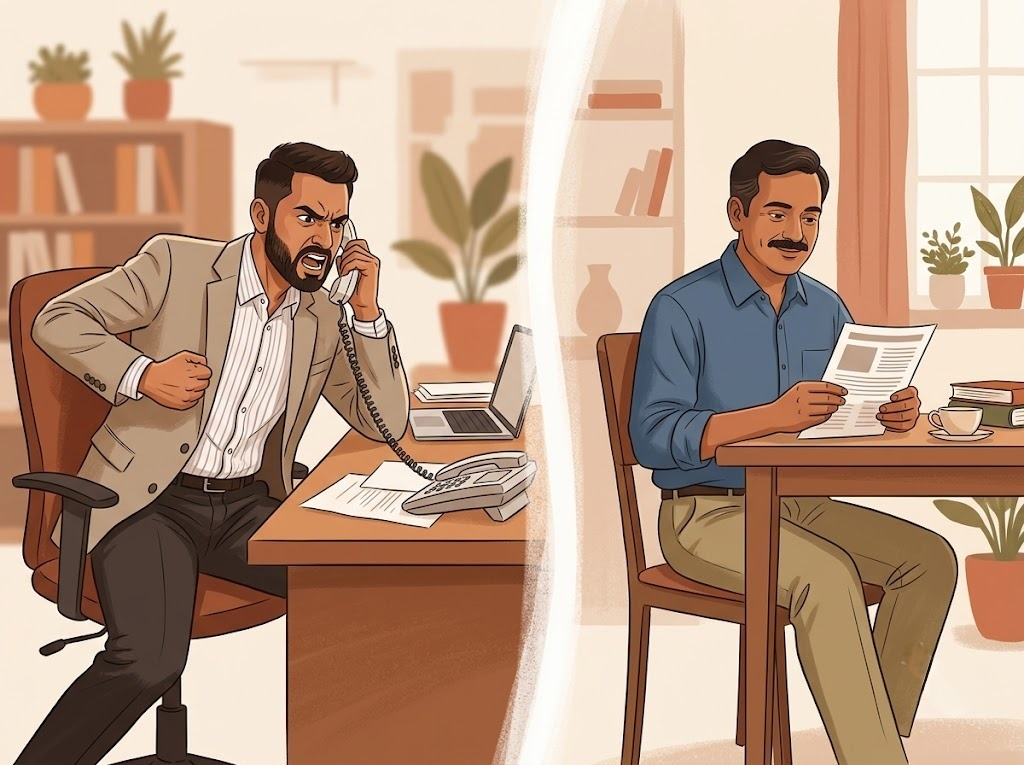
HDFC Bank Recovery Complaint - Where to Go at Each Stage
Stage | Where to Go | How | Timeline | What Can Happen |
Stage 1 | HDFC Customer Care | Phone / NetBanking / app | Immediate | Complaint logged, reference number issued |
Stage 2 | HDFC Grievance Redressal Officer | Email + registered post | 10 working days | Formal inquiry, agent action |
Stage 3 | HDFC Principal Nodal Officer | Written letter to Mumbai HQ | Up to 30 days total | Further inquiry, written resolution |
Stage 4 | RBI Ombudsman (cms.rbi.org.in) | Free online filing | After 30-day window | Bank directed to act; compensation up to ₹1 lakh possible |
Stage 5 | Consumer Court / Police FIR | Consumer Commission / local police station | Case-dependent | Compensation claim / FIR filed for criminal intimidation |
FREED does not provide legal representation. For legal action, consult a qualified advocate. FREED helps you understand your rights and document your situation.

Mohit Juneja
Mohit Juneja writes educational content at FREED on debt management, credit scores, loan repayment, and borrowing best practices. His content is shaped by expert insights and industry knowledge, helping readers better understand their financial options and make informed decisions.
mohit.juneja@freed.care

FREED is India's trusted loan management platform. Founded in 2020 and headquartered in Gurugram, FREED has counselled 20 lakh+ people on personal loans, credit cards, and app loans. FREED charges fees only on successful settlement, not upfront. FREED does not handle secured loans (home loans, car loans, gold loans).
Media Mentions