Debt Management Guidance for First-Time Borrowers
Debt management guidance helps you borrow an amount you can repay and stay on top of it. For a first-time borrower, it means checking the full cost before you sign, keeping EMIs low against your salary, and asking for help early if payments get hard.
Mohit Juneja
Reviewed by FREED India, Debt Resolution Specialists
 4.7/5
 ₹3,200Cr+
 20,000+
 20,00,000+4.7/5₹3,200Cr+20,000+20,00,000+
Key Summary

Ask for the Key Facts Statement (KFS) before you sign. It shows the yearly cost.
Keep EMIs and card payments well below 50% of your take-home pay.
No credit score (NH or NA) does not mean a bad score.
If payments feel heavy, talk to a counsellor before you miss an EMI.
What is debt management guidance for a first-time borrower?
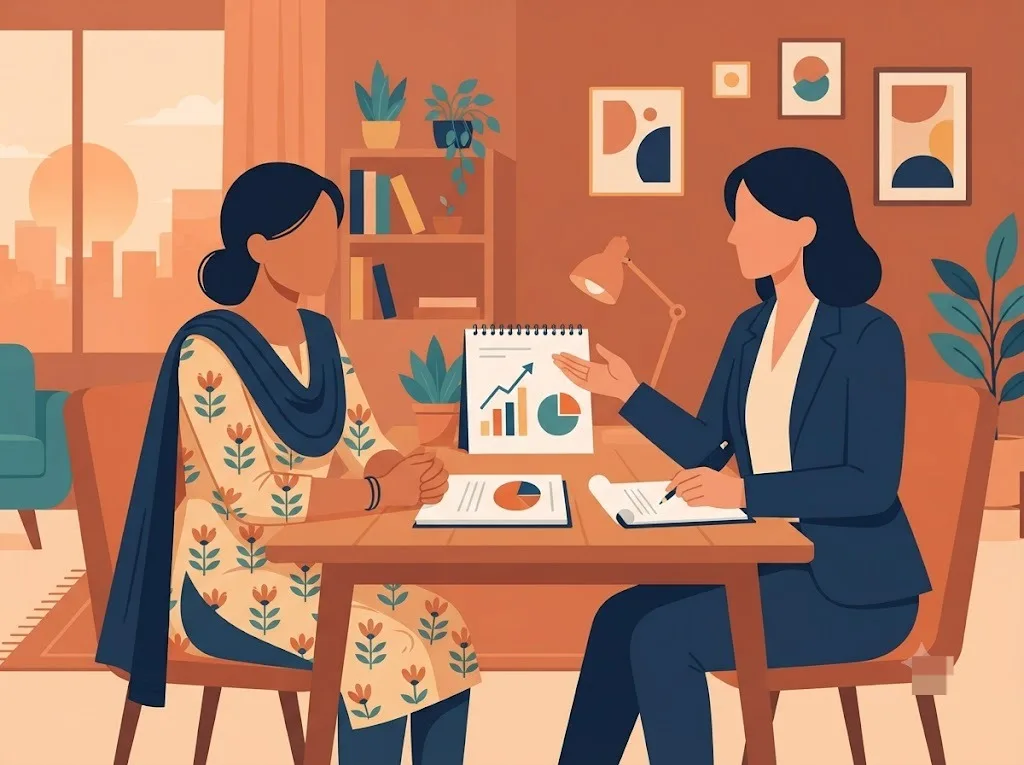
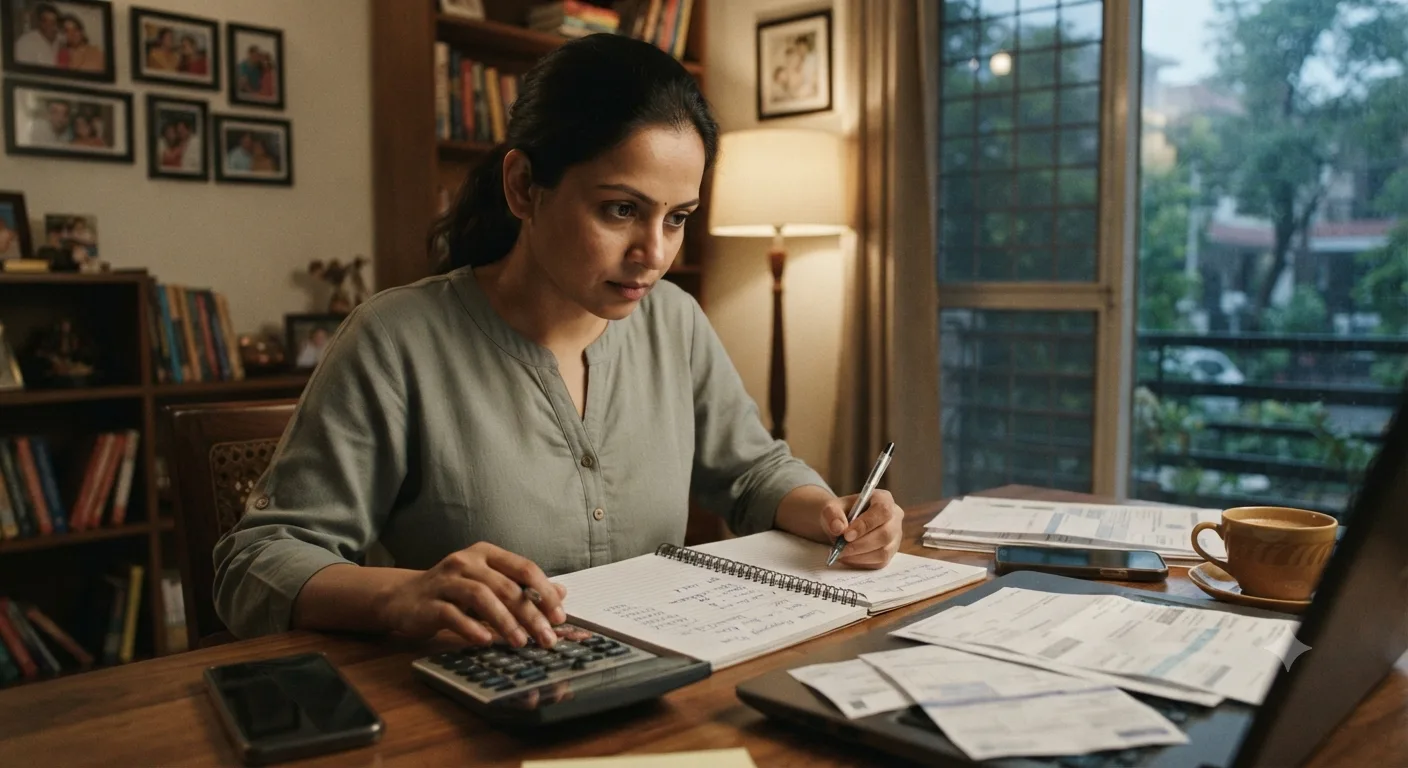
Your first loan feels big. The forms are long, the terms are new, and the agent is in a hurry. Good debt management guidance starts before you sign, not after the first missed EMI (the fixed amount you pay each month). This blog gives you simple checks for any first loan or card. It also lists the early signs that a loan is getting too heavy. And it tells you where to turn for help. Read it once before you sign. Keep it open on your phone at the desk.
Debt management guidance is simple help on three things. How much to borrow. How to repay it. And when to ask for help.
For a first-time borrower, it covers a first credit card, a personal loan or a BNPL (buy now, pay later) plan. You do not need to know finance to use it. You only need a few checks and a few habits.
It is not about borrowing as little as possible. It is about borrowing an amount that fits your pay.
A first loan sets habits that last. How you borrow and repay now shapes how lenders see you later. It also shapes how calm you feel on every due date. So the best time to get this right is before you sign.

Not Sure How Much Debt Is Too Much?
See how much of your salary your EMIs take. Get a free EMI Score from 0 to 100. No effect on your credit score.
Check My EMI ScoreWhat should I check before taking my first loan?
The lender must show you some things. You must ask for the rest. Use this table at the desk.
| What the lender must show you | What you must ask for |
|---|---|
| Key Facts Statement (KFS) for retail term loans. Not for credit cards | The KFS in a language you read well |
| Yearly cost (APR), with interest and fees together | The total you will pay back, in rupees |
| Fees and charges listed in the KFS | Processing fee, GST on it, late fee, bounce charge |
| On digital loans, the cooling-off terms | How many days, and what fee applies if you exit |
| Loan terms in the sanction papers | Is the rate fixed or floating? |
Three quick checks follow from the table:
Compare APR (the yearly cost of the loan, with all fees included), not just the interest rate.
Multiply the EMI by the number of months. That is what you really pay back.
Match the EMI to your take-home pay. The example below shows how.
Not sure what rate, EMI or tenure mean? Read the beginner guide to interest rates, EMIs and loan terms. For the full method, see how to plan your personal loan EMI payment better.
Worked example (illustrative, the rate is an example and not an offer). Take-home pay ₹32,000. Loan ₹2,00,000 at an example rate of 16% per year.
| Tenure | EMI | Total interest |
|---|---|---|
| 24 months | ₹9,793 | ₹35,023 |
| 36 months | ₹7,031 | ₹53,131 |
| 48 months | ₹5,668 | ₹72,067 |
An example 2% processing fee plus 18% GST adds ₹4,720.
Now match the EMI to pay. The 36-month EMI is about 22% of take-home pay. With ₹3,000 of other dues, it is about 31%. With ₹7,000 of other dues, it is about 44%.
A short tenure saves interest. A long tenure lowers the EMI but costs more. Pick the one you can pay on time, every month.

FREED Expert Tip
Most first-time borrowers look at the EMI and miss the total. Ask for the full amount you will pay back before you sign.
Check My EMI ScoreCan I repay my first loan early without a fee?
It depends on whether your loan is floating or fixed.
RBI has a rule here. Banks and NBFCs cannot charge a prepayment fee on floating-rate loans (the rate moves with the market) given to individuals for non-business use. It applies to loans sanctioned or renewed on or after 1 January 2026.
Here is the catch. Many personal loans have a fixed rate. For those, the lender’s own policy decides, so a charge may still apply. But the charge must be written in your KFS and loan papers. A charge that was never disclosed cannot be levied.
So do not assume the rule covers your loan. Ask this at the desk: “Is my loan fixed or floating? What is the prepayment charge in rupees?” Ask for the answer in writing.

What the Law Says
Since 1 October 2024, banks and NBFCs must give a Key Facts Statement in simple language, with the yearly cost (APR), on retail and MSME term loans sanctioned from that date. Credit cards are not covered. On digital loans, you get a cooling-off period to exit by repaying the principal and the interest for the days used. The lender’s board sets its length, and it cannot be shorter than one day. A small one-time processing fee can apply if it was shown in the KFS.
Check My Credit InsightsHow do I stay on top of my first loan?
A few habits do most of the work:
Set up auto-pay (NACH, the auto-debit permission) for a day after your salary arrives.
Keep a small buffer in your account for the EMI date.
Keep one page with the loan name, EMI, due date, and last date to pay.
Never repay one loan with a new app loan.
Check your credit report every few months.
If you have no credit score yet, do not worry. NH or NA means no history, not a bad score. A first score usually shows after about 3 to 6 months of credit use. Here is how to get started.
Want to See Where Your Credit Stands?
Credit Insights gives you an Experian-based report with step-by-step tips to improve your credit health.
Check My Credit InsightsWhat are the early signs a first loan is getting too heavy?
This happens to careful people. It is not a sign that you did something wrong. Watch for these signs in the first six months:
EMIs plus card payments are near half your take-home pay.
You pay only the minimum due on your card.
You use one loan or card to pay another.
You skip savings to meet the EMI.
You dread the due date.
One sign is a signal to look closer. Two or more is a good reason to act now. Acting early is easier, cheaper, and calmer than acting late.
Feeling Stretched by Your EMIs?
Talk to a FREED expert early. You do not need to miss a payment to ask for help.
Settle My LoansWhen should I ask for help with my debt?
FREED’s pointer is simple. If EMIs plus card payments go above 50% of your take-home pay, it is time to talk to someone. Do not wait for a missed EMI.
Use this quick check before you sign, or any month you feel stretched. Take (A) your monthly take-home pay, (B) your existing EMIs and card payments, and (C) the new EMI. Then work out (B + C) ÷ A × 100.
| Result | Message |
|---|---|
| Under 35% | Comfortable |
| 35% to 50% | Tight. Check again |
| Above 50% | High. Talk to someone before you sign |
Example: ₹32,000 pay, ₹3,000 existing dues, ₹7,031 new EMI = about 31%. Comfortable. The 50% line is FREED’s pointer. The 35% band is an editorial guide.
There are three places to start. Talk to your lender about a changed plan. Visit an RBI-backed Financial Literacy Centre for sessions on borrowing and repaying. Or speak to a counsellor. Read what credit counselling means if the term is new to you.
You do not need to be in trouble to ask. Many people talk to someone while they are still paying on time. That is when you have the most choices.
How does a counsellor help a first-time borrower?
A counsellor looks at your income, your EMIs, and your expenses. Then they show you where the money goes. Many people see their month clearly for the first time in that conversation. Here is how a credit counselling session works.
For people who can still repay but hold several EMIs, the next step may be FREED’s Loan Consolidation Plan (Reduce My EMI). One new loan pays off your old ones, leaving you with one lower EMI. FREED matches you to a lending partner from its network. There is a success-based fee. Loan consolidation may help improve your CIBIL score over time if you make repayments consistently, but its immediate impact depends on your credit profile and the terms of the new loan.
You can also use Credit Insights (Check My Credit). It is an Experian-based report with step-by-step recommendations to improve your credit health. It is open to everyone.
*Rates and ranges shown are indicative. Final terms decided by the bank. FREED is not a Loan Provider. No outcome is guaranteed. Please verify directly with your bank.
Holding Several EMIs and Want One?
FREED’s Loan Consolidation Plan combines multiple loans into one EMI.
Reduce My EMITips for a better first-loan experience
Borrow for what you need, not for the most the lender offers.
Ask for the KFS and read the total repayment line first.
Set a reminder three days before every due date.
Keep your loan page and statements in one folder.
Talk to someone the month a payment starts to feel heavy.
Already Behind on Payments?
If you genuinely cannot repay, FREED can negotiate with your lenders to settle your loans.
Settle My Loans
Mohit Juneja
Mohit Juneja is FREED’s Content & Communication Lead with 12+ years of experience across content, media, advertising and digital communications. He holds a postgraduate diploma in Communications from Xavier Institute of Communications, Mumbai, and has worked with organisations including NDTV, The Indian Express, McCann Worldgroup and NABARD.
At FREED, he leads content and communication across loan management, debt resolution, debt consolidation and financial well-being. His work combines research, storytelling and consumer-focused communication to make complex financial topics easier to understand and act on. He has also scripted and produced 11 documentaries on rural development and agriculture for NABARD, with film's selected for the Mumbai International Film Festival.
mohit.juneja@freed.care

FREED is India's trusted loan management platform. We help India settle their loans, consolidate their EMIs, improve their credit score, and manage their loans better. Over 20 lakh people trust FREED. We have managed more than ₹3,500 crore in loans and saved our users over ₹450 crore.
Media Mentions