Credit Score Ranges Explained: A Complete, Simple Guide
Is your credit score 650 or 750 — and what does that actually mean? This guide breaks down every credit score range in plain language — and tells you exactly what to do with yours.
FREED India
Reviewed by FREED India, Debt Resolution Specialists
 4.7/5
4.7/5 ₹3,200Cr+
 20,000+
 20,00,000+4.7/5₹3,200Cr+20,000+20,00,000+
Key Takeaways

A credit score is a 3-digit number between 300 and 900. Higher is better. 750+ is considered excellent by most banks in India.
Your score is calculated on 5 factors, payment history (35%), credit utilisation (30%), credit history length (15%), credit mix (10%), and new inquiries (10%).
A score below 650 makes loan approval very difficult. A score of 750+ gets you the best interest rates and fastest approvals.
Your score is updated every 15 days as per new RBI guidelines so responsible behaviour shows impact faster than before.
Checking your own credit score is free and has zero impact on your score, do it regularly to stay on top of your financial health.
What is a Credit Score?
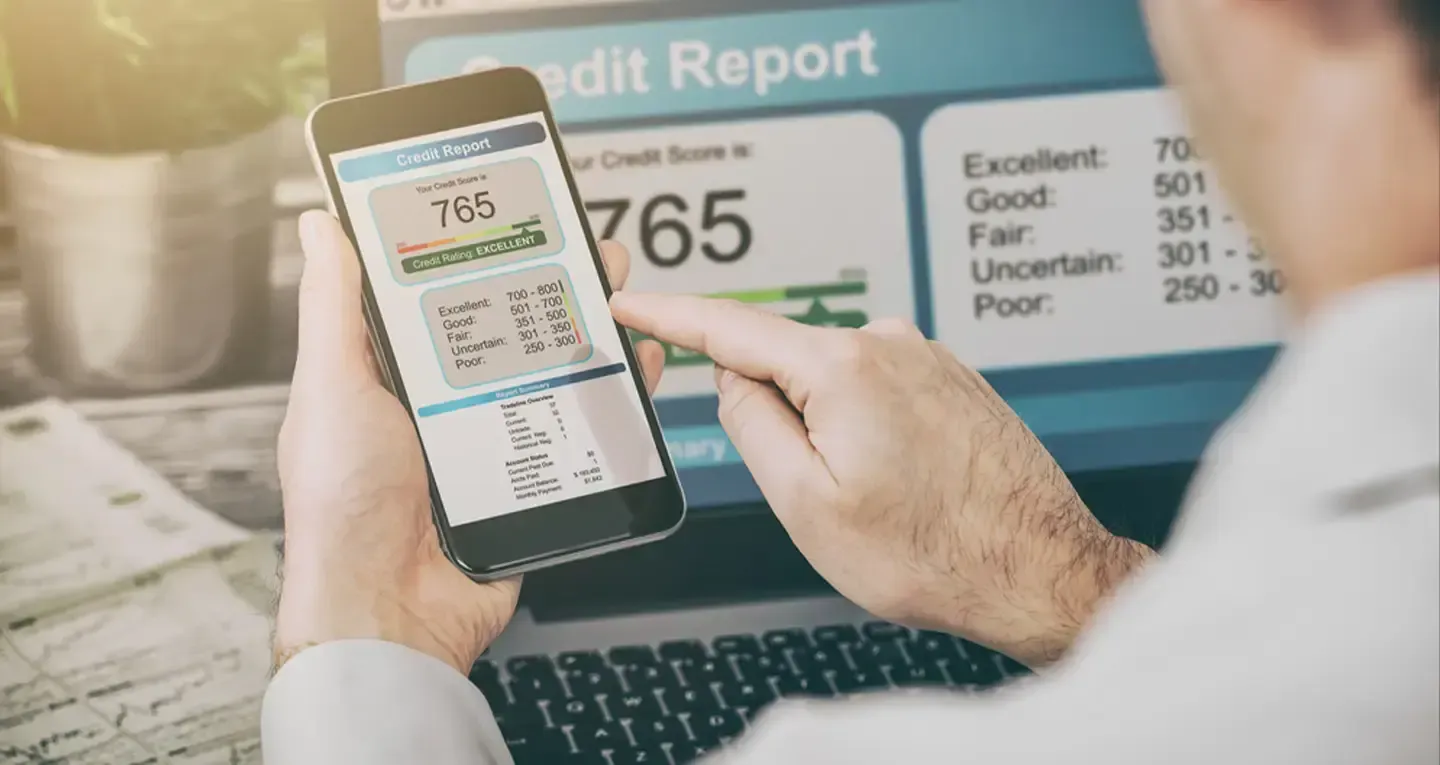
A credit score is a 3-digit number. It goes from 300 to 900.
It tells banks and lenders one thing: how likely are you to repay a loan on time?
The higher your number the more trustworthy you look. The lower it is the bigger the risk a lender sees in giving you money.
Your score is not just about the loans you currently have. It reflects your entire history of borrowing and repaying money. Every EMI paid on time. Every missed payment. Every time you applied for a new credit card. Every loan you closed. All of this goes into calculating your score.
Think of it as your financial report card. Banks look at this before deciding whether to approve your loan and at what interest rate.
A score of 750+ means: "This person is reliable. Give them a loan at a good rate." A score below 600 means: "This person is high risk. Either reject or charge a very high rate."
What Does Your Score Tell a Lender?
Every time you apply for a loan or credit card, the bank pulls your credit score and reads your credit report.
Here's what they're looking for:
Can this person repay? Your payment history tells them. Did you pay EMIs on time? Did you ever default?
Are they already stretched too thin? Your credit utilisation tells them. Are you using 80% of your credit card limit every month? That's a warning sign.
How long have they been managing credit? Your credit history length tells them. Longer is better, it shows track record.
Are they desperately seeking new credit? Your new inquiries tell them. Multiple applications in a short time suggests financial distress.
Do they manage different kinds of credit well? Your credit mix tells them. Having both secured (home loan) and unsecured (credit card) shows versatility.
All five factors together paint a picture. Your credit score is that picture compressed into one number.
The 5 Factors That Affect Your Credit Score
Your score is not random. It's calculated on 5 specific things:
1. Payment History - 35% The single biggest factor. Paying every EMI and credit card bill on time, every month. Even one missed payment can drop your score by 25–50 points.
2. Credit Utilisation - 30% How much of your credit card limit you're using. Keep it below 30%. If your limit is ₹1,00,000, keep your outstanding below ₹30,000.
3. Length of Credit History - 15% How long you've had active credit accounts. Older accounts help your score. Don't close your first credit card.
4. New Credit Inquiries - 10% Every time you apply for a new loan or card, a hard inquiry is added. Too many in a short time signals risk. Space applications at least 3–6 months apart.
5. Credit Mix - 10% Having a mix of secured (home loan, car loan) and unsecured credit (credit card, personal loan) looks better than having only one type.

FREED Expert Tip
Payment history is 35% of your score — the single most powerful factor. If you can only do one thing to improve your score, make it this: set up auto-debit for every EMI and credit card. One missed payment can undo months of progress. Auto-debit eliminates that risk completely
How to set up auto-debit for your loans and credit cardsHow to Improve Your Credit Score, The Key Steps
Whether your score is 500 or 700 — here's what actually moves the needle:
Pay every bill on time every month This is 35% of your score. Nothing beats consistency here. Set up auto-debit. Never miss a payment.
Bring your credit card usage below 30% This is 30% of your score. If your card limit is ₹1,00,000, keep outstanding under ₹30,000. Pay down balances as fast as you can.
Don't close old credit accounts. Older accounts = longer credit history = better score. Keep them open even if you rarely use them.
Space out loan applications Don't apply for 3 loans in one month. Each application is a hard inquiry that drops your score. Apply only when you genuinely need credit.
Check your report every 3 months. Errors on your report can silently drag your score down. Catching and disputing them is free and can boost your score quickly.
Are You in a Loan Trap? Quick Check
Move the slider to your total EMIs as a % of monthly salary. See your debt stress level instantly.
EMIs as % of Monthly Salary
What If Your Score Is Low Due to Debt?
Many people have a low credit score not because they've been irresponsible but because their debt load became unmanageable.
Multiple loans. A credit card that grew too large. An EMI they couldn't keep up with after a job loss or medical emergency.
If that's your situation — improving your score starts with addressing the underlying debt.
FREED can help you understand which of your current loans and credit card accounts are most affecting your financial health. We can help you resolve them — through consolidation or settlement — so that the accounts dragging your score down are properly dealt with.
Once the debt is resolved, consistent clean behaviour rebuilds the score over time.
About FREED
FREED is India's first and leading Debt Relief Platform. We help people who are overwhelmed by credit card bills, personal loans, and EMIs find a legal, stress-free path to becoming debt-free.
We offer Debt Consolidation (one lower EMI for multiple loans) and Debt Resolution (settle for less when you genuinely can't repay in full). We also help you understand how your debts are affecting your financial health — including your credit score.
We protect you from recovery harassment through FREED Shield — trusted by over 15,00,000 Indians.
Over 10,000 Indians have used FREED to take back control of their finances.
No complicated language. No hidden charges. No judgement. Just honest, practical help.
Call us: 0124-6663555 (Mon–Sat, 10AM–7PM) www.freed.care | Check your score: freed.care/credit-check

India's leading debt resolution platform
FREED is India's leading platform for debt settlement and financial wellness. We have helped over 60,000 Indians reduce, manage, and get completely out of debt the right and legal way.
Media Mentions












