Consumer Durable Loan for Low CIBIL Score
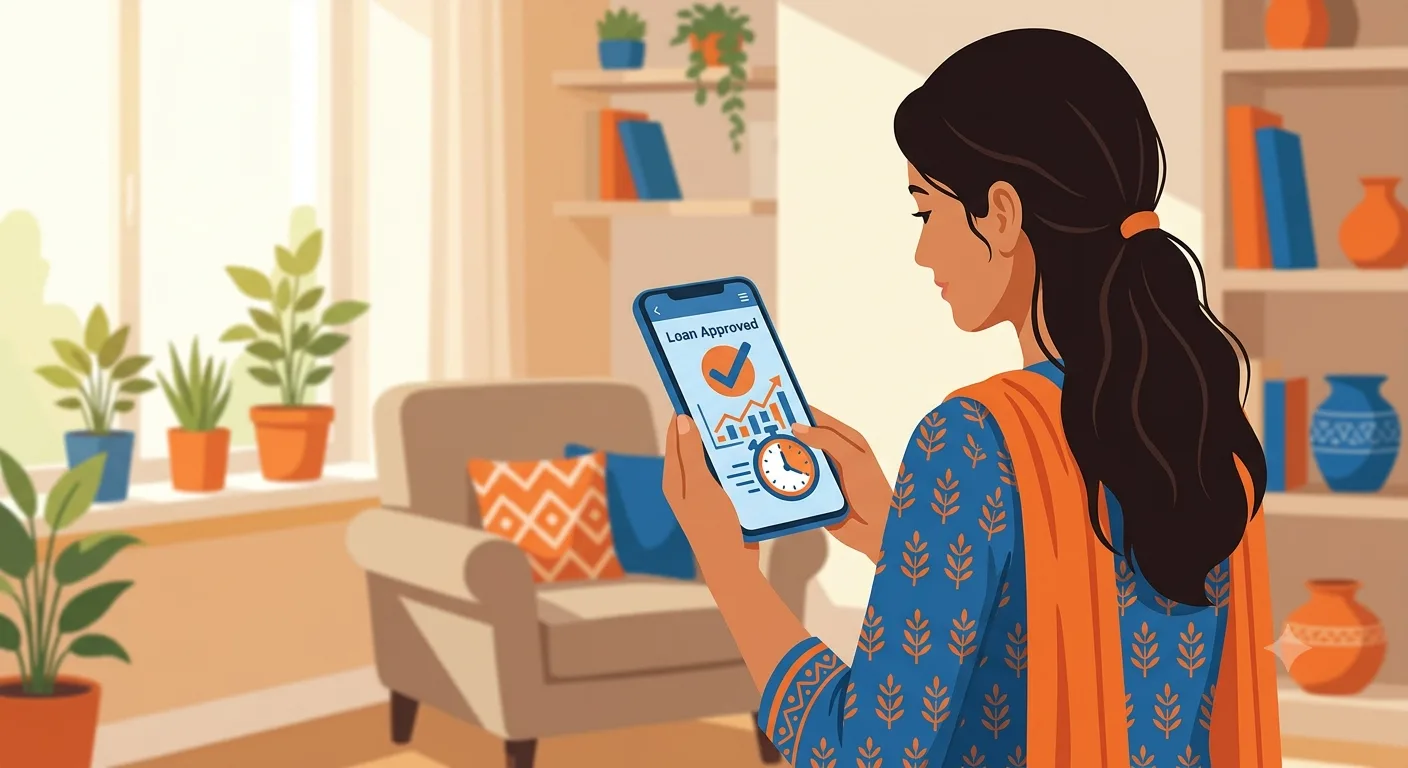
A consumer durable loan is a small, unsecured EMI loan used to buy things like a refrigerator, TV, laptop, or smartphone. Approval is usually easier than a personal loan, but your CIBIL score still decides which lender says yes and what it costs you.
Mohit Juneja
Reviewed by FREED India, Debt Resolution Specialists
 4.7/5
4.7/5 ₹3,200Cr+
 20,000+
 20,00,000+4.7/5₹3,200Cr+20,000+20,00,000+
KEY TAKEAWAYS

Many lenders generally prefer applicants with stronger credit profiles, although eligibility varies by lender.
Several lenders serve first-time borrowers with no credit history at all, not just people with a damaged score.
Interest rates typically run 12% to 22%, though select products carry 0% or no-cost EMI offers.
Loan amounts usually range from ₹10,000 to ₹15 lakh depending on the lender and the item.
A missed EMI is reported to the credit bureaus and may affect how future lenders assess your credit profile.
Can You Get a Consumer Durable Loan With a Low CIBIL Score?
Yes, in most cases you can, and it's generally easier than getting a personal loan approved. Consumer durable loans are smaller in size, tied to a specific product, and often processed right at the store counter or through the retailer's financing partner. Because the ticket size is smaller, lenders take on less risk, which means they're more willing to look past a low score than they would be for an unsecured personal loan running into lakhs of rupees.
That said, "easier" doesn't mean automatic. Your CIBIL score still shapes two things: which lenders will even consider your application, and what the loan costs you if they do. Most mainstream lenders look for a score somewhere between 650 and 700. Below that, your options narrow, but they don't disappear. Some NBFCs may consider applicants with lower credit scores, subject to their internal policies. What changes as your score drops is the shape of the deal. You might see a smaller sanctioned amount, a shorter repayment tenure, a higher interest rate, or a request for a co-applicant. None of these are automatic rejections. They're the lender's way of adjusting the terms to match the risk they're taking on. If your score sits in the 600 to 650 range, expect to shop across two or three lenders before you find one whose terms work for you, rather than assuming the first "no" is final.

See where your credit stands before you shop.
Knowing your score in advance means no surprises at checkout.
Check My CreditMinimum CIBIL Score Requirements by Lender Type
The minimum score a lender looks for depends heavily on what kind of institution it is, and this is where a lot of confusion comes from. There isn't one number that applies across the board.
Large banks and the bigger NBFCs, the kind that fund financing at big-box electronics chains, tend to prefer stronger credit profiles, indicatively scores around 700 or above, though each sets its own criteria. They have more paperwork, faster processing for well-qualified applicants, and often the best interest rates on offer, but they're also the least flexible if your score falls short.
Mid-sized NBFCs and consumer finance companies sit in the middle. As a general lender preference rather than a fixed eligibility threshold, many of these work comfortably with mid-range scores, and some accept lower ones, particularly for smaller loan amounts on lower-ticket items like a smartphone or a basic washing machine.
Point-of-sale lenders, the financing partners you'll find embedded directly into a store's billing counter or checkout app, tend to be the most accommodating. Several of these are built specifically to serve first-time borrowers and people with thin or no credit history, using income verification and a smaller loan cap instead of leaning entirely on a CIBIL score.
The practical takeaway: if a bank turns you down, that doesn't mean you're out of options. It usually means you need to look one tier down, toward NBFCs or point-of-sale financing, where the underwriting approach is built around exactly this kind of profile. Thresholds do shift over time and vary lender to lender, so treat any specific number as a general guide rather than a fixed rule.
What a Low CIBIL Score Changes About Your Loan
A lower score doesn't usually mean an outright rejection for a consumer durable loan, but it does change the shape of what's offered to you, and it helps to know this going in so nothing catches you off guard at the counter.
The most immediate change is the interest rate. As an illustrative market range, consumer durable loans generally run from around 12% to 22%, though actual offers vary by lender and profile, and a lower score tends to push you toward the higher end of that band. Here's what that looks like in real numbers: on a ₹40,000 loan repaid over 12 months, the difference between a 12% rate and a 22% rate works out to a few thousand rupees more in total interest paid. It's not a small difference when you're already watching your budget closely.
You may also see a smaller sanctioned amount than the full price of the item, meaning you'd need to cover part of the cost upfront. Some lenders shorten the repayment tenure for lower scores too, which raises your monthly EMI even though the total loan amount stays the same. And no-cost EMI offers, the kind where the interest is absorbed by the retailer or brand instead of charged to you, are usually reserved for applicants with stronger scores. If your score is low, budget for standard interest rather than expecting a 0% deal.
Additional verification is common as well. This might mean an extra income document, a reference check, or a request for a co-applicant to strengthen the application. None of this means you're being singled out unfairly. It's simply how lenders balance risk when a score sits below their usual comfort zone.

Freed Expert Tip
Check your credit report before you get to the store checkout. Knowing your actual score in advance means you won't be caught off guard by a rejection or a high-interest counteroffer in front of the salesperson.
Check My CreditLenders That Consider Low CIBIL or No Credit History
If your score is on the lower side, or you don't have a credit history at all yet, your options usually fall into three broad categories rather than any single named institution.
NBFCs (non-banking financial companies) that specialise in consumer finance are often the most workable route. Many of these were built specifically around smaller-ticket lending, and their underwriting tends to weigh income and repayment capacity alongside the score rather than treating the score as a hard cutoff.
Point-of-sale financing, the loan offer you see right at the billing counter of an electronics or appliance store, is another strong option. These tie-ups exist precisely because retailers want to sell to a wide range of customers, including first-time borrowers, so the financing partner behind the counter is frequently more flexible than a traditional bank would be.
Digital lending apps round out the third category. These use alternate data, things like your bank statement patterns, salary credits, and repayment history on smaller past loans, to assess you when a thin CIBIL file doesn't tell the full story. This route works particularly well for someone with no credit history rather than a damaged one, since there's no negative marks to weigh against, just a lack of data to fill in.
Whichever category you approach, the process usually looks similar: submit income proof, basic KYC, and let the lender run its own risk assessment rather than relying on the CIBIL score alone. It's worth exploring more than one lender type if your first attempt doesn't go through, since each category weighs the same information differently. But avoid making multiple formal applications within a short period. Each formal application creates a hard enquiry on your credit report, and future lenders may consider a cluster of recent enquiries when reviewing your file. Research your next option first, then apply selectively.
Documents You'll Need
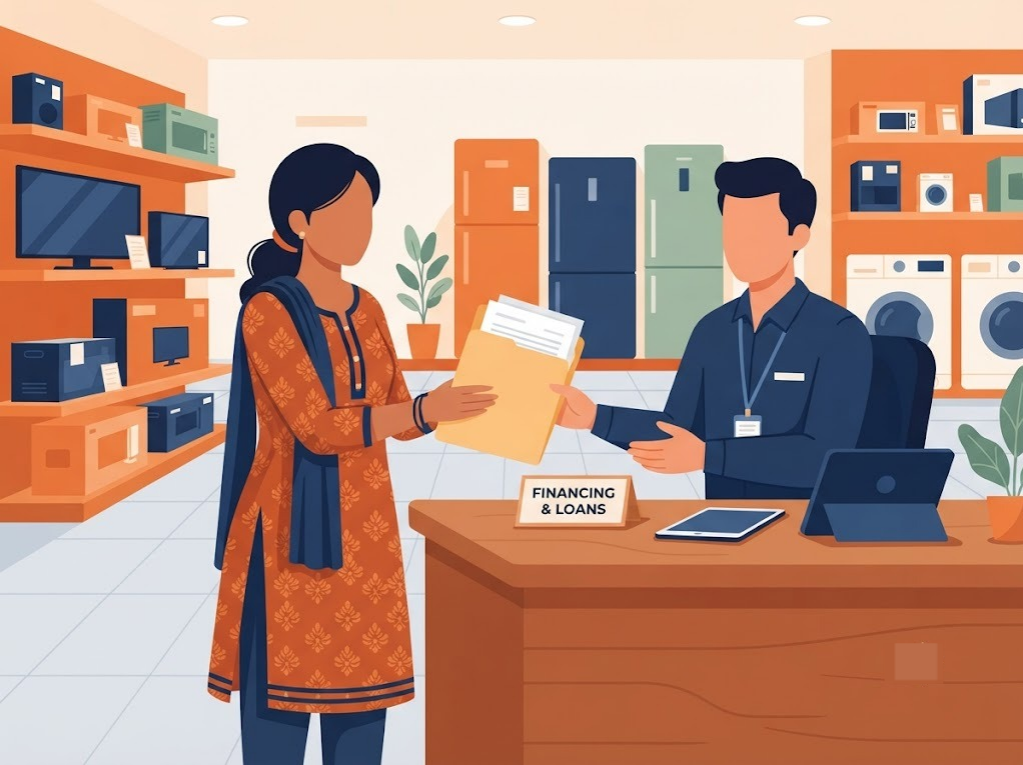
- KYC documents. PAN card and Aadhaar card, to confirm your identity and address.
- Income proof. salary slips for salaried applicants, or bank statements for the last 3 to 6 months if you're self-employed.
- Address proof. a utility bill, rent agreement, or Aadhaar can usually serve this purpose.
- Passport-size photograph. most lenders still ask for this at the physical or in-app application stage.
- Co-applicant documents (if applicable). the same KYC and income proof, if you're adding a co-applicant to strengthen your application.
Keep digital copies ready on your phone. Most point-of-sale and app-based lenders now accept uploaded scans, which speeds up approval considerably compared to physical paperwork.
How to Improve Your Approval Odds
These steps may strengthen your application, subject to the lender's assessment.
Start by choosing a smaller loan amount than you might initially want. A lender is far more comfortable approving ₹15,000 for a smartphone than ₹80,000 for a high-end television, simply because the risk on their side is lower. If the item you want is expensive, consider paying part of the cost upfront and financing only the remainder.
Applying with a co-applicant, a spouse, parent, or sibling with a stronger score or steady income, can shift a border-line application into an approved one. The co-applicant shares responsibility for the EMI, which gives the lender more confidence that the loan will be repaid on time.
A shorter tenure also helps your case, even though it raises your monthly EMI slightly. Lenders see a shorter repayment window as lower risk, since there's less time for your financial situation to change before the loan closes.
Before you apply anywhere, pull your credit report and check it for errors. It's more common than people expect: a loan that was actually closed still showing as active, a payment marked late that was actually on time, or an account that isn't even yours. Correcting inaccurate credit-report information helps ensure lenders assess accurate credit information. FREED's Credit Insights subscription pulls your Experian report and lays out exactly what's affecting your score, along with clear next steps to improve it, useful groundwork before you walk into any loan application.
What Happens If You Miss an EMI
This part gets overlooked more often than it should. A consumer durable loan is reported to credit bureaus exactly like any other loan on your file, and a missed EMI shows up there the same way a missed personal loan or credit card payment would.
The immediate cost is usually a late payment fee or bounce charge, typically a few hundred rupees per missed instalment, though the exact figure depends on your lender's terms. That's the smaller problem. The bigger one is what it does to your credit report. Repeated missed payments become part of your credit history and may influence future lending decisions.
If you already have a low CIBIL score and you're financing a consumer durable item, protecting that EMI payment matters more than it might for someone with a stronger credit file. One or two slipped payments can undo the progress you'd need to make to qualify for better terms on your next loan.
If you sense an EMI is going to be tight this month, reach out to your lender before the due date rather than after. Many lenders have some flexibility if you communicate early, but very few will backdate an adjustment once a payment has already been missed and reported.

What the Law Says
Under RBI's Credit Information Companies (Regulation) Act, lenders are required to report your loan repayment data, including missed EMIs, to credit bureaus on a regular basis. This applies to consumer durable loans the same way it applies to any other unsecured credit.
Read your rights on credit reportingConsumer Durable Loan Approval by CIBIL Score Range
CIBIL Score Range | What to Expect |
750 and above | Widest lender choice, best rates, no-cost EMI offers likely available |
700 to 749 | Good approval odds, standard interest rates |
650 to 699 | Approval possible with some lenders, higher interest rate |
Below 650 or no history | Limited to specific NBFCs and point-of-sale lenders, stricter terms, possible co-applicant requirement |
Note: These are indicative market ranges based on general lending patterns, not standard eligibility criteria. Each lender applies its own underwriting rules, so outcomes at any score range vary across lenders.
Thresholds vary by lender and change over time. Rates and ranges shown are indicative. Final terms are decided by the lender. FREED is not a Loan Provider. No outcome is guaranteed. Please verify directly with your lender.
The pattern across this table is fairly consistent: as your score drops, your lender pool shrinks and your terms tighten, but at no point does it go to zero. Even in the lowest band, point-of-sale financing and specific NBFCs remain a realistic route, just with more conditions attached.
How FREED Helps If a Consumer Durable Loan Is Part of a Bigger Debt Picture
A single consumer durable loan on its own usually isn't a heavy burden. Where it becomes a problem is when it sits alongside a personal loan, a couple of credit cards, and maybe a BNPL purchase or two, and the combined EMIs start eating into your monthly budget more than you'd like.
If that sounds like your situation, and you're still managing to pay everything on time but finding it increasingly stressful to track multiple due dates and multiple lenders, FREED's Debt Consolidation Program is worth exploring. It's built for exactly this stage: still current on payments, just stretched thin managing several EMIs at once. FREED assesses your full financial picture, income, existing loans, and repayment capacity, and matches you to a lending partner from its network. That partner disburses one new loan that pays off your existing eligible debts at once, leaving you with a single EMI, one lender, and one due date going forward. Debt Consolidation may simplify repayment for eligible borrowers, depending on repayment behaviour and lender reporting. In fact, it tends to improve over time as your account history moves toward regular, on-time payments on one clean loan instead of several scattered ones.
This isn't the right fit for everyone reading this blog, and that's fine. If your consumer durable loan is the only EMI you're managing, there's likely nothing to consolidate yet. But if it's one piece of a wider stack of unsecured debt that's getting harder to juggle, talking to FREED's team costs nothing and can tell you quickly whether consolidation makes sense for your specific numbers.
Sources
Claim | Source |
Lenders are required to report loan repayment data, including missed EMIs, to credit bureaus | RBI, Credit Information Companies (Regulation) Act, 2005 — rbi.org.in [LEGAL FLAG — reviewing team to verify exact circular/section reference before publish] |
All other figures in this blog (interest rate ranges, score bands, fee amounts) are industry conventions without a single locatable regulator source and have been worded as "typically," "generally," or "usually" in the body rather than presented as sourced fact.

Mohit Juneja
Mohit Juneja writes educational content at FREED on debt management, credit scores, loan repayment, and borrowing best practices. His content is shaped by expert insights and industry knowledge, helping readers better understand their financial options and make informed decisions.
mohit.juneja@freed.care

FREED is India's trusted loan management platform. Founded in 2020 and headquartered in Gurugram, FREED has counselled 20 lakh+ people on personal loans, credit cards, and app loans. FREED charges fees only on successful settlement, not upfront. FREED does not handle secured loans (home loans, car loans, gold loans).
Media Mentions