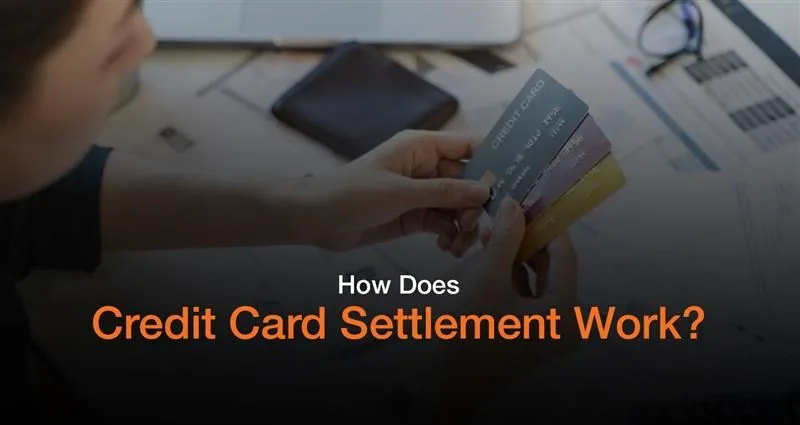
Yes Bank Credit Card Settlement: How It Works
Yes Bank credit card settlement (OTS) happens when Yes Bank agrees to accept a reduced lump sum, less than your full outstanding, to close a credit card account that has turned into an NPA (loan marked as bad by the bank). By this point the card is usually already blocked for further use, settlement is about closing what's owed, not the card facility itself.
Mohit Juneja
Reviewed by FREED India, Debt Resolution Specialists
 4.7/5
4.7/5 ₹3,200Cr+
 20,000+
 20,00,000+4.7/5₹3,200Cr+20,000+20,00,000+
KEY TAKEAWAYS

Yes Bank credit card settlement lets you close an NPA card account for less than you owe.
Credit-card revolving interest can be substantially higher than the rates on many personal loans. When a balance is carried forward, finance charges can make the outstanding grow quickly.
Yes Bank generally appears to handle credit card settlement case by case through the branch or collections desk, rather than a named public scheme, though this should be confirmed against Yes Bank's current published terms.
The "Settled" mark stays on your credit report for up to 7 years.
What Is Yes Bank Credit Card Settlement (OTS)?
NPA means the account has been classified as a non-performing asset under the applicable banking rules.
This isn't something available to any cardholder who simply wants to pay less. Settlement is generally considered when an account has become seriously delinquent and the borrower is unable to repay the full outstanding. The bank decides whether to offer or approve a settlement based on the account and circumstances. Settlement is not something a borrower chooses out of preference.
By the time an account reaches serious delinquency, the card may already be restricted or blocked from further use. It's worth being precise about that distinction: card blocking and account closure are two different events. Blocking stops you from spending more on the card. Settlement, later, is about closing what's actually owed on the balance already accumulated.
Credit card debt gets to this point differently than a personal loan default usually does, and understanding why matters before getting into the mechanics of the process itself.

Why Does Credit Card Debt Escalate Faster Than a Loan?
This happens to careful, responsible cardholders too, not just people who overspent, and it's worth understanding the specific mechanics rather than assuming default always comes from reckless spending.
The minimum-due trap is at the center of it. Paying only the minimum due each month keeps a credit card account technically current, on paper, nothing looks wrong yet. But the remaining balance keeps accruing interest at credit card rates the entire time, and those rates run considerably higher than most other borrowing, commonly somewhere in the 36% to 46% annual range.
Once even one or two payments get missed on top of that compounding, the math moves fast. An outstanding balance that would have taken years to meaningfully grow on an equivalent personal loan default can escalate in a fraction of that time on a credit card, purely because of how much interest is stacking on top of an already-growing balance every single month.
None of this reflects poorly on someone who ends up here. A medical bill, a job loss, or even just a few tight months combined with minimum-only payments is enough to set this in motion, regardless of how careful someone has generally been with money. Recognising the signs that this pattern has crossed from manageable into genuinely serious is the next useful step.
Signs You Should Consider Yes Bank Credit Card Settlement
- You've already missed two or more minimum-due payments, and recovery calls have started. You've begun receiving repeated collection or recovery communications and are struggling to maintain repayment.
- The card has already been blocked for further use. This usually happens well before settlement becomes relevant, and it's a clear marker that the account has moved into a more serious phase.
- Your Yes Bank card account is showing NPA status on your CIBIL report. An NPA classification is a sign that the account has entered serious delinquency. At that stage, borrowers may need to discuss resolution options with the lender.
- You have no realistic way to clear the outstanding, even with a revised payment schedule. If a restructured plan still wouldn't be sustainable given your actual income, that's worth being honest about early.
- You've already received a legal or recovery notice from Yes Bank. A legal or recovery notice means you should review the account promptly and understand what action the notice requires.
If two or more of these describe your situation, it's worth having a proper conversation about the route forward rather than waiting. A free assessment can help confirm which route actually fits, since settlement isn't the only option even at this stage, and exactly how the settlement process itself works is worth understanding either way.
How Does Yes Bank Credit Card Settlement Work?
Step 1: Confirm NPA status and pull your credit report. Check your CIBIL, Experian, or Equifax report to see the exact outstanding on the card, including accrued interest and any over-limit or late fees layered on top of the original spend. This gives you the real number you're working with, not just what the last statement showed.
Step 2: Write a hardship letter to Yes Bank. Address it to the branch, your relationship manager, or the collections desk directly, stating the card account details, the reason for default, and a proposed lump sum you're able to offer.
Step 3: Attach hardship documentation. Income proof, medical bills, a termination letter, or bank statements, whatever genuinely supports the circumstances behind the default, strengthens the case for a meaningful reduction.
Step 4: Submit and keep a dated acknowledgment. Every document you send should have a record showing it was received, an email timestamp or a stamped copy, something you can point to later if there's any dispute about what was submitted and when.
Step 5: Yes Bank reviews the case internally. This is a case-by-case review, not an application against a published, named scheme, since Yes Bank doesn't run one publicly for credit cards.
Step 6: Negotiate, focusing on interest and penal charges first. The original spend itself is usually harder to move than the accrued interest and penalty charges sitting on top of it, which is where the real negotiating room tends to be.
Step 7: Get the offer in writing before paying anything. It must explicitly state "fully and finally settled," along with the exact amount and a payment deadline. Never pay based on a verbal assurance alone.
Step 8: Pay within the stated deadline.
Step 9: Collect the NOC (No Objection Certificate) and settlement letter, then check all four credit bureaus within 30 to 45 days to confirm the account has been correctly updated to reflect the settlement.
Consistent with FREED's established role described across other blogs in this thread, but flagging per her instruction, needs current internal commercial sign-off before publishing, not a content problem.

Freed Expert Tip
On a credit card, ask for accrued interest and penal charges to be reviewed first. These often make up a large share of the outstanding and see the biggest cuts, more than the original spend itself.
Talk to a FREED CounsellorWhat Makes Credit Card Settlement Different From Loan Settlement at Yes Bank?
Credit card debt behaves differently from a personal loan, and that difference shapes how the settlement conversation actually plays out.
A credit card is revolving credit, meaning the outstanding balance isn't a single fixed principal with a clean, scheduled interest structure the way a Yes Bank personal loan typically is. Instead, it can include accrued interest, cash advance fees, late fees, and over-limit charges, all stacked on top of the original spend over time. That layering is exactly why two people with the same original ₹50,000 in card spending can end up owing meaningfully different totals a year later, depending on how the minimum-due cycle and fees compounded in each case.
The card is also typically blocked for further use once payments lapse, well before any settlement conversation begins. That means "settlement" here is entirely about closing what's already owed, it isn't about restoring access to the card itself, which won't be reinstated regardless of how the negotiation goes.
Like Yes Bank's personal loan settlement process, there's no named public scheme or self-service portal for credit cards either. This happens case by case, through the branch or collections desk, the same general structure across both products.
The practical consequence of all this is that the negotiation math differs meaningfully from a loan. Since a large share of a card's outstanding is often interest and fees rather than the original spend, there's frequently more room to negotiate down than the headline outstanding figure might suggest.

What the Law Says
Under RBI's Master Direction on Credit Card and Debit Card Issuance and Conduct Directions, 2022, a card issuer must disclose interest rates, charges, and the calculation methodology upfront and in writing, including via the card's Most Important Terms and Conditions (MITC) document, and Before making any settlement payment, obtain the settlement offer in writing and confirm the exact amount, payment deadline, account details, and the treatment of the remaining balance.
Talk to a FREED CounsellorWhat Are Your Options Before Yes Bank Credit Card Settlement?
Settlement is the last resort on a ladder with two other rungs worth considering first, depending on where you actually stand. If you're current on payments: a balance transfer or EMI conversion is worth exploring, moving the balance to a lower-rate personal loan or converting it to a 0%-interest EMI plan if your issuer offers one. If you're stretched but still paying: FREED's Debt Consolidation Program reviews your eligible loans and cards with the aim of simplifying repayment into one manageable monthly arrangement. If repayment in full has genuinely stopped being realistic, exploring settlement directly with the lender becomes the relevant option, closing what's owed for less than the full amount, at the cost of a lasting mark on your credit file.
If your card is still current and your CIBIL score is reasonably healthy, a balance transfer or an EMI conversion is worth exploring first, moving the card balance to a lower-rate personal loan, or converting it to a 0%-interest EMI plan if your issuer offers one. This is the right fit for someone still paying, just looking to escape a high-interest revolving balance before it becomes a bigger problem.
FREED's Debt Consolidation Program reviews eligible borrowers' multiple loans and cards with the aim of simplifying repayment into a more manageable monthly arrangement. The effect on your CIBIL profile depends on the application and subsequent repayment behaviour.
Only when repayment in full has genuinely stopped being realistic does Yes Bank credit card settlement become the relevant option, closing what's owed for less than the full amount, at the cost of a real and lasting mark on your credit file.
Comparison Table: Options Before Settlement
Purpose | Balance Transfer / EMI Conversion | Debt Consolidation | Yes Bank Credit Card Settlement |
What it does | Moves card balance to a lower-rate loan or EMI plan | Merges all loans/cards into one lower EMI | Closes card debt for less than owed |
CIBIL impact | Neutral to mildly positive | Improves over time | Drops, "Settled" tag for up to 7 years |
Best for | Still paying, good CIBIL | Still paying, over-leveraged | Genuinely unable to repay |
Rates and ranges shown are indicative. Final terms decided by the bank. FREED is not a Loan Provider. No outcome is guaranteed. Please verify directly with your bank.

How FREED Helps With Yes Bank Credit Card Settlement
FREED reviews your complete debt picture first, including a full breakdown of the card's interest and charges, not just the headline outstanding figure, so any negotiation starts from an accurate number rather than a guess.
From there, FREED drafts and sends the hardship and settlement letter directly to Yes Bank's branch or collections desk on your behalf, gathers and organises the supporting documentation, and manages an SPA-based (Systematic Payment Approach) savings plan to build toward a realistic lump sum before negotiating once that corpus is sufficient.
FREED follows up consistently until the NOC and settlement letter are actually in hand, and then tracks the case through to confirm the credit bureau update reflects the settlement correctly. FREED has settled 20,000+ accounts and managed ₹3,200 Cr+ in debt, typically settling accounts at up to 50%* less than the original outstanding.
The fee for this service is success-based, meaning it only applies once a settlement is actually reached, not before.
*Waiver percentage varies by case, bank, and account history. No specific outcome is guaranteed.
Compare Yes Bank Credit Card Settlement With Other Bank Options
Yes Bank isn't the only bank whose credit card settlement process is worth understanding on its own terms. If you're weighing how this compares against IndusInd, SBI, HDFC, ICICI, Axis, or another issuer, the tool below lets you filter by bank, product type, CIBIL threshold, and settlement availability side by side. FREED's IndusInd Bank credit card settlement guide covers that bank's process in the same depth as this piece covers Yes Bank's, worth a look if you're carrying cards across more than one issuer.
What Helps During the Yes Bank Credit Card Settlement Process?
- Reach the collections or recovery desk directly, not general customer care. Since there's no named public scheme to apply through, going straight to the team actually handling delinquent accounts saves real time.
- Get every offer in writing. An email or letter with explicit "fully and finally settled" wording is what protects you later, never rely on a verbal call alone, no matter how confident it sounded.
- Ask for interest and penal charges to be reviewed first. As covered above, that's usually where the actual room to negotiate exists, more than on the original spend itself.
- Keep a dated acknowledgment for every document you submit. A simple email trail is enough, but it needs to exist, in case anything about what was sent or received is ever disputed.
- Don't pay anything until the offer letter is signed and in your hands. This single habit protects against the most common way a settlement negotiation goes wrong.
None of this is about gaming the process or delaying payments strategically, it's about documentation and asking the right questions at each stage. FREED tracks the case through to the credit bureau update for enrolled customers, so the follow-through after payment doesn't fall entirely on you either.
Sources
Claim | Source |
Card issuers must disclose interest rates, charges, and calculation methodology upfront, and via the MITC document | RBI Master Direction on Credit Card and Debit Card Issuance and Conduct Directions, 2022 |
A loan or card account is classified as NPA once payment remains overdue for more than 90 days | Consistent with RBI's prudential norms on income recognition and asset classification, established elsewhere on freed.care |

Mohit Juneja
Mohit Juneja writes educational content at FREED on debt management, credit scores, loan repayment, and borrowing best practices. His content is shaped by expert insights and industry knowledge, helping readers better understand their financial options and make informed decisions.
mohit.juneja@freed.care

FREED is India's trusted loan management platform. Founded in 2020 and headquartered in Gurugram, FREED has counselled 20 lakh+ people on personal loans, credit cards, and app loans. FREED charges fees only on successful settlement, not upfront. FREED does not handle secured loans (home loans, car loans, gold loans).
Media Mentions