Where to File a Complaint Against a Recovery Agent in India
Filing a complaint against a recovery agent means telling the right authority that a bank's or NBFC's (non-bank financial company's) agent crossed a legal line, through threats, abusive language, calls outside permitted hours, or contact with your family or employer. You can complain to the bank, the RBI Ombudsman, a consumer court, or the police, depending on the severity.

Mohit Juneja
Reviewed by FREED India, Debt Resolution Specialists
 4.7/5
4.7/5 ₹3,200Cr+
 20,000+
 20,00,000+4.7/5₹3,200Cr+20,000+20,00,000+
KEY TAKEAWAYS

You can file a complaint against a recovery agent in four places: the bank's GRO (Grievance Redressal Officer), the RBI Ombudsman, a consumer court, or your local police.
The RBI Ombudsman resolved 95.1% of complaints filed in FY24, and filing is completely free.
Under RB-IOS 2026 (effective July 1, 2026), you get 90 days from the bank's final response to escalate to the RBI Ombudsman, down from one year earlier.
Banks are legally responsible for what their recovery agent does. You complain to the bank, not just the agent.
A written complaint with dates, times, and call logs is the single most important thing you can do before escalating anywhere.
What Is a Recovery Agent Complaint, and When Should You File One?
Not every call from a recovery agent is harassment. A polite reminder call during the day about your EMI (the fixed monthly payment on your loan) is allowed under the law. The trouble starts when the agent crosses specific lines.
These count as harassment, and you can complain about them:
- Calls before 8 AM or after 7 PM
- Abusive or threatening language
- Threats of arrest, violence, or showing up at your workplace
- Contacting your employer or family members about your loan
- A home visit with no written notice beforehand
- Public shaming through WhatsApp messages or groups
- False information about how much you actually owe
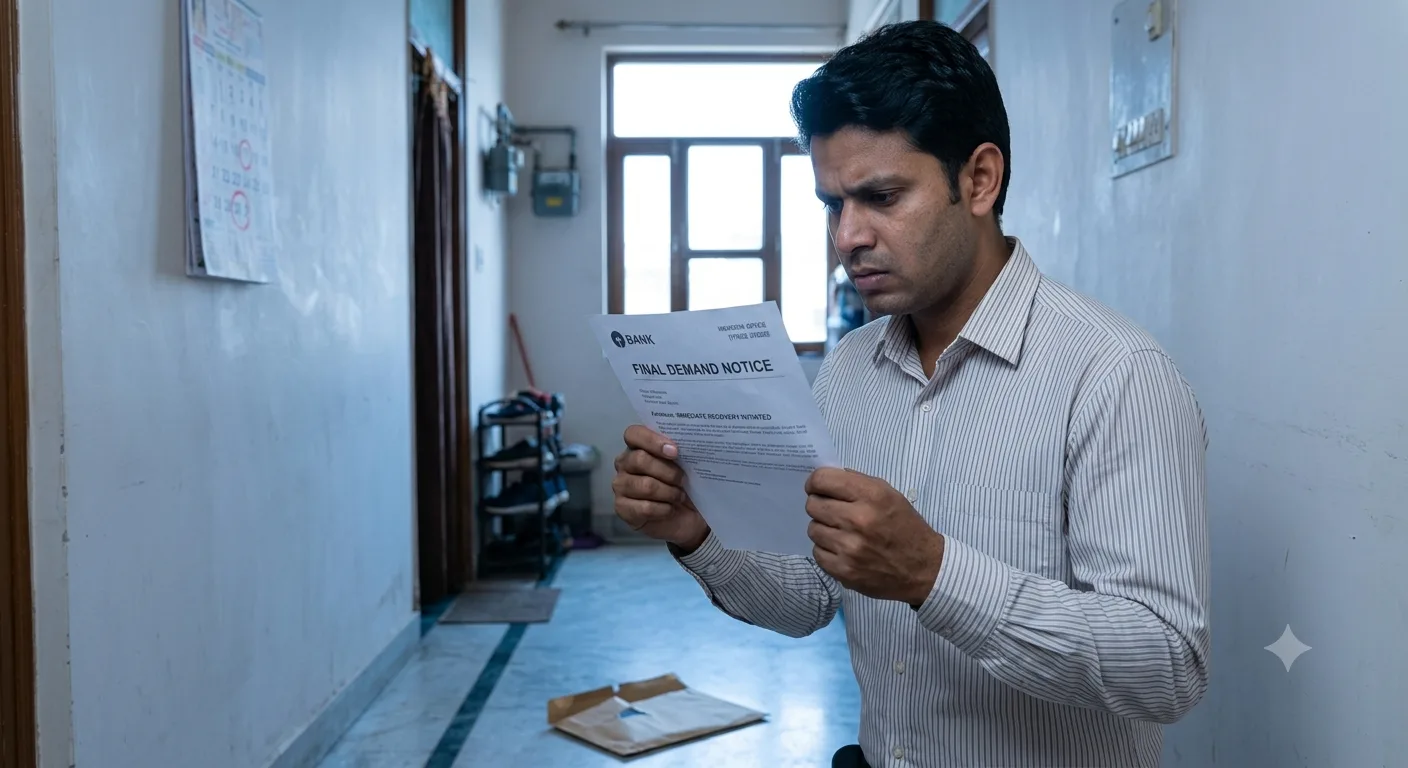
Take Ramesh. He has been getting calls at 10 PM for two weeks, and the agent told him he would come to his office and "create a scene" if the EMI was not paid by Friday. This is not normal collection behaviour. It may not align with the RBI's recovery guidelines.
Under the RBI's Master Circular on Fair Practices, recovery calls are restricted to 8 AM to 7 PM. Contacting your family or employer without your written consent breaks the Fair Practices Code (FPC), the bank's own rulebook for how it deals with you. And the bank cannot say, "The agent did it, not us." Banks remain responsible for what their recovery agents do, even when the agent works for an outside agency.
How to Document a Recovery Agent Violation Before You Complain
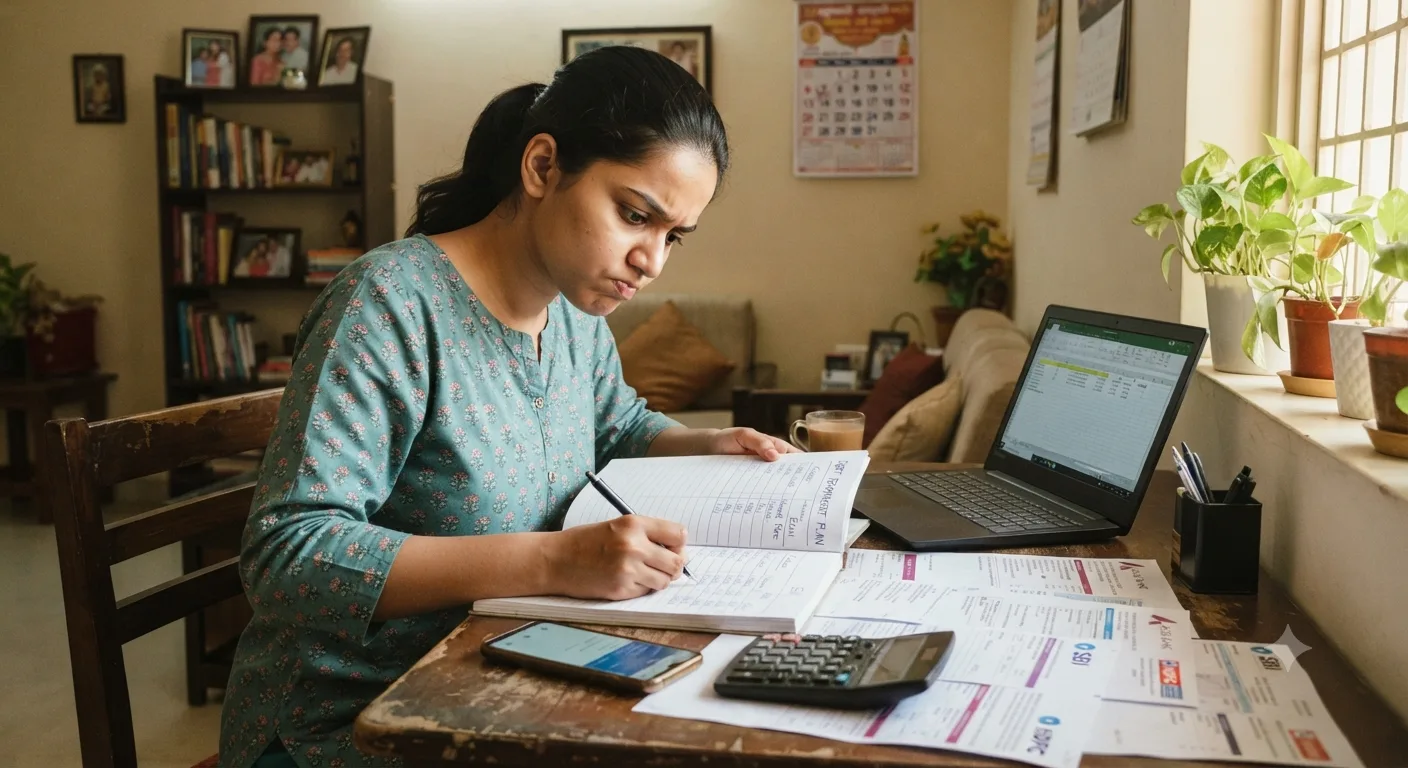
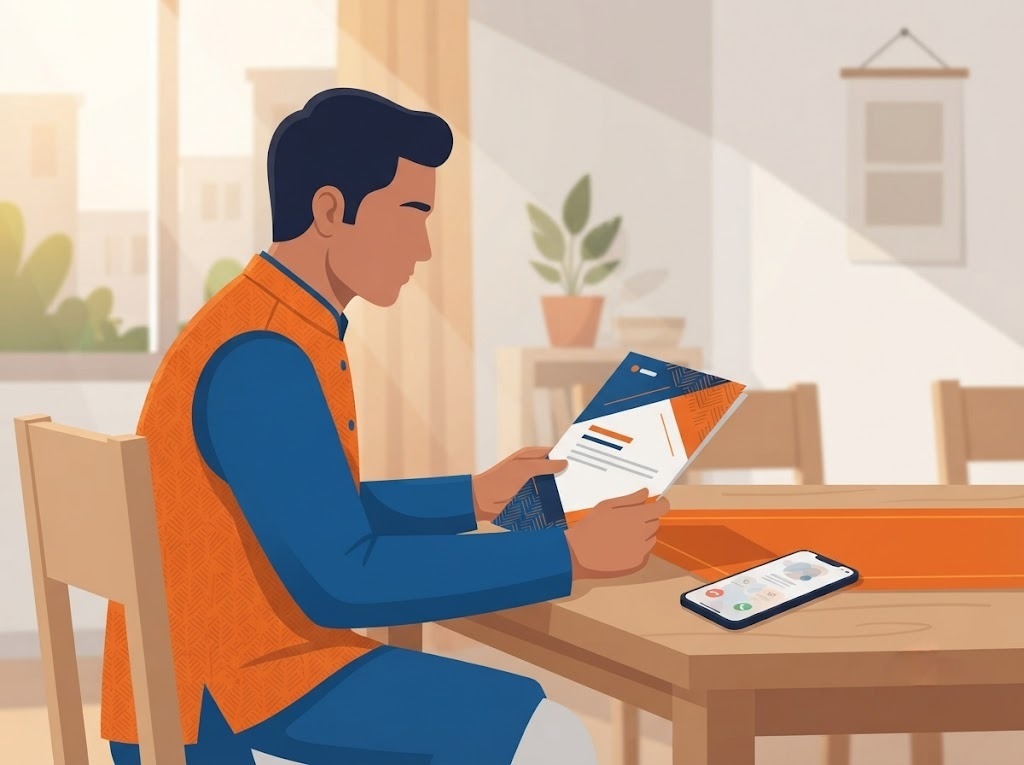
A complaint without proof is easy for a bank to brush aside. Before you complain anywhere, build a paper trail. Good documentation can make it easier for the bank to review your complaint.
Start collecting these today:
- Screenshots of your call log, with the date, time, and number for each call
- Call recordings going forward (legal in India when you, as one party to the call, consent to it)
- Screenshots of any WhatsApp or SMS messages
- A short written note after every call: what was said, by whom, and when
- The name of anyone who overheard a call or witnessed a visit
- If an agent visited your home, the date, time, their name, if given, and whether they showed a written authorisation letter
This documentation is what makes a bank's GRO (Grievance Redressal Officer) take your complaint seriously at the first step. Without it, a bank can simply say there is no record of any wrongdoing.
Courts have also held banks responsible in real cases. In ICICI Bank Ltd. v. Prakash Kaur (2007), the Supreme Court ruled that a bank cannot use force or musclemen to recover a loan, and that it remains responsible for what its recovery agents do on its behalf.

FREED Expert Tip
The moment harassment starts, send yourself a WhatsApp message after every call: date, time, number, and what was said. Keeping a running log can help support your complaint if you choose to raise one.
Read MoreHow to File a Complaint With the Bank's GRO
Every bank and NBFC is legally required to have a Grievance Redressal Officer (GRO). This is always your first step. You cannot go to the RBI Ombudsman before you have gone to the bank's GRO.
To find your GRO's name and email, check your bank's website under "Customer Grievances" or "Nodal Officer Details." Most banks list this clearly, often in the website footer.
Write a complaint email with:
- A clear description of what happened, with the date and time of each incident
- Call recordings or screenshots attached as proof
- The recovery agent's name, if you know it
- A clear ask: stop the harassment, and investigate the agent
Keep your tone factual. Avoid emotional language, even if you are upset. A complaint that reads like a report, not a rant, is harder for the bank to brush aside.
The bank must reply within 30 days. This window matters for more than just getting an answer. It is also the trigger that makes you eligible to escalate to the RBI Ombudsman. If 30 days pass with no reply, or the reply does not actually address the harassment, you can move to the next step.

Not Sure How to Write Your Complaint?
A FREED counsellor can review your situation and tell you exactly which channel to use. Free. Confidential. No commitment
Talk to a Free CounsellorHow to File a Complaint With the RBI Ombudsman
The RBI Ombudsman is free, fully online, and you do not need a lawyer. This is usually the strongest channel for recovery agent harassment, because it puts regulatory pressure directly on the bank.
You can only approach the Ombudsman after the bank's GRO has either not replied within 30 days or given you a reply that does not resolve the harassment.
File your complaint online at cms.rbi.org.in, the RBI's Complaint Management System. Pick the category closest to "recovery agent harassment." Attach your original complaint to the bank, the bank's reply (or proof that 30 days passed with no reply), and all your evidence.
Under the new RB-IOS 2026 (Reserve Bank - Integrated Ombudsman Scheme, effective July 1, 2026), you have 90 days from the bank's final response, or from when the 30-day reply window expires, to file with the Ombudsman. This is tighter than the one-year window allowed earlier, so do not sit on a bad reply.
Once you file, the RBI contacts the bank, asks for a written response, and may hold a conciliation meeting to try to settle things. If that does not resolve it, the Ombudsman can pass a formal award. Under RB-IOS 2026, the Ombudsman can award up to ₹3 lakh for mental anguish, harassment, and loss of time, and up to ₹30 lakh for any direct financial loss you can show.
For guidance while filing, you can also call the RBI's toll-free helpline at 14448.
The Ombudsman resolved 95.1% of all complaints it received in FY24 (the financial year ending March 2024), and there is no fee at any stage.

What the Law Says
Under RB-IOS 2026 (effective July 1, 2026), you must file your Ombudsman complaint within 90 days of the bank's final response, or from when the bank's 30-day reply window expires, whichever is later. The earlier scheme allowed a full year. Do not wait.
Know Your Complaint RightsHow to File a Complaint in Consumer Court
Consumer court is the right channel when the bank's or agent's conduct caused you real, provable harm: mental distress, financial loss, or damage to your professional reputation. Unlike the Ombudsman, there is no upper cap on what you can be awarded here.
The Consumer Protection Act, 2019, covers exactly this kind of harm, treating it as a deficiency in service and an unfair trade practice.
There are three levels, based on the value of your claim:
- District Consumer Commission: claims up to ₹50 lakh
- State Consumer Commission: claims from ₹50 lakh up to ₹2 crore
- National Consumer Disputes Redressal Commission (NCDRC): claims above ₹2 crore
Most recovery agent harassment cases belong in the District Consumer Commission. You do not need a lawyer to file here, and the filing fee is low.
Courts have taken this kind of harassment seriously before. In ICICI Bank Ltd. v. Prakash Kaur (2007), the Supreme Court held that a bank cannot use coercive or illegal methods, including musclemen, to recover a loan, and that the bank itself is responsible, not just the agent it hired

How to File a Police Complaint Against a Recovery Agent
A police complaint is for the most serious violations: physical threats, abusive behaviour in person, criminal intimidation, or an agent forcing entry into your home. This does not replace the bank's GRO or the RBI Ombudsman. It runs alongside them, for the part of the agent's conduct that is criminal, not just a service failure.
At the station, you can name the relevant sections of the Bharatiya Nyaya Sanhita (BNS), India's criminal code:
- Section 351(2), for criminal intimidation, meaning a threat meant to scare you or force you to act
- Section 352, for an intentional insult meant to provoke a breach of peace
- Section 329, for criminal trespass, if the agent entered your home without permission
Bring a written complaint with two photocopies: one for the police station's record, and one for you, date-stamped at the station.
If the SHO (Station House Officer, the officer in charge of the station) refuses to register your FIR (First Information Report), ask for that refusal in writing or get it stamped. You can then escalate it to the office of the Superintendent of Police (SP).
Getting Harassed and Do Not Know Where to Start?
A FREED counsellor will walk you through the exact steps for your situation. No lawyers, no cost
Book My Free CallHow to File a Complaint Against a Recovery Agent: Step by Step
Step 1: Collect Your Evidence First Start logging everything the moment harassment begins: date, time, phone number, and what was said in each call. Screenshot WhatsApp messages. Record calls going forward (legal when you consent to it). Write a short note after each incident. This log is the foundation of every channel below.
Step 2: Write a Formal Complaint to the Bank's GRO. Find the GRO's name and email on your bank's website, under "Customer Grievances." Send a written email with your evidence attached. State clearly what happened, when, and what you want the bank to do. Keep the tone factual. The bank must reply within 30 days.
Step 3: Escalate to the RBI Ombudsman If the Bank Does Not Resolve It. If 30 days pass with no reply, or the reply is unsatisfactory, file at cms.rbi.org.in. Pick "Recovery Agent Harassment" or the closest category. Attach your bank complaint, the bank's response (or proof of no reply), and all your evidence. Filing is free. Under RB-IOS 2026, file within 90 days of the bank's final response.
Step 4: Approach the Consumer Court for Compensation Claims. If you want compensation for mental distress, lost income, or reputational harm, file in the District Consumer Commission. A lawyer is not mandatory at this level. Bring your bank complaint record, your Ombudsman complaint if you filed one, and all your evidence.
Step 5: File a Police Complaint for Criminal Conduct. If the agent threatened you physically, used criminal intimidation, or forced entry into your home, go to the police station in parallel. Do not wait for the bank or the Ombudsman to finish first. Name the relevant BNS sections, and bring two copies, one for the station and one stamped for your file.
When recovery conversations cross the line into abusive, threatening, or harassing behaviour, FREED provides an added layer of support through FREED Shield, a dedicated borrower-support service. FREED Shield helps you understand your rights as a borrower and can assist you in preparing and submitting a complaint through the appropriate channels where necessary.
Comparison: Where to File a Complaint Against a Recovery Agent
Channel | When to Use | How to File | Cost | What You Can Get | Typical Timeline |
Bank GRO | First step, always required | Email the bank's GRO | Free | Agent removed, harassment stopped | Bank must reply in 30 days |
RBI Ombudsman | After the bank fails to resolve in 30 days | Online at cms.rbi.org.in | Free | Up to ₹3 lakh for harassment, up to ₹30 lakh for financial loss, plus corrective action | 30 to 60 days after escalation |
Consumer Court | For harm beyond what the Ombudsman can award | File at the District Consumer Commission | Low filing fee | Compensation based on proven harm, no upper cap | 3 to 12 months |
Police | For physical threats, criminal intimidation, and forced entry | FIR at the local police station | Free | Criminal action against the agent | Depends on police response |
Note: You can use more than one channel at the same time. A police complaint and a bank GRO complaint can run in parallel. FREED counsellors can help you decide which combination fits your situation.
What Happens After You File the Complaint?
Each channel has a different path forward, so it helps to know what to expect.
With the bank's GRO, expect an acknowledgement email first, then an internal investigation, then a written response. If the agent is removed and the harassment stops, your complaint is effectively resolved.
With the RBI Ombudsman, the RBI contacts the bank and asks it to respond. A conciliation meeting may follow to try to settle the matter. If that fails, the Ombudsman passes a formal award, which you must accept within 30 days for it to be valid.
With the consumer court, hearing dates get fixed, both sides present their evidence, and the commission issues a written order.
With the police, your FIR is registered, and the agent may be summoned for questioning.
The RBI may direct the bank to take appropriate action, depending on the outcome of the complaint.
. If you are unhappy with the Ombudsman's decision, you can appeal to the Appellate Authority, the Deputy Governor of the RBI, within 30 days.
In practice, most harassment stops the moment a bank receives a written complaint backed by real evidence. That first step matters more than any other.

What Are Your Options If You Cannot Repay the Loan?
Filing a complaint stops illegal harassment. But it does not change what you owe.
If you are still able to pay but the EMI feels heavy, start with the easier options. Ask your bank for a lower EMI, a longer repayment period, or a short pause on payments (a moratorium) if you have a genuine, temporary setback. Banks are expected to offer these options to borrowers who can show real financial difficulty.
If you have multiple loans and are managing them, but only just, FREED's Debt Consolidation Program can merge them into one loan with one lower EMI, without hurting your CIBIL score (India's credit score, used by banks to judge how risky you are to lend to). In fact, this may make repayments easier to manage and can support healthier credit behaviour over time.
Settlement is not something a borrower chooses out of preference. Banks and financial companies only consider it when you are in genuine financial difficulty, and repaying the full amount is no longer realistic.
If that is where you are, FREED negotiates with your banks on your behalf. FREED can help you understand your options, organise documents, and support you through the settlement process where appropriate.
FREED's counsellors offer a free, confidential call to help you understand which option, if any, fits your situation.
Sources
Topic / Claim in Content | Source Link |
RBI Ombudsman resolved 95.1% of complaints in FY24; recovery agent/loan complaints jumped | https://rbi.org.in/Scripts/AnnualPublications.aspx?head=Annual+Report+on+Banking+Ombudsman+Scheme (RBI's Annual Report of the Ombudsman Scheme, 2023–24) |
RB-IOS 2026 (effective July 1, 2026), 90-day filing window, compensation up to ₹3 lakh/₹30 lakh | https://rbidocs.rbi.org.in/rdocs/content/pdfs/SCHEME16012026_A.pdf |
Recovery calls restricted to 8 AM–7 PM under RBI's Fair Practices Code | https://rbi.org.in/Scripts/NotificationUser.aspx?Id=12378&Mode=0 |
ICICI Bank Ltd. v. Prakash Kaur (2007) Supreme Court judgment | |
Consumer Protection Act 2019-pecuniary jurisdiction (District ≤₹50L, State ₹50L–2Cr, National >₹2Cr) | https://www.indiacode.nic.in/bitstream/123456789/16939/1/a2019-35.pdf -note: figures match the December 2021 amendment notification correctly. |
BNS Section 351(2) criminal intimidation, Section 352 intentional insult, Section 329 criminal trespass | https://www.indiacode.nic.in/bitstream/123456789/20062/1/a202345.pdf these section numbers are correct as written. |
RBI toll-free helpline 14448 | |
RBI Ombudsman complaint portal |

Mohit Juneja
Mohit Juneja writes educational content at FREED on debt management, credit scores, loan repayment, and borrowing best practices. His content is shaped by expert insights and industry knowledge, helping readers better understand their financial options and make informed decisions.
mohit.juneja@freed.care

FREED is India's trusted loan management platform. Founded in 2020 and headquartered in Gurugram, FREED has counselled 20 lakh+ people on personal loans, credit cards, and app loans. FREED charges fees only on successful settlement, not upfront. FREED does not handle secured loans (home loans, car loans, gold loans).
Media Mentions