Urgent Loan for CIBIL Defaulters: Real Options When Banks Say No
You needed money fast. You applied. Bank rejected. Reason: CIBIL defaulter. Now, at 2 AM, you are searching online, and every app promises an "instant loan, no CIBIL check." Pause. Before you tap Apply, check the details. Because the wrong loan right now can trap you for years. The right move? Often it is not another loan at all.
Mohit Juneja
Reviewed by FREED India, Debt Resolution Specialists

 4.7/5
4.7/5 ₹3,200Cr+
 20,000+
 20,00,000+4.7/5₹3,200Cr+20,000+20,00,000+
Key Takeaways

Most regulated banks will not give a fresh loan if you are a CIBIL defaulter (score below 600) or have an active default or write-off on report.
“No CIBIL check” loan apps exist but charge very high effective interest and are often unregulated.
Secured options like gold loans work because your asset replaces your credit score requirement.
The smarter question isn't, "Where do I get another loan?" It is "How do I clear the ones I already have?"
Why Are You Being Called a “CIBIL Defaulter”?
Your CIBIL report is like a report card. Banks check it before deciding whether to lend. A bad report usually means no admission, at least through the front door.
But “CIBIL defaulter” is not one fixed thing. Here are the 4 situations that can put you in this category:
- DPD 30+ or DPD 90+ (Days Past Due): your EMI has been overdue for 30 or 90 days or more. Banks see this on your report immediately.
- Written-off status: the bank stopped pursuing the loan in their active books. The debt still exists. Your report shows “Written-Off.” This is the most damaging status.
- “Settled” tag: the loan was resolved for less than the full amount owed. This is a negative mark, but better than a write-off or ongoing missed payments.
- Score below 600: Even without a specific tag, a score this low signals that several missed payments, high credit card balances, or both have built up over time.
According to industry data and TransUnion CIBIL commentary, roughly 30% of personal loan applications in India fail at the CIBIL screening stage. You are not alone, and this situation is not permanent.
Can You Actually Get an Urgent Loan as a CIBIL Defaulter?
Yes, urgent loans for CIBIL defaulters exist in India but with major trade-offs. Mainstream banks will refuse. Your real options narrow to secured loans against gold or FD, NBFCs at high interest, or app-based loans with very high effective rates. Each carries real risk. The safest move is fixing what caused the default first.
Not every "no" is permanent. Here is how to understand the three categories you fall into:
Refused no path right now. If your account has an active fraud flag or willful default tag, most lending avenues are closed until the underlying issue is addressed.
Conditionally possible with the right setup. Gold loans, FD-backed loans, and co-applicant loans are available regardless of CIBIL because something else, your asset or another person's credit, replaces your score requirement.
High-risk technically available, practically harmful. Instant loan apps will approve you. But at 36% or more effective interest, with aggressive recovery, these loans are what deepened the problem for most people who are already CIBIL defaulters.
Knowing which bucket you are in determines your next move.
5 Real Options for Urgent Loans: Ranked Safest to Riskiest
Option 1: Gold Loan
Your gold jewellery or coins are pledged with a bank or NBFC. Your CIBIL barely matters. Disbursal is quick, often the same day. The interest rate range is broad for this category. The risk is straightforward: if you miss payments on this loan too, the bank sells the gold to recover.
Rates are indicative. Final terms are decided by the bank or NBFC. FREED is not a loan provider. No outcome is guaranteed. Please verify all terms directly.
Option 2: Loan Against FD, PPF, or LIC Policy
If you have a fixed deposit, a public provident fund balance, or a life insurance policy with surrender value, banks can lend against these instruments. CIBIL is not checked. The interest rate is typically low, usually a small margin above your FD rate. This is the cheapest emergency money available if you have any of these assets sitting idle.
Option 3: NBFC Personal Loan with Co-applicant
Some NBFCs will approve a personal loan if a family member with a good CIBIL score (700 or above) co-signs the application. Their credit score effectively carries the loan. The risk is real and worth saying clearly: if you miss payments, you also damage their CIBIL. Be honest with whoever you ask before involving them.
Option 4: Salary Advance from Your Employer
Most people forget this option exists. If your company offers a salary advance or an employee loan facility, this is the lowest-cost option, often at zero or very low interest, with no CIBIL check. Ask your HR before looking elsewhere.
Option 5: Loan Apps and Instant Cash Apps (Last Resort Only)
These apps approve almost anyone. The effective interest rate is very high, often 36% or more annually. Recovery practices are aggressive. Many operate in a grey regulatory area. This category is listed last because it should be considered last, and for most CIBIL defaulters, it should not be considered at all. This is what created the cycle for many people who now cannot get a bank loan.
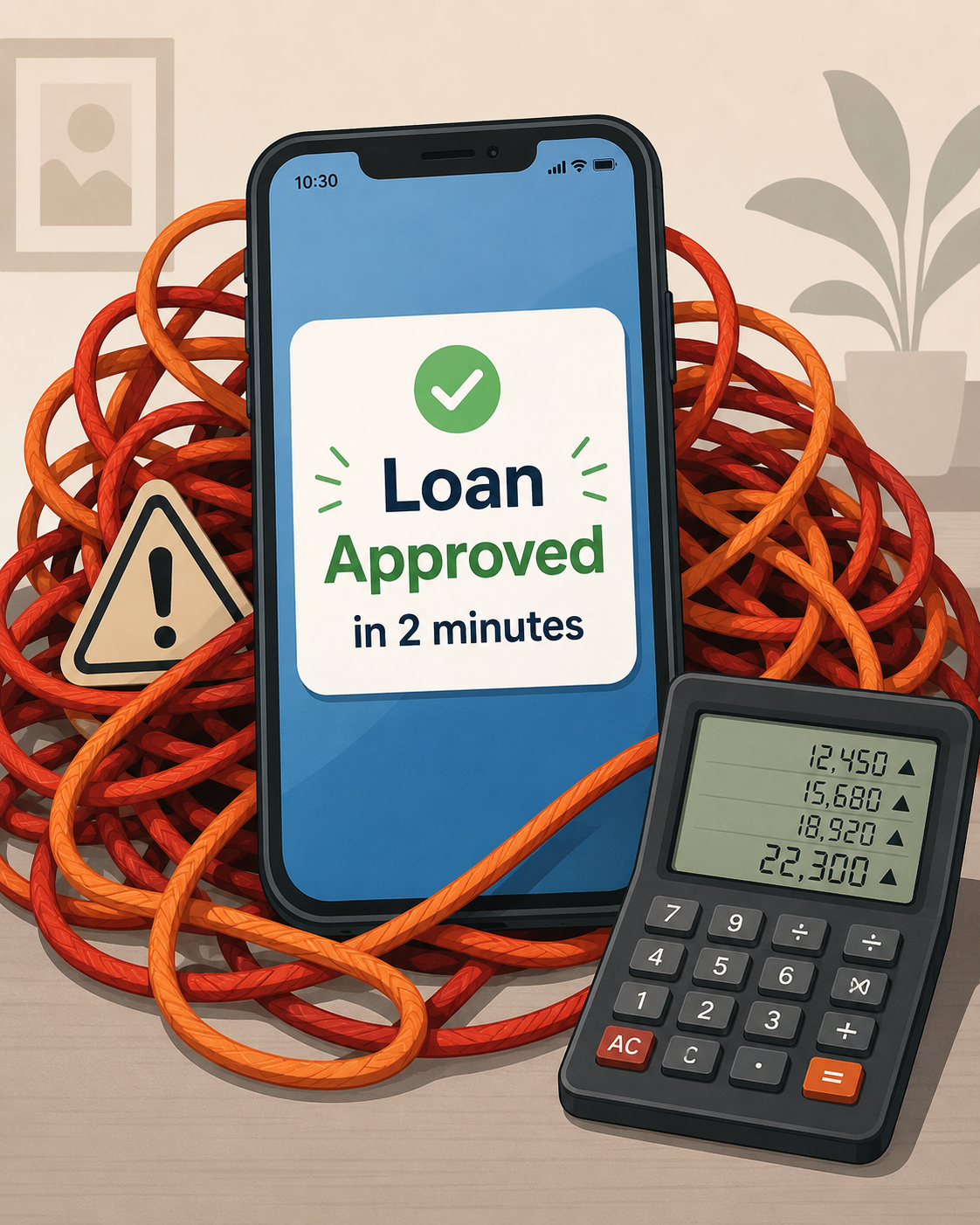
The Risk Hiding in “No CIBIL Check” Loans
If you are a CIBIL defaulter, the apps that approve you fastest are usually the ones that hurt you most.
Here is how the math works in practice:
- You borrow ₹10,000 from an instant loan app.
- Processing fee plus interest for 30 days is approximately ₹1,500 to ₹2,000. That sounds manageable.
- But annualized, that cost is very high, well above what any regulated bank would charge.
- Now you miss the repayment deadline. Penalties stack. The app contacts you repeatedly. They may contact people in your phone contacts.
- Within 3 months, that ₹10,000 has become ₹35,000 or more across multiple apps, because by then many borrowers have taken a second or third app loan to pay the first.
This situation is not a rare scenario. It is the pattern FREED sees repeatedly.

What the Law Says
(yellow micro block) RBI's Digital Lending Guidelines (2022, ongoing updates), every digital lender must be regulated by RBI or operate through a partnership with a regulated entity. No lender, including loan apps, can threaten, harass, or contact your family, employer, or colleagues without your permission. If a "no CIBIL check" app is doing so, it is likely violating RBI guidelines. You can file a complaint at the RBI Sachet portal. FREED's team can guide you through the process
Know your rights as a borrower →Is Taking Another Loan Really the Answer?
Most readers landed on this blog because they need money urgently. That is completely understandable. But before applying anywhere, it is worth being honest about what a new loan actually does in this situation.
- As a CIBIL defaulter, any new loan you access will come at a higher interest rate than before because you are now considered a higher risk by every bank and NBFC.
- You will likely have access to less than you need.
- A new EMI adds to your existing burden. If the existing ones are unmanageable, another one usually does not help.
Three questions worth sitting with before you apply anywhere:
- Will this new loan actually solve the problem, or will it postpone it by a month or two?
- Can you genuinely afford one more EMI given what you are already paying or not paying?
- What if, instead of taking on another loan, you focused on reducing the loans you already have?
That third question is where most people find the real answer.

FREED Expert Tip
Most people who reach us are looking for one more loan, but what they actually need is for the existing debt to come down. A FREED counselor can look at every loan you owe and map out whether settlement, a revised repayment plan, or another path makes more sense than borrowing again.
Talk to a FREED Expert →The Smarter Path: Settling Existing Debt Instead of Adding More
Debt settlement means negotiating with your banks and NBFCs to close your loans for less than the full outstanding amount.
Settlement is not something a borrower chooses out of preference. Banks and financial companies only consider it when you are in a genuine financial difficulty and are truly unable to repay in full. It is a last resort, not a shortcut.
For a CIBIL defaulter with multiple loans, settlement often makes more practical sense than a new loan because it reduces what you owe rather than adding to it.
FREED’s counselors handle the entire process on your behalf. We work with your banks, NBFCs, and credit card companies on your behalf. We help prepare your financial documents, coordinate with the right teams at each institution, and make sure the settlement letter and No Dues Certificate (NOC, the document confirming your account is fully resolved) are worded correctly so your CIBIL recovery can begin properly after the account is resolved.
One structured monthly amount. FREED guides you on how to improve your CIBIL score after settlement. FREED has helped 20,000+ Indians in financial difficulty.
You do not pay FREED until you receive a settlement offer you agree to accept.
Settlement outcomes depend on your bank or NBFC, your account history, and your individual circumstances. FREED is not a loan provider and does not guarantee approval of any settlement. All terms are finalized with your bank or NBFC.

What to Do in the Next 7 Days: Step by Step
Step 01: Stop Applying for New Loans on Any App Today
Every rejection creates a hard inquiry on your CIBIL report. Multiple rejections in a short window push your score down further.
Step 02: List Every Loan and EMI You Currently Owe
Name of bank or NBFC, outstanding balance, monthly EMI, interest rate, and how many months have been missed. One clear list.
Step 03: Identify Which Loans Are Already in Default
Loans where payments have been overdue for 90 days or more are usually the strongest candidates for settlement conversations. Active loans in good standing have different options.
Step 04: Know Your Rights When Recovery Agents Call
Under RBI guidelines, no recovery agent can threaten, abuse, or call outside 8 AM to 7 PM. You do not have to engage with calls that feel threatening. Know your rights before picking up.
Step 05: Speak to a FREED Counsellor (Free, No Obligation)
FREED looks at your full loan picture and tells you whether loan settlement, a revised repayment plan, or a different path fits your situation. One call. No pressure.
Step 06: Start Building a Small Buffer in Parallel
Even ₹500 a month set aside separately is enough to stop the next unexpected expense from becoming the reason for another loan.

Banks said no?
We do not say no; we find a different answer. FREED has helped 60,000+ Indians who were turned away by banks and NBFCs. Make one free call. Get honest answers.
Talk to FREED: Free ConsultationYour 4 Real Options Compared Side by Side
Option | Speed | Cost | Risk | Best Fits |
|---|---|---|---|---|
Gold or FD-backed loan | Same day | Low | Asset at stake if you default again | You have gold or FD lying idle |
NBFC with co-applicant | 3 to 7 days | Medium to high | Co-applicant's CIBIL is at risk | A family member is willing to co-sign |
Instant loan app | Minutes | Very high | High borrowing cost and short repayment periods | Almost never recommended for CIBIL defaulters |
Loan Settlement via FREED | Assessment in 48 hours | One structured monthly amount | Settlement terms depend on lender review; future borrowing decisions may be affected | You have ₹2 lakh or more in unsecured debt across 2 or more banks or NBFCs |
Comparison is indicative. Actual terms vary by bank or NBFC and individual case. FREED is not a loan provider. No outcome is guaranteed.
What Happens to Your CIBIL Score After Settlement?
A settlement marks your CIBIL account as "Settled," not "Closed." "Settled" is a negative remark. That is the honest truth.
But here is the comparison that matters: "Settled" is significantly better than "Written Off" or an open account with DPD 90+ continuing to accumulate every month. An account in ongoing default drags your score down month after month. Settlement stops that damage.
With disciplined credit behavior after settlement, on-time payments on any active accounts, no new unplanned debt, and a small secured credit card used carefully, most people see their score move back toward the 700 range over 18 to 36 months.
FREED guides you through steps to rebuild your CIBIL score after settlement. Our counselors share a clear roadmap starting from the day your account is resolved.

Mohit Juneja
Mohit Juneja writes educational content at FREED on debt management, credit scores, loan repayment, and borrowing best practices. His content is shaped by expert insights and industry knowledge, helping readers better understand their financial options and make informed decisions.
mohit.juneja@freed.care

FREED is India's trusted loan management platform. Founded in 2020 and headquartered in Gurugram, FREED has counselled 20 lakh+ people on personal loans, credit cards, and app loans. FREED charges fees only on successful settlement, not upfront. FREED does not handle secured loans (home loans, car loans, gold loans).
Media Mentions