SBI EMI Moratorium: Eligibility, Process, and What It Actually Costs
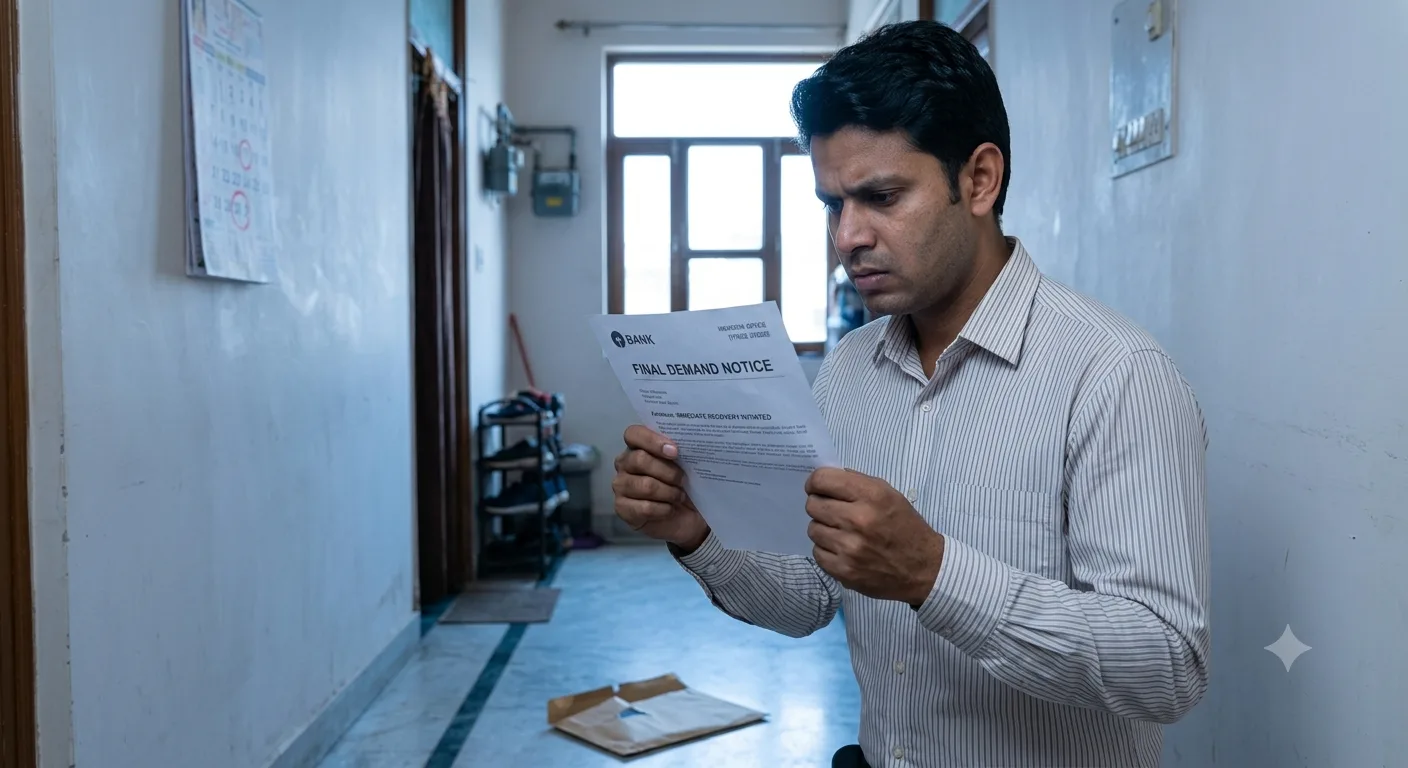
An SBI EMI moratorium is a formal approval from State Bank of India that lets you temporarily pause EMI payments on a home loan, personal loan, auto loan, or education loan during a period of genuine financial difficulty. The pause does not cancel the debt. Interest continues to build on the outstanding principal every day and gets added to what you owe.
Mohit Juneja
Reviewed by FREED India, Debt Resolution Specialists
 4.7/5
4.7/5 ₹3,200Cr+
 20,000+
 20,00,000+4.7/5₹3,200Cr+20,000+20,00,000+
Key Takeaways

An SBI EMI moratorium pauses your monthly payment, not the interest. The debt grows during the pause.
SBI's own published example: deferring 3 EMIs on a ₹30 lakh home loan with 15 years remaining adds approximately ₹2.34 lakh in extra interest equal to 8 additional EMIs. [(SBI moratorium example, verified via Quartz India citing SBI data: https://qz.com/india/1830804/how-to-avail-emi-moratorium-from-sbi-hdfc-for-coronavirus-slump )]
The COVID-era blanket SBI moratorium ended August 31, 2020. Individual moratoriums in 2025–26 are approved case by case at SBI's discretion.
SBI does not automatically grant a moratorium. Approval depends on repayment track record, loan type, remaining repayment time, and proof of genuine financial difficulty.
A formally approved SBI moratorium is generally not reported as a default. Stopping EMIs without written approval may be reported as a missed payment and affect your credit history.
What Is an SBI EMI Moratorium and How Does It Work?
A moratorium is not a waiver. It is not a discount. It is a pause button, and the moment that pause ends, everything that built up during it comes due.
When SBI approves a moratorium on your loan, it lets you stop paying EMIs for a set period. The duration, if approved, depends on SBI's assessment and the borrower's circumstances. But the interest on what you owe does not stop. It keeps running every day on your outstanding balance, and when the pause ends, that interest gets folded into your loan.
There are two ways SBI can restructure your loan once the moratorium period is over:
Option A: Same EMI, more months. Your monthly payment stays the same, but the number of months left on your loan increases to absorb the extra interest that built up.
Option B: More EMI, same months. The number of months stays the same, but your monthly payment goes up to cover the accrued interest within the original timeline.
Both options cost you money. Option A spreads the pain out. Option B concentrates it. There is also a third path: paying the accrued interest as a lump sum at the end of the pause. That avoids both. More on that in Section 4.
Loan types eligible for an SBI moratorium include home loans, personal loans, auto loans, and education loans. Credit card outstanding balances were included under the COVID-era RBI moratorium (2020) but are not part of SBI's standard moratorium process, credit card hardship relief follows a separate restructuring path. [(SBI moratorium FAQs: https://www.sbicard.com/en/faq/covid-19-regulatory-package.page)]
The COVID-era SBI moratorium (March 1 to August 31, 2020) was a blanket scheme that covered all eligible loan accounts with no overdue as of February 29, 2020. That scheme is closed. What exists now in 2025–26 is individual, case-by-case relief for genuine hardship. The duration, where offered, varies by lender and individual circumstances.
Is the COVID-Era SBI Moratorium Still Available in 2025–26?
No. The blanket COVID moratorium SBI offered ended August 31, 2020. That scheme is done.
What is still available is individual moratorium relief, but it works very differently. There is no automatic approval. No one at SBI is waiting to offer it to you. You have to apply, demonstrate genuine financial hardship, and wait for SBI to review your case and decide.
SBI evaluates each request based on:
- Repayment history. A consistent track record with limited or no prior defaults carries weight. A chequered history makes approval harder.
- Loan type. Different products have different moratorium structures.
- Remaining repayment time. If you have very few months left on the loan, SBI is less likely to approve. There is not enough runway to absorb the accrued interest smoothly.
- Existing irregularities. If the account already has unresolved defaults or prior restructuring, approval becomes significantly harder.
- Documented proof of hardship. Job loss letter. Medical bills. Salary cut confirmation. Business disruption proof. Vague statements about going through a tough time do not move a bank.
- SBI is not legally required to approve every moratorium request. The RBI permits banks to offer moratoriums based on board-approved policies. It does not mandate them. As of 2025–26, there is no RBI directive requiring any bank to grant individual moratoriums.
So: yes, you can apply. No, SBI does not have to say yes.
SBI EMI Moratorium Eligibility: Who Qualifies?
SBI applies these signals when reviewing individual moratorium requests in 2025–26:
- Active loan account with SBI. The loan must be a home loan, personal loan, auto loan, or education loan. SBI credit card accounts are also eligible, subject to the card being in standard status.
- No existing overdue or NPA classification. The account should typically standard, meaning it has not already been marked as bad by the bank. NPA (Non-Performing Asset) is what banks call a loan after roughly 90 days of missed payments. If the loan is already in NPA territory, a moratorium is unlikely to be approved.
- Consistent repayment history. Limited or no prior defaults or missed payments helps the case considerably.
- Sufficient remaining repayment time. If you are in the last few months of a loan, SBI is unlikely to approve. There simply is not enough time left to restructure the interest.
- No unresolved prior restructuring or irregularities. A loan that has already been changed once before is harder to move again.
- Documented proof of genuine financial difficulty. This is non-negotiable. You need paper evidence: a termination letter, hospital bills, a written salary cut confirmation, or business account statements showing income disruption.
Meeting all of these conditions does not guarantee approval. SBI evaluates each case and may ask for additional documents before deciding.

FREED Expert Tip
If a large share of your take-home salary is already committed to EMIs , talk to SBI about converting your multiple loans into 1 loan before requesting a moratorium. A changed plan permanently reduces the EMI. A moratorium only delays it and adds interest in the meantime.
Talk to a FREED ExpertSBI EMI Moratorium: Post-Pause Options at a Glance
Option | What Happens After the Pause | Total Cost Impact | Best For |
Repayment time extends | Same EMI amount, more months added | Higher total interest paid | Borrower cannot afford any increase in EMI |
EMI increases | Same repayment timeline, higher monthly payment | Less total interest vs option above | Borrower can afford a slightly higher EMI |
Pay accrued interest as lump sum | Resume original EMI and original timeline | Lowest total cost | Borrower has access to some savings |
Rates and ranges shown are indicative. Final terms decided by the bank. FREED is not a Loan Provider. No outcome is guaranteed. Please verify directly with SBI.
How to Apply for an SBI EMI Moratorium: Step by Step
This is the individual hardship request process for 2025–26, not the COVID scheme.
- 1
Check your loan account status before applying
Log in to YONO SBI or net banking and confirm your loan account is in good standing, with no existing overdue and no NPA (loan marked as bad by the bank) classification. SBI only considers standard accounts. Checking this before applying saves you a wasted application.
- 2
Prepare your hardship documents
Gather proof of why you cannot pay right now. A termination letter if you have lost your job. Hospital bills for a medical emergency. A salary slip showing a pay cut. Business account statements showing income has stopped. The more specific the documentation, the stronger the case.
- 3
Choose your application route
Three channels are available: SBI official website: log in and navigate to loan services or the EMI moratorium request section. SBI customer care: call from your registered mobile number and state the request clearly. Ask for written confirmation of the interaction afterward. Nearest SBI branch: submit a written application at the home loan or personal loan desk with your hardship
- 4
Wait for written confirmation before stopping any payment
Do not cancel your NACH mandate (auto-payment permission you gave the bank) and do not stop the EMI until SBI sends you written confirmation of the approved moratorium. Stopping payment without that approval is treated as a missed EMI. The missed payment may be reflected in your credit history.
- 5
Confirm the post-moratorium repayment plan in writing
Before agreeing to the moratorium, ask SBI two things: Will my EMI increase after the pause, or will my repayment time extend? Get the revised plan in writing. If the new terms feel unmanageable, ask SBI about changing the loan repayment plan instead.

What the Law Says
The RBI permits banks including SBI to offer EMI moratoriums during financial hardship. It does not mandate them. Interest continues to accrue on the outstanding principal throughout the pause period per RBI guidelines. A formally approved moratorium must not be reported as a default to CIBIL by the bank. Interest continues to accrue during the pause, but the deferred payments do not count as defaults for credit reporting purposes. [(RBI Moratorium guidelines. Confirmed via SBI Card FAQs: https://www.sbicard.com/en/faq/covid-19-regulatory-package.page ) and (RBI Circular on COVID Regulatory Package: https://www.rbi.org.in/Scripts/NotificationUser.aspx?Id=11835&Mode=0 )]
Check Your OptionsSBI EMI Moratorium vs Changing the Loan Plan vs Balance Transfer: What Is the Difference?
These three terms come up together constantly. They are not the same thing.
An SBI EMI moratorium is a temporary pause. It does not change your loan terms permanently. Interest keeps building throughout the pause. Once the pause ends, you are back to paying, with a bigger balance than when you stopped.
Changing the loan plan (what banks call restructuring) permanently modifies your repayment terms. Either a lower EMI or a longer repayment period. It is not a pause. It is a reset. But it comes with a flag: a restructured loan gets marked on your CIBIL report as restructured. Not as a default, but it is visible to other banks reviewing your credit profile in the future.
A balance transfer means moving your loan to a different bank that offers a lower interest rate. No pause. No flag. You keep paying, but at a lower rate to a new bank. To be eligible, your CIBIL score generally needs to be 670 or above, and SBI must agree to the transfer. If you qualify, this is worth exploring before the other two.
The key difference for your CIBIL report:
- A formally approved moratorium: Generally not reported as a default when formally approved.
- A changed loan plan (restructuring): flagged as "Restructured", not default, but visible
- A balance transfer: no CIBIL flag
Each suits a different situation. A moratorium is for a short-term income gap. Changing the loan plan is for a permanent income change. A balance transfer is for someone whose income is stable but the interest rate is crushing them.
What Are Your Other Options If a Moratorium Isn't the Right Move?
If SBI does not approve the moratorium, or if a pause is not solving the problem underneath, there is a clear order of options to work through.
First: ask SBI to reduce the EMI directly. Go to the home loan or personal loan desk and ask if there is a way to lower the monthly amount. Some accounts can be adjusted without a full restructuring.
Second: ask about extending your repayment period. If SBI agrees to give you more months to repay, the EMI comes down. This is changing the loan plan. It gets flagged as restructured on your CIBIL report, but it is not a default.
Third: consider merging all your loans into one lower EMI. Consolidation means taking one new loan to pay off all your existing loans, so you have one payment to one bank each month. This works best when you are still current on payments but struggling with too many due dates and too many EMIs.
Fourth: If your credit profile is in reasonably good standing, explore a balance transfer to a bank offering a lower interest rate. This saves money every month without touching your CIBIL record.
Fifth: a moratorium as a last temporary pause, if your income has genuinely stopped for a short period and you expect it to resume.
Sixth: if all of the above have been exhausted and repayment has become genuinely impossible, loan settlement is worth discussing. This applies only to unsecured SBI loans: personal loans and credit cards. Home loans and auto loans are secured debt. FREED covers unsecured debt only: personal loans, credit cards, loan apps. Settlement on a home loan or auto loan is outside FREED's scope.
How Loan Settlement Helps When SBI Repayment Has Become Genuinely Impossible
Settlement is not something a borrower chooses out of preference. Banks and financial companies only consider it when you are in a genuine financial difficulty and are truly unable to repay the full amount. It is a last resort, not a shortcut.
This section applies only to unsecured SBI products: personal loans and credit cards. SBI home loans, auto loans, and education loans are secured debt. Settlement on secured loans is a different process entirely and outside FREED's scope.
When repaying in full has become genuinely impossible, settlement means the bank agrees to accept a reduced amount as the full and final payment. The loan is then marked as "Settled" on your CIBIL report, and that mark stays for up to 7 years. Future lenders can see it.
FREED helps borrowers settle their unpaid/overdue loans at up to 50% less * That figure depends on the bank and your specific situation.
FREED's role in this process: preparing your financial documents, handling the back-and-forth with the bank, and guiding you through each step until the matter is resolved.
If you are at this point with your SBI personal loan or credit card, a free call with a FREED counsellor is worth having. No pressure. No commitment. Just a clear picture of where you stand.
Disclaimer: Rates and ranges shown are indicative. Final terms decided by the bank. FREED is not a Loan Provider. No outcome is guaranteed. Please verify directly with your bank.
Things That Actually Help During and After an SBI EMI Moratorium
A moratorium works best when you treat the paused months as a recovery window, not as free money.
Make partial interest payments during the pause if SBI allows it. Even paying part of the interest that is accruing each month reduces the compounding effect when the pause ends. Ask SBI if this is permitted on your loan type.
Ask SBI for the revised repayment schedule in writing before the pause ends. Not when it ends. Before. You want to see the new plan, the new EMI or the new number of months, before you commit to it. If it is unmanageable, you still have time to negotiate.
Set a personal calendar reminder for the restart date. The moratorium end date is easy to lose track of when you are managing a difficult period. A missed first payment after the moratorium ends looks bad on your credit record.
Use the paused EMI months to build a small emergency buffer. Even ₹5,000 to ₹10,000 set aside during the pause gives you a cushion when the EMI restarts. Treating the freed-up money as spending money defeats the purpose of the pause.
Prepay whatever extra you can when income resumes. If your financial situation improves before the moratorium ends, put any surplus toward the loan balance. This chips away at the accrued interest before it compounds further.
One honest note: The best outcome is successfully managing a temporary financial setback while keeping the loan in good standing. It is not a restructuring of your finances. The debt is still there. Pay as soon as your income returns.
SBI home loan rates start from 7.25% p.a. as of June 2026. [(Paisabazaar, rates as of 12 June 2026: https://www.paisabazaar.com/sbi-bank/home-loan/ )] Banks now report repayment data to credit bureaus every 15 days under RBI's updated credit reporting norms since January 2025, so a cleared EMI reflects on your credit report much faster than before. [(RBI CIC Amendment Directions 2025: https://www.rbi.org.in/Scripts/NotificationUser.aspx?Id=12697&Mode=0 )]

Mohit Juneja
Mohit Juneja writes educational content at FREED on debt management, credit scores, loan repayment, and borrowing best practices. His content is shaped by expert insights and industry knowledge, helping readers better understand their financial options and make informed decisions.
mohit.juneja@freed.care

FREED is India's trusted loan management platform. Founded in 2020 and headquartered in Gurugram, FREED has counselled 20 lakh+ people on personal loans, credit cards, and app loans. FREED charges fees only on successful settlement, not upfront. FREED does not handle secured loans (home loans, car loans, gold loans).
Media Mentions