RBI Guidelines for Credit Card Settlement: What Every Borrower Must Know
Before agreeing to any credit card settlement, know what the RBI requires banks to do, what they are prohibited from doing, and what rights you have throughout the process.
Mohit Juneja
Reviewed by FREED India, Debt Resolution Specialists
 4.7/5
4.7/5 ₹3,200Cr+
 20,000+
 20,00,000+4.7/5₹3,200Cr+20,000+20,00,000+
Key Takeaways

RBI guidelines on credit card settlement protect borrowers across three dimensions: transparency (the bank must disclose all terms in writing), fair conduct (no harassment, no misleading communication), and post-settlement obligations (bureau update within 30 days, No Dues Certificate on request).
Banks cannot harass borrowers to force a settlement, cannot threaten arrest for unsecured credit card debt, cannot contact family members or employers to pressure repayment, and cannot demand verbal-only settlements without written confirmation.
After settlement, the bank is legally required to update the CIBIL bureau to "Settled" status within 30 days and to issue a No Dues Certificate on request.
Any violation of these guidelines is actionable through the bank's Grievance Redressal Officer, the Nodal Officer, and the RBI Banking Ombudsman at bankingombudsman.rbi.org.in.
FREED helps borrowers navigate the settlement process correctly, ensuring every protection is exercised and every settlement is properly documented.
What RBI Guidelines Say About Credit Card Settlement
The RBI regulates credit card settlement through several instruments: the Master Circular on Credit Card Operations, the Fair Practices Code for Lenders, the Master Circular on Recovery Agents, and general consumer protection guidelines. Together, these create a framework that governs how banks must handle credit card default and settlement.
The core principles across all these guidelines are:
Transparency: All settlement terms must be communicated in writing. No verbal-only settlement is valid. The bank must provide a written settlement letter and, after payment, a No Dues Certificate.
Fair conduct: Recovery activity must follow prescribed boundaries on timing, language, and scope. Harassment is prohibited. Misleading communication about legal consequences is prohibited.
Accurate reporting: The credit bureau must be updated accurately within 30 days of a status change, including settlement.
Grievance redressal: Every borrower has the right to escalate complaints through a defined hierarchy: bank GRO, Nodal Officer, RBI Banking Ombudsman.
Understanding these principles is the foundation of navigating credit card settlement correctly.
Your Rights Before the Settlement Begins
Before any settlement negotiation begins, specific rights apply.
The right to a written statement of total outstanding. Before any settlement discussion, request a formal written statement from the bank showing the exact total outstanding: principal, accumulated interest, late payment fees, and all other charges. This is the accurate number from which any settlement percentage is calculated. A bank must provide this on request.
The right to know the settlement policy. Under RBI guidelines, banks are required to have a Board-approved policy for settlement of NPA accounts. This policy must specify eligibility criteria and the approval process. If the settlement terms offered seem inconsistent or arbitrary, you can request information about the bank's OTS policy.
The right to time to consider any offer. A bank cannot pressure a borrower into an immediate verbal settlement. Any settlement offer must be communicated in writing and a reasonable time for consideration provided.
The right to full cost disclosure. Any settlement offer must include the exact settlement amount, the payment deadline, and confirmation of what happens to the account after payment. Hidden charges or conditions not disclosed in the settlement letter are not enforceable.

FREED Expert Tip
Never begin a settlement negotiation on the phone without a written record. After any verbal settlement discussion, send an email to the bank's settlements department summarising what was discussed: the account number, the date, the name of the bank representative, and the terms discussed. This creates a paper trail that protects the borrower's interests throughout the negotiation.
Talk to a FREED CounsellorYour Rights During the Settlement Negotiation
The right to negotiate. A bank's first counter-offer to a settlement proposal is almost never its final position. Under RBI guidelines on NPA resolution, banks must consider genuine hardship proposals fairly. A proposal backed by documentation of genuine financial hardship is a legitimate basis for negotiation.
The right to be free from harassment during the negotiation. Once a formal settlement proposal is submitted in writing, recovery calls and collection pressure should diminish as the account moves into the bank's settlement process. Any continued aggressive collection activity while a formal settlement proposal is under review is a violation of RBI Fair Practices guidelines.
The right to involve a professional intermediary. A borrower can authorise a professional intermediary like FREED to negotiate on their behalf. Once this authorisation is given, the bank must direct formal communications to the intermediary rather than to the borrower directly.
The right not to be threatened. During settlement negotiations, recovery agents and bank representatives cannot threaten arrest for unsecured credit card debt, threaten criminal prosecution, or misrepresent the legal consequences of non-payment. These are prohibited representations under the RBI Master Circular on Recovery Agents.
Your Rights After the Settlement Is Completed
Post-settlement rights are the most commonly violated category of borrower protections in credit card settlement.
The right to a written settlement letter before payment. This is the most critical protection in the entire settlement process. The settlement letter must be on official bank letterhead and must state the agreed settlement amount, the payment deadline, and confirmation that payment of this amount constitutes full and final settlement with no further dues. Any payment made without this letter in hand forfeits all negotiating leverage and all legal protection.
The right to a no-dues certificate after payment. After the settlement amount is paid, the bank must issue a No Dues Certificate on request, confirming the account is fully closed with no remaining obligations. This document is permanent evidence that the debt is discharged.
The right to an accurate and timely CIBIL bureau update. Under the Credit Information Companies (Regulation) Act and RBI guidelines, banks must update the credit bureau to reflect the "Settled" account status within 30 days of the settlement being completed. The account must be marked "Settled," not "Outstanding," "Overdue," or "Written Off," after a completed settlement.
The right to dispute incorrect bureau reporting. If the account is not correctly updated within 45 days, the borrower can raise a formal dispute with CIBIL through the official dispute portal. If the bank does not cooperate with the correction, the matter can be escalated to the RBI Banking Ombudsman.

Legal Note
Under the Credit Information Companies (Regulation) Act, credit bureaus must investigate disputes and respond within 30 days. If the bureau does not respond or fails to correct a confirmed error, escalate to the RBI Banking Ombudsman at bankingombudsman.rbi.org.in. FREED assists clients with bureau dispute processes as a standard part of the programme completion stage.
Know your credit rights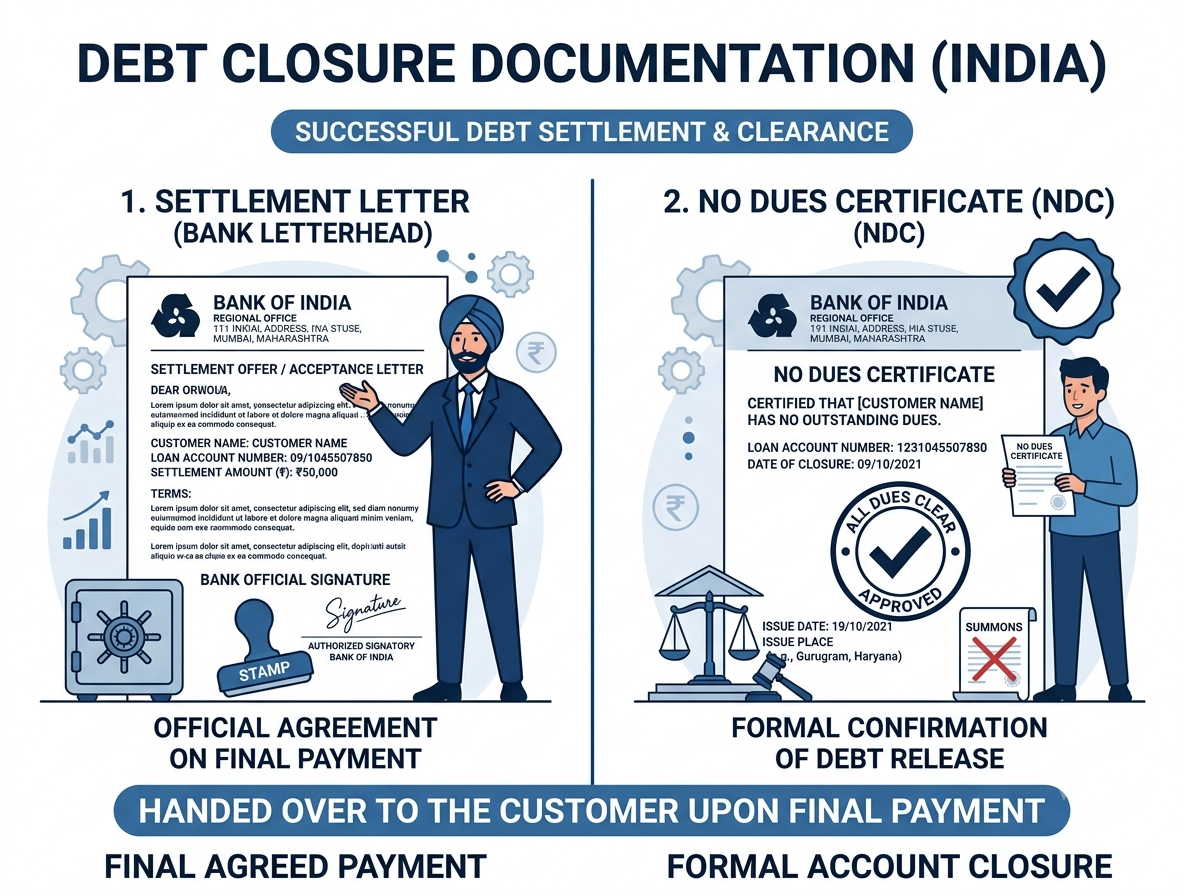
What Banks Are Prohibited from Doing Throughout
The RBI Master Circular on Recovery Agents and the Fair Practices Code for Lenders establish specific prohibitions that apply throughout the credit card default and settlement process.
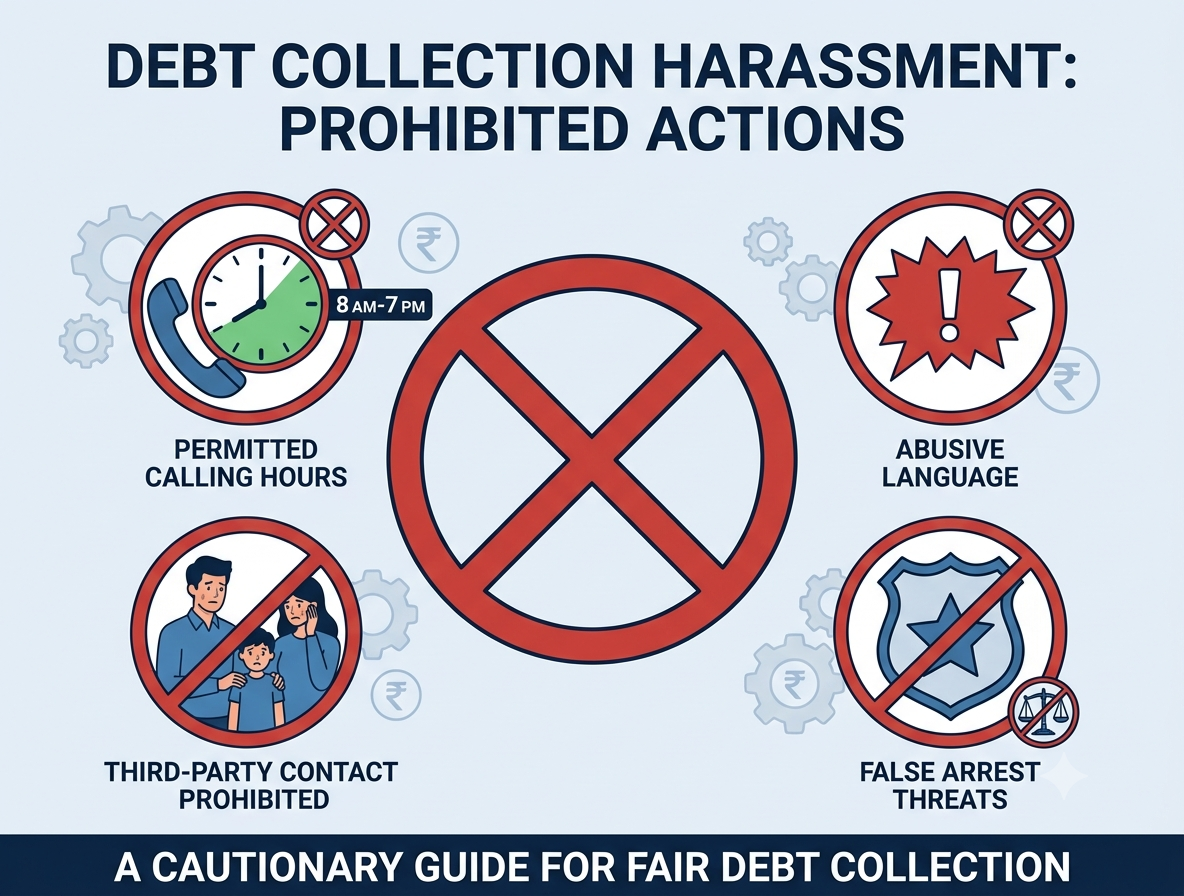
Prohibited conduct by recovery agents: Calling before 8 AM or after 7 PM. Using abusive, threatening, or humiliating language. Threatening arrest or criminal prosecution for unsecured credit card debt. Contacting family members, employers, colleagues, or neighbours to disclose the debt or create pressure. Visiting the home or workplace in a manner designed to publicly humiliate. Misrepresenting their identity or authority.
Prohibited conduct by the bank: Imposing undisclosed charges or conditions on a settlement after the settlement letter has been issued. Failing to update the credit bureau within 30 days of settlement completion. Refusing to issue a No Dues Certificate on payment. Providing inaccurate information to the credit bureau about account status.
Prohibited representations: Any representative claiming that a borrower can be arrested for credit card default (this is a civil matter, not a criminal one). Any claim that the bank has already filed an FIR for credit card default when no such action has been taken. Any misrepresentation of the legal process.
How to Complain if Your Rights Are Violated
The complaint escalation sequence is structured and defined.
Step 1: Bank's Grievance Redressal Officer (GRO). File a written complaint (email or letter) to the GRO with documentation of the specific violation. The bank must acknowledge and resolve within 30 days.
Step 2: Bank's Nodal Officer. If the GRO's response is unsatisfactory or absent after 30 days, escalate to the Nodal Officer with the original complaint and the GRO's response attached.
Step 3: RBI Banking Ombudsman. If the Nodal Officer's response is unsatisfactory or absent, file a complaint online at bankingombudsman.rbi.org.in. The complaint is free. The Ombudsman investigates, requires the bank to respond, and can direct corrective action or compensation.
For recovery agent conduct that rises to criminal level (threats, extortion, intimidation), a police complaint (FIR) at the nearest cybercrime cell or police station is appropriate in addition to the RBI complaint.
Step-by-Step: How to Approach Settlement Correctly Under RBI Guidelines
Step 1: Request a written statement of the full outstanding from the bank's settlements department.
Step 2: Gather documentation of genuine financial hardship: termination letter, medical bills, bank statements showing income reduction.
Step 3: Submit a formal written settlement proposal to the bank's NPA resolution or settlements department (not general customer service). State the proposed settlement amount, the hardship documentation, and request a written settlement letter before any payment.
Step 4: Negotiate through the expected rounds of counter-offers. Move in small increments from the opening offer.
Step 5: Once a figure is agreed, insist on the written settlement letter before transferring any amount. Verify the letter is on official bank letterhead, states the agreed amount, and confirms full and final settlement.
Step 6: Make the payment through the specified channel. Keep the payment receipt.
Step 7: Request the No Dues Certificate immediately after payment.
Step 8: Check the CIBIL report 30 to 45 days after settlement to confirm the account shows "Settled" status. Raise a formal dispute if the update is incorrect.
Are You in a Loan Trap? Quick Check
Move the slider to your total EMIs as a % of monthly salary. See your debt stress level instantly.
EMIs as % of Monthly Salary

Mohit Juneja
Mohit Juneja writes educational content at FREED on debt management, credit scores, loan repayment, and borrowing best practices. His content is shaped by expert insights and industry knowledge, helping readers better understand their financial options and make informed decisions.
mohit.juneja@freed.care

FREED is India's trusted loan management platform. Founded in 2020 and headquartered in Gurugram, FREED has counselled 20 lakh+ people on personal loans, credit cards, and app loans. FREED charges fees only on successful settlement, not upfront. FREED does not handle secured loans (home loans, car loans, gold loans).
Media Mentions