Personal Loan for a CIBIL Defaulter, Is It Possible, and What Are Your Real Options?
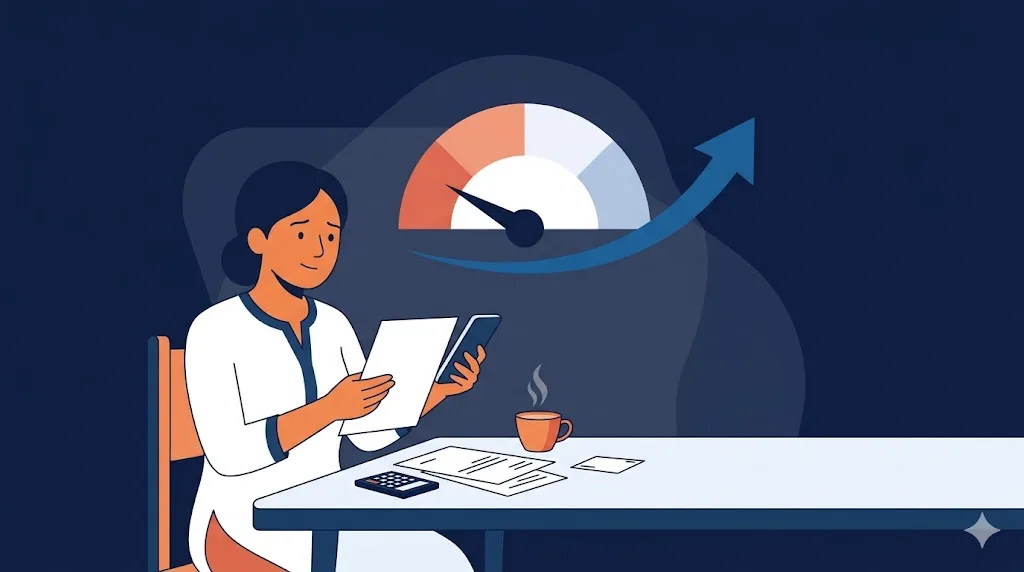
You missed a few EMIs. Maybe a credit card bill kept rolling for months. Now your CIBIL is low, the word "defaulter" is showing somewhere on your report, and many lenders may be declining your applications. You still need money, for rent, a medical bill, a family situation. So is a personal loan even possible? The honest answer is: sometimes yes, but with conditions. And in many cases, a different option fixes the real problem better. Let us walk through what's actually happening, and what helps.

Mohit Juneja
Reviewed by FREED India, Debt Resolution Specialists
 4.7/5
4.7/5 ₹3,200Cr+
 20,000+
 20,00,000+4.7/5₹3,200Cr+20,000+20,00,000+
Key Takeaways

Being a "CIBIL defaulter" usually means a loan or card showing missed payments, Settled status, or Written-off on your credit report (loan history document).
A few NBFCs and digital banks may still approve a small personal loan for defaulters, but at much higher interest and shorter repayment time.
Loan apps offering ‘instant approval to defaulters’ should be approached with caution because costs and repayment risks can be significantly higher.
Taking a new loan to pay an old one usually makes things worse. A debt resolution plan often works better.
If your EMIs already eat up more than 50% of your take-home salary, borrowing more is not the answer.
FREED's counsellors offer a free call to look at your full picture before you decide.
What Does It Mean to Be a CIBIL Defaulter?
The word "defaulter" sounds like a label the bank has stuck on you permanently. It is not. It is a status that shows up on your credit report, your loan history document, and it can change over time.
On your credit report, "defaulter" usually refers to one of three situations. First: a loan or credit card account showing 90 or more days of missed payments. Second: a "Settled" status, meaning the account was closed for less than what was owed. Third: a "Written-off" status, meaning the bank stopped trying to recover the money.
A single missed EMI does not make you a defaulter. Your score may drop, but the defaulter tag appears only after sustained missed payments over time. One bad month is not the same as three months of silence.
There is also a difference between a "low CIBIL score" and being a "CIBIL defaulter." A low score can happen because of high credit card usage, too many loan applications, or a short credit history, none of which involve a missed payment. A defaulter status specifically means a payment was missed badly enough that the bank reported it as a serious account problem.
India has four main credit bureaus, CIBIL, Experian, CRIF, and Equifax. All four maintain your credit history. FREED has tie-ups with Experian and Equifax to help customers access and understand their full credit picture.
Can You Actually Get a Personal Loan if You Are a CIBIL Defaulter?
Yes, sometimes. But the loan you are offered as a defaulter looks very different from a regular personal loan.
The ticket size is usually small, often ₹10,000 to ₹2 lakh. The repayment window is short, 3 to 12 months in many cases. The interest is much higher than what someone with a 750+ score would pay. Some approvals come with a co-applicant requirement, or a request for collateral even on what looks like a personal loan.
Who is more likely to approve? A few NBFCs and some digital banks have products designed for borrowers with damaged credit. Traditional banks are more likely to reject outright. The smaller and faster the lender sounds, the more carefully you should read their terms.
Loan apps that promise "approve in 5 minutes, no CIBIL check" are the riskiest path of all. The effective interest on these, when you add processing fees, renewal fees, and penalties, is extremely high. And their recovery practices may become difficult to manage if repayments are missed.
One more honest point: if the reason you need a new personal loan is to pay off an old one, that cycle often increases financial pressure further. The new EMI adds to the old pressure. If the new loan's interest is higher than the old one, you are moving backward, not forward. The next section covers what to do instead.
Rates and ranges shown are indicative. Final terms are decided by the bank or NBFC. FREED is not a Loan Provider. No outcome is guaranteed. Please verify directly with your bank or NBFC.
Who Approves Personal Loans for CIBIL Defaulters in India?
The landscape is not uniform. Different types of lenders behave very differently when your CIBIL shows a default history.
Some NBFCs may consider your application if your current income is stable and how much of your salary goes to EMIs (FOIR, fixed obligation to income ratio) is within their comfort zone. They look at bank statement behaviour more than CIBIL alone.
Digital banks and fintech NBFCs often have specific products for borrowers with damaged credit. Amounts are small, terms are strict, and rates are much higher than standard.
Co-applicant or guarantor route if someone with a good CIBIL score agrees to sign with you, your chances of approval go up significantly at most lenders.
Salary account bank route if you have a long-standing salary account with a bank, that relationship sometimes counts more than your CIBIL score. Worth asking directly before applying elsewhere.
Loan apps they approve fast and ask few questions. But the effective cost, once fees, penalties, and very short tenures are added up, can be extremely high. Recovery practices, if you miss a payment, can also turn aggressive quickly and may include contacting your family or workplace, which is not allowed under RBI rules.
Whichever path is offered, read the full terms before signing. If something feels rushed, slow down. A loan you cannot repay only deepens the problem.
What Are the Risks of Borrowing a New Loan When You Are Already a Defaulter?
You need money. That part is real and we are not dismissing it. But there are things that make a new loan genuinely dangerous in your situation, and they are worth knowing before you sign.
The interest on a high-rate loan can cost more than the relief it seemed to offer. A ₹50,000 loan at very high interest, repaid over 6 months, can cost you ₹10,000–₹20,000 extra that was never in your plan. Indicative only.
One more EMI on your salary means even less room for everything else, groceries, rent, school fees, the emergency you didn't plan for.
If you cannot repay this new loan either, your CIBIL drops further. The impact on your credit profile becomes more significant. Banks become even less willing to help. You end up with fewer options, not more.
there have been complaints about inappropriate recovery communication involving family members or workplaces, which is not permitted under RBI guidelines. The stress it brings is not just financial.
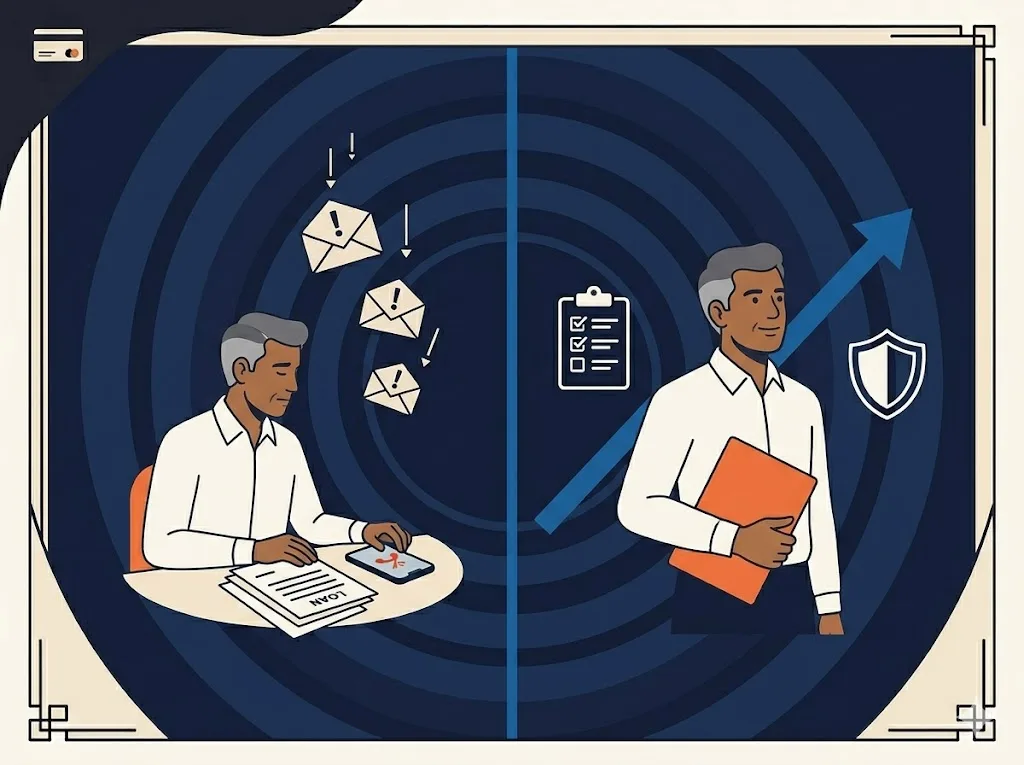
The pattern is familiar: borrow to repay, can't repay, borrow again, can't repay again. Each loop tightens the trap. If new borrowing isn't safe, what is? That's the next part.

FREED Expert Tip
If your total EMIs already eat up almost all of your take-home salary, a new loan will not solve the problem, it will only delay a much bigger fall. Speak to a counsellor before you sign anything.
Talk to a FREED ExpertWhat Are the Better Options Before Taking a New Loan?
Before you apply anywhere, try these paths first. Most of them cost nothing, and some can solve the problem without adding a single new rupee of debt.
- 1
Ask Your Bank for an EMI Reduction or Longer Repayment Time
A longer schedule lowers your monthly EMI. Your bank may agree if you ask before missing more payments.
- 2
Ask for a Short Payment Pause (Moratorium)
A temporary pause on EMIs if you have had a job loss or a medical emergency. Not every bank offers this, but it is worth asking.
- 3
Consider Combining All Loans into One Payment
If your CIBIL is around 670 or above and you are managing multiple loans, a balance transfer or consolidation can bring everything into one lower monthly payment.
- 4
Talk to Family or Trusted People First
A short-term informal help from someone you trust can protect you from a high-interest trap. It is worth the conversation before you approach a lender.
- 5
Look at Loan Settlement as a Last Resort
If you are truly unable to pay your EMIs, the bank may accept a smaller amount as final payment. This stays on your CIBIL as Settled for up to 7 years. It is not a quick fix, it is a last resort.
- 6
Get Free Help from a Debt Counsellor
A counsellor can look at your full picture, every loan, every card, your income, and tell you honestly which path fits. FREED offers this for free.
How FREED Helps When You Are Already in Debt and Cannot Borrow Out of It
When borrowing again is not safe and the EMIs are already too much, the real question is not "how do I get a new loan." It is "how do I get the existing debt under control." That is the work FREED's counsellors do every day.
For someone marked as a defaulter, FREED's team can look at every loan and card together, talk to your bank or NBFC on your behalf, and help you arrive at a plan you can actually afford. In many cases, the total amount owed can be brought down by up to 50%*, without you taking any new loan.
Settlement is not something a borrower chooses out of preference. Banks and NBFCs only consider it when you are in genuine financial difficulty and are truly unable to repay the full amount. It is a last resort, not a shortcut. FREED also supports borrowers through recovery-related communication and escalation processes. , which are not allowed under RBI rules, and guides borrowers on rebuilding healthier credit habits after resolution. Once the matter is resolved.

Get the Right Debt Resolution Plan First
Already behind on EMIs and worried about the next call? One free call with a FREED counsellor. No judgment. Just a clear, honest plan for your situation.
Get My Free Debt AssessmentHow Does Becoming a Defaulter Affect Your CIBIL Score, and How Long Does It Stay?
A missed EMI starts pulling your score down within 30 days of going overdue. The longer the payments stay missed, the sharper the drop. Many borrowers experience a noticeable impact on their credit profile.
A "Settled" status stays on your credit report for up to 7 years. A "Written-off" status, where the bank stopped trying to recover the money, is the heaviest mark and also stays for up to 7 years. Both signal to future banks that something went seriously wrong.
Recovery is real, though. With on-time payments on any remaining credit lines, low credit utilisation (the percentage of your card limit you are using), and time, credit profiles may gradually improve over time with disciplined repayment behaviour. It takes patience, but it happens.

What the Law Says
Under RBI guidelines, no bank, NBFC, or loan app is allowed to threaten, abuse, or harass you during recovery. They cannot contact your family, colleagues, or employer without your permission. If you are facing such calls, you have the right to file a complaint with the RBI Ombudsman. FREED's team can guide you through this process.
Know your full rights as a borrowerHow Can You Remove the "Defaulter" Status from Your CIBIL Report?
You cannot erase it overnight. But you can take clear steps to clean it up and rebuild.
- 1
Pull Your Latest Credit Report
Check exactly what is marked, Settled, Written-off, or just missed payments with DPD (Days Past Due) entries.
- 2
Pay Off the Overdue Amount or Settle
It A pending balance keeps pulling the score down every single month it sits there.
- 3
Get a NOC (Clearance Letter, called NOC) from the Bank or NBFC
Without this letter, the Settled mark will not update properly on your report.
- 4
Confirm the Status Update on Your Report Within 30–45 Days
Banks typically report to credit bureaus monthly. Follow up directly if the update does not show.
- 5
Rebuild With a Small Secured Credit Card or a Small EMI
Consistent on-time payments on a small new credit line is what actually moves the score back up. Start small and stay consistent.
- 6
Avoid Multiple Loan Applications in a Short Time
Every application triggers a hard enquiry (a formal check on your CIBIL). Multiple enquiries in a short window pull the score down further. Space them out.
New Loan vs Resolving Existing Debt, What Suits Your Situation?
What You're Considering | What It Does | When It May Help | When It May Hurt |
New personal loan as a defaulter | Adds another EMI on top of existing ones | If income is stable and existing EMIs are well under 50% of salary | If you are already missing EMIs or the burden is high |
Loan app instant loan | Gives quick small cash at very high effective interest | Almost never the safer option | Almost always tightens the trap |
Loan consolidation (combining loans) | Merges all EMIs into one lower payment | If CIBIL is around 670+ and burden is medium | If CIBIL is too low to qualify |
Changing your repayment plan | Bank revises your EMI or schedule | If you have a temporary drop in income | If the bank refuses or you need wider help |
Loan settlement (last resort) | Bank agrees to a smaller final amount | If you are truly unable to pay | Hurts CIBIL, Settled status stays up to 7 years |
Free debt counselling with FREED | A counsellor looks at everything and suggests what fits | Always a safe first step | Never hurts, it's free |
Confused About Your Next Step?
Confused which option is right for you? A FREED counsellor will look at your full debt picture and walk you through what fits. Free. Honest. No pressure.
Connect with a FREED ExpertAbout FREED
FREED is India's first debt relief company, founded in 2020 and based in Gurugram.
60,000+ Indians Helped | ₹3,200 Cr+ Debt Managed | 15,000+ Accounts Settled | 4.7★ Google Reviews
FREED negotiates settlements on unsecured loans, credit cards, personal loans, BNPL (buy-now-pay-later) products, and loan apps, on behalf of enrolled customers. Fees are charged only on successful settlement. FREED does not handle secured loans.

Mohit Juneja
Mohit Juneja writes educational content at FREED on debt management, credit scores, loan repayment, and borrowing best practices. His content is shaped by expert insights and industry knowledge, helping readers better understand their financial options and make informed decisions.
mohit.juneja@freed.care

FREED is India's trusted loan management platform. Founded in 2020 and headquartered in Gurugram, FREED has counselled 20 lakh+ people on personal loans, credit cards, and app loans. FREED charges fees only on successful settlement, not upfront. FREED does not handle secured loans (home loans, car loans, gold loans).
Media Mentions