Kotak Loan Settlement: How to Negotiate With Kotak Mahindra Bank
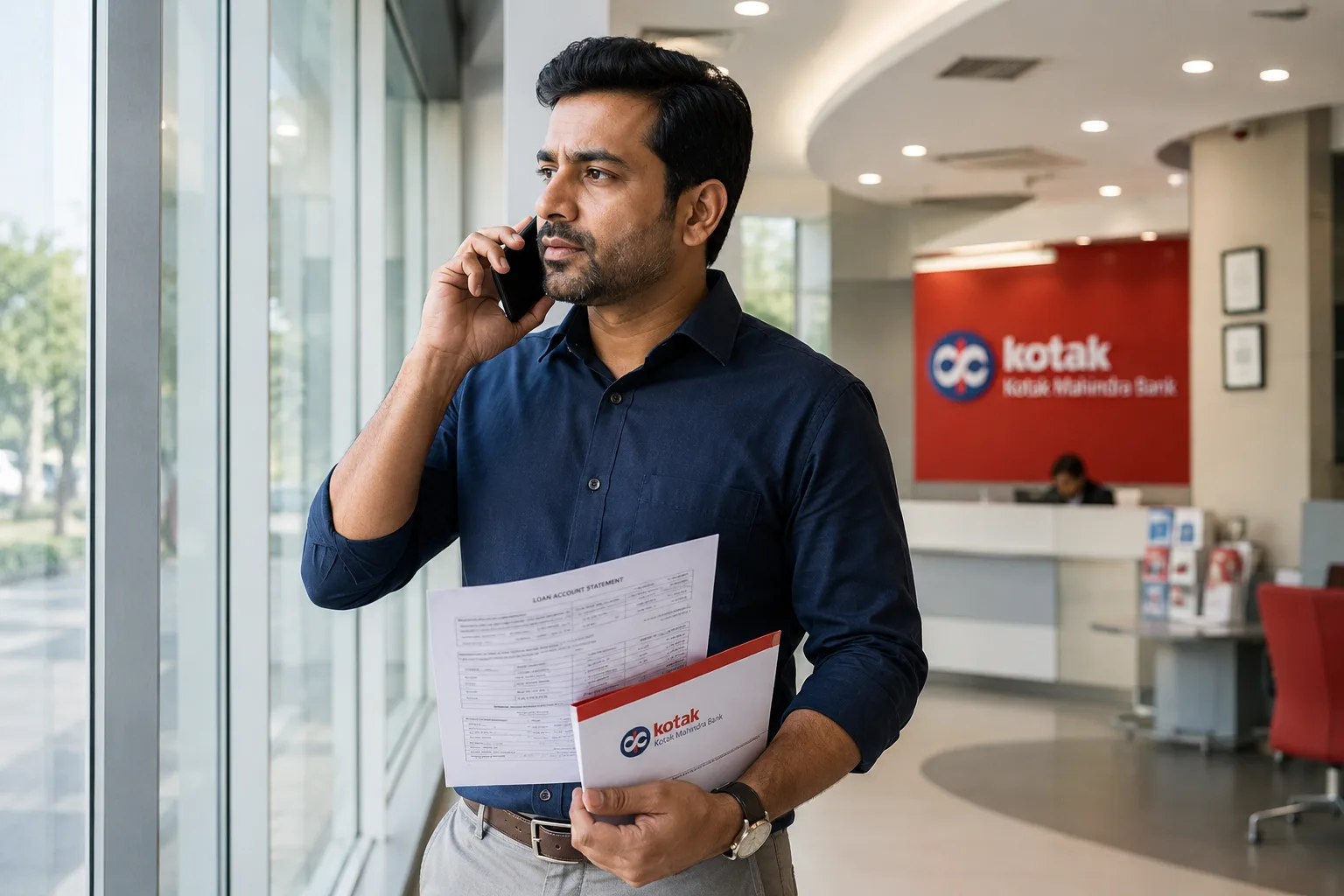
Kotak loan settlement happens when you and Kotak Mahindra Bank agree to resolve your loan by paying a reduced amount, less than what you actually owe. The bank agrees to accept a reduced amount to settle the loan, based on your individual circumstances. This is called an OTS (one-time settlement, meaning you pay it once and the matter ends). It is only considered when you are genuinely unable to repay in full.
Mohit Juneja
Reviewed by FREED India, Debt Resolution Specialists
 4.7/5
4.7/5 ₹3,200Cr+
 20,000+
 20,00,000+4.7/5₹3,200Cr+20,000+20,00,000+
Key Takeaways

A Kotak loan settlement (OTS) lets you resolve a personal loan or credit card account by paying a reduced lump sum amount.
Settlement is only available after your loan account is classified as an NPA (bad loan, usually after 90 days of missed EMI).
After settlement, your credit report will generally show the account as "Settled," which may affect future borrowing decisions.
Once the settlement is completed, the lender will update your credit report as part of its reporting process. Timelines may vary.
Never pay Kotak anything before receiving a written settlement offer letter on the bank's official letterhead with an authorised officer's signature.
What Is Kotak Loan Settlement and Who Is It For?
Kotak loan settlement applies only to unsecured loans: personal loans, credit cards, and BNPL (buy now pay later) digital products. It does NOT apply to home loans, car loans, or gold loans. Those are secured loans, which fall under a completely different legal and recovery process. If you have a secured loan, settlement on these terms is not an option. Don't let anyone tell you otherwise.
So what does settlement actually mean? It means Kotak Mahindra Bank agrees to accept less than what you owe as the final payment. The bank agrees to settle the loan for a reduced amount. , penalties, and sometimes part of the borrowed amount itself. Once paid and confirmed, the matter is resolved, though your CIBIL report will carry the "Settled" mark.
This is different from foreclosure. Foreclosure means paying off the full remaining loan balance early. Your account then shows as "Closed" with no negative CIBIL mark. Settlement means paying a reduced amount, with the bank waiving the rest. The account then carries a "Settled" status, which does affect your credit record.
Kotak Mahindra Bank reports customer loan data to CIBIL every month. Once you make the settlement payment, the update typically reflects in your CIBIL report within 45–60 days.
When Does Kotak Mahindra Bank Consider a Settlement?
Settlement is not something a borrower chooses out of preference. Banks and financial companies only consider it when you are in genuine financial difficulty, and repaying the full amount is no longer realistic. It is a last resort, not a shortcut.
Two conditions must be in place before Kotak will even look at a settlement request.
First, your loan account must be classified as an NPA (bad loan). Under RBI norms, a loan becomes an NPA when payment of interest or principal has been overdue for 90 days or more. Until that happens, Kotak is still in EMI-recovery mode. Its focus is getting you back on schedule, not negotiating a reduced amount.
Second, you must have a genuine inability to repay in full. Kotak, as a large private bank, runs a systematic recovery operation. Recovery calls begin early, often within days of a missed EMI. Legal notices and arbitration can follow for larger outstanding amounts. The bank is not quick to offer a settlement. It becomes a realistic option only after the account has turned NPA and the bank has shifted from collecting EMIs to recovering whatever it can from a genuinely distressed borrower.
The amount Kotak is willing to accept under OTS depends on your outstanding balance, how old the NPA is, and your documented financial situation. It is not based on how well you negotiate.

FREED Expert Tip
If your total EMIs across all loans already eat up more than 50% of your take-home salary, it may be worth reviewing your options before the situation becomes more difficult. Use the Debt Elimination Tool to understand your situation before it gets worse.
Talk to a FREED ExpertWhat Loans Can Be Settled With Kotak Mahindra Bank?
Most competitor articles cover "Kotak settlement" without breaking it down by product. Here is the specific answer.
Personal loans from Kotak are unsecured, which means there is no property or asset backing them. They are the most commonly settled loan type.
Credit cards issued by Kotak are also unsecured. Credit card outstanding amounts tend to accumulate fast because of compound interest and penalty charges. This is actually one reason settlement becomes more viable here. The gap between what you borrowed and what you technically owe can be large, giving the bank room to waive the excess.
Digital app loan products from Kotak fall in the same unsecured category. Same rules apply.
What cannot be settled this way: home loans, car loans, and gold loans from Kotak. These are secured loans backed by property or assets that Kotak can legally seize and sell to recover dues under the SARFAESI Act (a law that allows banks to take back secured property). The OTS process described in this article does not apply to secured loans. FREED also does not handle secured loan cases.
Context on credit card debt As per RBI data, credit card spending in India touched ₹1.89 trillion in May 2025, a 14.5% year-on-year rise. Outstanding balances at these volumes mean credit card loan settlement is increasingly relevant for Indian borrowers.

Not Sure if Your Kotak Loan Qualifies for Settlement?
Speak to a FREED counsellor and get an honest answer. No pressure to enroll.
Get Free Debt AssessmentHow Does the Kotak Loan Settlement Process Work, Step by Step?
Three things matter above everything else in the Kotak settlement process.
One: never pay based on a verbal offer from a recovery agent. Kotak's recovery agents have no authority to approve or finalise a settlement. Only the NPA Settlement Department or a nodal officer of the bank can do this. Any offer made over a phone call, without a written letter, has no legal standing.
Two: Pay only through official bank channels. NEFT, RTGS, or a demand draft directly into Kotak's account number mentioned in the settlement letter. Cash payments to any agent or representative, no matter what they promise, are not safe. Keep the payment receipt.
Three: follow up for the NOC (clearance letter from the bank). Without this, Kotak's system may still show your account as a defaulter even after you have paid. The NOC is your proof that the matter has been fully resolved. Get it in writing and keep it safely for your records.
The full step-by-step process is below.
How to Negotiate Kotak Loan Settlement, Step by Step
- 1
Confirm Your Account Is in NPA Status
Check your latest loan statement or CIBIL report to see if your account has been marked as NPA (bad loan, usually after 90 days of missed EMI). Banks only consider an OTS at this stage. If you are still within 90 days, speak to Kotak about changing your loan plan first.
- 2
Gather Your Hardship Documents
Put together a folder of papers showing why repaying became genuinely impossible. A job loss letter, your last 3–6 salary slips showing an income drop, medical bills, or business closure documents. This is what you present to Kotak when requesting a settlement.
- 3
Contact Kotak's NPA Settlement Team in Writing
Do not speak to a recovery agent about settlement. They have no authority to approve it. Write or email Kotak's nodal officer or the NPA Settlement Department directly. State your loan account number, your financial situation, and formally request an OTS. Keep a copy of everything.
- 4
Wait for the Written Settlement Offer Letter
Do not pay anything until this letter arrives on Kotak's official letterhead, with the bank's stamp and an authorised officer's signature. Read the "full and final" clause before agreeing to anything.
- 5
Negotiate the Terms if Needed
If the amount offered is higher than you can pay, go back in writing with a counter-proposal and supporting documents. Show what you can realistically pay. This back-and-forth is normal. Kotak expects it.
- 6
Pay Through Official Channels Only
Once you have agreed on the amount and payment deadline, transfer the money via NEFT, RTGS, or a demand draft to Kotak's account number as mentioned in the letter. Never hand cash to any agent. Save the payment receipt.
- 7
Collect Your NOC After Payment
Within a week of payment, send a written request to Kotak for your No Dues Certificate (NOC, which is a clearance letter from the bank. Follow up until it arrives. Then check your credit report to confirm the account has been updated.

What the Law Says
Under RBI's June 2023 Framework (circular DOR.STR.REC.20/21.04.048/2023-24), all banks, including Kotak Mahindra Bank, must follow a board-approved policy for compromise settlements. This is a regulated, formal process, not an informal negotiation done off the record.
Check Your Settlement OptionsWhat Documents Do You Need for Kotak Loan Settlement?
Most settlement guides skip this section. They shouldn't. Without the right documents, Kotak may classify you as a "wilful defaulter," someone who is choosing not to pay rather than someone who genuinely cannot. Wilful defaulters are not offered OTS. They face legal action instead. Your documents are what open the settlement door.
You need two types of documents.
Documents that prove your genuine inability to pay:
- Job loss letter or termination letter from your employer
- Last 3–6 months' salary slips showing a clear income drop
- Medical bills if illness or hospitalisation is the reason
- Business closure documents or GST deregistration if you ran a business
- Any other paper that shows why repayment became impossible
Loan-related documents:
- The latest Kotak loan statement shows the current outstanding amount
- Previous EMI payment records, which show you were paying before things went wrong
- Any earlier written communication with Kotak about the account
Banks are trained to distinguish between borrowers who "will not pay" and those who "cannot pay." Settlement is only for the second group. Clear and complete documents help the bank understand your financial situation.
What Happens to Your CIBIL Score After Kotak Loan Settlement?
This is what most people want to know before they decide. The honest answer is not comfortable, but it is important.
After settlement, Kotak will update your loan account status from the current negative status (NPA or Write-Off) to "Settled." This is better than a continued default or a "Written Off" mark. But it is still a negative status.
Here is what to expect.
The "Settled" mark stays on your CIBIL report for up to 7 years. Not as "Closed." As "Settled." Any bank that checks your report will see it.
Your CIBIL score typically drops by 75–100 points after settlement. If your score is already low because of missed EMIs, the additional drop may be smaller, but it will still register.
Kotak updates CIBIL monthly. After your payment, the status change takes 45–60 days to appear on your report.
One thing worth asking for in writing: in some cases, particularly for older NPA accounts, This is rare. But it is worth requesting in the settlement letter itself, before you pay.
What happens next? Responsible credit behaviour over time can help strengthen your credit profile, although outcomes vary from person to person.
Kotak Recovery Calls Getting Too Much?
Talk to a FREED counsellor: free, confidential, no commitment
Book Free CallWhat Are Your Options Before Going for a Kotak Loan Settlement?
Settlement has real consequences. A negative CIBIL mark stays for years. Before going there, look at what else is available.
EMI restructuring: Ask Kotak to change your loan plan. A longer repayment time means a smaller monthly amount. If your income has dropped temporarily, this can buy you breathing room. Kotak may agree if you ask early, before the account turns NPA.
Moratorium (temporary pause on payments): Some banks grant a short payment break, typically 3 to 6 months, if you are facing a genuine temporary difficulty like job loss or a medical emergency. This is not guaranteed, but it is worth asking for in writing.
Balance transfer: If your account hasn't turned NPA yet and your CIBIL score is 670 or above, you may be able to move your Kotak loan to a bank offering a lower interest rate. This reduces your monthly burden without any negative CIBIL impact.
Debt consolidation (merging all loans into one): If you have multiple loans, a personal loan, a credit card outstanding, or maybe a BNPL balance, consolidation means combining them into a single EMI at a lower combined interest. One payment, one date, one amount. It is worth exploring if repayment is still possible.
When do these options stop working? Once your account has turned NPA, balance transfer and fresh consolidation loans are usually blocked. No bank will approve a new loan when your CIBIL shows an active default. At that point, settlement becomes the remaining exit. But only if repayment in full is genuinely not possible.
Do not take another loan to pay the settlement amount. That makes the situation worse.
How FREED Helps With Kotak Loan Settlement
Kotak's settlement process involves paperwork, follow-ups, and careful reading of offer letters. Most borrowers handle this while already stressed, without a clear understanding of what each clause means. That is where FREED steps in.
When you enrol with FREED, counsellors review your Kotak settlement offer letter before you sign anything. They check for missing clauses, especially whether the "full and final" language is present and whether the CIBIL update timeline is mentioned. If either is absent, they go back to Kotak's NPA settlement team in writing.
FREED can help you understand your options, organise your documents, and support you through the settlement process.. Once a settlement amount is agreed and paid, FREED follows up with Kotak for the NOC (clearance letter). After that, FREED tracks the CIBIL update at the 60-day mark to confirm the status has changed correctly.
FREED has experience dealing with Kotak's settlement process. The team knows what to look for in the offer letter and what to push back on, in writing, before payment is made.
FREED's role is to handle the documentation and follow-up so you are not doing it alone. If you are unsure where to start, a free consultation is available.
What Helps When You Are Negotiating With Kotak Mahindra Bank
A few practical things that make the process go more smoothly.
- Always go in writing. Every communication with Kotak about settlement should be via email or a written letter to the nodal officer. Verbal promises from recovery agents have no standing. If it isn't in writing, it doesn't count.
- Contact the right department. The recovery agents who call you cannot approve a settlement. You need to reach Kotak's NPA Settlement Department or what may be referred to internally as the Retail Recovery Resolution team. When you call, ask to be transferred specifically. When you write, address the nodal officer.
- Keep records of every interaction. Date and time of calls, screenshots of emails, copies of letters sent and received. If there is ever a dispute later, your record is your protection.
- Don't show urgency. If you call Kotak and immediately say you are ready to pay, the negotiating space shrinks. Instead, state your financial position clearly, what you can pay and why, and ask for a written offer. Let them come to you with a number.
- Read the "full and final" clause before paying. The settlement letter must include a statement that the payment being made is in full and final settlement of all dues. If that language is missing, do not pay. Write back and ask for it to be included.
- Collect the NOC and verify the CIBIL update. Once you pay and receive your NOC, check your CIBIL report 60 days later. Confirm that the account now shows "Settled." If it hasn't updated, contact Kotak in writing with your payment receipt and NOC.
Once you receive your NOC, keep it safely as an important record of the settlement.The "Settled" mark reduces in weight over time as you build a clean repayment record on other accounts.
Kotak Loan Settlement vs Other Options: What Each Means for You
Option | When It Works | Effect on CIBIL | What You Pay |
EMI Restructuring | Account not yet NPA; temporary difficulty | No negative mark | Full amount, lower monthly payments |
Balance Transfer | Account not NPA; CIBIL 670 or above | No negative mark | Full amount, lower interest rate |
Loan Settlement (OTS) | Account is NPA; genuine inability to pay | Account reported as "Settled"; may affect future borrowing decisions. | Reduced lump sum, up to 50%* waiver on interest and penalties |
Continued Default | Account already NPA; no action taken | "Written Off" status; ongoing negative marks | Full amount + compounding interest + legal risk |
Settlement terms vary by loan type, account age, outstanding amount, and individual financial situation. The above is for general guidance only. *Up to 50% waiver not guaranteed, outcome depends on individual case.
Rates and ranges shown are indicative. Final terms decided by the bank. FREED is not a Loan Provider. No outcome is guaranteed. Please verify directly with your bank.
About FREED
FREED is India's first debt relief company, founded in 2020 and headquartered in Gurugram. FREED works with people who are unable to repay their unsecured loans, including personal loans, credit cards, and BNPL products, and helps manage the settlement process on their behalf. FREED charges fees only when a settlement is successfully completed.
FREED does not handle secured loans (home loans, car loans, gold loans).
Over 20,000+ customers have been counselled by FREED across India. If you are dealing with an unsecured loan you cannot repay, a free consultation is available with no obligation to enrol.

Mohit Juneja
Mohit Juneja writes educational content at FREED on debt management, credit scores, loan repayment, and borrowing best practices. His content is shaped by expert insights and industry knowledge, helping readers better understand their financial options and make informed decisions.
mohit.juneja@freed.care

FREED is India's trusted loan management platform. Founded in 2020 and headquartered in Gurugram, FREED has counselled 20 lakh+ people on personal loans, credit cards, and app loans. FREED charges fees only on successful settlement, not upfront. FREED does not handle secured loans (home loans, car loans, gold loans).
Media Mentions