ICICI Bank Loan Restructuring: Process and Impact
ICICI Bank loan restructuring happens when the bank agrees to change your loan terms, usually a longer tenure and a lower EMI, because you're facing genuine, temporary income trouble. Your account has to still be standard, not overdue. The bank decides case by case. It's relief, not loan forgiveness. The full amount still gets repaid, just on eased terms.

Mohit Juneja
Reviewed by FREED India, Debt Resolution Specialists
 4.7/5
4.7/5 ₹3,200Cr+
 20,000+
 20,00,000+4.7/5₹3,200Cr+20,000+20,00,000+
KEY TAKEAWAYS

ICICI bank loan restructuring extends repayment tenure and lowers EMI for standard accounts hit by genuine hardship.
Interest keeps accruing during the extended tenure, so total interest payable goes up, not down.
The account may be reported as restructured in your credit report, subject to the reporting practices of the credit bureau.
Application happens only through your RM, a branch, or the online portal. It's the bank's final call, no automatic approval.
Restructuring only works if you can still repay eventually. If you genuinely can't, settlement is the option, not restructuring.
What Is ICICI Bank Loan Restructuring?
Restructuring is the bank agreeing to change how you repay a loan you took, usually stretching the tenure and dropping the EMI, because something genuine has knocked your income off track. It's not a discount and it's not forgiveness. You still owe every rupee. What changes is the shape of the repayment, not the size of the debt.
FREED helps borrowers settle their unpaid/overdue loans at up to 50% less*. A moratorium is different too, a temporary pause on EMIs rather than a permanent change to your loan's terms, usually much shorter-lived.
At ICICI, restructuring can apply across several loan types, personal loans, credit cards, auto loans, and business loans among them, though the exact process and documentation required varies by product. Any restructuring request also has to sit within RBI's broader resolution framework, which requires banks to follow a board-approved, transparent policy rather than making ad hoc calls.

Multiple Loans Making EMIs Unmanageable?
See if FREED's Debt Consolidation Program may combine eligible unsecured debts into a single repayment, depending on the approved loan amount, tenure, and lender terms.
Check My Consolidation OptionsWhy Do Borrowers Need Loan Restructuring?
Nobody plans for the reason restructuring becomes necessary. A job loss that wasn't expected. A pay cut that came out of nowhere. A medical emergency that ate through savings meant for something else entirely. A business that slowed down for reasons well outside anyone's control.
This is a common, structural situation, not a personal failure. Plenty of people manage their EMIs fine for years and then hit a stretch where the math simply doesn't work anymore, not because they were careless, but because the ground shifted under them. Someone still trying to pay every bill but watching the margin disappear month after month is exactly who restructuring exists for.
The point of restructuring is to meet that reality where it is. Rather than letting an account slide into missed payments and eventually default, it gives the borrower a chance to keep paying, just on terms that actually fit the income they have right now.
Who Is Eligible for ICICI Loan Restructuring?
How Does the ICICI Bank Loan Restructuring Process Work?
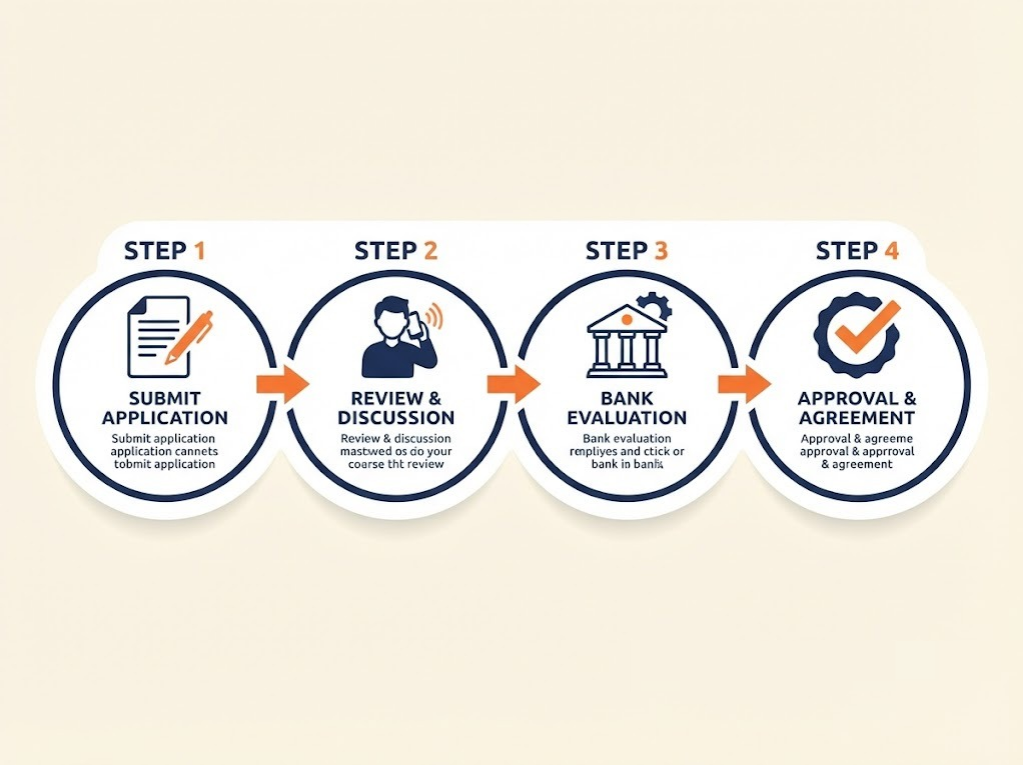
- 1
Reach out to your RM, a branch, or apply online.
The exact channel depends on your loan type, but the first step is always initiating the request, ideally before you've actually missed an EMI.
- 2
Submit your hardship documentation.
This means income proof and whatever evidence supports your situation, a termination letter, medical bills, or proof that your income has genuinely dropped.
- 3
The bank reviews your application.
ICICI checks your account status first, confirming it's still standard, then assesses whether the hardship you've described is genuine and well-documented.
- 4
You receive the bank's decision.
This typically comes through SMS, email, or a call. ICICI Bank commits to responding within up to 10 working days of your application, though approval isn't automatic and depends on how complex your case is and how quickly your documentation clears review.
- 5
If approved, a revised repayment schedule kicks in.
Your loan continues, but now under new terms, usually a longer tenure and a lower EMI, and the account gets reported going forward as "restructured."

FREED Expert Tip
Apply for restructuring before missing an EMI, not after. Banks favor proactive requests.
How to Plan Your Personal Loan EMI Payment BetterWhat Happens to Your EMI and Tenure After Restructuring?
A longer tenure brings your EMI down almost immediately, and for someone whose income has genuinely tightened, that relief is real and often necessary. But it's worth being honest about the trade-off sitting right behind it. Interest keeps accruing across that extended period, which means the total interest you pay over the life of the loan goes up, not down.
This isn't a hidden catch, it's simply how the math of a longer repayment window works. Relief today costs a bit more over time. The exact numbers depend entirely on your specific loan amount, remaining tenure, and interest rate, so rather than guessing at a figure here, running your own numbers through a debt calculator gives you a far clearer, personalised picture of what restructuring would actually mean for your total repayment.
How Does ICICI Restructuring Impact Your CIBIL Score?
This is where a lot of confusion sits, so it's worth being precise. A restructured account gets a distinct flag on your credit report, separate from "settled" and separate from "written off." It isn't invisible, future lenders can see it in your credit report, and it becomes part of what they assess alongside your current repayment record when reviewing a new application.
That said, it sits in a genuinely different category from settlement. Settlement carries a heavier mark, "Settled" status stays visible for up to 7 years and reflects that the bank accepted less than the full amount owed. Restructuring, by contrast, reflects that you're still repaying the full amount, just on adjusted terms, which is a meaningfully different story to tell a future lender. There isn't a single, verified point-drop figure for restructuring the way there sometimes is discussed for other credit events, and it would be misleading to invent one here.

What the Law Says
RBI requires every bank to follow a board-approved, transparent policy for restructuring standard accounts.
Check your optionsWhat Are Your Options If ICICI Restructuring Isn't Approved?
A rejected restructuring request isn't the end of the road. A few realistic paths still exist from here.
Go back to your RM with stronger documentation. Sometimes a request gets declined simply because the hardship evidence wasn't complete or convincing enough the first time. A more thorough application, clearer proof of income disruption, can change the outcome on a second attempt.
Explore a balance transfer if your CIBIL score is still healthy. Moving your loan to another bank at a better rate is worth considering if your credit profile still qualifies, and if what you actually need is a lower rate rather than a full restructure.
Look at FREED's Debt Consolidation Program if multiple loans are the real issue. If restructuring one ICICI loan wouldn't solve much because you're actually juggling several loans and cards across different lenders, consolidation addresses the bigger picture rather than just one account.
Worth being clear here, settlement isn't the next step for a rejected restructuring request. Settlement is specifically for genuine inability to repay, not for someone who's still able to pay but was turned down for eased terms.
Multiple Loans Making EMIs Unmanageable?
See if consolidation gets you one lower EMI.
Check My Consolidation OptionsHow FREED Helps When Restructuring Isn't Enough
FREED's Debt Consolidation Program may combine eligible unsecured debts into a single repayment, depending on the approved loan amount, tenure, and lender terms.
FREED first assesses your full financial profile, all your existing loans, your income, your monthly obligations, then matches you to a suitable lending partner from its network. That partner disburses one new loan that pays off your existing eligible debts instantly. Instead of separate EMIs to separate banks with separate due dates, you're left with one loan, one EMI, one date.
Unlike a restructured account, which still carries that distinct flag on your report, consolidation actually helps your CIBIL score improve over time, since you move to a single, cleanly managed repayment instead of juggling several accounts. FREED's fee here is success-based, charged only once the consolidation is actually completed. This isn't advice you act on yourself, FREED gets the consolidation done for you, end to end.

What Should You Do Before Requesting Restructuring?
Restructuring vs Settlement vs Consolidation
Feature | Restructuring | Settlement | Consolidation |
Who it's for | Temporary hardship, still standard | Genuine inability to repay, NPA | Over-leveraged but current |
Full amount repaid? | Yes, over longer tenure | No, reduced lump sum | Yes, via new single loan |
CIBIL impact | "Restructured" flag | "Settled," up to 7 years | Improves over time |
Who decides | Bank | Bank | FREED's lending partner network |
Each row in this table points to a different starting situation, not a ranking of which option is "better." Restructuring fits someone still able to pay but needing eased terms on a single account. Settlement fits someone who genuinely can't repay in full anymore. Consolidation fits someone still current on payments but juggling too many separate loans at once. The right path depends entirely on which of these actually describes where you stand.
Each path suits a different financial situation. Talk to a counsellor to identify the right one. FREED is not a Loan Provider.
Sources
Claim in blog | Source |
|---|---|
Restructuring must follow board-approved, transparent bank policy (body + Law box) | RBI (Commercial Banks Resolution of Stressed Assets) Directions, 2025 |
Restructured account gets distinct credit-report flag, separate from "Settled"/"Written-off" | Master Direction RBI (Credit Information Reporting) Directions, 2025 catalogue values list "Restructured and Closed" as separate status from "Auctioned and Settled" |

Mohit Juneja
Mohit Juneja writes educational content at FREED on debt management, credit scores, loan repayment, and borrowing best practices. His content is shaped by expert insights and industry knowledge, helping readers better understand their financial options and make informed decisions.
mohit.juneja@freed.care

FREED is India's trusted loan management platform. Founded in 2020 and headquartered in Gurugram, FREED has counselled 20 lakh+ people on personal loans, credit cards, and app loans. FREED charges fees only on successful settlement, not upfront. FREED does not handle secured loans (home loans, car loans, gold loans).
Media Mentions