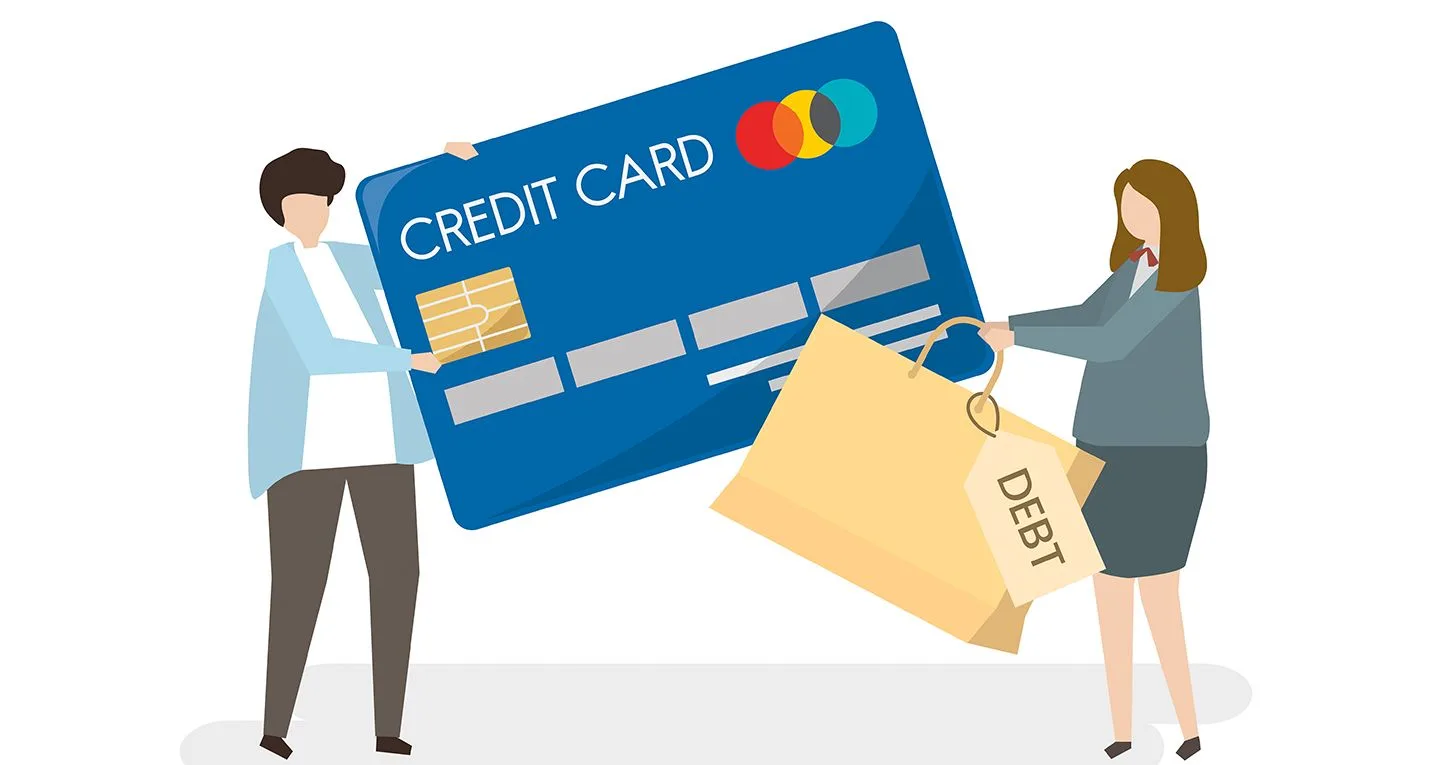
HDFC Credit Card Minimum Amount Due: What It Means and What It Costs
The HDFC credit card minimum amount due is the smallest payment you need to make by your due date to keep your account in good standing. It's worked out using a formula set under the RBI-prescribed framework applicable to credit card issuers, not a flat percentage most people assume, and it covers mostly interest and fees, not your actual spending. Paying only this amount keeps the late fee away, but the rest of your bill goes on earning interest.
Mohit Juneja
Reviewed by FREED India, Debt Resolution Specialists
 4.7/5
4.7/5 ₹3,200Cr+
 20,000+
 20,00,000+4.7/5₹3,200Cr+20,000+20,00,000+
Key Takeaways

The HDFC minimum amount due follows RBI's formula, not the flat 5% rule most people still assume it is.
Pay only the minimum, and interest gets charged on your entire outstanding, not just the part you didn't pay, this has been the rule since 1 December 2022.
HDFC's card interest typically runs between roughly 2% and 3.75% a month, translating to about 24% to 45% a year, depending on the card and your profile. On whatever balance keeps rolling over, that adds up fast.
Miss even the minimum due for more than 3 days, and a late fee kicks in, plus it can affect your credit report.
If minimum due is turning into your default every month, FREED can help you look at whether consolidation brings things back under control.
What Is the HDFC Credit Card Minimum Amount Due?
The minimum amount due, MAD for short, is the smallest payment HDFC will accept by your due date without treating the account as overdue. That's it. It's not designed to bring down what you owe, it exists purely to keep the account active and in good standing.
A lot of people still think of it as "5% of your spending." That used to be roughly how card issuers pitched it years ago, but it's outdated and not how the number actually works anymore. The real calculation is tied to an RBI formula that mostly captures interest, fees, and taxes from the billing cycle, plus a small slice of your principal. Your actual spending mostly sits untouched.
This matters more than it looks like it should, especially if you're juggling more than one card, or a card alongside an EMI or two. Paying just the minimum can feel like breathing room for a single cycle, a way to get through a tight month without missing a payment entirely. That's a completely reasonable thing to do once in a while. The trouble starts when it becomes the default every month, because the balance you're carrying keeps earning interest whether you notice it or not.
If you're already at the point where this feels less like an occasional thing and more like how you manage every bill, that's usually a sign worth paying attention to, and it's exactly the kind of situation FREED's team looks at every day.
So how does HDFC actually arrive at this number every month? That's worth walking through properly, because the formula behind it explains a lot of what happens next.

See What Your Card Debt Is Really Costing You
A free call with FREED tells you exactly where your money is going.
Book My Free CallHow Is the HDFC Credit Card Minimum Amount Due Calculated?
Since 1 December 2022, every card issuer in India, HDFC included, follows the same RBI-mandated formula. It isn't a flat percentage. It's the higher of two amounts:
- 100% of the interest, fees, and taxes billed in that cycle, or
- 5% of your total amount due
Whichever of those two is larger becomes the base. To that base, HDFC adds:
- Whichever is higher between your past-due amount (anything unpaid from before) or your over-limit amount
- Any EMI instalments due in that cycle, if you've converted a purchase into EMI
Here's how that plays out with real numbers. Say you owe ₹40,000 on your card, and ₹1,200 of that is interest and fees from the cycle. 5% of ₹40,000 is ₹2,000, and ₹2,000 is higher than ₹1,200, so ₹2,000 becomes your minimum due. Add any past-due amount or EMI instalment on top of that, and you get the final number on your statement.
RBI brought in this rule specifically to stop something called negative amortisation, a situation where a customer pays the minimum every single cycle, but because that payment barely touches the principal, the outstanding balance never actually shrinks. HDFC's own published minimum due figure follows this same RBI formula, there isn't a separate, different number HDFC applies on top of it.
Formulas like this are worth understanding on your own terms, but if the number itself keeps climbing cycle after cycle regardless of how it's calculated, that's a different problem, and it's one FREED can help you step back and look at.
Once you see how this number gets built, the next question is the one that actually matters day to day: what happens if this is the only amount you ever pay?

What the Law Says
RBI requires card issuers to base the minimum amount due on a fixed formula designed to avoid negative amortisation, and to charge a late fee or report an overdue account only after 3 days past the due date. Source: RBI Master Direction – Credit Card and Debit Card – Issuance and Conduct Directions, 2022 (amended 7 March 2024). rbidocs.rbi.org.in
Understand My Rights as a CardholderWhat Happens If You Only Pay the Minimum Amount Due?
Your account stays current. No late fee, no default flag, nothing shows up as a problem on paper. But interest gets charged on your entire unpaid balance, from the date of each transaction, not just on the sliver you didn't pay.
Take that same ₹40,000 balance. You pay the ₹2,000 minimum due. At a typical 3.5% monthly rate, roughly ₹1,400 in interest gets added back onto your balance that same cycle. Which means ₹1,400 of the ₹2,000 you just paid never actually touched your original spend, it just covered the interest that piled up.
Now stretch that out. Keep paying only the minimum for 6 months with no new spending on the card, and the balance barely moves. This is what people mean by the minimum due trap, the payment looks like progress, but most of it is just servicing interest on itself. It's worth naming plainly, but it's also worth not over-dramatising. This effect shows up over several cycles of doing it repeatedly. It isn't something that happens because of one tight month. Plenty of people pay the minimum once, get through a rough patch, and go straight back to paying in full the next cycle without any lasting damage.
If you've noticed this pattern on your own statements though, several months where the balance just isn't shrinking despite paying every cycle, that's usually the moment to get a second set of eyes on it. FREED's team can look at your actual numbers and tell you honestly whether this is manageable as is, or whether it's time to consider something like consolidation.
Where it does start to matter is the interest rate sitting underneath all of this, because that's the number actually driving how fast the balance grows.
See What Your Card Debt Is Really Costing You
A free call with FREED shows exactly where your money is going.
Book My Free CallWhat Interest Rate Does HDFC Charge on the Unpaid Balance?
HDFC's typical card interest runs around 3.5% a month, which works out to roughly 42% a year once it compounds monthly. The exact rate depends on your card variant and usage history, so it's worth checking your latest statement or HDFC's published rate schedule rather than assuming this figure applies to your card exactly.
Rates and figures shown are indicative. Please verify against your latest HDFC statement or HDFC's published rate card. FREED is not a Loan Provider.
Here's what that looks like in practice. Carry a ₹50,000 balance at around 3.5% a month for a full year, paying only the minimum due throughout, and you could end up with over ₹20,000 in added interest on top of the original ₹50,000. (Illustrative example assuming no new spends and continued minimum payments.) That's a meaningful chunk of money going purely toward interest, not toward anything you bought.
For comparison, personal loans in India typically run somewhere between 11% and 24% annually, depending on the lender and your profile. That gap, 42% versus roughly a third of that, is why carrying a revolving credit card balance for months at a time tends to cost far more than most other forms of borrowing, and it's part of why moving that balance into a single lower-interest loan through something like FREED's consolidation plan can work out meaningfully cheaper over time.
Which brings up the other side of this, the one nobody wants to think about until it happens: what if you miss even the minimum due?
What Happens If You Miss the Minimum Due Date?
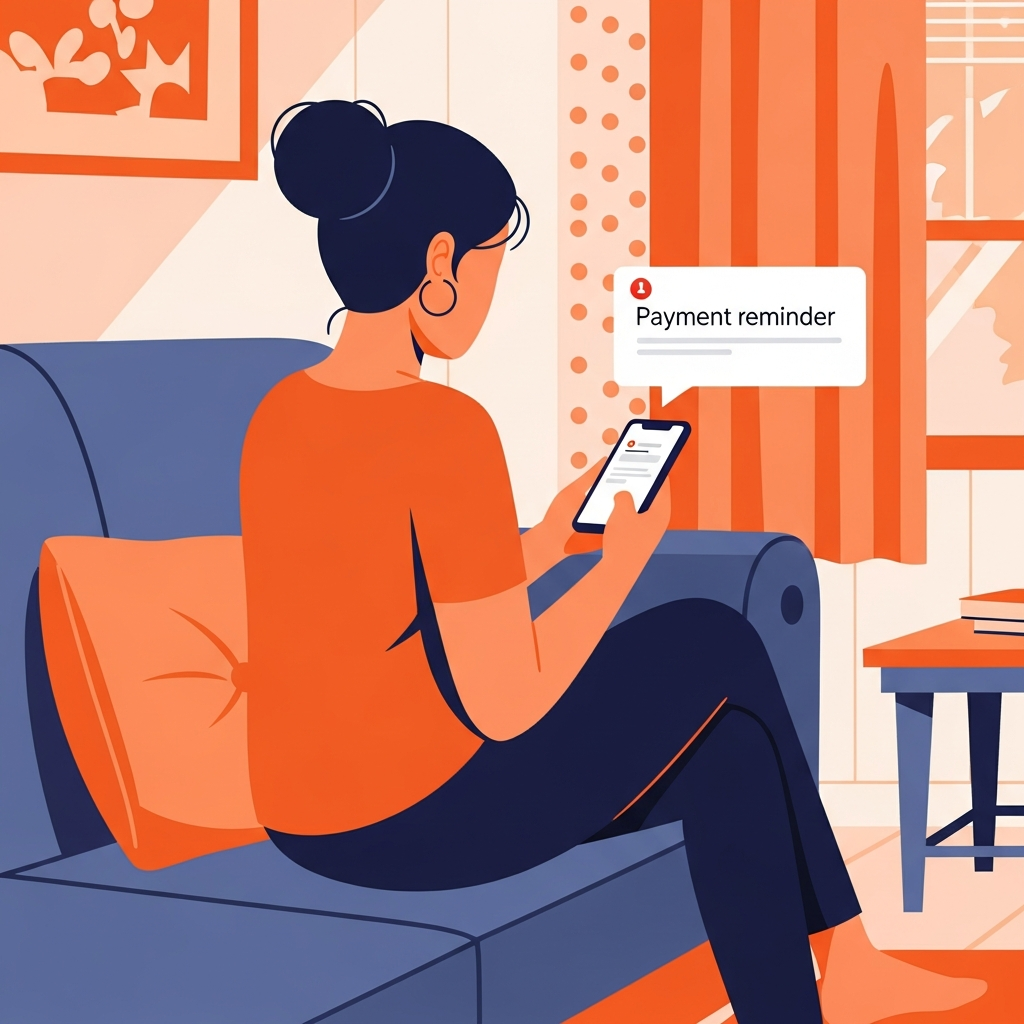
- A late payment charge kicks in, but only once you're more than 3 days past your due date, per RBI's rule. It's calculated on your outstanding balance, not your entire credit limit, so the fee itself is usually proportionate to what you actually owe.
- HDFC can report the account as overdue to credit bureaus once that 3-day window passes. A single delayed payment may still be reflected in your credit report depending on the timing and lender reporting practices, while repeated delays can have a greater impact on future lender assessments.
- Interest keeps compounding on whatever wasn't paid, including the missed minimum due itself. So the number you owe next cycle isn't just last cycle's balance, it includes interest on the shortfall too.
There's a risk of an over-limit fee if unpaid interest and charges push your outstanding past your credit limit, which can happen faster than expected once interest starts stacking on interest.
Worth repeating here: this becomes a real problem from a pattern over several months, not from one missed cycle in isolation. If you've slipped once and caught up, that's not the same situation as several months of the same struggle repeating.
If this is starting to feel like a recurring pattern though, especially across more than one card or loan, it's worth stepping back and looking at the bigger picture rather than just managing cycle to cycle. FREED's counsellors can walk through where things actually stand and what realistically helps from here, no pressure, just a clearer picture than trying to work it out alone.
Not Sure How Much Interest You're Paying?
FREED can walk through your statement, free.
Book My Free CallMinimum Due, Paying in Full, or Debt Consolidation, What Fits You
Minimum due makes sense for a genuine one-off tight month. Paying in full is always the cheaper option when it's within reach. And if you're juggling two or more cards or loans, each with its own due date and its own interest clock running, consolidating them into one loan with a single lower EMI, which is what FREED's Loan Consolidation Plan does, is usually the more practical next step, well before things get to the point of needing something more drastic like settlement.
Aspect | Minimum Due Only | Paying in Full | FREED's Loan Consolidation Plan |
Monthly outgo | Lowest | Full bill amount | One fixed, often lower EMI |
Interest charged | On entire balance, every month | None if paid before due date | Lower, fixed rate on one loan |
CIBIL impact | Neutral to negative over time | Positive | Improves over time |
Best for | A genuine one-off tight month | Anyone who can afford the full bill | Juggling 2+ cards or loans, still paying but stretched |
Rates and terms shown are indicative. Final terms decided by the bank or lending partner. FREED is not a Loan Provider. No outcome is guaranteed. Please verify directly with HDFC.

How FREED Helps If Your Minimum Due Payments Keep Piling Up
Relying on the minimum due month after month, across one card or several, usually means one thing: your total EMIs and card bills have grown past what your monthly income comfortably covers. That's not a character problem, it's a numbers problem, and it's exactly what FREED's Loan Consolidation Plan (LCP), also called "Reduce My EMI," is built to fix.
Here's how it works. FREED looks at your full financial picture, everything you owe, your income, your existing EMIs, and matches you to a suitable lending partner from its network. That lending partner then disburses one new loan, and this new loan instantly pays off your existing credit card dues and other eligible unsecured loans. What you're left with is one loan, one EMI, one due date, instead of several bills each running their own interest clock.
A few things worth stating plainly rather than glossing over. LCP requires a CIBIL score of 700 or above. There's a one-time evaluation fee as part of the process, and it's non-refundable, even if a lending partner ends up declining your application. FREED itself doesn't charge a separate facilitation fee for putting the consolidation together, though any processing or foreclosure charges on the new loan belong to the lending partner, not to FREED.
On the credit side, consolidation means simplified repayment. One EMI instead of several rolling card balances, with reduced complexity, can factor into future lender assessment over time.
If you're not sure whether you qualify, or whether this is even the right move for your situation, a free call with FREED's team gives you an honest read either way, no pressure attached
Talk to Someone Before the Next Bill Comes
See if consolidation makes sense for your situation.
Book My Free CallTips to Manage Your HDFC Credit Card Bill Better
Pay more than the minimum whenever you can. Even an extra ₹500 to ₹1,000 above the minimum due, cycle after cycle, cuts down the interest drag noticeably over a few months, without needing to clear the whole balance at once.
Set up autopay, or at least a phone reminder, for the minimum due at a bare minimum. One missed cycle compounds fast, both in interest and in what it does to your account status, so this small habit protects you more than it seems like it should.
Many financial experts recommend keeping utilisation below about 30% where possible. This protects your CIBIL score on its own, separately from whether you're paying on time, since utilisation is one of the bigger factors in how your score gets calculated.
Try not to add new spending on a card that's already carrying a rolling balance. Every new purchase on top of an existing balance starts earning interest immediately, which means you're adding interest on top of interest that's already building.
And if you notice two or more cards each carrying their own minimum-due balance month after month, that's the specific signal worth acting on. At that point, it's less about managing each card individually and more about looking at whether FREED's consolidation plan can bring it down to one manageable payment instead.

FREED Expert Tip
Pay ₹500 to ₹1,000 above your minimum due each cycle, it can cut months of interest without needing a full payoff.
Check My EMI Options
Mohit Juneja
Mohit Juneja writes educational content at FREED on debt management, credit scores, loan repayment, and borrowing best practices. His content is shaped by expert insights and industry knowledge, helping readers better understand their financial options and make informed decisions.
mohit.juneja@freed.care

FREED is India's trusted loan management platform. Founded in 2020 and headquartered in Gurugram, FREED has counselled 20 lakh+ people on personal loans, credit cards, and app loans. FREED charges fees only on successful settlement, not upfront. FREED does not handle secured loans (home loans, car loans, gold loans).
Media Mentions