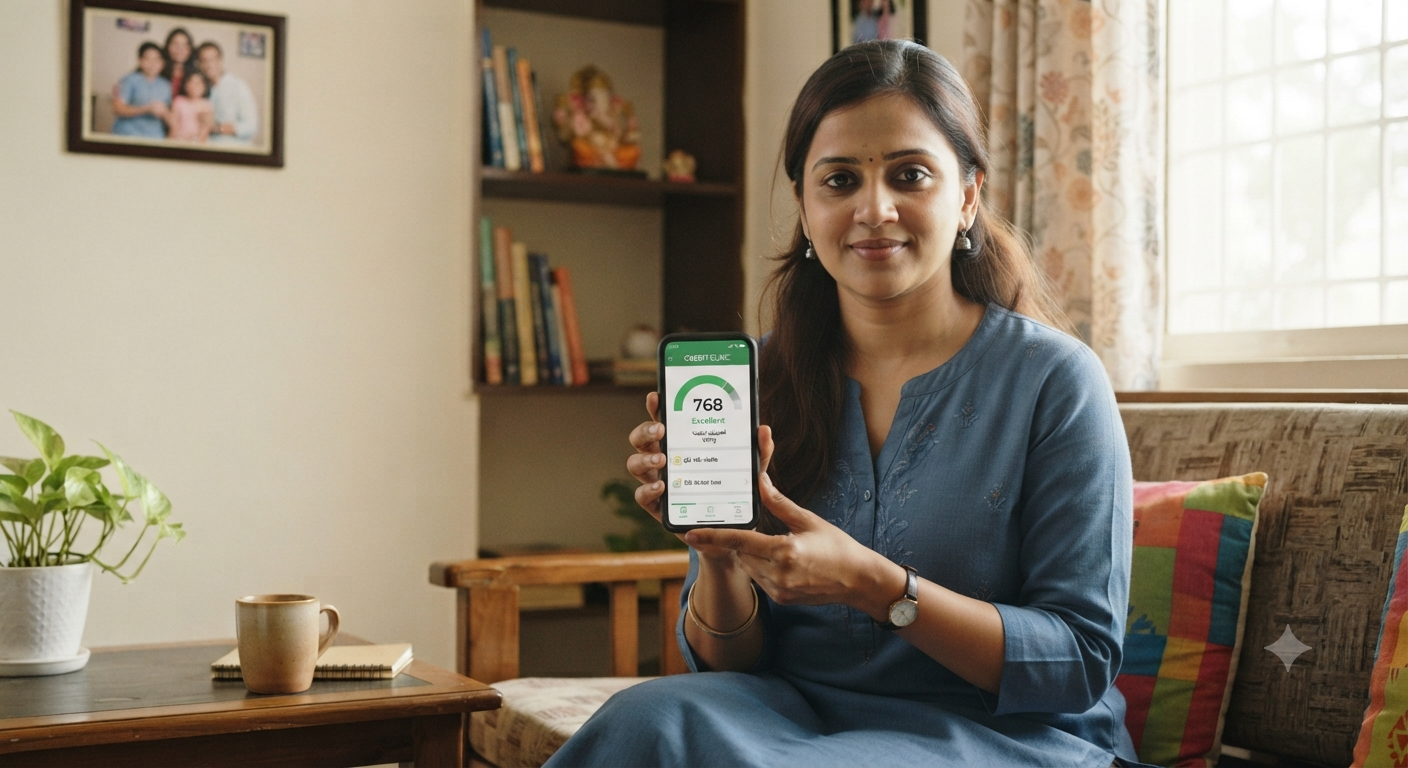
Average CIBIL Score in India: What It Means
The "average" CIBIL score band in India is commonly considered to fall between 650 and 699 on the 300–900 scale, this is an industry classification band, not a single statistical figure. It is not bad, but it is not strong either. Lenders may approve credit at this level, but usually at higher interest rates and lower loan amounts than someone scoring 750 or above.
Mohit Juneja
Reviewed by FREED India, Debt Resolution Specialists

 4.7/5
4.7/5 ₹3,200Cr+
 20,000+
 20,00,000+4.7/5₹3,200Cr+20,000+20,00,000+
KEY TAKEAWAYS

The "average" CIBIL score band (a classification range, not a single number) sits between 650–699 on a 300–900 scale.
Separately, TransUnion CIBIL's own reported statistical average score among consumers who actively track their score stood at 728, as of December 2025.
Payment history counts for the biggest share of your score.
Credit utilisation above 30% of your limit drags an average score down further.
A score below 650 falls into the fair/poor band and makes loan approval harder.
What Is an Average CIBIL Score in India?
Band | Score Range |
Poor | 300–549 |
Fair | 550–649 |
Average | 650–699 |
Good | 700–749 |
Excellent | 750–900 |
Note: These bands are the common industry convention. Some banks and NBFCs draw the lines slightly differently, so treat this as a general guide, not a fixed rule.
In practice, an average score means some lenders will still approve you, but the terms won't match what a 750+ applicant gets. Expect a higher interest rate, a smaller loan amount, or a shorter tenure than you'd be offered with a stronger score. It's not a red flag, it's a signal that your credit behaviour has room to tighten up.
Where the score actually comes from, and why it lands in this middle band for so many people, is worth understanding next.
How Is the CIBIL Score Calculated?
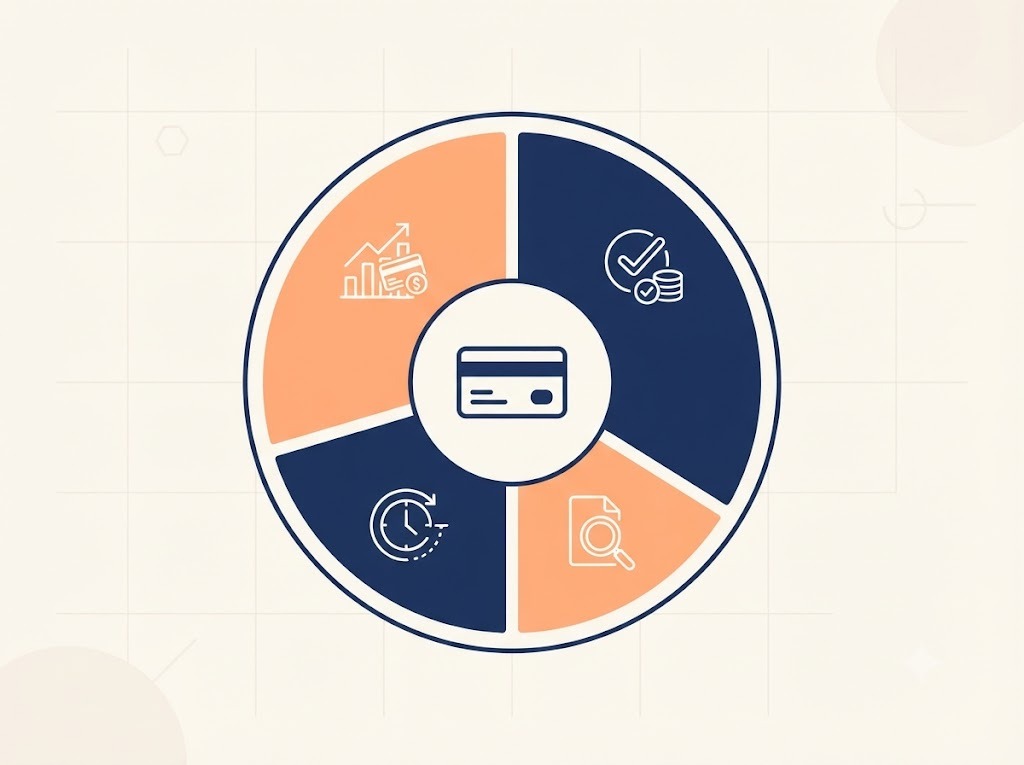
- Payment history. This carries the heaviest weight of any single factor. It measures whether you've paid your EMIs and credit card bills on time, or let them slip.
- Credit exposure and utilisation. This looks at how much of your available credit you're actually using at any given time, high running balances relative to your limit weigh against you here.
- Credit type and duration. This covers how long you've held credit accounts and whether you have a healthy mix of secured (home, car) and unsecured (personal loan, credit card) credit.
- Other factors. Recent hard enquiries and a few smaller behavioural signals round out the remaining weight.
Someone sitting in the 650 to 699 band usually doesn't have one catastrophic factor dragging them down. It's typically a mixed picture, decent payment history alongside high utilisation, or a short credit history that hasn't had time to build strength yet. That's actually good news: a mixed picture is fixable in a way a single major default isn't.
One thing worth clearing up directly: your income does not factor into your CIBIL score calculation. Only your credit behaviour does. Income matters to a lender's overall approval decision, but it plays no role in the number itself.
Knowing the factors is step one. Seeing where you personally land is step two.
Are You in a Loan Trap? Quick Check
Move the slider to your total EMIs as a % of monthly salary. See your debt stress level instantly.
EMIs as % of Monthly Salary
What Does the National Average CIBIL Score Look Like?
According to TransUnion CIBIL's "CIBIL for Every Indian" report, the average CIBIL score among consumers who actively self-monitor their score stood at 728 as of December 2025. That's meaningfully above the average band, and it's worth understanding exactly what this number does and doesn't represent.
183 million Indians now track their own credit score, up 27% year-on-year. That's the important caveat here: this 728 average reflects people who are actively checking and paying attention to their credit, not every credit-active Indian. People who monitor their score tend to already be more financially engaged, which naturally pulls the average up compared to the wider population.
The report also found that nearly 45% of monitoring consumers improved their score within six months of starting to check it regularly. That's the actual point worth taking from this section: the act of paying attention correlates with improvement. 728 isn't a target to chase or a number you "should" have, it's context for how much difference regular checking tends to make.
The obvious next step, then, is finding out your own number.

Freed Expert Tip
Checking your own CIBIL score is a soft enquiry, it never lowers your score. Check it every few months.
See How Often You Should Check Your Report-Signs Your CIBIL Score Needs Attention
- You've been rejected for a loan or credit card in the last 6 months. That's usually the clearest signal something's off.
- You've been offered credit, but at a rate visibly higher than advertised. Approval with unfavourable terms is still a sign your profile needs work.
- A lender asked for a guarantor or co-applicant when you weren't expecting it. That's often a middling-score request, not an outright rejection.
- You've genuinely never checked your own score or report. Not knowing where you stand is its own kind of risk.
- You're regularly carrying balances above 30% of your credit card limits. This quietly works against you even if you always pay eventually.
- You're juggling three or more active EMIs at once. Multiple open obligations, even when managed fine, add up in how a lender reads your profile.
None of this is a crisis. It's simply worth a closer look if two or three of these sound familiar.
How to Check Your Average CIBIL Score
- Get your free annual report. Every bureau, CIBIL, Experian, and CRIF High Mark, is required to give you one full report free every calendar year.
- Use your bank's net banking check. Many banks now offer a free monthly soft-check built into net banking, and this never affects your score.
- Know that checking your own score is always a soft enquiry. Checking as often as you like, whether through the bureau directly or your bank, never lowers your score. Only a lender's hard enquiry, triggered by an actual loan or card application, carries any weight, and only when several happen close together.
That last point is worth repeating on its own, because it's one of the most common myths out there: checking your own CIBIL score does not hurt it.
Once you know where you actually stand, the next question is what to do about it.

What the Law Says
Under RBI Notification RBI/2016-17/58 (DBR.CID.BC.No.11/20.16.042/2016-17), effective January 1, 2017, every Indian is entitled to one free full credit report per bureau, per year, directly from CIBIL, Experian, Equifax, and CRIF High Mark.
Learn How to Check and Correct Your CIBIL Score
What Are Your Options If Your Score Is Average or Below?
If you're in the average band, you haven't defaulted, you're not behind, this is squarely about habits and structure, not crisis management.
Start with the fixes that cost nothing and move the needle fastest: pay every EMI and bill on time without exception, bring your credit utilisation below 30% of your limit, and hold off applying for new credit for a while so enquiries don't stack up against you.
If one specific loan is carrying a noticeably higher rate than the rest of your profile would suggest, a balance transfer to a lower-rate lender is worth exploring, provided your current profile still qualifies for one.
If the real issue isn't one bad account but several open ones, multiple EMIs and credit cards spread across different lenders, that's usually a utilisation and structure problem more than a single-account problem. This is where FREED's Loan Consolidation Plan becomes relevant. Merging several running EMIs into one lower payment can ease exactly the kind of pressure that keeps a profile stuck in the average band.

How FREED Helps
FREED's Loan Consolidation Plan, also called "Reduce My EMI," is built for exactly this situation, someone still current on their payments but stretched across too many accounts.
FREED assesses your financial profile and matches you to a suitable lending partner from its network. That partner disburses one new loan that instantly pays off your existing eligible unsecured loans and credit card dues, leaving you with one loan, one EMI, one due date. FREED manages the entire process end to end.
The EMI amount comes down. And because utilisation drops and your payment history consolidates onto a single, well-managed account instead of several scattered ones, this supports simplified debt management and structured, eligible unsecured loan consolidation going forward.
Tips to Move From Average to Good
- Automate your EMI and credit card payments. Set them up so nothing is ever late, this removes the single biggest risk to your score entirely.
- Keep utilisation under 30%, ideally lower where possible. Lower utilisation is one of the quickest levers available to you.
- Don't close your oldest credit card or loan account. Length of credit history genuinely matters, and closing an old account can shorten it unnecessarily.
- Space out new credit applications by at least a few months. This keeps hard enquiries from stacking up and working against you.
- Check your report every few months and dispute any factual errors immediately. Misreported accounts are more common than most people assume, and they're free to fix once flagged.
There's no fixed timeline here, and no promise of a specific point jump, that varies by profile. These habits help strengthen your overall credit profile and support future lender assessments over time.
Sources
Claim in article | Section | Verify status | Source | |
|---|---|---|---|---|
1 | RBI notification RBI/2016-17/58 (DBR.CID.BC.No.11/20.16.042/2016-17), effective Jan 1 2017, free full credit report once/year, all CICs (CIBIL, Experian, Equifax, CRIF High Mark) | "What the Law Says" | ✅ confirmed exact circular number + date | RBI notification page + Deccan Herald: RBI directed all credit information companies to provide free full credit report once per calendar year effective January 1, 2017 |
deccanherald | ||||
2 | TransUnion CIBIL: avg score among self-monitoring consumers = 728, as of Dec 2025 | "National Average" section, Key Summary, FAQ | ✅ confirmed exact figure/date | TransUnion CIBIL newsroom: average CIBIL Score among monitoring consumers stood at 728, pointing to strong alignment between active monitoring and healthier credit profiles |
Transunioncibil | ||||
3 | 183 million Indians track own score, up 27% YoY | Same section | ✅ confirmed, minor nuance | Tribune: 183 million Indians now track CIBIL scores... number of consumers monitoring for first time grew by 27% YoY. |
The Tribune | ||||
Note: 27% is growth in first-time monitors specifically, not growth of the total 183M base — article's phrasing ("up 27% YoY") is close enough but could be tightened. | ||||
4 | ~45% of monitoring consumers improved score within 6 months | Same section | ✅ confirmed | Nearly 45% of monitoring consumers improved their credit score within six months of monitoring |
Transunioncibil | ||||
5 | Report titled "CIBIL for Every Indian" | Same section | ✅ confirmed exact title | TransUnion CIBIL's latest report, CIBIL for Every Indian – Uncovering How India Owned Its Credit Journey in 2025 |
Transunioncibil | ||||
6 | Score bands: Poor 300-549, Fair 550-649, Average 650-699, Good 700-749, Excellent 750-900 | Bands table | ✅ standard industry convention, matches prior article and multiple lender pages | Consistent w/ CreditMantri, Moneyline, others — no conflict found |
7 | Payment history = biggest single factor | "How Is the CIBIL Score Calculated" | ✅ confirmed (35% cited elsewhere) | Same sourcing as prior article's #2/#3 — Bajaj Housing Finance, BankBazaar |
8 | Income does not factor into CIBIL score | Same section | ✅ confirmed | Paytm blog: salary does not directly affect your CIBIL score; the score reflects your credit behaviour, not your income |
Paytm | ||||
9 | Checking own score = soft inquiry, never lowers score; only lender hard inquiry counts | "How to Check," FAQ, Expert Tip | ✅ standard fact, consistent across all lender/bureau sources checked in prior table | No conflicting source found |
10 | 4 bureaus give different scores due to different models/data | FAQ ("Why is my score different on different apps") | ✅ confirmed | Bajaj Housing Finance: four different credit information bureaus... each uses a different scoring model to calculate credit scores |
Bajaj Housing Finance | ||||
11 | FREED product name "Reduce My EMI" / consolidation mechanics | "How FREED Helps" | 🚩 internal, not externally verifiable | Confirm current product name/process copy with FREED product team before publish |
12 | Related content links | Related Content | 🚩 not fact-checked | Verify URLs live before publish |

FREED is India's trusted loan management platform. Founded in 2020 and headquartered in Gurugram, FREED has counselled 20 lakh+ people on personal loans, credit cards, and app loans. FREED charges fees only on successful settlement, not upfront. FREED does not handle secured loans (home loans, car loans, gold loans).
Media Mentions