Understanding the Basics of Financial Planning
Financial planning sounds like something that requires a finance degree, a high income, or a dedicated app with dozens of features. In practice, it comes down to a small number of basic ideas, applied consistently, that anyone can start using this week regardless of income level or experience.
Mohit Juneja
Reviewed by FREED India, Debt Resolution Specialists
 4.7/5
4.7/5 ₹3,200Cr+
 20,000+
 20,00,000+4.7/5₹3,200Cr+20,000+20,00,000+
Key Takeaways

Financial planning at its core is a small set of basic practices, knowing your numbers, building a cushion, managing debt wisely, budgeting, saving and investing appropriately, protecting against risk, and setting real goals, applied consistently over time.
None of these basics require specialised knowledge or a high income to begin. A person earning a modest salary and a person earning considerably more are both applying the exact same underlying principles, just at different scale.
The most common beginner mistake is trying to do everything at once. Applying these basics one at a time, in the order presented, produces steadier, more lasting results than attempting all of them simultaneously and abandoning the effort within weeks.
High interest debt is the one factor that can undermine nearly every other basic on this list, which is why it deserves specific, early priority rather than being treated as one goal among many.
If existing debt is the reason these basics feel out of reach despite genuine effort, FREED can help address that obstacle directly so the fundamentals in this blog have a real foundation to work from.
What Financial Planning Actually Means at a Basic Level
Stripped of jargon, financial planning simply means making deliberate decisions about your money in advance, rather than reacting to whatever situation arises each month. It is the difference between money going wherever it happens to go, and money being directed on purpose towards things that actually matter to you.
This does not require predicting the future perfectly or having a large amount of money to work with. It requires a basic structure, a few numbers understood clearly, a few habits practiced consistently, and a willingness to revisit the plan periodically as circumstances change.
The eight basics below cover the essential building blocks. None of them are advanced. All of them are genuinely useful, and most people who feel their finances are "complicated" find, once they apply these basics, that the complication was mostly a lack of structure, not a lack of underlying complexity in the actual situation.

Transactional, Placement: end of Key Summary, before the first section begins] Ready to build your own financial plan step by step?
Talk to a FREED Expert for free.
Connect with FREED ExpertBasic 1: Know Your Actual Numbers, Income, Expenses, and Net Worth
Every basic that follows depends on this first one. Before any plan can be built, you need three specific numbers, calculated honestly rather than estimated roughly.
Your actual monthly income, after tax, from all sources. Your actual monthly expenses, tracked for at least one full month rather than guessed. And your net worth, everything you own, savings, investments, property, minus everything you owe, credit cards, loans, any other debt.
Most people who feel vaguely uneasy about their finances have never actually calculated these three numbers directly. Doing so, even once, converts a general unease into a specific, addressable starting point, which is considerably more useful than continuing to operate on a rough, anxious impression of where things stand.
Basic 2: Build an Emergency Fund Before Anything Else
Once your basic numbers are known, the very first financial priority, ahead of investing, ahead of aggressive saving for other goals, is a starter emergency fund.
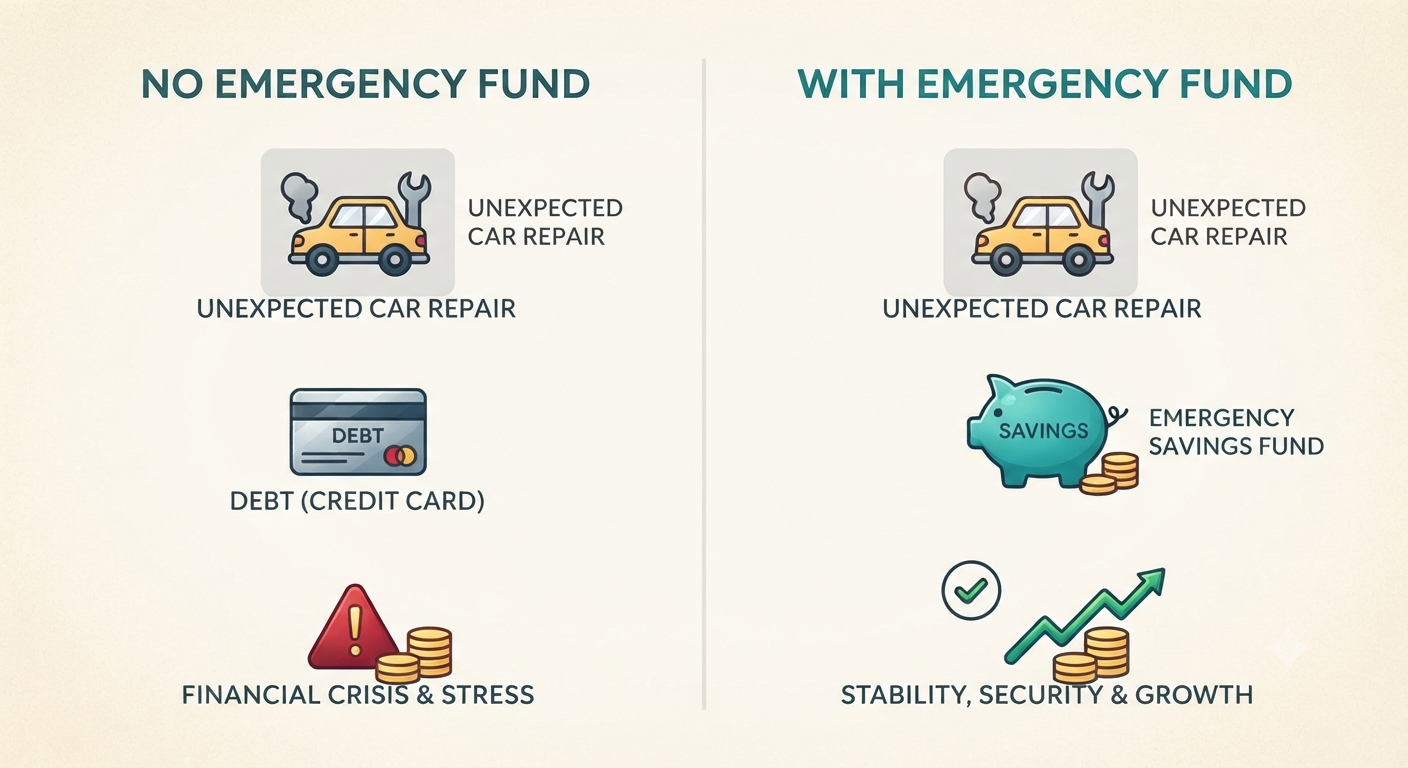
An emergency fund is money set aside specifically for unplanned expenses, a medical bill, a job loss, an urgent repair, kept in an easily accessible savings account rather than tied up in an investment. Start with a target of one month of essential expenses, and build towards three to six months over time.
The reason this comes first is straightforward. Without this fund, any unplanned expense typically gets covered by a credit card or a high interest loan, creating new, expensive debt that then works against every other financial basic on this list. An emergency fund is not a luxury step for later, it is the foundation that protects everything built after it.
Basic 3: Understand the Difference Between Good Debt and Bad Debt
Not all debt is the same, and treating every form of borrowing identically is a common source of confusion for people early in their financial planning journey.
Generally, debt taken on for an appreciating asset or an investment in future earning potential, a reasonable home loan, an education loan, tends to carry lower interest rates and can be a reasonable, even useful, part of a financial plan. Debt used to fund ongoing lifestyle spending or depreciating purchases, particularly at high interest rates, credit card debt at 36 to 42% per year being the clearest example, works directly against every other financial goal and deserves priority attention to pay down or eliminate.
The basic principle worth internalising early: before taking on any debt, ask whether it is building towards something of lasting value at a reasonable cost, or simply funding present spending at a cost that will be considerably harder to escape later.
Basic 4: Give Every Rupee a Job Through a Simple Budget
A budget, at its most basic, is simply a decision made in advance about where your income will go, so that spending reflects intention rather than accident.
Start simply. Three to five broad categories are enough to begin, essentials, rent, EMIs, groceries, utilities, flexible spending, eating out, entertainment, shopping, and savings or debt repayment. Assign a portion of your income to each category, and track actual spending against these categories for a few months before adding more detail.
The goal at this basic level is not precision, it is intention. A rough, simple budget that is actually followed and reviewed monthly is considerably more valuable than an elaborate, detailed one that gets abandoned within a few weeks because it demanded more effort than was sustainable.
Inline, Placement: directly after Basic 4, as a natural break point roughly one-third through the article
Not sure how to structure a budget around your specific income and debts? Talk to a FREED Expert for free.
Talk to a FREED ExpertBasic 5: Save and Invest According to When You Will Actually Need the Money
Once an emergency fund exists and a basic budget is in place, the next basic concept is matching your savings and investment choices to the actual timeline of each specific goal.
Money needed within the next one to two years, a planned expense, a short term goal, belongs in a savings account or a similarly safe, easily accessible instrument. Money that will not be needed for five or more years, retirement, long term wealth building, is generally better placed in growth oriented investments, since there is enough time for short term market fluctuations to even out.
The basic mistake to avoid in both directions: do not put emergency or short term money into investments that could lose value right when you need it, and do not leave genuinely long term money sitting in a low interest savings account for decades, where it will likely lose meaningful value to inflation over that much time.
Basic 6: Protect Yourself With Insurance Before You Need It
A frequently overlooked basic is insurance, health insurance in particular, which protects your entire financial plan against one of the most common and most disruptive types of unplanned expense.
A single significant medical event, without adequate health insurance, can undo years of careful saving and planning in a matter of weeks. Adequate health coverage, and life insurance for anyone with dependents, is not an optional extra layered on top of a financial plan, it is a basic, foundational protection that allows every other part of the plan to actually hold up under a genuine, significant disruption.
This basic is easy to deprioritise specifically because, like an emergency fund, its value is only fully felt at the moment it is actually needed, which is precisely why it needs to be arranged well before that moment arrives.
Are You in a Loan Trap? Quick Check
Move the slider to your total EMIs as a % of monthly salary. See your debt stress level instantly.
EMIs as % of Monthly Salary
Basic 7: Set Goals With Real Numbers and Real Timelines
A goal like "save more" or "get better with money" is not specific enough to act on. A basic, workable financial goal has three elements: a specific rupee amount, a clear timeline, and a monthly action tied directly to it.
"Save Rs 1,00,000 for a family trip by December 2027, by transferring Rs 8,500 automatically every month" is a goal that can be tracked, adjusted, and actually achieved. A vague intention to save more, without these specifics, tends to remain a background thought rather than becoming real, funded progress.
Apply this basic structure to whatever your two or three most significant goals currently are, and you will likely find that the exercise itself clarifies which goals are genuinely realistic on your current income, and which may need either a longer timeline or a different monthly amount to actually work.
Basic 8: Review Your Plan on a Fixed Schedule
A financial plan built once and never revisited becomes outdated as income, expenses, and priorities inevitably change over time. The final basic, and one that ties all the others together, is a simple, recurring review.
Every six months is a reasonable rhythm for most people. At each review, recalculate your net worth, confirm your emergency fund is still at its target level, check whether your budget categories still reflect actual spending, and adjust any goal timelines based on real progress.
This review does not need to take more than an hour, but its value depends entirely on it actually happening on schedule, rather than being the first thing deprioritised when life gets busy, precisely the situation in which a plan is most likely to quietly drift out of relevance.

What the Law Says
Under RBI's financial literacy guidelines, banks are required to provide customers with account statements, transaction histories, and information about loan repayment schedules on request, which supports Basic 1 directly, giving you accurate, verified numbers to work from rather than estimates. Insurance regulators similarly require clear disclosure of policy terms and coverage details before you commit to a plan, which is worth requesting and reviewing carefully as part of Basic 6.
Settle My LoansCommon Beginner Mistakes to Avoid
A few specific mistakes show up repeatedly among people just starting to apply these basics, and are worth naming directly.
Trying to implement all eight basics simultaneously in the first week, which tends to be overwhelming and often leads to abandoning the whole effort. Building an elaborate, detailed budget before establishing the simpler habit of tracking spending at all. Investing aggressively before a basic emergency fund exists, leaving no cushion for the very first unplanned expense that arrives. And treating the plan as a one time document rather than a living, periodically reviewed structure.
The more effective approach is sequential, work through the basics roughly in the order presented, spend a few weeks or a month genuinely establishing each one, and layer the next basic on top only once the previous one feels manageable and consistent.
Inline, Placement: directly after Common Beginner Mistakes section
Feeling unsure where to start with your own numbers? Talk to a FREED Expert for free.
Talk to a FREED ExpertPutting the Basics Together: A Simple First Month
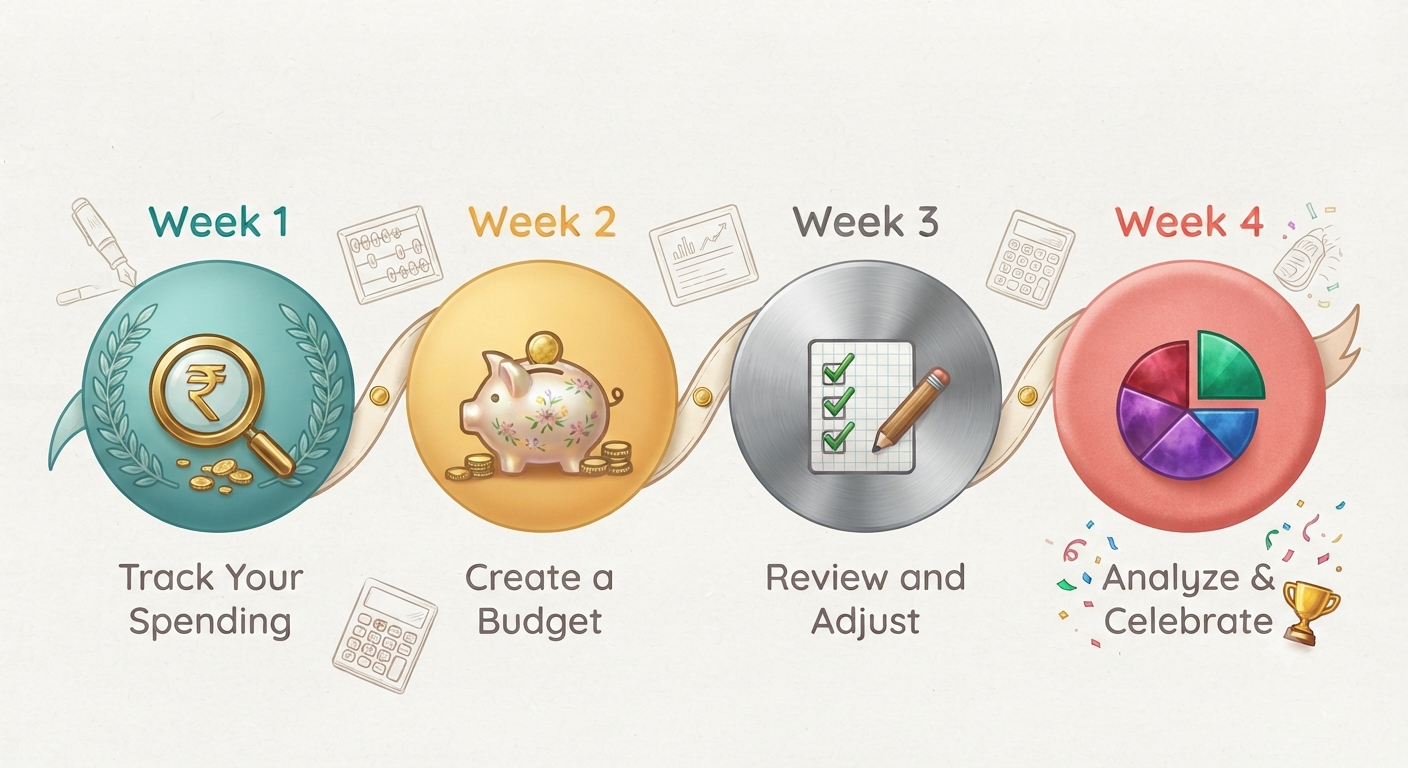
If all eight basics feel like a lot to absorb at once, here is a simple, realistic starting sequence for the first month specifically.
Week one, calculate your actual income, expenses, and net worth (Basic 1). Week two, open a separate savings account if you do not already have one, and set up an automatic transfer, even a small one, to begin your emergency fund (Basic 2). Week three, list every debt you currently have with its interest rate, and identify which one deserves priority attention (Basic 3). Week four, set up three to five basic budget categories and begin tracking actual spending against them (Basic 4).
The remaining basics, savings and investment matching, insurance, specific goals, and the recurring review, can be layered on in the following month or two, once this first foundational month has established the habit of actually looking at your numbers regularly, rather than avoiding them.
When the Basics Are Not Enough on Their Own
For many people, applying these eight basics consistently, even imperfectly at first, produces genuine, steady improvement in their financial position over time.
For some, a specific obstacle stands in the way of these basics working as intended, existing high interest debt large enough that it consumes a significant share of monthly income before any of the other basics, an emergency fund, a budget, savings, ever get the chance to take hold. In this situation, the honest next step is not applying the basics more rigorously, it is addressing this specific obstacle directly.
FREED's Debt Consolidation Program combines multiple high interest debts into one lower interest loan with a single, more manageable EMI, freeing up the monthly income these basics actually need to work.
FREED's Debt Resolution Program negotiates a reduced settlement for debt that cannot realistically be repaid in full, on average 56% less than the original outstanding, removing the obstacle rather than working around it indefinitely.
A free consultation can assess your specific situation honestly and tell you whether existing debt is the reason these basics have felt out of reach.
FREED Financial Health Score
Want an honest starting point before you begin applying these basics? Take the FREED Financial Health Score, free, 2 minutes.
Check My Financial Health Score
Mohit Juneja
Mohit Juneja writes educational content at FREED on debt management, credit scores, loan repayment, and borrowing best practices. His content is shaped by expert insights and industry knowledge, helping readers better understand their financial options and make informed decisions.
mohit.juneja@freed.care

FREED is India's trusted loan management platform. Founded in 2020 and headquartered in Gurugram, FREED has counselled 20 lakh+ people on personal loans, credit cards, and app loans. FREED charges fees only on successful settlement, not upfront. FREED does not handle secured loans (home loans, car loans, gold loans).
Media Mentions