Loan Recovery Rules: Your Rights When Bank Agents Contact You
RBI's loan recovery rules protect you from harassment. Know what agents can and cannot do, how to document violations, and how to file a free complaint with the RBI Ombudsman.
Mohit Juneja
Reviewed by FREED India, Debt Resolution Specialists
 4.7/5
4.7/5 ₹3,200Cr+
 20,000+
 20,00,000+4.7/5₹3,200Cr+20,000+20,00,000+
Key Takeaways

A loan becomes an NPA (a loan marked as bad by the bank) only after 90 days of missed payments. Banks must send written reminders and offer relief options before that point.
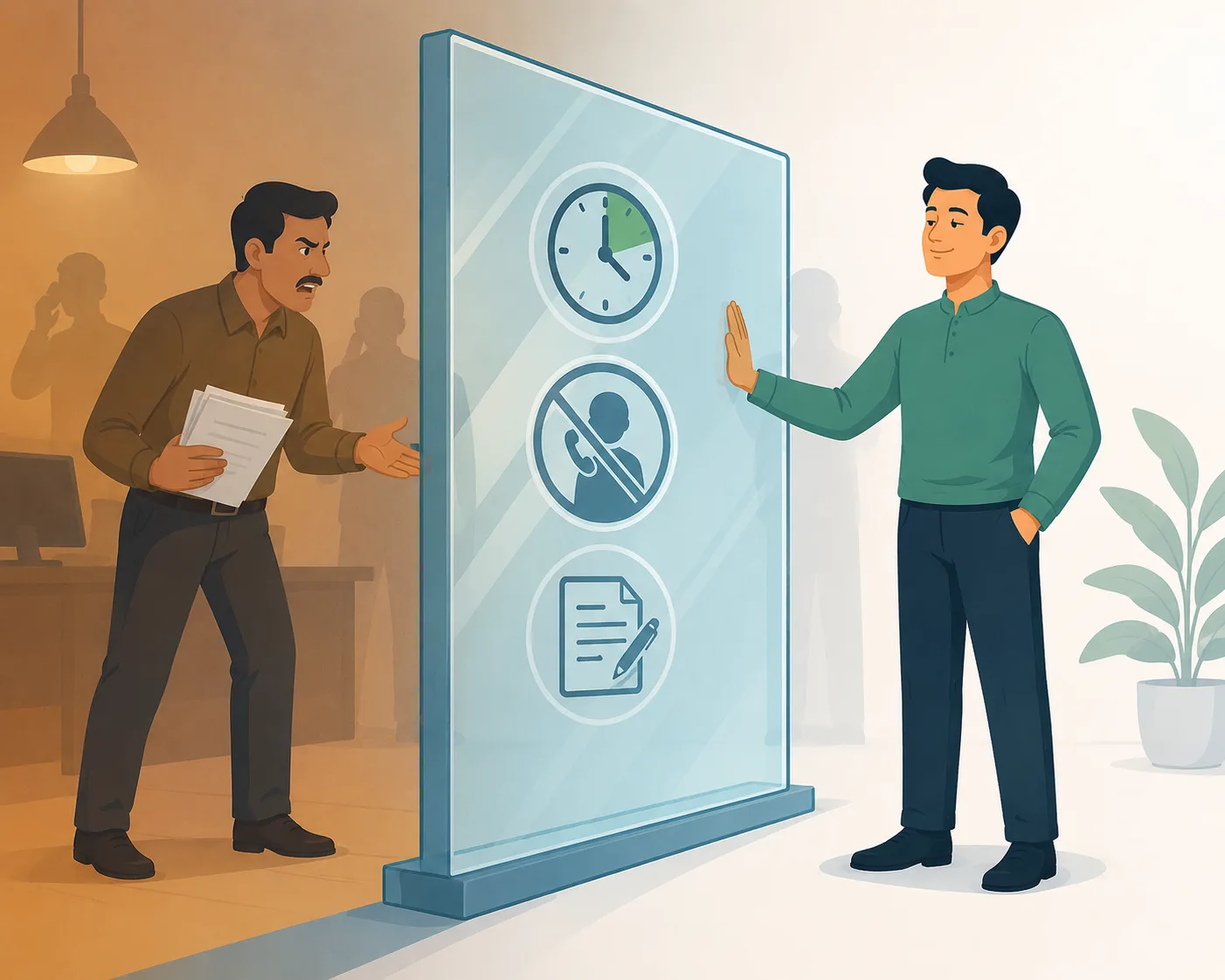
Recovery agents are permitted to contact you only between 8 AM and 7 PM. Calls outside these hours go against RBI guidelines. Contact with your family or employer about your loan also goes against the Fair Practices Code.
All recovery agents are required to carry an IIBF (Indian Institute of Banking and Finance) certification. An uncertified agent operating on behalf of a bank is not allowed.
Once you file a written complaint with the bank, the bank's grievance process begins. The bank is expected to address the complaint within 30 days before escalating further recovery action.
From July 1, 2026, under RB-IOS 2026, the RBI Ombudsman can award compensation up to ₹30 lakh for financial loss and up to ₹3 lakh for harassment and mental anguish. Filing a complaint costs nothing.
Loan default on an unsecured loan is a civil matter. No agent can get you arrested for missing EMIs.
What Are Loan Recovery Rules and Why Do They Exist?
Loan recovery rules are not suggestions. They are binding regulations under the Banking Regulation Act and RBI's Fair Practices Code
Banks have a real right to recover money that's owed to them. But you have an equal right to dignity, privacy, and a fair process. Neither side gets to ignore the other.
If you've been told, directly or indirectly, that "banks can do whatever they want" once you miss a payment, that isn't true. These rules exist precisely because aggressive recovery tactics became widespread enough that the RBI had to step in.
The numbers show why. Close to 39% of borrowers have reported facing abusive or threatening recovery calls, according to an RBI-cited survey reported by the Economic Times in February 2026. Loan and credit card complaints already make up the single largest share of grievances the RBI receives. Gross NPAs across Indian banks stood at around 3% of total advances in 2025, a small enough share that aggressive recovery on the rest is hard to justify.
None of this is insider information. These rules are public. They exist for you to use.
What Happens After You Miss an EMI: The Recovery Timeline
Most explanations jump straight to what agents can and can't do. It helps more to see the actual timeline first, so you know exactly where you stand.
Days 1 to 30. The bank sends reminders by SMS, email, or call. This is routine, not harassment. It's simply the bank letting you know a payment is due.
Days 30 to 60. A representative from the bank may call to discuss options like a smaller EMI or a different repayment schedule. If your situation involves genuine hardship, you can formally request restructuring banks are expected to consider such requests under RBI's Fair Practices Code.
Days 60 to 90. You'll get a formal written notice. Your account moves to an internal recovery team.
Day 90 onward. our account is now classified as an NPA. The bank's options get stronger from here: formal legal notice, and the option to appoint a recovery agent. Under RBI guidelines, banks are expected to give you written notice before appointing a recovery agent.
The 90-day window before NPA classification is your most useful negotiating period. This is when asking for a different repayment plan in writing carries the most weight.
One exception worth knowing: agricultural loans follow a different timeline, tied to crop seasons rather than a flat 90-day count.

What the Law Says
Under RBI's Fair Practices Code, banks are expected to give borrowers facing genuine financial hardship the opportunity to discuss repayment options before escalating to recovery action. You can formally request restructuring or a revised repayment plan in writing.
Talk to a FREED counsellorWhat Recovery Agents Are, and What They Are Not
A lot of fear around recovery calls comes from one wrong assumption: that recovery agents carry some kind of official authority, like the police or a court officer. They don't.
Recovery agents are private contractors hired by the bank. Their only authority comes from the contract between the bank and the agency they work for. That's it.
They cannot arrest you. For unsecured loans, they cannot seize any property without a court order. They cannot enter your home without your permission.
What they are required to have: an IIBF certification, and ID card, and a letter from the bank authorising them to contact you. You can ask to see both before you say a word.
One principle worth noting: if an agent breaks a rule, the bank is responsible for it. RBI holds banks accountable for the conduct of their recovery agents, and banks can be penalised for violations committed on their behalf.
The Exact Rules Recovery Agents Must Follow
Here's the actual rulebook, in plain terms.
- Calling hours. Agents can contact you only between 8 AM and 7 PM.
- Contact frequency. There are guidelines on how frequently an agent can contact you under RBI's recovery conduct framework. If calls feel excessive or harassing, document them and raise a formal complaint.
- Privacy. Recovery agents should not improperly disclose your loan information to unrelated third parties. If they post about your default publicly, that can amount to defamation under BNS 2024 Section 356.
- Identification. Agents must carry an ID card and an authorisation letter at all times. You're allowed to ask for both before you speak to them.
- Female borrowers. Female borrowers. RBI guidelines state that only a female agent should contact a female borrower.
- Recording. Recording. Under RBI's updated directions, banks are expected to digitally record interactions between borrowers and recovery agents. You can request these records. If the bank is unable to produce them, you can raise this as part of a formal complaint.
- No threats of arrest. No threats of arrest. Defaulting on an unsecured loan is a civil matter, not a criminal one. An agent who threatens arrest may be committing criminal intimidation under BNS 2024 Section 351. Document the call and file a complaint.
No forced entry. No forced entry. Entering your home without permission is not permitted and may be treated as criminal trespass under applicable provisions of BNS 2024. .
In September 2024, the RBI fined HDFC Bank ₹1 crore, in part for recovery agents contacting customers outside permitted hours. Banks get penalised for this. It happens.
What Banks Can Legally Do If You Stop Paying
Knowing what a bank can actually do, in order, tends to replace fear with clarity.
- Report to credit bureaus. This happens from your first missed payment, not just after NPA classification.
- Send demand and legal notices. Written, formal communication about what you owe.
- Appoint a recovery agent. Under RBI guidelines, banks are expected to give you written notice before a recovery agent makes contact. [LEGAL FLAG: confirm notice period before publish]
- File a civil recovery suit in court. This is the bank pursuing repayment through the legal system.
- Approach a Debt Recovery Tribunal (DRT, a special government court for loan cases). This applies to large unsecured defaults, generally above ₹20 lakh.
For secured loans only, like a home loan or car loan, the bank can also issue a SARFAESI notice (a law that lets banks take back secured property) and begin possession proceedings after a 60-day notice period. This does not apply to personal loans, credit cards, or BNPL debt, since those are unsecured.
What banks cannot do, regardless of the loan type: seize your assets without a court or DRT order if your loan is unsecured. Have you arrested. Have you detained.
Loan default on an unsecured loan is a civil matter under Indian law. It stays that way unless a separate criminal element such as a dishonoured cheque is involved.
What You Can Do If Recovery Agents Cross the Line
If a call or visit crosses into harassment, here's how to handle it, step by step.
- Document everything. Note the date, time, the agent's name, and exactly what was said or threatened. Recording a call is permitted in India when you are a party to the call.
- Ask for the agent's details. Get their full name, their ID card number, and the name of the bank they're representing. Write all three down.
- File a written complaint. Send it to the bank's Grievance Redressal Officer, with your documentation attached. Use email and registered post, and keep proof of delivery.
- Recovery action must pause. Once your complaint is filed, the bank is required to resolve it before restarting any recovery activity.
- Escalate if needed. If the bank has not resolved your complaint within 30 days, you can file a free complaint with the RBI Integrated Ombudsman at cms.rbi.org.in.
- For physical threats or forced entry. File an FIR with your local police. Threats and trespass fall under BNS 2024, and the police can act on this directly.
If putting all of this together feels like too much on top of everything else, FREED can help you draft the complaint letter and organise your documentation.

FREED Expert Tip
File your first complaint to the bank in writing, not by phone. A written complaint creates a timestamp and a paper trail. A phone complaint does not.
Read the Step-by-Step Complaint GuideWhat Are Your Options When You Genuinely Cannot Pay?
Knowing your rights solves one problem. It doesn't solve the underlying one, if you genuinely can't keep up with your EMIs. Here's what's worth trying, in order.
- Write to the bank proactively. Ask for a smaller EMI. Banks are required to consider this for genuine hardship cases.
- Ask about a moratorium (a temporary pause on EMIs). This buys you time, though interest typically continues to add up during the pause.
- Ask for a new loan plan. A longer tenure or a different schedule can bring your EMI down without touching your CIBIL.
If none of these are realistic and your account has already defaulted, loan settlement is worth understanding as a last resort.
Settlement is not something a borrower chooses out of preference. Banks only consider it when you're in genuine financial difficulty and truly unable to repay the full amount. It's a last resort, not a shortcut.
A settlement can bring your total outstanding amount down by up to 50%*. But it leaves a "Settled" mark on your CIBIL report for up to 7 years, which makes future credit harder to access.
FREED can help you work through this process if you reach this point, preparing documentation and helping you understand each step. FREED doesn't stop recovery calls directly, and it doesn't have insider access to how any specific bank operates. What it does is help you manage the process and the paperwork involved in getting a settlement done properly.
Loan Recovery Rules vs. What Actually Happens: Myth Check
Myth: "They can have me arrested." Fact: Loan default is a civil matter, not a criminal one. No recovery agent or bank can have you arrested simply for missing EMIs. Myth: "They can take my furniture or phone." Fact: Agents cannot seize any property without a court order, and for unsecured loans, that's not an option at all. Myth: "I have to talk to them whenever they call." Fact: You can end a call the moment it turns threatening or abusive. You don't owe anyone a justification of your finances on a phone call. Myth: "Filing a complaint will make the bank angrier." Fact: A written complaint puts the bank on record and starts the formal grievance process. Recovery activity that continues in violation of guidelines during this period can itself be escalated to the Ombudsman. Myth: "Loan apps have different rules." Fact: Every RBI-regulated NBFC and loan app is expected to follow the same Fair Practices Code. Threatening to contact your phone contacts or share your data goes against these guidelines and can be reported.
Loan Recovery Rules: What Banks Can and Cannot Do
Action | Allowed? | Condition |
Call you between 8 AM and 7 PM | Yes | Routine recovery |
Call you after 7 PM | No | RBI violation |
Contact your employer | No | Privacy breach |
Contact family or neighbours | No | RBI and data protection violation |
Send a legal notice | Yes | After 90-day NPA |
File a civil recovery suit | Yes | After issuing legal notice |
Seize unsecured loan assets | No | Court order required |
Seize secured loan assets | Yes | After SARFAESI 60-day notice |
Threaten arrest | No | Criminal intimidation under BNS 2024 |
Appoint a recovery agent | Yes | After 30-day written notice to borrower |
Report to credit bureaus | Yes | From first missed payment |

Mohit Juneja
Mohit Juneja writes educational content at FREED on debt management, credit scores, loan repayment, and borrowing best practices. His content is shaped by expert insights and industry knowledge, helping readers better understand their financial options and make informed decisions.
mohit.juneja@freed.care

FREED is India's trusted loan management platform. Founded in 2020 and headquartered in Gurugram, FREED has counselled 20 lakh+ people on personal loans, credit cards, and app loans. FREED charges fees only on successful settlement, not upfront. FREED does not handle secured loans (home loans, car loans, gold loans).
Media Mentions