Paying Minimum Due on Your Credit Card? Read This First.
Paying only the minimum due feels like a relief but it could be quietly trapping you in debt. Find out what it really costs you and what you should do instead.
FREED India
Reviewed by FREED India, Debt Resolution Specialists
 4.7/5
4.7/5 ₹3,200Cr+
 20,000+
 20,00,000+4.7/5₹3,200Cr+20,000+20,00,000+
Key Takeaways

Minimum due is a small amount your bank asks you to pay to avoid a late fee. It is usually 5% of your total bill.
Paying only the minimum does NOT mean your debt is cleared. You still owe the rest with heavy interest added.
Credit card interest in India is 36% to 42% per year. This is one of the highest interest rates on any loan.
The longer you pay only the minimum, the more you end up paying sometimes 2x or 3x the original amount.
If you are stuck in this cycle, FREED can help you create a plan to get out of it.
What is Minimum Due on a Credit Card?
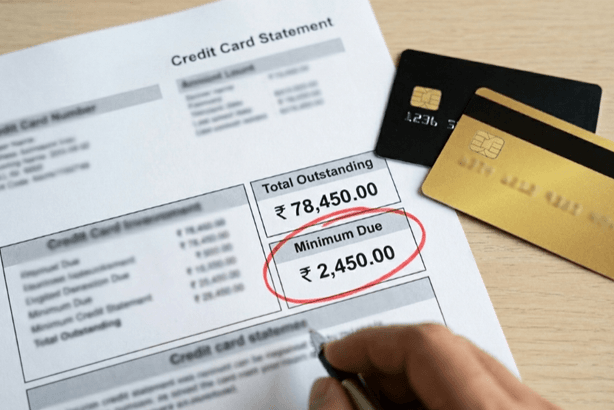
Every month, your bank sends you a credit card bill. This bill shows your total outstanding amount — everything you owe. But it also shows a smaller number called the "Minimum Amount Due" or "Minimum Due."
The minimum due is the smallest amount you need to pay to keep your account in good standing. If you pay this amount, you will not get a late payment penalty. Your account will also not be marked as defaulted.
It sounds helpful. And for a very short term it is. But paying only the minimum every month is a habit that can quietly become a big problem.
Simple example: Your credit card bill this month is ₹20,000. The minimum due shown is ₹1,000. You pay ₹1,000 and feel okay. But the remaining ₹19,000 is still sitting there — and interest is being charged on it every single day.
How is Minimum Due Calculated?
Different banks calculate minimum due slightly differently. But in India, most banks follow a similar formula.

FREED Expert Tip
If you have been paying only the minimum due for 3 or more months in a row, your debt is growing silently. Check how much you actually owe today using our Debt Calculator
Enroll NowWhat Happens When You Pay Only the Minimum Due?
When you pay only the minimum, the bank does two things that work against you.
First, they charge interest on the remaining balance. Credit card interest in India is typically 3% to 3.5% per month. That comes to 36% to 42% per year. This is much higher than a personal loan or home loan.
Second, your credit utilisation stays high. This means your credit score slowly starts to fall. A falling credit score makes it harder to get loans in the future.
If You Pay Full Bill
- No interest charged at all
- Debt clears in one month
- Credit score stays healthy
- You are in full control
If You Pay Only Minimum
- 36–42% interest charged on balance
- Debt keeps growing every month
- Credit score starts dropping
- Debt can last for years
The Real Cost With an Example
Let us make this very real with actual numbers.
Real Example
Your credit card outstanding: ₹50,000 Interest rate: 3.5% per month (42% per year) Minimum due: ₹2,500 per month (5%)
If you pay only the minimum every month: → It will take you more than 7 years to clear this debt. → You will end up paying ₹1,30,000+ in total more than 2.5 times what you originally owed. → Your ₹50,000 balance barely goes down for the first 2–3 years.
This is not a scare tactic. This is how credit card math actually works. The bank earns a lot more when you pay only the minimum. That is why they make it so easy to do.
The hard truth is the minimum due option exists to benefit the bank, not you.
Are You in a Loan Trap? Quick Check
Move the slider to your total EMIs as a % of monthly salary. See your debt stress level instantly.
EMIs as % of Monthly Salary
Why It Feels Like a Trap
Many people fall into the minimum due trap without realising it. Here is how it usually happens.
Month 1: You spend more than expected. You pay the minimum because money is tight.
Month 2: Your bill is now higher because of added interest. You again pay the minimum.
Month 3: The bill is even higher. But you are already used to paying small amounts. The full bill now feels impossible.
By month 4 or 5, you are in a cycle. The balance never really goes down. You are just paying interest every month while the original debt stays almost the same.
Warning Sign to Watch
If your credit card balance is the same or higher than it was 6 months ago, and you have been making payments, you are in the minimum due trap. The interest is eating up your payments before they can touch the actual debt.

What the Law Says
As per RBI guidelines, banks must clearly disclose the total interest payable if you pay only the minimum due. If your bank is not showing this clearly, you have the right to ask for a full statement. You also have the right to restructure your credit card debt.
Read about your rights as a borrowerWhat Should You Actually Do?
Here are practical steps you can take starting today.
→ Always try to pay the full bill. Even if it is hard, it saves you from interest.
→ If you cannot pay full, pay as much as you can, not just the minimum. Even ₹500 more than the minimum helps.
→ Stop using the credit card for new purchases while you still have an outstanding balance.
→ Try to convert your outstanding balance into a personal loan or balance transfer card with lower interest.
→ Talk to a FREED expert. They can help you build a plan to clear your credit card debt step by step.
→ Track your credit score monthly. It tells you how your financial health is changing.
If your credit card debt is more than 3 months of your salary, it is already a serious situation. It is better to get help now than to wait.
FREED has helped thousands of people across India negotiate with banks and clear credit card debt in a structured way — without damaging their peace of mind.
About FREED
FREED is India's leading debt relief platform. We help people who are stuck in credit card debt, personal loans, and EMIs find a clear and affordable way out. Our certified experts work with you and your bank to create a plan that fits your life.
We speak your language. We understand your situation. And we have helped over 1 lakh Indians become debt-free.
1L+ Indians Helped | ₹500Cr+ Debt Resolved | 4.8★ App Rating
text
text
text
text

India's leading debt resolution platform
FREED is India's leading platform for debt settlement and financial wellness. We have helped over 60,000 Indians reduce, manage, and get completely out of debt the right and legal way.
Media Mentions