300 Credit Score Loans: What Options Do You Actually Have?
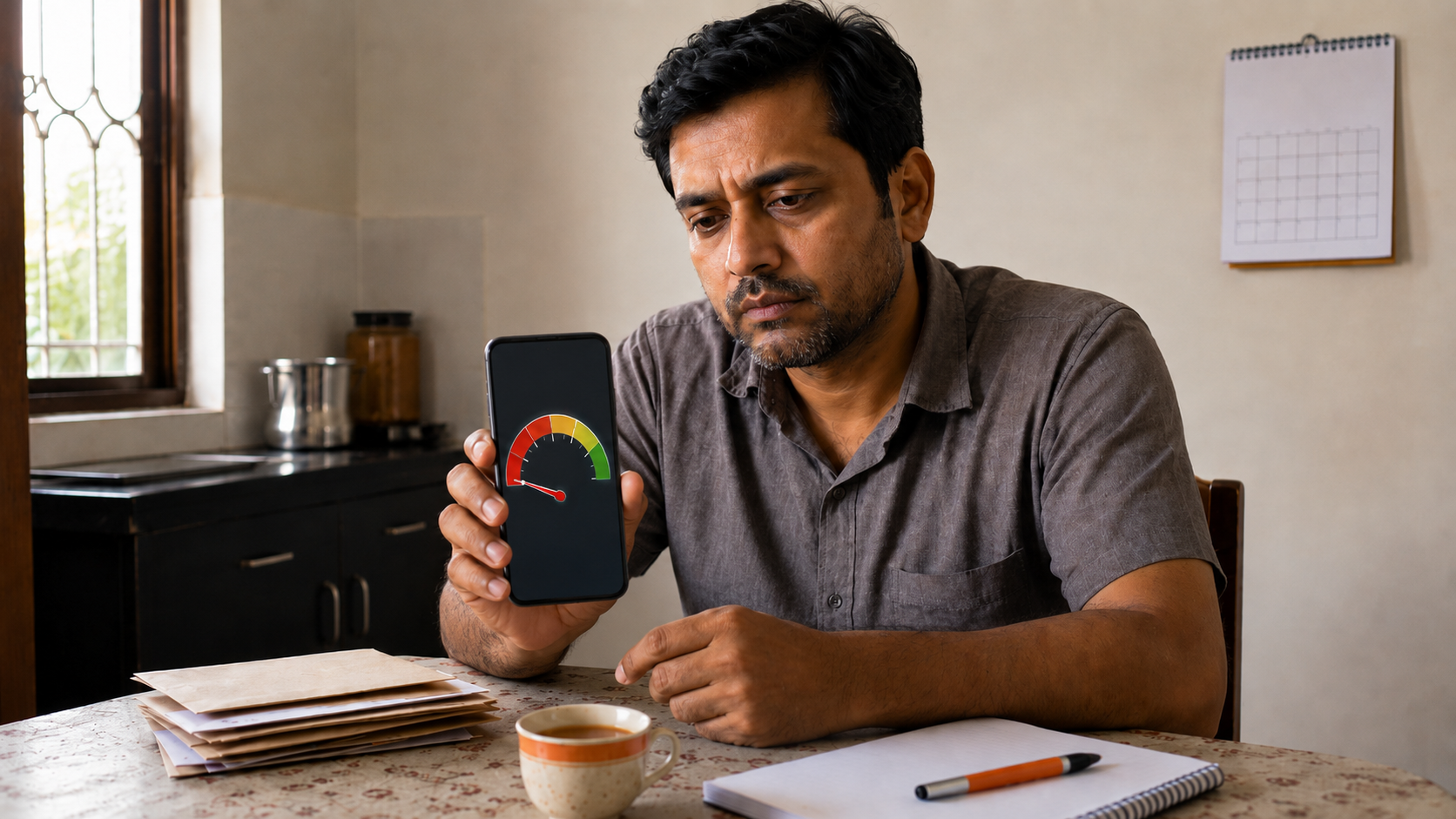
300 credit score loans are loan products offered to people whose CIBIL score sits at or near 300, the lowest point on the 300 to 900 scale. At this score, most banks and financial companies reject applications outright. A handful of NBFCs (non-bank financial companies) and fintech apps may still lend, but always at higher interest rates and smaller amounts. If your score is 300, you are in the high-risk bracket and need to understand your options clearly before applying anywhere.
Mohit Juneja
Reviewed by FREED India, Debt Resolution Specialists
 4.7/5
4.7/5 ₹3,200Cr+
 20,000+
 20,00,000+4.7/5₹3,200Cr+20,000+20,00,000+
Key Takeaways

A 300 CIBIL score sits at the absolute floor of the credit scale. Most banks will not approve a loan at this level.
NBFCs and fintech loan apps are the main sources of credit for 300 CIBIL borrowers, but interest rates are significantly higher than regular loans.
Multiple loan applications in a short period may affect how lenders assess future applications.
A score of 300 almost always points to a deeper problem: missed payments, defaults, or unsettled loans that need to be addressed before borrowing more.
Taking on additional high-interest debt when you're already struggling with repayments can increase financial stress.
What Does a 300 Credit Score Actually Mean?
The CIBIL score runs from 300 to 900. Every credit active adult in India starts somewhere on this scale.
300 is not just the low end. It is the absolute floor. Getting there takes more than one bad month. It usually means a pattern of missed EMIs over several months, credit card bills that kept rolling without payment, one or more loan accounts that slipped into default, or a combination of these.
Many banks may prefer applicants with stronger credit profiles, although eligibility varies by lender. Below 549, the chance of approval from a traditional bank is close to zero.
If your score is at 300, that history is showing up on every report a lender pulls. They are not guessing. They are reading what actually happened over the last few years.
This is not about character. It is about math. A low score tells lenders that repayment risk is high. That is the only thing the number measures.
Understanding that is the first step to doing something about it.
Why Does a Loan Get Rejected When Your CIBIL Score Is 300?
Banks are not punishing you. They are doing a risk calculation.
When a bank or NBFC pulls your credit report, they are looking for evidence that you have repaid loans consistently in the past. Payment history is widely considered the single biggest factor in how a CIBIL score is calculated, though the exact weightage isn't publicly disclosed and can vary by bureau and scoring model.
At a score of 300, that repayment record is showing significant gaps. A few missed EMIs across several months, credit card dues that kept growing, or an account that slipped into default, any of these will register. Together, they tell the lender that there is a meaningful chance this loan will not be repaid either.
Banks and NBFCs also look at how much of your available credit you have already used. High credit usage, meaning consistently using most or all of your credit card limit, pulls the score down alongside missed payments.

FREED Expert Tip
If a large share of your take-home salary is already committed to EMIs, taking a new loan will make things harder, not easier. Talk to a counsellor before applying anywhere.
Talk to a FREED ExpertLoan Options Available for a 300 CIBIL Score
Getting a loan at 300 is possible in some cases, but the terms are different from what a regular borrower sees.
- 1
NBFC personal loans
Some NBFCs are willing to look beyond the CIBIL score and assess income, employment type, and cash flow instead. Loan amounts in this category typically range from Rs 5,000 to Rs 2 lakh. Interest rates are higher than standard personal loans, which usually run 10 to 15% per annum for borrowers with healthy scores. Rates for low-CIBIL borrowers from NBFCs
- 2
Fintech and loan apps
Several RBI-registered fintech platforms offer small loans by assessing income and bank statement patterns rather than relying purely on CIBIL. Amounts are typically small and tenures short. Before applying to any app, verify that it is registered with the RBI. Unregistered loan apps carry high risk, especially for borrowers with fewer options.
- 3
Gold loans
Banks and NBFCs offer loans against gold jewellery or coins. The CIBIL score is often not the primary criterion here since the gold acts as security. The key risk: if you are unable to repay, the pledged gold will be taken. Consider this carefully before going this route.
- 4
Loan against fixed deposit
If you have an existing FD with a bank, you can borrow up to 90% of its value at a relatively low interest rate. CIBIL score is typically not the deciding factor. The risk is that your FD is locked as collateral and may be forfeited if repayment fails. No specific bank or platform is recommended here. Terms change. Always

Already struggling with existing loans?
A new loan may not fix it. Talk to a FREED counsellor and understand your real options
Get My Free AssessmentWhat Caused the 300 Score? Understanding the Root Before Borrowing More
Before applying anywhere, it is worth pausing on one question: will a new loan actually help?
A score of 300 almost always reflects a pattern over time, not one bad event. Your EMIs may have started slipping a few months ago. A credit card bill may have kept rolling for longer than expected. One account may have gone into deep default. These are not small setbacks. They are signs that the current debt load has become difficult to manage.
Adding a new high-interest loan on top of existing unpaid debt does not fix the underlying problem. It adds a new monthly obligation to a pile that is already too heavy. If the first loans became hard to pay, a smaller loan at a higher rate is likely to follow the same path.
Payment history makes up roughly 35% of a CIBIL score. High credit utilisation may affect how lenders assess your credit profile. A score of 300 usually reflects both factors over a sustained period.
None of this is said to discourage. It is said so you can act with a clear picture. Sometimes the right next step is getting a small loan to cover a genuine emergency. But sometimes the real answer is addressing what already exists, before adding anything new.
If you are unsure which situation you are in, a counsellor can help you see it clearly.

What the Law Says
Under RBI's Fair Practices Code, banks must communicate the main reason for rejecting a loan application in writing, for loan amounts below Rs. 2 lakh. For larger loan amounts, the same principle is increasingly expected of lenders, though the formal written-reason requirement was specifically introduced for smaller-ticket loans. Source: RBI guidelines on Fair Practices Code (rejection reasons for loans under Rs. 2 lakh) - https://www.buddyloan.com/blog/rbi-guidelines-on-personal-loan-and-digital-lending
Book A Free CallHow to Rebuild Your CIBIL Score From 300
Getting from 300 to 750 takes time. Realistically, 1 to 2 years of consistent behaviour. There are no shortcuts. But the steps are not complicated.
1. Download Your CIBIL Report
Check for errors, wrong account entries, or settled accounts still showing as overdue. Under RBI's rules, disputes must be resolved within 30 calendar days. A mistake on your report is pulling your score down for no reason.
2. Stop All New Loan Applications Immediately
Every application creates a hard inquiry mark on your report. Multiple loan applications in a short period may affect future lending assessments. Pause all applications while you address the current situation.
3. Pay All Overdue EMIs First
Even partial clearance helps. Full clearance of a missed EMI helps bring the account back into good standing. Prioritise overdue accounts before anything else.
4. Keep Credit Card Usage Below 30% of the Limit
If you have an active credit card, do not use more than 30% of the available limit per month. Consistent low usage over several months will show improvement.
5. Set Up Auto-Pay for All Active Loans
A single missed payment can drop a score by 50 to 100 points. Automating payments removes the risk of slipping again due to a busy month or a forgotten date.
Consistent on-time payments over 6 to 12 months will show measurable improvement. Getting to 750 from 300 will take longer, but the direction changes as soon as consistent payment behaviour begins.
When a New Loan Is Not the Answer: What Else Can You Try?
If the real problem is existing debt you cannot repay, a new loan is not always the answer. There are softer options to try first.
- 1
Talk to your bank directly
Banks have options for borrowers going through a rough patch. You can ask for a revised repayment plan, a temporary reduction in EMI, a longer repayment time, or in some cases a short payment pause called a moratorium. These do not always get advertised. You have to ask.
- 2
Look at debt consolidation
If you are still paying EMIs but struggling to keep up with multiple loans, consolidation may help. It merges all your unsecured loans into one, with one EMI on one date. FREED's Loan Consolidation Plan (also called "Reduce My EMI") does exactly this for eligible borrowers who are still current on their payments. It can meaningfully reduce total monthly outflow
- 3
Settlement only if repayment has become genuinely impossible
Settlement is not something a borrower chooses out of preference. Banks and financial companies only consider it when you are in genuine financial difficulty and are truly unable to repay the full amount. It is a last resort, not a shortcut. If you have exhausted other options and an unsecured loan remains unpaid despite your best efforts, settlement is worth
How Loan Settlement Helps When Repayment Has Become Impossible
Loan settlement means paying a one-time amount, less than the total outstanding, to close an unsecured loan account. The bank or financial company accepts this as full and final payment.
For someone already at a score of 300, with loans in deep default, the CIBIL damage has typically already happened. Settlement does not make it significantly worse. What it does is resolve the unpaid account so it stops accumulating more damage.
The settled account will show a "Settled" status on your CIBIL report. This mark stays for up to 7 years. It tells future lenders that the loan was not fully repaid. That affects your ability to borrow during that period.
FREED helps borrowers settle their unpaid/overdue loans at up to 50% less*. FREED helps by handling the back-and-forth with the bank, preparing documents, and following the process through to the settlement letter. FREED covers unsecured loans only: personal loans, credit cards, BNPL, and loan apps. Home loans and car loans are not covered.
If a bank refuses to settle, FREED does not charge a service fee and refunds the initial evaluation fee.
Are You in a Loan Trap? Quick Check
Move the slider to your total EMIs as a % of monthly salary. See your debt stress level instantly.
EMIs as % of Monthly Salary
Not sure what to do next?
A free call with a FREED counsellor takes 15 minutes and gives you a clear direction.
Book A Free CallTips for Getting Through This Without Making It Worse
Loan Type | Who Offers It | Approximate Amount | CIBIL Score Required | Key Risk |
Unsecured Personal Loan | NBFCs and fintech apps | Rs 5,000 to Rs 2 lakh typically | 300+ considered by some | High interest rate |
Gold Loan | Banks and NBFCs | Based on gold value | Often score-independent | Gold pledged; at risk if not repaid |
Loan Against Fixed Deposit | Banks | Up to 90% of FD value | Often score-independent | Requires an existing FD |
Credit Builder Loan | Some NBFCs | Small amounts only | Designed for low scores | Primarily for rebuilding, not large needs |
FREED is not a loan provider. This table is for general awareness only. Verify all terms directly with the bank or financial company before applying.
- 1
Do not borrow from unregistered loan apps.
Before downloading any loan app, check the RBI's Digital Lending Apps directory to confirm it's linked to a registered bank or NBFC. Unregistered platforms often charge illegal rates, use aggressive recovery tactics, and have no regulatory oversight. The risk is highest precisely when your options feel most limited.
- 2
One rejection does not mean apply to five more.
Every new application leaves a hard inquiry on your report. Multiple applications in a short period may reduce your chances of approval with future lenders. Stop, assess, then act.
- 3
If you must borrow, borrow the minimum.
Take only what you need for an immediate necessity. A smaller loan at a high rate is more manageable than a larger one. More debt on top of existing debt is only justified if the new loan directly solves the underlying problem.
- 4
Clear existing defaults before taking anything new.
A new loan will not help your score if old accounts are still showing missed payments. Before applying anywhere, it's worth knowing exactly what's dragging your score down. FREED's Credit Insights will help you understand reasons for your credit score being low and give you personalised actionable insights so that you can improve your credit score

Mohit Juneja
Mohit Juneja writes educational content at FREED on debt management, credit scores, loan repayment, and borrowing best practices. His content is shaped by expert insights and industry knowledge, helping readers better understand their financial options and make informed decisions.
mohit.juneja@freed.care

FREED is India's trusted loan management platform. Founded in 2020 and headquartered in Gurugram, FREED has counselled 20 lakh+ people on personal loans, credit cards, and app loans. FREED charges fees only on successful settlement, not upfront. FREED does not handle secured loans (home loans, car loans, gold loans).
Media Mentions