Use your credit card like a wiseman see how
Give the same credit card, the same limit, the same rewards programme, to two different people, and a year later one has earned cashback and paid zero interest, while the other is carrying a balance that has quietly grown every month. The card was identical. The habits were not. Here is what the first person is actually doing differently.
Mohit Juneja
Reviewed by FREED India, Debt Resolution Specialists
 4.7/5
4.7/5 ₹3,200Cr+
 20,000+
 20,00,000+4.7/5₹3,200Cr+20,000+20,00,000+
Key Takeaways

A credit card's outcome, genuinely free and rewarding, or a source of accumulating interest, depends almost entirely on the specific habits of the person using it, not on the card's features or limit itself.
The single most important habit is paying the full statement balance every month without exception, since this one decision determines whether the grace period exists at all and whether any interest is ever paid.
Treating the credit limit as a ceiling rather than a spending target, reading the statement in full rather than only the due amount, and automating the payment are the habits that most reliably prevent a card from quietly becoming a source of debt.
A wise credit card user treats rewards, cash advances, and new card applications as secondary decisions, evaluated on their own specific merits, never as the primary reason to spend, borrow, or apply.
If a card has already moved past being a well managed tool, carrying a balance that no longer clears, FREED can help address that specific debt directly.
Why the Card Itself Is Never the Problem
It is tempting to think of a credit card as inherently risky or inherently safe, a product with a fixed character of its own. In practice, the exact same card, with the exact same terms, produces completely different outcomes depending entirely on the habits of the person holding it.
This matters because it reframes the entire question. The goal is not to find a "safer" card, though some products do have better terms than others, the goal is to build a specific, small set of habits that consistently produce a good outcome regardless of which specific card you hold. The ten habits below are exactly that, the practical, repeatable behaviours that separate a card used wisely from one that quietly becomes a problem.

Want a clear read on whether your own card habits are working for or against you?
Talk to a FREED Expert for free.
Connect with FREED ExpertHabit 1: Never Spend What You Have Not Already Confirmed You Have
A wise credit card user applies one simple test before any purchase, is the money to repay this already sitting in a bank account, separate from the card itself, right now.
This single question is the clearest, most reliable way to distinguish using a card as a convenient payment method from using it as a way to spend beyond your actual, current means. If the answer is yes, the card is doing exactly what it is designed to do, providing convenience, safety, and rewards on a purchase you could have made in cash. If the answer is no, the purchase is being financed, whether or not it feels that way at checkout, and deserves the same scrutiny you would give any other loan decision.
Habit 2: Pay the Full Statement, Not the Minimum, as a Fixed Rule
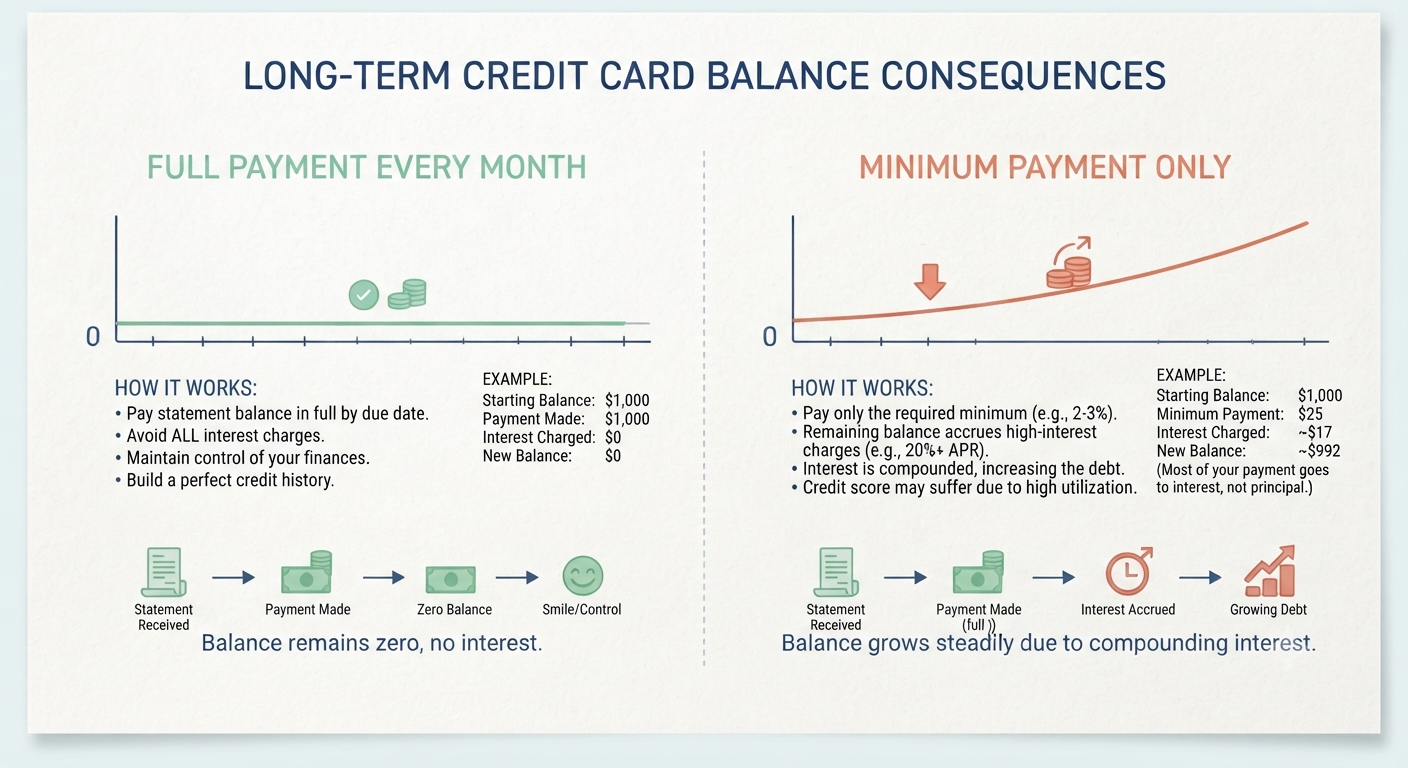
This is the single most consequential habit on this entire list, and the one that determines almost everything else about whether a card remains free to use or becomes expensive.
Paying the full statement balance every month, without exception, is what preserves the interest free grace period on every subsequent purchase. The moment even a small balance is carried over, interest begins accruing on new purchases immediately, from the date of purchase rather than the due date, and the minimum due, typically around 5% of the outstanding, does almost nothing to actually reduce what is owed while interest at 36 to 42% per year continues compounding on the rest.
Treat "pay the full statement" as a fixed rule with no exceptions, the same way you would treat rent or an EMI, rather than a target to hit only when convenient.
Habit 3: Treat the Credit Limit as a Ceiling, Never a Budget
A wise user understands, clearly and consistently, that a credit limit reflects the bank's own risk assessment, not their personal budget or actual repayment capacity. Spending up to a limit simply because it is available is one of the most common and quiet paths into debt.
Beyond the immediate risk of overspending, consistently using a large share of the available limit, credit utilisation, actively damages your CIBIL score, independent of whether payments are made on time. Keeping utilisation below 30% of the total limit, ideally lower, is a specific, deliberate habit, not something that happens automatically simply because the limit exists.
Habit 4: Use Rewards as a Bonus, Never as a Reason to Spend
Cashback and reward points are genuinely valuable, but only in a specific, narrow sense, as a bonus on a purchase that was already planned and budgeted, one that will be paid off in full regardless.
A wise user never lets a reward rate justify a purchase that would not otherwise have been made, and never carries a balance to "keep earning rewards," since interest at 36 to 42% per year overwhelms almost any reward rate, typically 1 to 5%, many times over. The specific test worth applying: would I make this exact purchase if there were no reward attached at all? If the honest answer is no, the reward is driving the decision rather than genuinely supplementing it.
Habit 5: Read the Statement Every Month, Not Just the Due Amount
Many card users glance only at the total due and the due date each month, without actually reading the full statement, which means unauthorised charges, incorrect fees, or a creeping utilisation trend can go unnoticed for months.
A wise user spends five minutes each month actually reading the statement, confirming every listed transaction is recognised, checking that no unexpected fee has appeared, and noting the current utilisation percentage specifically, not just whether the bill has been paid. This habit catches problems early, when they are still a quick, easy fix, rather than months later when a dispute window may have already closed.
Not sure what to actually look for on your own statement each month?
Talk to a FREED Expert for free.
Talk to a FREED ExpertHabit 6: Keep the Card Active but Rarely Idle
A card that sits completely unused for many months can, in some cases, be closed by the issuing bank due to inactivity, which then reduces your total available credit and can shorten your average credit history length, both of which can quietly lower your score.
A wise user keeps even a rarely used card lightly active, a single small, planned purchase every couple of months, paid in full immediately, specifically to preserve the account's positive contribution to credit history and total available limit, rather than either overusing it or abandoning it entirely.
Habit 7: Know Exactly What a Cash Advance Actually Costs Before Ever Using One
A wise user treats a credit card cash advance as fundamentally different from a purchase, understanding specifically that it carries no grace period, interest starts from the moment of withdrawal, and typically involves a separate cash advance fee of 2.5 to 3% charged immediately.
This specific knowledge is what allows a wise user to reserve cash advances for a genuine last resort, when no cheaper alternative genuinely exists, rather than reaching for one out of convenience, since the true cost, understood clearly in advance, makes the decision considerably easier to evaluate honestly in the moment it actually arises.
Are You in a Loan Trap? Quick Check
Move the slider to your total EMIs as a % of monthly salary. See your debt stress level instantly.
EMIs as % of Monthly Salary
Habit 8: Space Out New Card Applications Deliberately
A wise user does not apply for a new credit card impulsively, whether prompted by an attractive sign up offer or a moment of feeling that "one more card" would be convenient, without first considering the impact of the resulting hard enquiry.
Each new application causes a modest, temporary score dip and adds a new account to actively manage. Spacing applications at least 6 months apart, and applying only when a genuine, specific need exists, a particular reward structure that fits actual spending patterns, for instance, keeps this specific factor working for rather than against an overall credit profile.
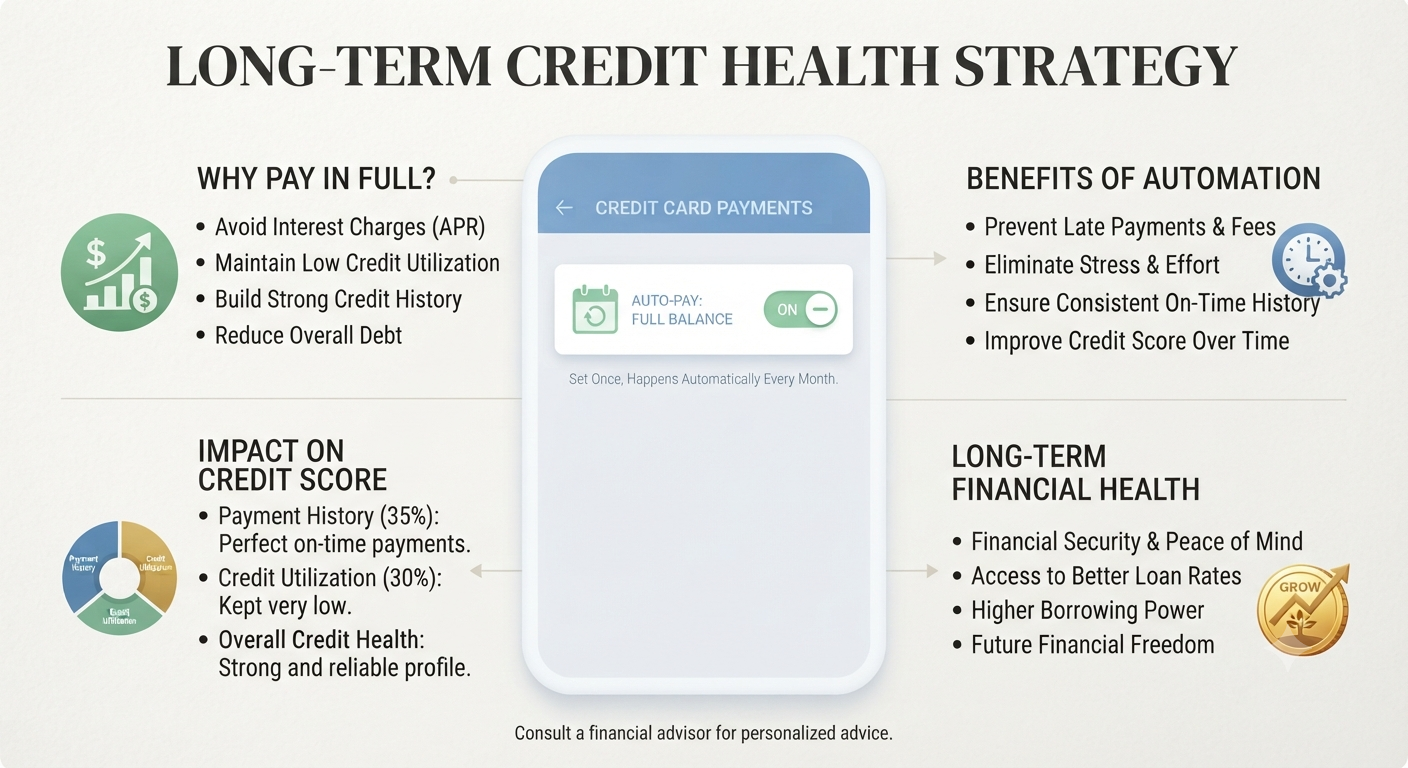
Habit 9: Automate the Payment So Willpower Is Never the Deciding Factor
A wise user does not rely on remembering to pay the full statement manually each month, since even the most disciplined person has a busy or difficult month where a manual payment could be missed or delayed.
Setting up auto-debit for the full statement balance specifically, not just the minimum due, removes this risk entirely. This single structural change is what makes Habit 2, paying in full every month, something that happens reliably by default, rather than something that depends on remembering and deciding correctly every single billing cycle.
[IMAGE — Place directly after "Habit 9" section, before Habit 10 begins]
Prompt: A simple flat-design illustration of a smartphone banking app screen showing a toggle switch clearly set to "ON" next to a label representing auto-debit for full statement balance, with a small calendar icon beside it showing a recurring monthly cycle symbol. Clean, minimal, soft blue and green colour palette, no dense or realistic UI text, designed to communicate "set once, happens automatically every month" at a glance.
Habit 10: Review the Whole Relationship With the Card Once a Year
Beyond the monthly statement check in Habit 5, a wise user sets aside time once a year to review the card relationship as a whole, is the reward structure still the best fit for current spending patterns, has the annual fee, if any, remained worth its benefit, and is the credit limit still appropriate relative to current income and other obligations.
This annual review is also the point to confirm that Habits 1 through 9 are all still genuinely being followed, since habits can quietly slip over time without a deliberate, periodic check confirming they remain intact.

What the Law Says
Under RBI's Fair Practices Code, credit card issuers are required to disclose all fees, interest rates, and terms clearly, both at the time of issuance and in every monthly statement. A wise user makes active use of this right, requesting and reading the Most Important Terms and Conditions document specifically, rather than assuming the headline terms advertised at application represent the complete picture of the card's actual cost structure.
Settle My LoansWhat This Looks Like Over a Full Year
Applied together, these ten habits produce a specific, observable pattern across twelve months, a full statement balance paid every month without exception, utilisation consistently kept below 30%, rewards earned as a genuine bonus on planned spending, no cash advances used except in a genuine emergency, and a credit score that steadily improves as a natural consequence, rather than something separately, anxiously monitored.
This is, in practical terms, what "using a credit card wisely" actually means, not a single clever trick, but ten small, specific, repeatable habits that, applied consistently, reliably produce a considerably better outcome than the same card used without this deliberate structure.
When the Card Has Already Stopped Behaving Like a Tool
For someone whose card currently carries a balance that has not cleared in some months, these ten habits remain the right long term framework, but the immediate priority shifts specifically to clearing the existing balance first, since interest continues accruing on it regardless of how well future spending is managed.
If this describes your current situation, and the existing balance feels genuinely difficult to clear through disciplined repayment alone, particularly if it is one of several accounts in a similar position, a more structured approach may be considerably more effective than continuing to apply these habits around a debt that keeps growing faster than it can be paid down.
FREED's Debt Consolidation Program combines multiple credit card balances into one lower interest loan with a single, manageable EMI, creating the conditions under which these ten habits can actually be applied going forward without an existing balance working against them.
FREED's Debt Resolution Program negotiates a reduced settlement for credit card debt that cannot realistically be repaid in full, on average 56% less than the original outstanding.
A free consultation can assess your specific situation and confirm the most effective path back to using your card the way it is genuinely designed to be used.
Ready to get your credit card back to working for you, not against you?
Talk to a FREED Expert for free.
Talk to a FREED Expert
Mohit Juneja
Mohit Juneja writes educational content at FREED on debt management, credit scores, loan repayment, and borrowing best practices. His content is shaped by expert insights and industry knowledge, helping readers better understand their financial options and make informed decisions.
mohit.juneja@freed.care

FREED is India's trusted loan management platform. Founded in 2020 and headquartered in Gurugram, FREED has counselled 20 lakh+ people on personal loans, credit cards, and app loans. FREED charges fees only on successful settlement, not upfront. FREED does not handle secured loans (home loans, car loans, gold loans).
Media Mentions