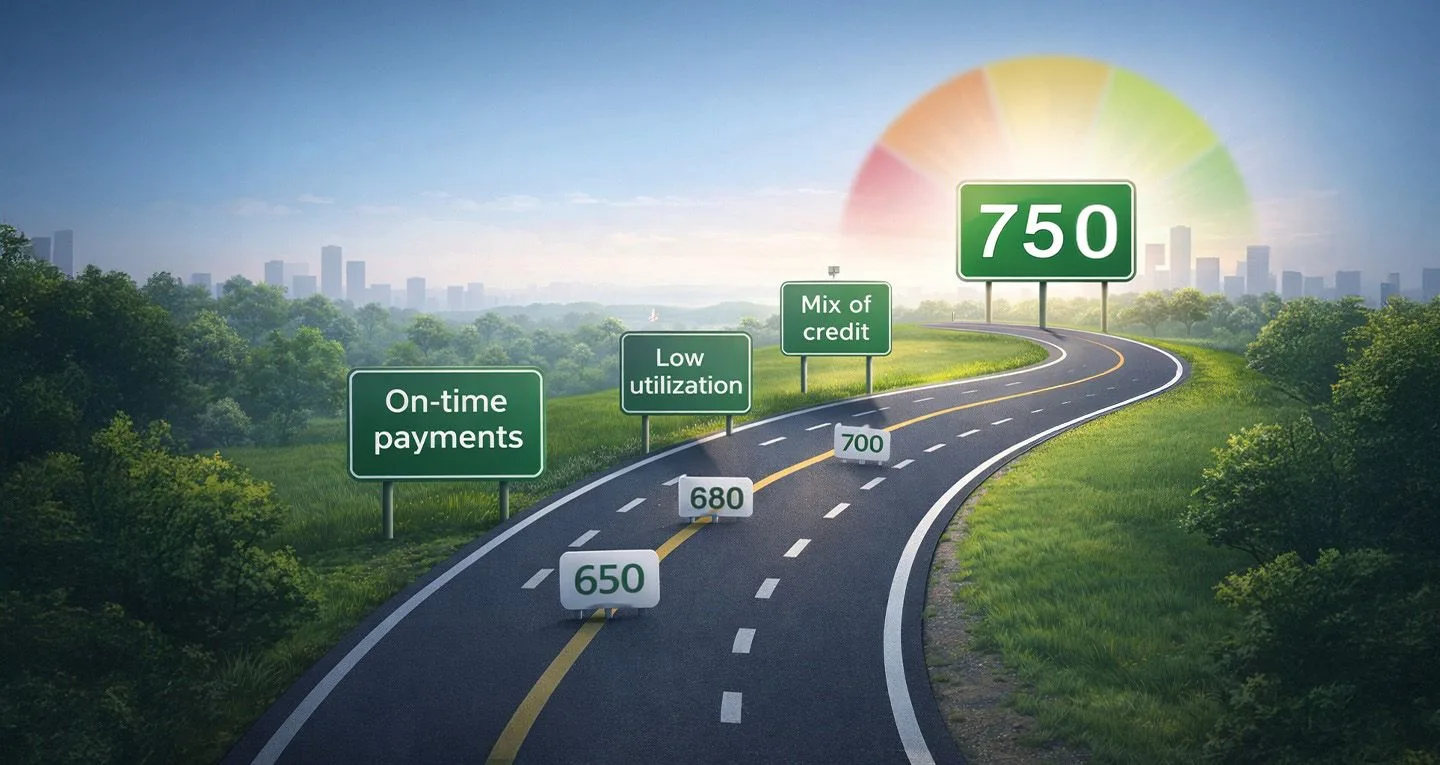
Rebuilding Credit: Steps to Regain Financial Strength
A damaged credit score is not a permanent condition. It is a recoverable one. Here is the complete, step-by-step plan for rebuilding credit and financial strength after defaults, missed payments, or debt settlement in India.
Mohit Juneja
Reviewed by FREED India, Debt Resolution Specialists
 4.7/5
4.7/5 ₹3,200Cr+
 20,000+
 20,00,000+4.7/5₹3,200Cr+20,000+20,00,000+
Key Takeaways

Credit rebuilding after defaults, missed payments, or debt settlement in India follows a consistent, predictable pattern. The speed depends on the severity of the damage and the consistency of positive behaviour after it.
The most important single action is paying every active obligation on time, every month, without exception. This builds positive payment history month by month on top of the negative history.
A secured credit card against a fixed deposit is the most accessible and effective tool for building positive credit history from a damaged starting point.
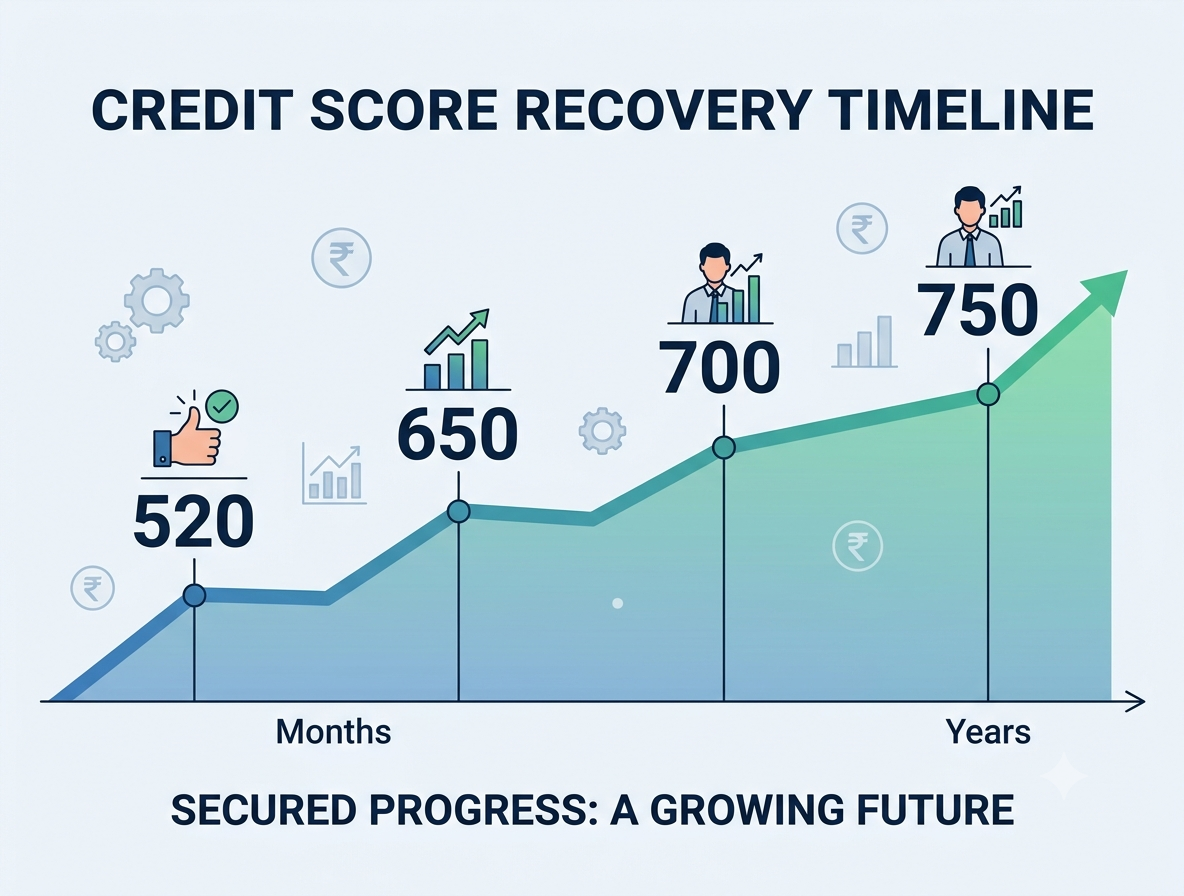
Most people who maintain consistent positive behaviour after debt resolution cross 650 within 12 to 18 months, 700 within 24 to 36 months, and approach 750 within 3 to 5 years.
FREED provides credit score monitoring, bureau dispute support, and rebuilding guidance throughout and after the resolution programme.
Why Credit Rebuilding Takes the Time It Takes
The CIBIL score is a weighted summary of credit behaviour over time. Negative marks (missed payments, high utilisation, defaults) are added to the report and reduce the score when they occur. Positive marks (on-time payments, low utilisation) accumulate month by month and gradually reduce the weight of the negative history.
This is why credit rebuilding takes months to years rather than days to weeks. The negative marks cannot be erased (unless they are errors). They can only be progressively outweighed by positive history added on top of them. The time required depends on how many negative marks exist and how consistently positive behaviour is maintained after they were made.
Understanding this removes the temptation to look for shortcuts (paid credit repair services that promise rapid score improvement, strategies that circumvent the standard credit history process). No shortcut exists. The only path is consistent, positive financial behaviour over a sufficient period.
What determines how long it takes: the severity of the damage (number of missed payments, whether NPA or settlement occurred, how recent the negative marks are), and the consistency of the positive behaviour that follows.
Step 1: Address the Underlying Debt First
If the credit score is damaged because of ongoing debt that is causing continued missed payments and high utilisation, the score cannot improve while the debt problem continues. The score rebuilding clock does not start until the underlying debt is resolved.
For people in FREED's Debt Resolution Programme, the rebuilding begins after each settlement is completed. For people who have self-managed through debt repayment, rebuilding begins when the high-interest balances are cleared and obligations are manageable within income.
If debt is still the active problem, FREED's free consultation identifies the right resolution path. Once resolved, the steps below apply.
Step 2: Verify All Accounts Are Correctly Reported
The first rebuilding action is ensuring the credit report accurately reflects the current situation.
Pull the full CIBIL report from the official website or through FREED Credit Insights. Review every account entry.
For settled accounts: confirm the account shows "Settled" status, not "Outstanding" or "Overdue." If incorrectly reported, raise a formal dispute with CIBIL immediately. Under the Credit Information Companies (Regulation) Act, bureaus must investigate and respond within 30 days.
For fully closed accounts: confirm they show "Closed" or "Settled" and not still active with balances.
For active accounts: confirm payment history is correctly recorded. Any payment marked as missed when it was made on time is an error that should be disputed.
Correcting errors is the only action that can improve the score without any change in financial behaviour, and it can produce improvement within 30 to 60 days.

Legal Note
Under RBI guidelines and the Credit Information Companies (Regulation) Act, you have the legal right to dispute any inaccurate information on your credit report. Bureaus must investigate within 30 days. If the bureau does not respond or fails to correct a confirmed error, escalate to the RBI Banking Ombudsman at bankingombudsman.rbi.org.in.
Know your credit rightsStep 3: Open a Secured Credit Card
A secured credit card is the most accessible and most effective credit rebuilding tool in India after significant credit damage.
Why it is accessible: issued against a fixed deposit with a limit equal to or below the deposit amount, approval does not depend on the current CIBIL score. The bank's risk is covered by the deposit.
Why it is effective: from the first month of correct use, it generates positive payment history on the CIBIL report. This is new, positive credit behaviour being recorded month by month, building the positive track record that outweighs the older negative history over time.
How to get one: approach any major Indian bank with a savings account and request a secured credit card against a fixed deposit. Most banks require a minimum FD of Rs. 10,000 to Rs. 25,000. Approval is typically within a few days.
The fixed deposit continues to earn interest. The secured card is the rebuilding tool. Both coexist.

FREED Expert Tip
Open the secured credit card as soon as possible after the debt resolution is complete. The rebuilding clock starts from the first month the card is used and paid correctly. Waiting six months before opening the card is six months of rebuilding time lost. Start immediately.
Talk to a FREED Counsellor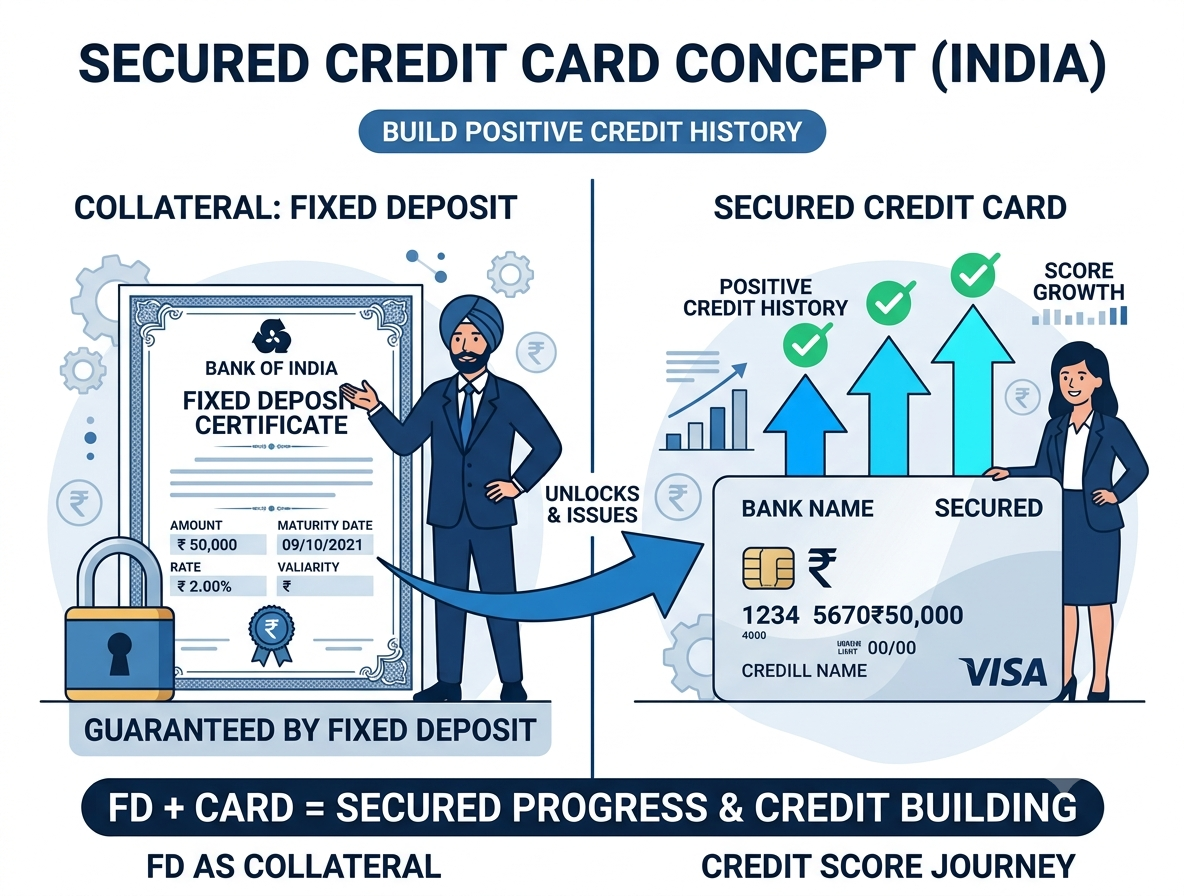
Step 4: Use It Correctly from the First Month
Having the secured card is not enough. Using it correctly is what builds the credit history.
One or two small, planned purchases per month: groceries, a utility bill, a monthly subscription that is already in the budget. Not all discretionary spending. Targeted, specific use.
Pay the full outstanding balance before the due date every month. Not the minimum. The full amount. This establishes the most important credit factor (payment history) with a perfect record from the first month and keeps utilisation low.
Keep the monthly spending below 30% of the card's limit. If the limit is Rs. 20,000, keep monthly charges below Rs. 6,000. High utilisation suppresses the score even when payments are on time.
Set up auto-pay for the full statement balance if the bank allows it. This eliminates missed payment risk from the equation entirely.
Step 5: Automate All Remaining Obligations
While the secured card builds new positive history, all remaining active obligations must be paid on time without exception.
If any personal loans or other credit obligations exist after the debt resolution, every EMI must be paid on time every month. A single missed payment during the rebuilding period resets several months of positive progress and extends the timeline significantly.
Set up auto-debit or standing instructions for every remaining obligation, set to trigger 2 to 3 days before the due date. The 2 to 3 day buffer accounts for bank processing time and ensures the payment is recorded as on-time.
Set a phone calendar reminder seven days before each due date as a verification check: confirm the account balance covers the EMI and adjust if needed.
Step 6: Keep Utilisation Below 30%
For all active credit products, including the secured credit card and any remaining credit cards, keep the combined outstanding balance below 30% of the combined available credit limit.
Utilisation is recalculated every time a billing statement is generated. It is one of the fastest-moving factors in the score and one of the most directly controllable.
Three specific actions keep utilisation healthy during rebuilding:
Pay the credit card balance before the billing statement date (not just before the due date) to reduce the utilisation recorded that month.
Request a credit limit increase on the secured card after 12 to 18 months of clean payment history, without increasing spending. This reduces utilisation mechanically.
If any old credit card accounts remain open (from before the debt difficulty), keep them open and use them occasionally for small purchases, paid immediately. This maintains the available credit and the credit age.
Step 7: Avoid New Hard Enquiries
Every new credit application triggers a hard enquiry on the CIBIL report. Each enquiry temporarily reduces the score. Multiple enquiries in a short period create a visible pattern of financial stress.
During the rebuilding period, avoid applying for any new credit product unless genuinely necessary. Space any required applications at least three to six months apart. If an application is declined, do not apply again immediately: the declined application already has the hard enquiry cost. Wait for the score to improve before reapplying.
The rule of thumb: do not apply for any unsecured credit product until the CIBIL score has reached at least 650. Below this, approval is unlikely, and declined applications add hard enquiry damage without benefit.
Step 8: Add a Second Credit Type at the Right Time
After 12 to 18 months of consistent positive behaviour with the secured credit card, and once the score has reached 680 or above, consider adding a second credit type to improve credit mix.
Credit mix is a factor in the CIBIL score: having both secured or deposit-backed credit and a genuine loan demonstrates the ability to manage different credit types. A small consumer durable loan (for a laptop, appliance, or home item genuinely needed), a two-wheeler loan for commuting, or another accessible credit product serves this purpose while also meeting a genuine need.
The second credit type should: serve a genuine purpose, keep FOIR below 40%, and be managed with on-time payments throughout its tenure.
Do not take the second credit type purely for score improvement purposes. It should be needed. The credit mix benefit is a secondary advantage.
Step 9: Monitor the Score Quarterly
Rebuilding is a process with a trajectory. Monitoring it quarterly allows verification that the process is working and identification of any specific factor that is unexpectedly suppressing the score.
Check FREED Credit Insights every three months. Note the score and the specific factors shown. Confirm payment history is recording correctly. Confirm utilisation is in the right range.
If the score is not improving as expected after 6 to 9 months of consistent positive behaviour, the report will reveal what is preventing it: an error that was not noticed, an old account still incorrectly marked, unexpectedly high utilisation, or a hard enquiry from an unintended application.
The Realistic Timeline
The rebuilding timeline follows a consistent pattern for most people who maintain positive behaviour throughout.
Months 1 to 3: Score stabilises. New positive payment history begins to appear on the report. No dramatic movement yet but the foundation is being laid.
Months 3 to 9: First visible score improvement. Positive payment history from the secured card begins to carry weight. Score typically rises by 30 to 60 points from the post-settlement low.
Months 9 to 18: Meaningful recovery. A score that started at 520 after settlement is typically in the 580 to 650 range at this point with consistent behaviour. The upward trend is visible.
Months 18 to 36: Significant recovery. Most people who maintain consistent behaviour cross 650 to 680 in this window. A second credit type added within the first 12 months and managed correctly contributes meaningfully.
Years 3 to 5: Most people who maintain consistent behaviour reach 700 or above. Home loans begin to become accessible again, initially with NBFCs and eventually with major banks. The "Settled" remark is still on the report but carries progressively less weight as positive history accumulates.
Years 5 to 7: The "Settled" remark ages toward its 7-year limit from the date of first default. By this point, most people with consistent positive behaviour have reached 750 or above and have full access to mainstream credit products.
Are You in a Loan Trap? Quick Check
Move the slider to your total EMIs as a % of monthly salary. See your debt stress level instantly.
EMIs as % of Monthly Salary

Mohit Juneja
Mohit Juneja writes educational content at FREED on debt management, credit scores, loan repayment, and borrowing best practices. His content is shaped by expert insights and industry knowledge, helping readers better understand their financial options and make informed decisions.
mohit.juneja@freed.care

FREED is India's trusted loan management platform. Founded in 2020 and headquartered in Gurugram, FREED has counselled 20 lakh+ people on personal loans, credit cards, and app loans. FREED charges fees only on successful settlement, not upfront. FREED does not handle secured loans (home loans, car loans, gold loans).
Media Mentions