6 Practical Ways to Control Overspending Right Now
Six strategies to prevent overspending include keeping track of expenditures, using cash rather than credit cards, and paying off debt from impulsive purchases. Easy money advice.
Mohit Juneja
Reviewed by FREED India, Debt Resolution Specialists

 4.7/5
4.7/5 ₹3,200Cr+
 20,000+
 20,00,000+4.7/5₹3,200Cr+20,000+20,00,000+
Key Takeaways

Understanding overspending correctly begins with awareness rather than willpower. Overspending is typically made up of several tiny, unreported expenses that covertly exceed income rather than a single large expense.
From keeping track of every rupee to switching from credit cards to cash or debit for everyday expenses, these six strategies to reduce spending are realistic and quick.
The leaks can be found by keeping track of your budget for even a single month. Most people find that they have been spending between Rs 2,000 and Rs 5,000 without even realizing it.
The 24-hour rule, which calls for waiting a full day before making any non-essential purchases, is a straightforward budget discipline that eliminates the majority of impulsive spending without requiring any significant sacrifice.
Budgeting advice won't reverse the debt that has already been collected if overspending has already resulted in credit card or loan debt.
Why Overspending Happens - It Is Not About Willpower
The majority of overspenders are neither irresponsible nor thoughtless. They just can't see where their money is going.
Small purchases add up covertly when spending is not monitored—no budget, no monthly assessment. Today's food delivery will cost Rs 150. Rs 200 for a taxi rather than the subway. An internet impulse buy of Rs 300. A one-year auto-renewal subscription for Rs 199. None of these seem important on their own. When combined, they result in thousands of dollars in unforeseen expenses each month.
Systems, not willpower, are the answer. Developing basic routines that make wise spending choices automatic rather than needing ongoing conscious effort is the key to managing overspending.
These six strategies for reducing excessive spending are doable, quick, and don't involve major sacrifices.

CTA - Transactional
Has credit card debt increased as a result of overspending? Speak with a FREED Expert for free, and we'll assist you in finding a methodical solution.
Connect with FREED ExpertWay 1: Track Every Expense for One Month
This is the most effective thing you can do, yet most people avoid it because they find it boring.
Keep track of every expense for a full month. Each and every tea. Every ride in a car. each order placed online. each subscription fee. Everything.
Use a notebook, your phone's Notes app, or a free app like Money Manager, Walnut, or the expenditure tracker provided by your bank. The tool is irrelevant. The wholeness does.
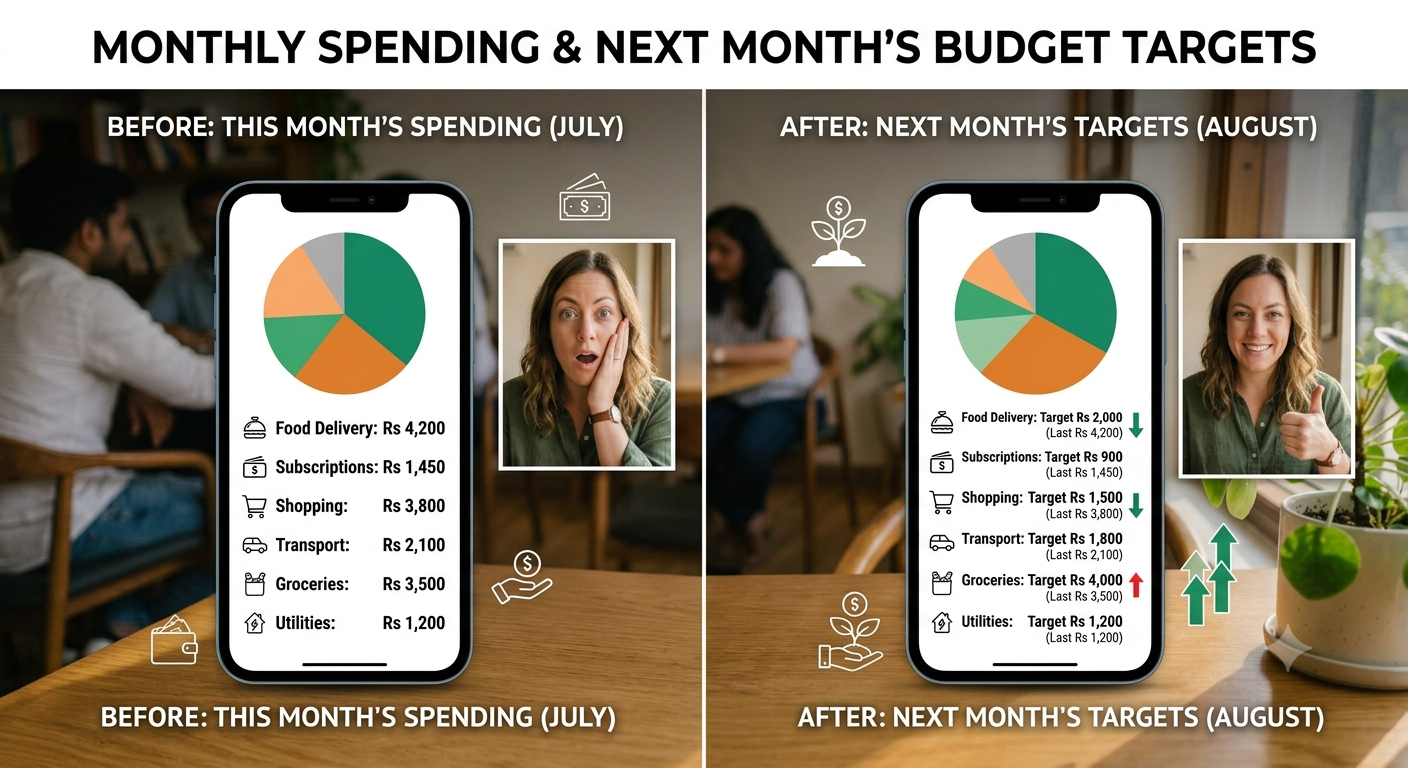
Sort your monthly expenditures into the following categories: food, transportation, entertainment, subscriptions, shopping, EMIs, and utilities. Examine the totals for each category. Compare your actual spending to what you believed it to be.
Most individuals are truly taken aback. For those who were unaware that they were placing such frequent orders, food delivery alone can cost between Rs 3,000 and Rs 5,000 per month. The entire cost of subscriptions is between Rs 1,000 and Rs 2,000. Shopping is 40–60% undervalued.
Because the figures are now clear and precise rather than unclear and abstract, this one exercise alters spending patterns for months later.
Way 2: Apply the 24-Hour Rule Before Every Non-Essential Purchase
For the majority of people, impulse buying is the primary cause of overspending. The phone has a fantastic look. Tonight is the last day of the sale. The item is already in the cart.
The 24-hour guideline is straightforward: wait 24 hours before making any non-essential purchases above Rs 300. Take a nap on it. Return tomorrow.
The majority of impulsive cravings go away in a matter of hours. At 9 AM the following day, anything that seemed urgent at 9 PM is needless or can wait. The desire to buy peaks at the time of exposure and sharply decreases within 24 hours, according to research on impulse buying.
Most people save between Rs 1,000 and Rs 3,000 a month just by following this one guideline, without making any significant behavioral changes or sacrificing their quality of life.
Use it for meal delivery, online shopping, in-store purchases, subscription upgrades, and new services. Purchase it if, after a day, it still seems reasonable. Otherwise, you simply saved that sum of money.

FREED Expert Tip
For a month, remove only the shopping applications from your phone, not the accounts. Impulsive purchases are frequently discouraged by the additional hassle of reinstalling before making a purchase. Most people report a 40–60% decrease in spending throughout that month.
Check My Financial Health ScoreWay 3: Cancel Subscriptions You Are Not Actively Using
Due to their automatic nature, subscriptions are the most undetectable type of overspending. The charge is paid mindlessly and shows up on the credit card statement.
Examine your credit card bills and bank statements from the previous three months. Enumerate all of the ongoing fees. Ask each person if they have used it actively in the past 30 days.
Common subscriptions that people forget they have include streaming services they no longer use, music applications they no longer use, news subscriptions they opened for a single item, fitness apps they downloaded and then stopped using, cloud storage plans that are greater than necessary, and software trials that automatically turned into paying plans.
Everything you haven't utilized in the past 30 days should be canceled. If you truly want it again, you can always resubscribe. From the following billing cycle, the money saved is actual and instant.
The majority of consumers discover that their unused subscriptions cost between Rs 500 and Rs 2,000 per month.
Way 4: Reduce Food Delivery and Eating Out
In a monthly budget, food is usually the biggest controllable expense. Additionally, eating the same cuisine at a restaurant or preparing it at home is far less expensive in Indian cities due to the shift to food delivery apps.
A base meal cost, a delivery fee, a platform fee, packaging fees, and a service fee are all included in the typical Indian food delivery order. Delivery of a meal that costs Rs 150 at a restaurant costs between Rs 250 and Rs 350 at home.
It costs between Rs 50 and Rs 80 to prepare the same dish at home.
Calculating over the course of a month is important. A person spends Rs 4,500 if they buy meal delivery 15 times a month for an average of Rs 300 per order. The cost of preparing those identical meals at home is between Rs 900 and Rs 1,200. Savings per month: between Rs 3,000 and Rs 3,600.
Reducing eating out and meal delivery is not the aim. Instead of relying on instinctive behavior, it aims to help them make deliberate decisions. Cook from Monday through Thursday at home. Set aside delivery or eating out for a predetermined number of times each week.
What the Law Says
For savings, credit card, or loan accounts, banks are required by RBI regulations to provide you with a full account statement at no cost upon request. You can ask for an itemized statement and challenge any costs you find-such as platform fees, auto-renewals, or subscription debits-directly with the bank. If the issue is not resolved, you can take it to the RBI Banking Ombudsman.
Talk to a FREED Expert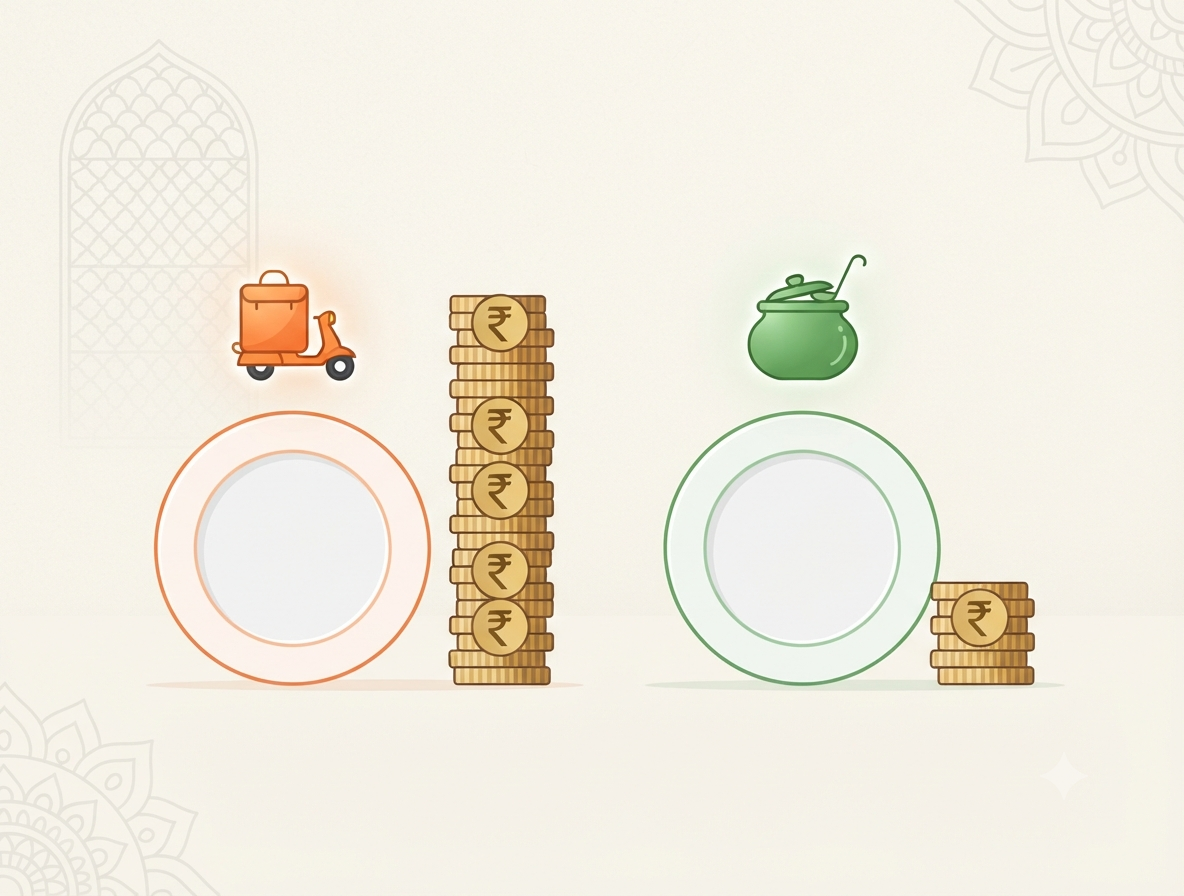
Way 5: Use Cash or Debit for Daily Spending - Not Credit Cards
A mental distance from the money being spent is created by credit cards. Giving out actual cash seems more like spending money than tapping a card. This is well-established behavioral economics, not a personal shortcoming.
Use cash, debit, or UPI debit from your savings account for everyday needs like groceries, car rides, and small purchases. You notice the difference right away when the funds are taken straight out of your account. Spending choices become more thoughtful.
Don't use your credit card for everyday regular expenses; instead, only use it for planned, budgeted expenditures that you are certain you will pay for in full before the due date.
If you already have a growing credit card debt, avoid making any new purchases with the card until the balance is zero. The interest paid each month increases when you use a card with an increasing balance.
Way 6: Set a Weekly Spending Limit - Not Just a Monthly Budget
A monthly spending plan is beneficial. However, there is a practical issue with it: if you spend excessively during the first two weeks of the month, you won't realize it until the end of the month, when the harm is already done.
This is resolved with a weekly spending cap. Your monthly allowance for variable spending is divided by four. That's the total amount you can spend each week on food, transportation, entertainment, and shopping.
Every Sunday, check it out. Next week, carry on as usual if you are inside the weekly cap. Spend less the following week to make up for any overspending.
Weekly visibility shows issues when they are still minor and fixable. Monthly tracking allows you to see what went wrong after it happened.
When Overspending Has Already Created Debt
These six strategies for controlling overspending aid in its prevention and subsequent reduction. However, if excessive spending has already resulted in debt, such as a large credit card debt or a reliance on personal loans, the advice above will only partially address the issue.
When debt reaches a certain point, monthly interest payments exceed what improved budgeting can do on its own. Direct attention must be given to the debt itself.
Speak with FREED if your credit card debt exceeds three months' worth of your monthly salary. We will evaluate your case and determine whether debt consolidation, settlement, or another strategy is best for your particular situation.
Are You in a Loan Trap? Quick Check
Move the slider to your total EMIs as a % of monthly salary. See your debt stress level instantly.
EMIs as % of Monthly Salary

Mohit Juneja
Mohit Juneja writes educational content at FREED on debt management, credit scores, loan repayment, and borrowing best practices. His content is shaped by expert insights and industry knowledge, helping readers better understand their financial options and make informed decisions.
mohit.juneja@freed.care

FREED is India's trusted loan management platform. Founded in 2020 and headquartered in Gurugram, FREED has counselled 20 lakh+ people on personal loans, credit cards, and app loans. FREED charges fees only on successful settlement, not upfront. FREED does not handle secured loans (home loans, car loans, gold loans).
Media Mentions