Why does a debt managment company care about intent?
When you reach out to FREED, we don't just look at your numbers. We look at your intent. Here's why that matters more than you might think and what it means for your debt-free journey.

Mohit Juneja
Reviewed by FREED India, Debt Resolution Specialists
 4.7/5
4.7/5 ₹3,200Cr+
 20,000+
 20,00,000+4.7/5₹3,200Cr+20,000+20,00,000+
Key Takeaways

Intent your genuine commitment to resolving your debt, is the single most important factor that determines whether a debt relief program will work for you.
FREED assesses intent not to judge you but to ensure the program it recommends will actually deliver results for your specific situation.
People with strong intent are more consistent with monthly savings, more communicative with their counsellors, and more likely to complete the program successfully.
Intent is not about being perfect. It's about being honest about your situation, your hardship, and your genuine desire to get out of debt.
Even if your situation is difficult or complicated, strong intent is what makes a path forward possible.
What Does "Intent" Mean in Debt Management?
Intent is a simple word. It means purpose, commitment, resolve.
In the context of debt relief intent means: do you genuinely want to get out of debt? And are you willing to do what it takes to get there?
This might sound like an obvious question. Of course you want to be debt-free. Who doesn't?
But there's a difference between wanting something and being ready to commit to the steps required to achieve it. Debt relief is a journey not a quick transaction. It requires consistent monthly savings. Honest communication with your counsellor. Discipline with spending. Willingness to follow through even when the process feels slow.
Intent is what separates people who complete that journey from those who start and give up.
This is why FREED and any responsible debt management company genuinely cares about intent. It's not a formality. It directly determines whether the program will succeed.
Why Intent Matters More Than Just the Numbers
When you first approach a debt management company, the obvious things they look at are numbers. Total debt. Monthly income. How many creditors. How long the accounts have been in default.
Numbers matter. But they don't tell the whole story.
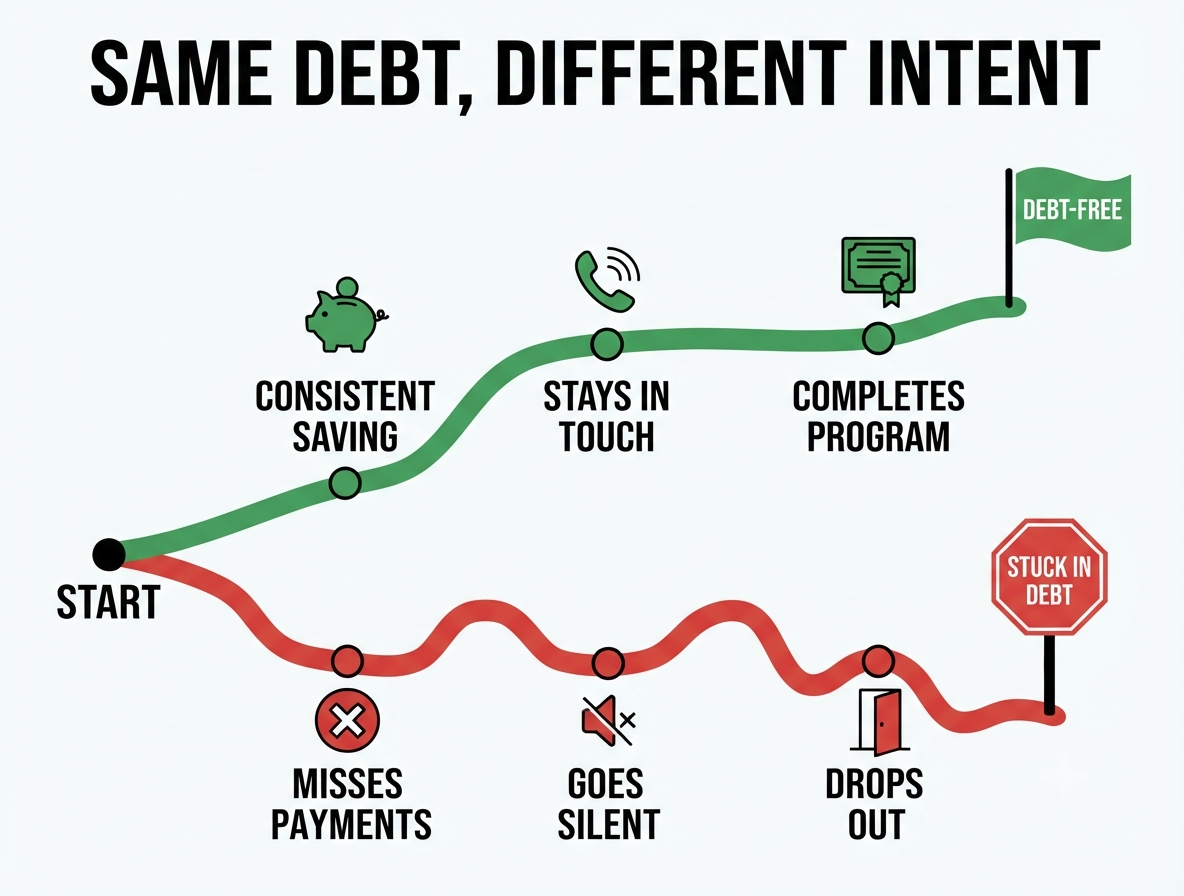
Two people can have identical numbers, same debt amount, same income, same creditors and have completely different outcomes based on their intent.
Person A approaches FREED with strong intent. They show up for every counsellor call. They save their monthly amount consistently. They communicate immediately when something changes in their situation. They trust the process even during difficult months. They complete the program.
Person B has the same numbers but weaker intent. They miss monthly savings. They avoid counsellor calls. They don't share the full picture of their finances. They lose patience when the process takes time. They drop out.
Same numbers. Completely different outcomes. The difference was intent.
This is why, at FREED, understanding your intent is as important as understanding your debt.
Intent and Eligibility: Who Can FREED Help?
FREED's programs are built for people who are genuinely struggling with debt due to real financial hardship, not for people who are deliberately avoiding repayment despite having the means.
This is a critical distinction that affects who we can help and how.
Genuine hardship means: a job loss that reduces your income. A medical emergency that wiped out savings. A business that didn't work out. Multiple loans that became overwhelming after a life event. These are situations where a person wants to repay but genuinely cannot without help.
Deliberate avoidance means: a person has the financial capacity to repay but chooses not to. Banks call this a "wilful default." FREED does not assist with this and legally and ethically, we should not.
When you first speak to FREED your counsellor assesses your situation to understand which category applies. This is not an interrogation. It's a conversation.
Your intent, your genuine desire to resolve the debt and willingness to participate honestly in the process is the primary signal. It tells us whether we can genuinely help you — and whether the program will deliver results.
If your intent is genuine, FREED is fully committed to helping you succeed.
Intent and Success: Why It Predicts Outcomes
In FREED's experience intent is the strongest predictor of whether a client completes the program successfully.
Here's why:
Consistent monthly saving The FREED Debt Resolution Program works because you save a fixed amount every month in a Special Purpose Account. When enough is saved FREED negotiates the settlement. If saving is irregular or stops negotiations cannot happen.
Clients with strong intent save consistently. Even in a tough month they find a way. They communicate with their counsellor if the amount needs to be adjusted. They don't just go quiet.
Active participation Your relationship manager is there to guide you. But they need your participation - updates on your financial situation, responses to their calls, sharing of required documents.
Clients with strong intent are responsive. They don't hide from calls. They share information proactively. They ask questions when something is unclear.
Openness to guidance The program includes budgeting support and financial discipline guidance. Clients with strong intent take this seriously. They adjust their spending. They follow the budget plan. They take the counsellor's advice to heart.
Perseverance through difficulty Debt relief takes time. It's not uncommon for clients to face a challenging month - an unexpected expense, a temporary income reduction. Clients with strong intent push through. They communicate, adjust, and stay the course.

FREED Expert Tip
One of the most common reasons debt relief programs don't work is not the debt or the plan - it's communication breakdown. If something changes in your financial situation - a new expense, a job change, a delay - tell your relationship manager immediately. Silence is the biggest obstacle to a successful outcome. Strong intent means staying in touch, not just making payments.
Talk to your FREEDIntent and Risk: Protecting Both Sides
A debt management company also cares about intent for an important practical reason it protects both parties.
FREED works with lenders on behalf of clients. Our credibility with banks depends on the quality and honesty of the cases we bring to them. When we present your hardship case to a lender - we are vouching for the genuineness of your situation.
If a client's situation is misrepresented or if they're not genuinely engaged in the program it damages our ability to negotiate effectively, not just for them but for all our clients.
Additionally, debt relief must be used for its intended purpose: helping genuine hardship cases resolve their debt responsibly. It should not be used as a way to deliberately avoid repayment by someone who has the means to pay.
By carefully assessing intent at the start FREED ensures:
- The program is offered to people it can genuinely help
- The cases presented to lenders are honest and documentable
- The agency is operating legally and ethically - always
- Client outcomes are maximised because the right people are in the right program
This protects clients. It protects lenders. And it protects FREED's ability to keep doing what it does for the thousands of people who genuinely need this help.
Intent and Resilience: Staying the Course When It Gets Hard
Debt relief is not a straight, smooth road. There will be difficult months. Unexpected expenses. A lender who is initially resistant. Moments when the process feels slow or frustrating.
Intent is the inner strength that keeps you going through these moments.
Someone who entered the program with genuine, strong intent driven by a real desire to be debt-free will push through a difficult month. They'll communicate. They'll adjust. They'll stay.
Someone who started with weaker intent perhaps hoping for a quick fix or an easy shortcut - is more likely to disengage when the process requires patience.
FREED's counsellors are trained to support resilience throughout the program. But they can only do so much. The inner determination to see it through - that has to come from you.
This is what makes intent not just a qualifier but a fuel. It's what powers the journey from the first call to the final "debt settled" confirmation.

What the Law Says
Indian law distinguishes clearly between a "wilful defaulter" - someone who can pay but won't - and a genuine defaulter - someone facing real financial hardship. Banks and courts treat these very differently. A genuine defaulter who actively engages with their lender and demonstrates commitment to resolution receives far more legal protection and flexibility than one who simply avoids repayment. Intent is not just important for debt management companies - it matters to the law and to your lender too.
Talk to a FREED CounsellorWhat Genuine Intent Looks Like in Practice
Intent is not about grand gestures. It shows up in small, consistent actions.
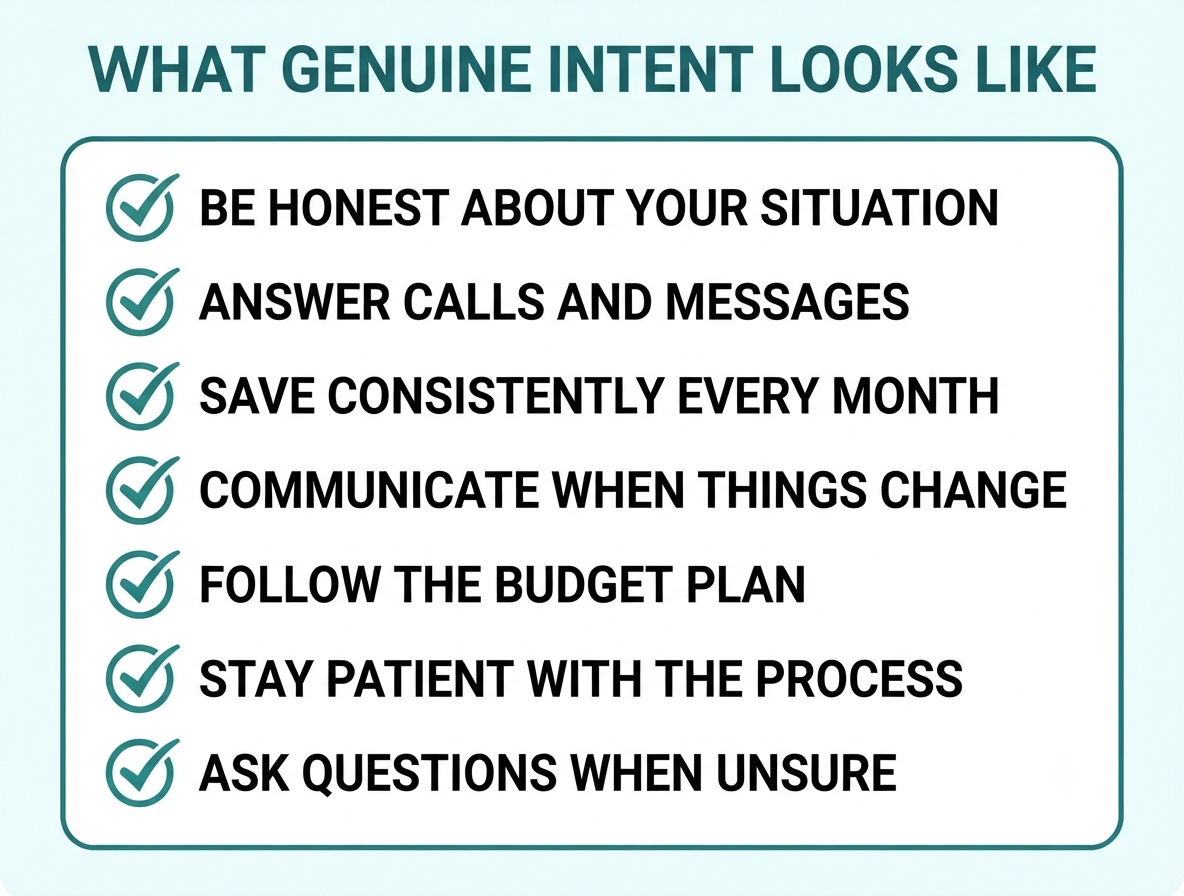
Genuine intent looks like:
- Being honest in your first consultation sharing your full financial picture, including what you owe and what you earn
- Showing up for counsellor calls and answering messages promptly
- Saving your monthly amount consistently even in tight months
- Communicating immediately when something changes in your situation
- Following the budget plan even when it requires some sacrifice
- Being patient when the process takes time understanding that real debt relief isn't instant
- Asking questions when you're unsure rather than going silent
What intent does NOT require:
- Being perfect every month
- Never having a setback or a difficult month
- Having everything figured out before you call
- Being financially literate before you start
Intent is about honesty and commitment not perfection. FREED works with people who are genuinely struggling. We don't expect everything to go smoothly. We expect you to stay engaged, communicate, and keep trying.
What If Your Intent Is Strong But Your Situation Is Complex?
Many people who contact FREED worry that their situation is "too complicated" or "too bad" to be helped.
Maybe the debt is very large. Maybe there are many different lenders. Maybe payments have been missed for a long time. Maybe there are legal notices already received.
Strong intent changes everything.
With genuine intent even a complex situation has a path forward. FREED has helped clients with:
- Multiple loans across different banks simultaneously
- Debt that had been in default for 12+ months
- Accounts already under legal proceedings
- Clients who had lost jobs and had minimal income at the time of enrolment
The complexity of the situation affects the strategy and the timeline. But it doesn't close the door not when the intent is real.
The first step is always the same: one honest, free conversation with a FREED counsellor.
How FREED Assesses and Supports Intent
FREED's intent assessment is not a formal test or an interrogation. It happens naturally through your first conversation with a counsellor.
What we look for:
- Are you honest about your situation - including the difficult parts?
- Do you understand that the program requires consistent effort over time?
- Are you willing to share the documentation needed to present your case to lenders?
- Do you see this as a genuine commitment - not a quick fix?
- Are you open to the guidance and structure the program provides?
How FREED supports your intent through the program:
- A dedicated relationship manager checks in regularly and stays accessible
- Clear progress updates so you always know where you stand
- Budget guidance to help you manage monthly savings even in tough times
- Immediate escalation of any harassment that might discourage you
- Transparent communication - no surprises, no hidden changes
Intent is a two-way street. FREED brings the expertise, the negotiation power, and the system. You bring the commitment and the honesty. Together - it works.
Are You in a Loan Trap? Quick Check
Move the slider to your total EMIs as a % of monthly salary. See your debt stress level instantly.
EMIs as % of Monthly Salary

Mohit Juneja
Mohit Juneja writes educational content at FREED on debt management, credit scores, loan repayment, and borrowing best practices. His content is shaped by expert insights and industry knowledge, helping readers better understand their financial options and make informed decisions.
mohit.juneja@freed.care

FREED is India's trusted loan management platform. Founded in 2020 and headquartered in Gurugram, FREED has counselled 20 lakh+ people on personal loans, credit cards, and app loans. FREED charges fees only on successful settlement, not upfront. FREED does not handle secured loans (home loans, car loans, gold loans).
Media Mentions