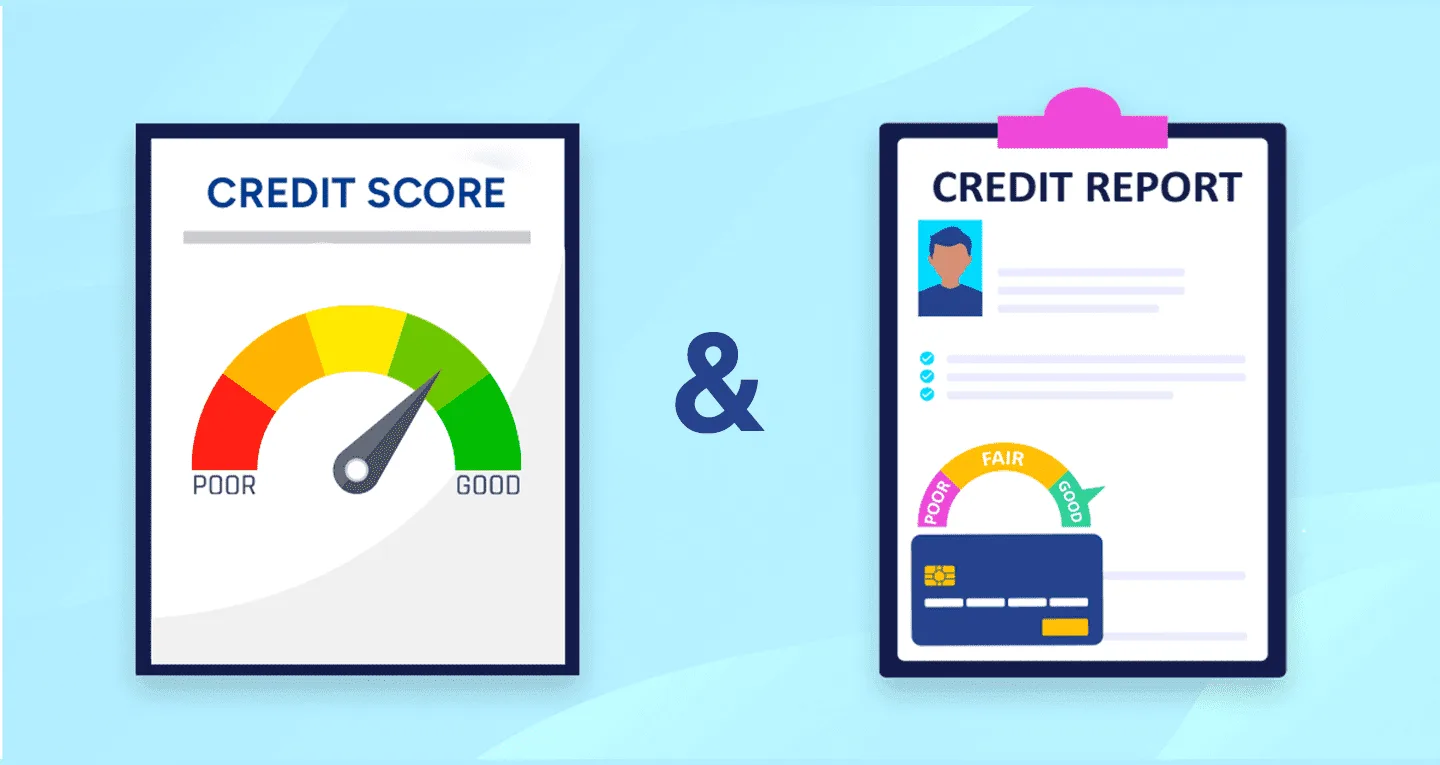
What is Credit Worthiness?
A credit score is a single number. Creditworthiness is the broader, fuller judgement a lender is actually trying to make, of which the score is only one input. Understanding the full picture explains why two applicants with an identical score can still be treated quite differently by the same lender.

Mohit Juneja
Reviewed by FREED India, Debt Resolution Specialists
 4.7/5
4.7/5 ₹3,200Cr+
 20,000+
 20,00,000+4.7/5₹3,200Cr+20,000+20,00,000+
Key Takeaways

Creditworthiness is a lender's overall assessment of how likely you are to repay a loan reliably, a broader judgement that a credit score summarises only partially.
Lenders traditionally weigh five factors, often called the five Cs, character (repayment history), capacity (income relative to obligations), capital (existing assets and savings), collateral (what backs a specific loan), and conditions (the purpose and context of the loan).
Two applicants with an identical credit score can be assessed quite differently for a significant loan once a lender reviews the fuller picture, since income stability, existing assets, and the loan's specific purpose all factor in beyond the number alone.
Genuinely building creditworthiness means strengthening all five factors over time, not just the credit score, since larger lending decisions in particular rely on this broader picture.
If poor creditworthiness reflects an underlying, unresolved debt problem rather than simply thin history or normal life circumstances, FREED can help address that debt directly, which is what allows genuine creditworthiness to recover.
Creditworthiness, Defined Beyond the Score
Creditworthiness is the overall judgement a lender makes about how likely you are to repay a loan reliably, on time and in full, based on everything genuinely relevant to that assessment, not only the single number a credit bureau calculates.
A credit score is a useful, standardised summary of part of this picture, primarily your payment history and credit behaviour. But creditworthiness, as lenders actually apply the concept, particularly for significant loans, extends further, into your income stability, your existing financial cushion, and the specific nature of the loan being considered. Understanding this fuller concept clarifies why the score, while important, is never the entire story a lender is actually evaluating.

Want a clear read on your full creditworthiness, not just your score?
Talk to a FREED Expert for free.
Connect with FREED ExpertThe Five Cs Lenders Actually Weigh
Traditional credit assessment, still widely used across Indian banks and NBFCs particularly for larger loans, is often organised around five specific factors, commonly called the five Cs of credit: Character, Capacity, Capital, Collateral, and Conditions.
Each of these captures something a credit score alone does not fully convey, and understanding them individually explains why a lender reviewing a significant loan application often looks well beyond the score displayed on a quick check.
Character: Your Track Record of Repayment
Character refers to your demonstrated history of repaying past obligations reliably, closely related to, but broader than, the payment history factor within your credit score. It includes not just whether payments were made on time, but the consistency and length of that track record, and how you have handled any past difficulty, whether a missed payment was corrected quickly and responsibly, or whether it reflects a longer, unresolved pattern.
For larger loans, a lender may review this history directly and in detail, rather than relying solely on the score's summarised reflection of it.
Capacity: Whether Your Income Can Actually Support the Debt
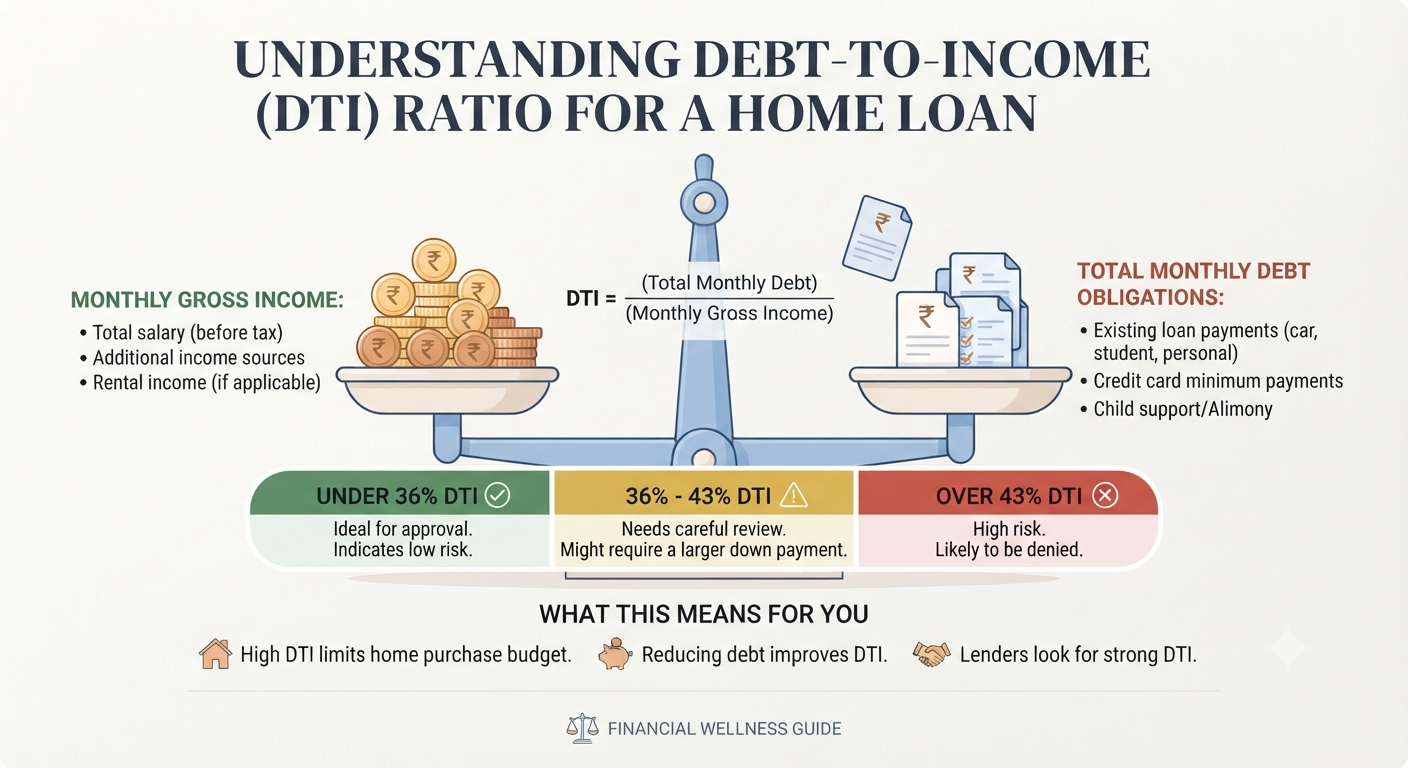
Capacity refers to your actual ability to repay a new loan, assessed through your income, your existing debt obligations, and the resulting debt-to-income ratio, how much of your monthly income is already committed to other EMIs and payments before this new loan is even considered.
This factor is not reflected in a credit score at all, since income is not one of the score's calculation inputs. A lender assessing capacity specifically wants to know whether your income genuinely supports the proposed new EMI comfortably, not just whether your past behaviour has been reliable.
Capital: What You Already Have Behind You
Capital refers to your existing savings, investments, and other assets, a specific financial cushion that provides a lender additional confidence beyond your income and repayment history alone. Someone with meaningful savings or investments represents lower risk to a lender, since these assets provide a genuine fallback if income were to be disrupted temporarily.
Like capacity, capital is not part of a credit score's calculation at all, it is a separate factor a lender may specifically request documentation for, bank statements, investment records, particularly for larger loan applications.
Collateral: What Backs the Specific Loan, If Anything
Collateral refers to any specific asset pledged against a particular loan, property for a home loan, a vehicle for a vehicle loan. For secured loans, collateral significantly reduces a lender's risk regardless of the borrower's other creditworthiness factors, which is precisely why secured loans generally carry lower interest rates than unsecured ones of a similar size.
For unsecured loans, personal loans, credit cards, this factor is absent entirely, which is exactly why the other four factors, character, capacity, capital, and conditions, carry correspondingly more weight in the lender's overall assessment.
Conditions: The Context Around the Loan Itself
Conditions refers to the specific purpose of the loan, the amount relative to your income, and broader economic or industry factors relevant to the loan, for instance, a business loan considered against the current conditions of that specific industry.
A loan for a clear, reasonable, verifiable purpose is generally viewed more favourably than one with a vague or unclear stated purpose, and the amount requested relative to your income and existing obligations is assessed specifically within this factor as well, distinct from the raw debt-to-income calculation covered under capacity.
Curious how a lender might weigh your specific loan purpose and amount?
Talk to a FREED Expert for free.
Talk to a FREED ExpertHow Creditworthiness Differs From a Credit Score Specifically
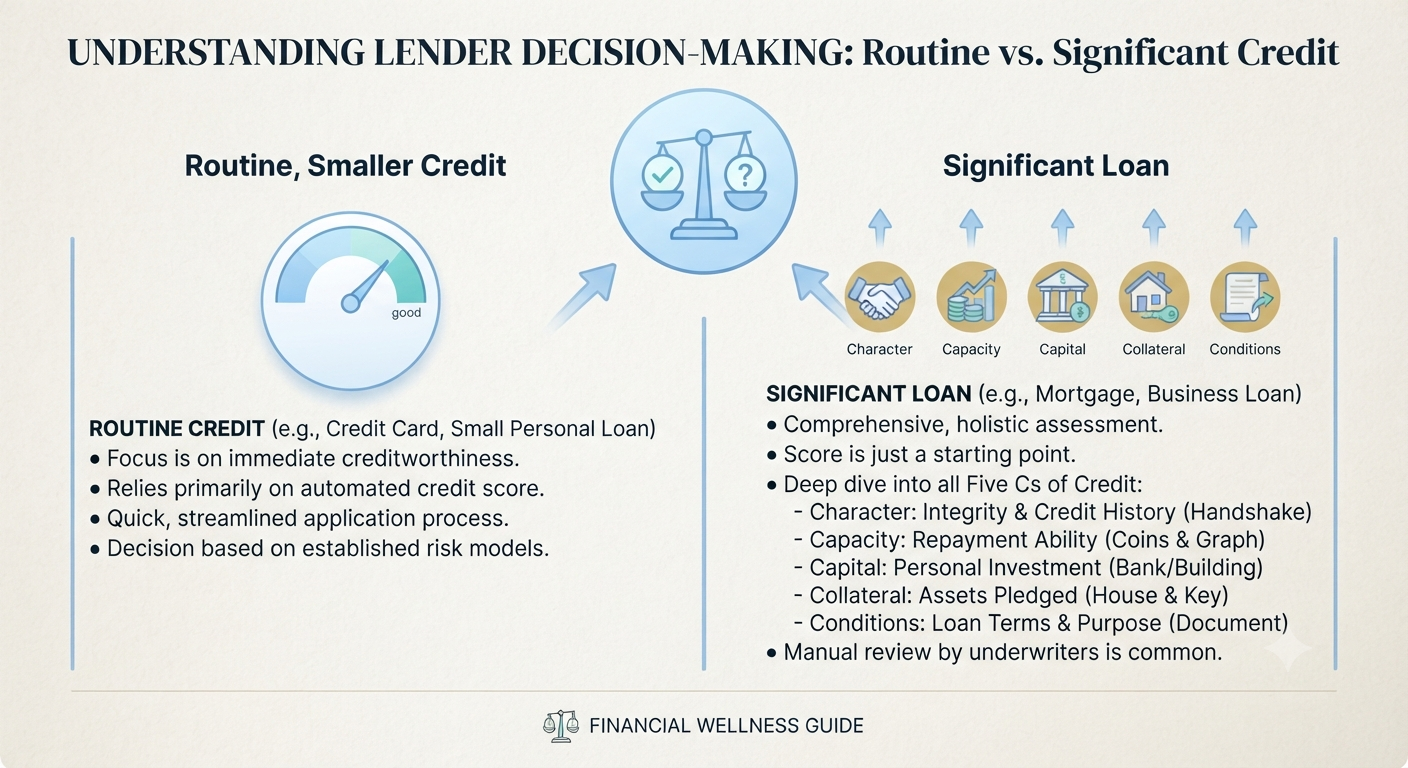
A credit score is a standardised, automated calculation based primarily on your credit history, useful because it allows fast, consistent decisions across large volumes of routine applications. Creditworthiness is the fuller, sometimes more manual, assessment a lender makes when a decision genuinely warrants deeper consideration, incorporating income, assets, and the loan's specific context alongside the score itself.
This means the score is one input into creditworthiness, an important one, but not the entirety of it. A strong score with weak income stability, or a moderate score with substantial savings and a clear repayment plan, can each be weighed quite differently once a lender looks at the fuller picture rather than the score in isolation.
Why Two People With the Same Score Can Be Assessed Differently
Consider two applicants for a significant personal loan, both with an identical credit score of 780. The first has stable, verifiable employment, no existing loans, and reasonable savings. The second has the same score but significant existing EMI obligations already consuming a large share of income, and no meaningful savings cushion.
For a routine, smaller credit decision, both might be approved on similar terms, since the score alone may be sufficient for the lender's process. For a larger, more significant loan, the second applicant's weaker capacity and capital, despite an identical score, would likely result in a smaller approved amount, a higher rate, or a request for additional documentation, precisely because creditworthiness, assessed fully, differs meaningfully between them even though their scores do not.
How Lenders Actually Combine These Factors in Practice
In practice, most Indian lenders use a hybrid approach, an automated score-based check for routine, smaller credit decisions, where speed matters more than a fully manual review, and a fuller, five Cs style assessment for larger, more significant lending decisions, home loans, large personal loans, business loans, where the amount and risk involved genuinely warrant deeper consideration.
Understanding which type of assessment applies to a specific application you are considering, a quick, routine credit card versus a significant home loan, helps set realistic expectations about which factors will actually matter most to that particular decision.

What the Law Says
Under RBI guidelines, lenders are required to assess a borrower's actual repayment capacity, not just eligibility based on a score or an available credit limit, before extending significant credit, a responsible lending requirement that directly reflects the broader creditworthiness assessment described throughout this blog, rather than a score-only approach. This means being offered a certain loan amount does not, by itself, indicate that amount genuinely fits your specific capacity and conditions, that judgement remains yours to make deliberately, informed by the same fuller picture a careful lender is required to consider.
Check Your Credit Score FreeBuilding Genuine Creditworthiness Over Time
Strengthening genuine creditworthiness, rather than only the credit score, means attending to all five factors deliberately. Build character through consistent, on-time payments sustained over a meaningful period. Build capacity by keeping your overall debt-to-income ratio well managed, ideally below 40% of income committed to EMIs, before taking on any significant new obligation. Build capital through a genuine emergency fund and consistent savings or investment habits, distinct from and in addition to credit behaviour alone.
For collateral, understand that this factor simply may not apply to certain loan types, and is not something to be manufactured artificially, and for conditions, ensure any significant loan application has a clear, well-articulated, verifiable purpose, rather than a vague or unclear stated reason for the amount requested.
When Poor Creditworthiness Reflects a Debt Problem, Not Just a Data Gap
For some people, weaker creditworthiness reflects genuinely correctable gaps, a thin credit history, limited documented savings, that time and deliberate habit-building, as described above, will be addressed gradually over a meaningful period.
For others, weaker creditworthiness reflects an underlying, unresolved debt problem specifically, a debt-to-income ratio that is genuinely too high because existing obligations are too large relative to income, or a character factor damaged by an ongoing, active default rather than a single, resolved past incident. In this second case, no amount of savings habit-building or documentation gathering will meaningfully improve creditworthiness while the underlying debt burden remains unaddressed.
FREED's Debt Consolidation Program can directly improve your capacity factor, by lowering your combined monthly EMI through a single, more manageable loan, freeing up income and reducing your debt-to-income ratio.
FREED's Debt Resolution Program can negotiate a reduced settlement for debt that cannot realistically be repaid in full, on average 56% less than the original outstanding, stopping ongoing damage to your character factor and creating a genuine point from which recovery can begin.
A free consultation can assess your specific situation honestly and identify whether your creditworthiness challenges reflect a data or habit gap, or an underlying debt burden that needs direct attention first.
Ready to understand and strengthen your full creditworthiness, not just your score?
Talk to a FREED Expert for free.
Talk to a FREED Expert
Mohit Juneja
Mohit Juneja writes educational content at FREED on debt management, credit scores, loan repayment, and borrowing best practices. His content is shaped by expert insights and industry knowledge, helping readers better understand their financial options and make informed decisions.
mohit.juneja@freed.care

FREED is India's trusted loan management platform. Founded in 2020 and headquartered in Gurugram, FREED has counselled 20 lakh+ people on personal loans, credit cards, and app loans. FREED charges fees only on successful settlement, not upfront. FREED does not handle secured loans (home loans, car loans, gold loans).
Media Mentions