What equips a freed debt expert to deal with the financially and emotionally stressed individual
A person calling about their debt for the first time is rarely calling with a calm, purely analytical question. They are often carrying months of avoided statements, a specific fear about what a number actually means, and a kind of shame that has nothing to do with the actual mathematics involved. Here is what genuinely equips someone to sit with that, and still get the practical work done.

Mohit Juneja
Reviewed by FREED India, Debt Resolution Specialists
 4.7/5
4.7/5 ₹3,200Cr+
 20,000+
 20,00,000+4.7/5₹3,200Cr+20,000+20,00,000+
Key Takeaways

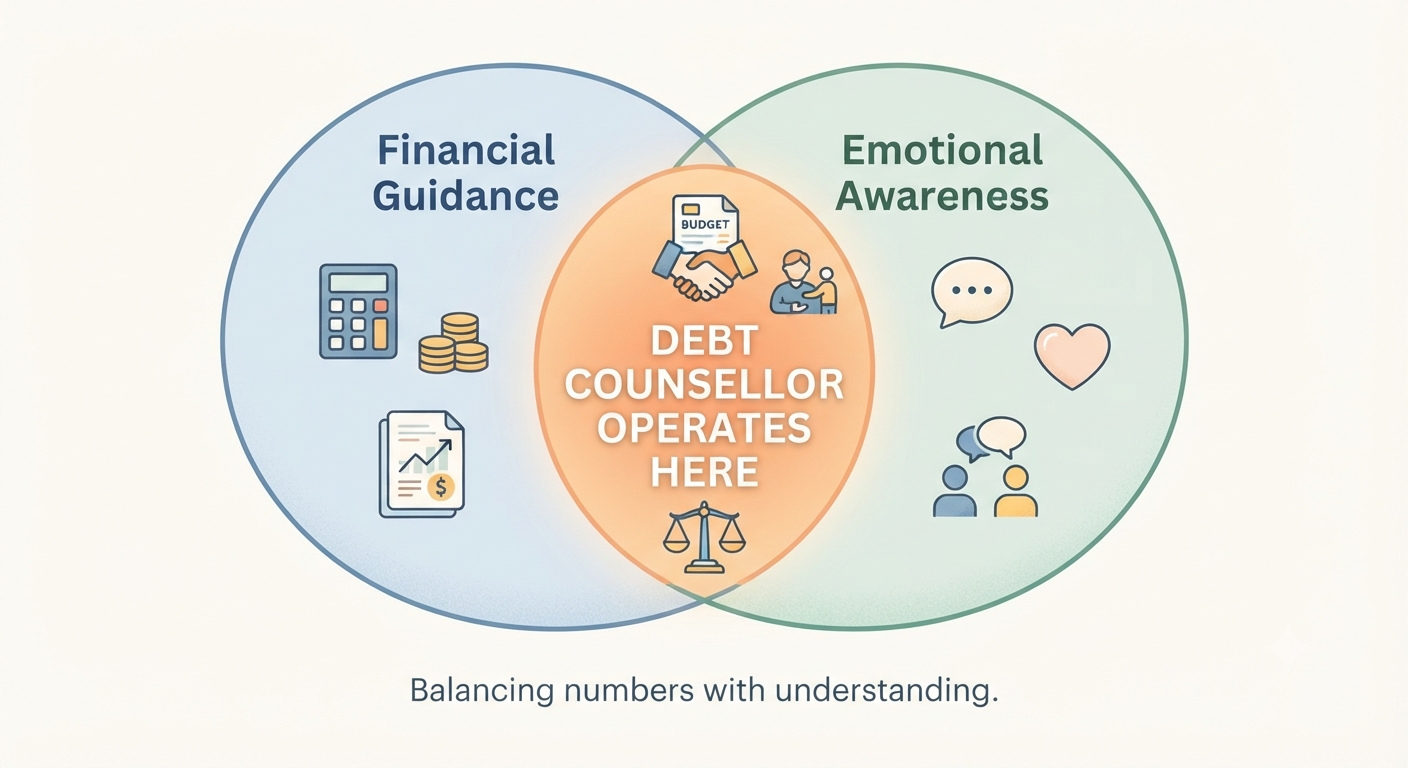
A debt situation is rarely only a financial problem. It typically arrives alongside genuine stress, shame, or anxiety, which means a debt counsellor needs both real financial and regulatory expertise, and the specific ability to hold a difficult emotional conversation without adding to that difficulty.
FREED's counsellors are trained to recognise signs of financial stress and distress without ever attempting to diagnose a mental health condition, staying within the boundaries of financial counselling while remaining genuinely attentive to a client's wellbeing.
Structured, judgement-free listening, gathering the full financial picture without rushing or minimising a client's hardship, is treated as a specific, practised skill, not simply a personality trait some counsellors happen to have.
Negotiation with lenders is handled in a way that minimises how often a client needs to personally repeat or relive their hardship, since counsellors carry the documented case forward on the client's behalf.
This combination of financial expertise and genuine emotional steadiness is precisely what someone reaching out to FREED for the first time can expect from the very first conversation.
Why Debt Counselling Requires Two Different Skill Sets at Once
A person's first call about their debt situation is almost never purely a request for information. Beneath the specific question, how much do I actually owe, what are my options, is frequently a much less articulated set of feelings, worry about what a spouse or parent will think, embarrassment at having let a balance grow this large, genuine fear about calls from a recovery agent that have already started.
A counsellor who only understands the financial mechanics, interest rates, settlement percentages, RBI regulations, but misses this emotional layer entirely, risks giving technically correct advice in a way that leaves the person feeling unheard, or worse, more anxious than before the call. A counsellor who is warm and empathetic but lacks genuine financial and regulatory expertise cannot actually solve the underlying problem, however well the conversation itself goes. Genuine effectiveness requires both, held together in the same conversation, often within the very first few minutes of a call.

Ready to have a conversation that treats both the numbers and the stress seriously?
Talk to a FREED Expert for free.
Connect with FREED ExpertTraining Element 1: Genuine Financial and Regulatory Expertise
The foundation, without which nothing else matters, is accurate, current knowledge of how debt actually works in India, interest calculation, credit bureau reporting, RBI's Fair Practices Code, the specific settlement negotiation patterns of different banks and NBFCs, and the practical realities of what a consolidation loan or a settlement negotiation can and cannot achieve for a specific situation.
This expertise needs to be current and specific, not general. Regulations, bank policies, and typical settlement ranges shift over time, and a counsellor working from outdated or generic knowledge can inadvertently give advice that undersells what is actually achievable, or, just as damagingly, sets an expectation that a specific lender's current policies will not support.
Training Element 2: Recognising Emotional Distress Without Diagnosing It
FREED's counsellors are trained to notice signs that a client may be experiencing significant emotional strain, a shaking voice, prolonged silences, language suggesting hopelessness, without ever crossing into diagnosing a mental health condition, which is not their role and not something a financial conversation is equipped to do accurately.
This distinction matters considerably. Noticing distress allows a counsellor to slow down, adjust their approach, and, where appropriate, gently suggest additional support alongside the financial conversation. Attempting to diagnose or label what a client is experiencing, in contrast, oversteps a genuine boundary and can feel presumptuous or invalidating to someone who has not raised it themselves. The training specifically threads this needle, attentive and responsive, without ever assuming a clinical label that has not been offered by the client.
Training Element 3: Structured, Judgement-Free Listening
A specific, trained skill involves gathering a complete, accurate financial picture, every debt, every account, the genuine reason behind any hardship, without the conversation feeling like an interrogation, and without any tone of judgement creeping into how questions are asked.
This is considerably harder than it sounds. Questions like "how did the balance get this large" or "why was this payment missed" can easily land as accusatory if asked without care, even when the underlying intent is simply to gather accurate information needed to recommend the right path. FREED's training specifically addresses phrasing, tone, and pacing for exactly this kind of question, so that the information gathering itself does not add to a client's existing sense of shame or defensiveness.
Training Element 4: Knowing When to Slow Down Instead of Solve
A natural instinct, particularly for someone genuinely skilled at solving financial problems, is to move quickly towards a solution the moment enough information has been gathered, presenting options, discussing next steps, moving the conversation forward efficiently.
This instinct, while often useful, needs to be deliberately held back in a specific, common scenario, when a client is clearly still processing the emotional weight of their situation and is not yet ready to absorb a set of options, however well considered. FREED's training specifically covers recognising this moment, and choosing to slow down, acknowledge what the person is experiencing, and let the conversation breathe, before moving into a solution-focused discussion that a still-overwhelmed person may not be able to genuinely engage with yet.
Feel like your situation needs to actually be heard before jumping into solutions?
Talk to a FREED Expert for free.
Talk to a FREED ExpertTraining Element 5: Negotiation Skill That Does Not Require the Client to Relive Their Hardship Repeatedly
Once a client's situation and documentation are understood, FREED's counsellors carry that case forward directly into negotiations with lenders, meaning the client is not required to repeatedly explain and re-justify their hardship to a different bank representative each time, an experience that can feel retraumatising for someone who has already had to explain a difficult situation once.
This specific structure, the counsellor negotiating on the client's behalf using documented, understood details, rather than the client fielding each bank's questions independently, is itself a form of emotional consideration built directly into the practical negotiation process, not a separate, additional layer of support.
Training Element 6: Recognising When a Situation Needs More Than Financial Counselling
A specific, important part of training covers recognising the boundary of what financial counselling can appropriately address, and knowing when to gently suggest that a client also seek support from a doctor, therapist, or another appropriate professional, alongside the financial conversation, rather than in place of it.
This recognition does not mean disengaging from the financial conversation, both can and should continue in parallel, it means being honest about the limits of a financial counsellor's role, and treating a suggestion to seek additional support as a genuine act of care, offered without judgement, rather than a dismissal of the person's financial concerns.
Training Element 7: Consistency Across a Long, Sometimes Difficult Process
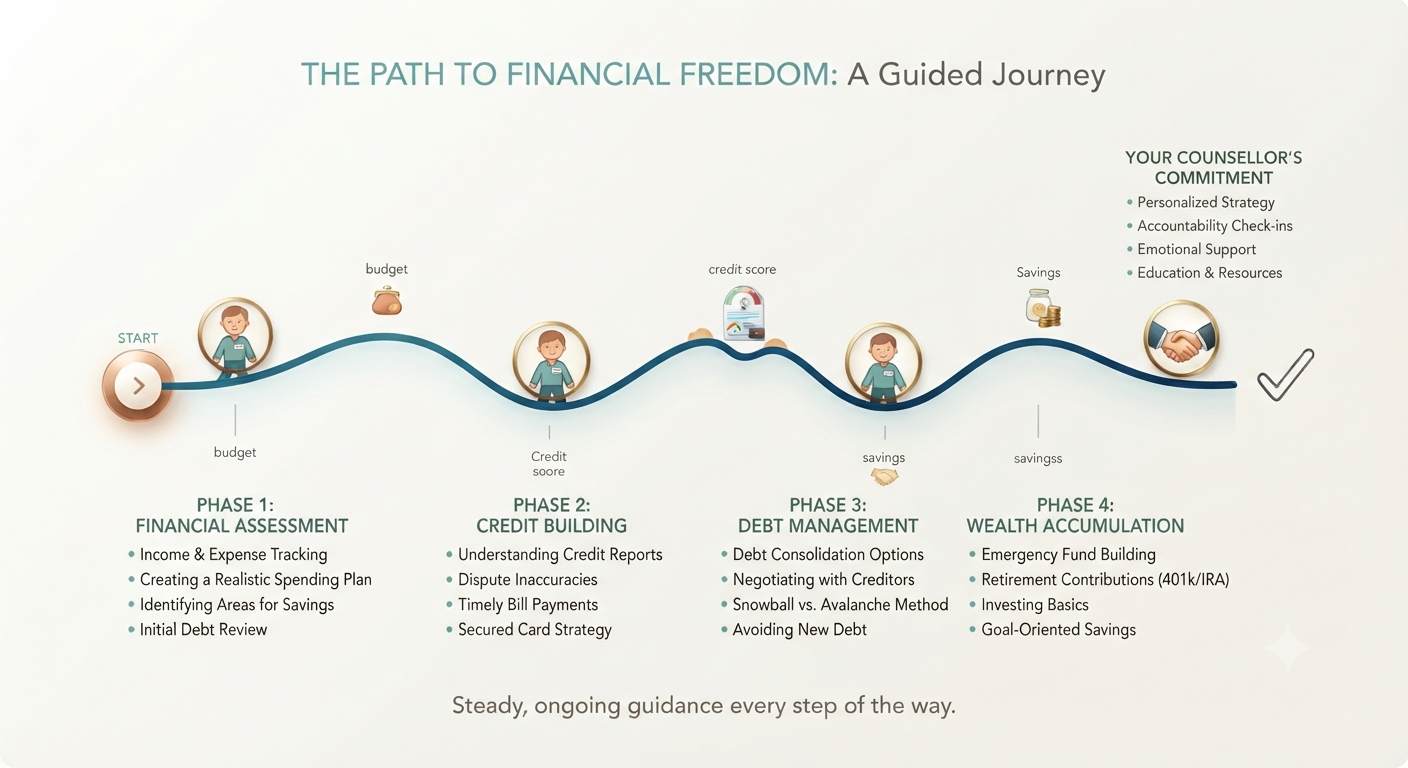
Debt resolution, whether consolidation or settlement, frequently unfolds over several months, involving documentation gathering, negotiation, occasional setbacks, and periods of waiting for a lender's response. FREED's counsellors are trained specifically to maintain the same attentive, steady tone across this entire timeline, not only in an emotionally charged first conversation.
This matters because a difficult month partway through the process, an unexpected expense delaying a settlement payment, a slower than expected bank response, can reintroduce the same stress the client felt at the very beginning. Consistency in how a counsellor responds to these moments, calm, specific, and reassuring without minimising the genuine difficulty, is treated as a core, ongoing part of the role, not something that only matters during onboarding.
What This Looks Like in an Actual First Conversation
In practice, a first call typically opens with space, genuinely open questions about the situation, rather than an immediate request for numbers, allowing the client to describe things in their own words and pace. As specific details emerge, the counsellor gathers the accurate financial picture through careful, non-judgemental questions, while remaining attentive to the client's emotional state throughout, adjusting pacing if distress becomes apparent.
Only once the person seems ready, information gathered and some of the initial anxiety of simply starting the conversation eased, does the discussion move towards specific options, consolidation, settlement, or another path entirely, explained clearly and without pressure, with a genuine, standing invitation to ask questions or take time before deciding anything.

What the Law Says
While RBI's Fair Practices Code specifically governs how lenders and recovery agents must treat borrowers, it does not directly regulate the training standards of a debt counselling service like FREED. This is precisely why FREED treats this training as an internal, deliberate standard, not a regulatory minimum, since the quality of a first, difficult conversation with a genuinely distressed person is not something any external regulation fully specifies, and is instead a direct reflection of how seriously FREED takes the human side of this work.
Talk to a FREED CounsellorWhy This Combination Is Difficult to Replicate Informally
An unregistered or informal settlement agent, operating without this specific dual training, is considerably more likely to either rush a client towards a decision before they are genuinely ready, missing the emotional readiness element entirely, or to offer emotional reassurance without the actual financial and regulatory expertise needed to negotiate an outcome that holds up legally and practically.
This combination, genuine technical expertise and genuine emotional steadiness, held together consistently across potentially difficult months, is specifically what separates a trained, accountable debt counselling process from either a purely transactional interaction or a well-meaning but under-equipped one.
What This Means for Someone Reaching Out to FREED Right Now
If you are considering reaching out about a debt situation and are hesitant because the conversation itself feels daunting, not just the numbers, but actually saying them out loud to someone, this is precisely the specific situation FREED's training is built to handle well.
The first conversation does not require you to have your full situation calculated or organised in advance, does not require you to explain your hardship in a specific, polished way, and does not require you to be emotionally composed before calling. It requires only a willingness to start, the rest of the conversation is built to meet you where you actually are.
FREED Financial Health Score
Not ready for a full conversation yet? Take the FREED Financial Health Score first, free, 2 minutes, entirely at your own pace.
Check My Financial Health Score
Mohit Juneja
Mohit Juneja writes educational content at FREED on debt management, credit scores, loan repayment, and borrowing best practices. His content is shaped by expert insights and industry knowledge, helping readers better understand their financial options and make informed decisions.
mohit.juneja@freed.care

FREED is India's trusted loan management platform. Founded in 2020 and headquartered in Gurugram, FREED has counselled 20 lakh+ people on personal loans, credit cards, and app loans. FREED charges fees only on successful settlement, not upfront. FREED does not handle secured loans (home loans, car loans, gold loans).
Media Mentions