How Long Do You Think You Can Manage Paycheck to Paycheck?
Most people who live paycheck to paycheck are not managing. They are surviving. And they are one unexpected expense away from a crisis that turns a tight month into a lasting debt problem. This article is not a list of budgeting tips. It is a direct look at what the paycheck-to-paycheck cycle actually costs, why it is more fragile than it feels, and what it takes to break it.

Mohit Juneja
Reviewed by FREED India, Debt Resolution Specialists
 4.7/5
4.7/5 ₹3,200Cr+
 20,000+
 20,00,000+4.7/5₹3,200Cr+20,000+20,00,000+
Key Takeaways

Living paycheck to paycheck means income reliably runs out before the month ends, leaving no buffer for savings, investments, or unexpected expenses.
The cycle feels manageable because nothing has gone wrong yet. It becomes a crisis the moment something does, and something always eventually does.
The hidden cost of the cycle is not just the absence of savings. It is the steady erosion of financial options, CIBIL score, and future borrowing capacity that comes from the debt that fills each gap.
Breaking the cycle requires addressing whichever of the three causes applies: excessive expenses, insufficient income, or a debt load that is consuming the margin that savings and stability require.
If debt is the specific reason the cycle cannot be broken through budgeting alone, FREED can help reduce that burden through consolidation or resolution.
What Paycheck to Paycheck Actually Means
Living paycheck to paycheck means that monthly income is spent completely before the next salary arrives. After all obligations, food, utilities, transport, EMIs, and minimum credit card payments are covered, there is nothing remaining, or so little that any additional expense, however modest, requires either borrowing or not paying something else.
In India, this is more common than most people are comfortable admitting. A study from the National Centre for Financial Education found that most Indians have no financial safety net. For many salaried households in Indian cities, the pattern is familiar: salary credited on the 1st or 5th, Rs. 40,000 to Rs. 60,000 of EMIs and credit card minimums cleared in the first week, rent and groceries in the second, and by the 20th of the month, the account balance is approaching zero. The last ten days of the month involve small calculations about what can be deferred.
This pattern is not restricted to low-income households. It appears across income levels. High-income households living paycheck to paycheck typically have higher obligations to match their income, home loans, vehicle loans, premium credit cards with large balances, private school fees. The mechanism is the same. The margin is zero.
Why It Is More Fragile Than It Feels
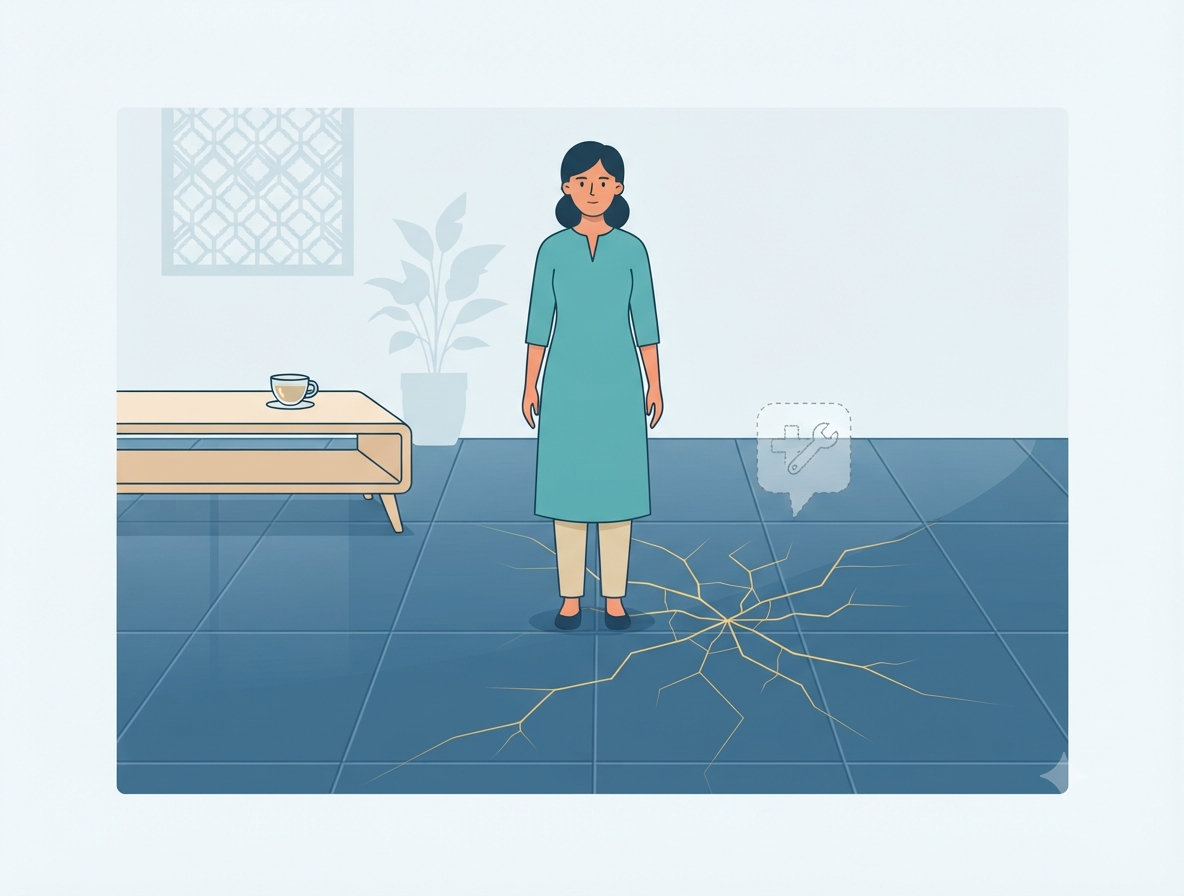
The paycheck-to-paycheck cycle feels manageable because, most months, it works. The salary arrives. The obligations are met. The month closes. Another begins. This consistency creates a psychological sense of stability that is, in reality, an illusion.
The illusion is created by the absence of the disruption that reveals the fragility. When nothing unexpected happens, the cycle continues. When something unexpected happens, and something always eventually does, the cycle breaks immediately and expensively.
Consider what the paycheck-to-paycheck household has no capacity for: a medical bill of Rs. 20,000. A vehicle repair of Rs. 15,000. A month of reduced income during a job transition. A family emergency requiring travel. None of these are extraordinary events. All of them are ordinary life. And for a household with no savings buffer, each of them triggers either new debt or a missed obligation, both of which have lasting financial consequences.
The household that has been managing paycheck to paycheck for two years may feel like it has proven the sustainability of the approach. What it has actually proven is that it has been lucky: nothing expensive and unexpected has happened in those two years. This is not the same as stability.
The Hidden Cost of Managing This Way
The visible cost of the paycheck-to-paycheck cycle is the absence of savings. The hidden cost, which compounds over time, is significantly larger.
When each unexpected expense creates new debt, credit cards are used, personal loans are taken, BNPL obligations are added, the total monthly fixed obligation gradually increases. Higher obligations mean less remaining after the salary clears. More of the month is spent in the zero-balance phase. The next unexpected expense has even less margin to absorb it.
This is how the paycheck-to-paycheck cycle becomes a debt cycle. Not through a single large crisis, but through the steady accumulation of small debts taken to fill small gaps, each individually reasonable, collectively destructive.
There is also a credit score dimension. A household consistently living paycheck to paycheck typically has high credit card utilisation, because cards are regularly near their limits. They may have occasional missed payments, because the last days of a month with zero balance and an auto-debit on the 28th do not always work out. Both of these suppress the CIBIL score. A lower CIBIL score means higher interest rates on every subsequent loan. Higher interest rates mean more of the salary goes to interest charges. The margin available for savings decreases further.
The paycheck-to-paycheck cycle silently closes financial options over time, even when the immediate month manages to close without visible crisis.

FREED Expert Tip
The most revealing financial exercise for a paycheck-to-paycheck household is calculating the trajectory. If the current pattern continues for another year, what will the total outstanding on credit cards and personal loans be? What will the FOIR be? What will the CIBIL score be? In most cases, this calculation reveals that the situation is not stable. It is deteriorating slowly. Seeing the trajectory is often what creates the motivation to address it before the deterioration accelerates.
Check Your OptionsAre You in a Loan Trap? Quick Check
Move the slider to your total EMIs as a % of monthly salary. See your debt stress level instantly.
EMIs as % of Monthly Salary
What Usually Breaks It
Paycheck-to-paycheck cycles are rarely broken voluntarily. They are almost always broken by an external event that makes the cycle impossible to continue.
The most common triggers in India are a job loss or significant salary reduction, which changes the denominator of the FOIR calculation without any change in obligations. A medical emergency that requires large, rapid spending beyond what credit can absorb. A family financial event, a parent's hospitalisation, a sibling's wedding that was not anticipated in the budget. A bank calling about an overdue EMI because an auto-debit failed for the third consecutive month.
At the point of forced break, the options available are fewer than they would have been one year earlier. The debt has accumulated further. The CIBIL score is lower. The FOIR is higher. The financial position that was fragile is now visibly unsustainable.
This is the most important reason to address the paycheck-to-paycheck cycle before it is forced: every month of voluntary inaction narrows the range of options available when the cycle breaks.
How the Cycle Connects to Debt
For most Indian households living paycheck to paycheck, debt is not the consequence of the cycle. Debt is the mechanism of the cycle.
The credit card that covers the last week of the month when the balance is zero. The personal loan that replaced the credit card when the credit card limit was reached. The BNPL obligation for a purchase that could not wait for next month's salary. The loan app that offered Rs. 10,000 in 24 hours when the medical bill arrived.
Each of these is a rational response to a specific short-term need. Together, they form the debt load that converts a paycheck-to-paycheck household into an over-leveraged one. The EMIs and minimum payments that clear in the first week of each month grow incrementally. The margin that was tight becomes negative.
This is the connection: paycheck-to-paycheck living creates the conditions in which debt accumulates, and accumulated debt creates the conditions in which paycheck-to-paycheck living is inevitable.

Legal Note
Under RBI guidelines, predatory digital lending apps that offer high-interest small loans without adequate disclosure of terms, fees, and annual percentage rates are in violation of RBI directions on digital lending. If you have borrowed from a digital lending app and believe the terms were not disclosed clearly before the loan was issued, you can raise a complaint with the RBI Banking Ombudsman at bankingombudsman.rbi.org.in.
Know your rights as a borrowerThe Three Exits from the Cycle
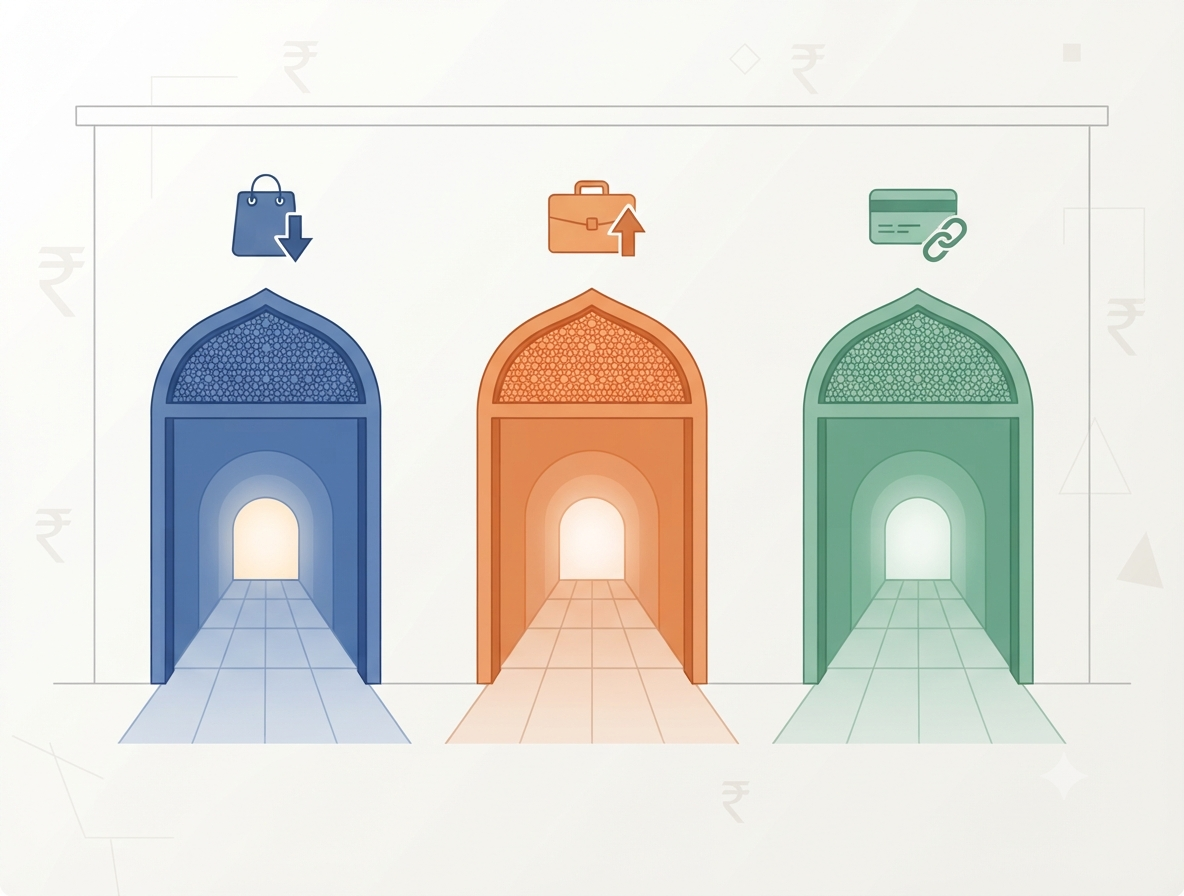
Breaking the paycheck-to-paycheck cycle permanently requires identifying which of the three root causes is driving it, and addressing that cause specifically.
Cause 1: Excessive expenses relative to income. The household is earning enough, but spending patterns consume the surplus. The exit is tracking actual spending, identifying the highest-impact discretionary categories, and making specific, sustained reductions. A Rs. 5,000 per month reduction in dining and entertainment spending, redirected to a separate savings account on salary day, changes the financial position within 6 months.
Cause 2: Insufficient income relative to necessary expenses. After genuinely necessary expenses, the income simply does not support savings. The exit here requires income growth, through salary negotiation, skill development, a side income, or a career change. Budgeting alone cannot save what does not exist as surplus.
Cause 3: A debt load consuming the margin that savings would otherwise occupy. This is the most common cause in Indian households that have been in the cycle for more than two years. The EMIs and minimum payments together consume 55% to 65% of income. Even with perfect budgeting of the remaining 35% to 40%, there is no meaningful savings capacity after rent, food, and utilities. The exit requires reducing the total monthly fixed obligation, through debt repayment, consolidation, or resolution.
Each exit is specific to its cause. Applying the wrong exit to a cause produces no result. A household whose cycle is driven by excessive debt load cannot break the cycle through tighter budgeting, because the budgeting margin does not exist. They need the debt load addressed first.
What to Do Today
The most practical first action for a paycheck-to-paycheck household is calculating the full picture accurately.
Total monthly income, net. Total monthly fixed obligations, every EMI and credit card minimum. Total outstanding on every credit product. The FOIR. What a savings account balance of Rs. 0 means for the household if an unexpected expense of Rs. 25,000 arrives this week.
This calculation is uncomfortable. It is also the only honest starting point for any plan that will actually work.
From this picture, the cause of the cycle becomes clear. Is the gap between income and obligations structural (a debt problem)? Is it behavioural (a spending problem)? Is it fundamental (an income problem)?
Each cause has a specific response. If the response is unclear, or if the debt load is the primary driver, FREED's free consultation provides the clarity and the path forward.

Mohit Juneja
Mohit Juneja writes educational content at FREED on debt management, credit scores, loan repayment, and borrowing best practices. His content is shaped by expert insights and industry knowledge, helping readers better understand their financial options and make informed decisions.
mohit.juneja@freed.care

FREED is India's trusted loan management platform. Founded in 2020 and headquartered in Gurugram, FREED has counselled 20 lakh+ people on personal loans, credit cards, and app loans. FREED charges fees only on successful settlement, not upfront. FREED does not handle secured loans (home loans, car loans, gold loans).
Media Mentions