Few things you should never do with your Credit Card
A credit card can help build credit, manage expenses, and earn rewards when used responsibly. Learn the key habits that keep credit card debt under control and help you avoid costly mistakes that can affect your financial health.

Mohit Juneja
Reviewed by FREED India, Debt Resolution Specialists
 4.7/5
4.7/5 ₹3,200Cr+
 20,000+
 20,00,000+4.7/5₹3,200Cr+20,000+20,00,000+
Key Takeaways

Credit cards charge 36% to 42% annual interest on unpaid balances one of the most expensive debt products available. Habits that allow balances to grow are disproportionately costly.
The single most damaging habit is paying only the minimum due which barely reduces the principal while interest compounds.
Cash advances are even more expensive than regular purchases interest begins immediately with no grace period, and additional fees apply.
Sharing card details, co-signing, and applying for multiple cards simultaneously are separate categories of risk security and credit score that most people underestimate.
If credit card habits have already created significant debt, FREED can help find a structured way out.
Why Credit Card Mistakes Are So Costly
Credit cards are structured differently from almost every other financial product. The interest rate is extremely high (3% to 3.5% per month 36% to 42% annually). The repayment is flexible minimum payment required, full payment optional. And the consequence of choosing less than full payment is compounding interest on the unpaid balance from the very next billing cycle.
This structure rewards discipline and punishes flexibility. A borrower who always pays in full benefits from an interest-free loan for up to 45 to 55 days, plus rewards. A borrower who pays anything less than the full amount, month after month, ends up paying significantly more for every purchase than its actual price.
The habits below are the ones that consistently turn a credit card from a useful tool into an expensive problem
Never 1: Pay Only the Minimum Due
This is the most dangerous credit card habit in India and the most common.
The minimum due on a credit card is typically 5% of the outstanding balance or Rs. 200, whichever is higher. It is set deliberately low low enough to feel manageable, too low to make meaningful progress on the principal.
On a Rs. 50,000 outstanding balance at 3.5% monthly interest, the interest added per month is Rs. 1,750. The minimum due is approximately Rs. 2,500. Of that payment, Rs. 1,750 goes to interest and only Rs. 750 reduces the principal. The balance barely moves. At this pace, clearing Rs. 50,000 takes years and costs tens of thousands of rupees in total interest.
The rule: pay the full outstanding balance every month before the due date. If full payment is not possible in a given month, pay as much above the minimum as the budget allows. Even doubling the minimum payment dramatically accelerates debt reduction.
Never 2: Use It for Cash Advances
A credit card cash advance withdrawing cash from an ATM using the credit card is one of the most expensive financial transactions available to an Indian consumer.
Three things make it worse than a regular credit card purchase:
No grace period. Regular credit card purchases have a 20 to 55 day interest-free window between purchase and due date. Cash advances have no grace period. Interest starts accruing from the moment the cash is withdrawn.
Higher interest rate. Many cards charge a higher interest rate on cash advances than on regular purchases sometimes 3.5% to 4% per month versus 3% to 3.5% for purchases.
Cash advance fee. In addition to the interest, a cash advance fee typically 2% to 3% of the amount withdrawn, with a minimum of Rs. 250 to Rs. 500 is charged immediately.
A Rs. 10,000 cash advance costs Rs. 200 to Rs. 300 in fees on day one, plus compounding interest from day one. If it is not repaid within a month, the total cost is significantly higher than a personal loan at 18% would cost for the same amount over the same period.
If cash is genuinely needed urgently, a small personal loan or a UPI credit line is almost always cheaper than a credit card cash advance.

FREED Expert Tip
Check whether your credit card has a feature called "Convert to EMI" or "Credit to Bank" that allows credit-limit-based transfers to your savings account at a defined interest rate. Some banks offer this at rates significantly lower than cash advance rates. This is not the same as a cash advance and may be a cheaper option for genuine short-term cash needs.
Reduce My EMINever 3: Ignore the Statement
The monthly credit card statement contains the full outstanding balance, the minimum due, the due date, the interest rate charged, and a transaction-by-transaction breakdown of all charges. Ignoring it not reading it, not opening the email, not checking the app is one of the most financially costly habits a credit card holder can have.
Errors in credit card statements are more common than most people realise. A duplicate charge. A transaction you did not authorise. An annual fee you were not expecting. A subscription auto-renewal for a service you cancelled. All of these appear in the statement and can only be disputed if noticed promptly.
Under RBI guidelines and the credit card issuer's dispute process, unauthorised transactions must be disputed within a defined timeframe. The longer a dispute is delayed, the harder it becomes to resolve. Ignoring statements eliminates the possibility of catching and disputing errors in time.
Read the statement. Every month. The full statement, not just the minimum due figure.
Never 4: Share Card Details on WhatsApp or Text
This is a security rule that many people treat as optional and pay for with unauthorised transactions.
Credit card details the 16-digit card number, expiry date, and CVV are the only credentials required to make online purchases on many platforms. Sharing these details via WhatsApp, text message, email, or any other digital channel creates a permanent, forwarded, screenshotable record of the full card details.
Even sharing with a trusted family member creates risk not from them, but from their device, their message history, or anyone who accesses their phone later. Card details shared digitally can be compromised at any point in their digital life.
If helping someone make a purchase requires sharing card details, do it verbally in person. Delete any digital message containing card details immediately after. And always use virtual card numbers or one-time-password-protected payments where available.

Legal Note
Under RBI guidelines on unauthorised electronic transactions, banks are required to reverse charges for unauthorised transactions reported within 3 days of receiving the communication about the transaction, provided the customer was not negligent in sharing credentials. If you share your card details digitally and they are misused, the bank may classify this as customer negligence and deny the reversal. Protect your card details to protect your reversal rights.
Know your rights as a credit card holderNever 5: Co-Sign for Someone Else
Co-signing a credit card application or adding someone as a supplementary card holder with full credit access creates a financial liability that most people do not fully understand before agreeing to it.
When you co-sign, you become legally responsible for the debt if the primary holder does not pay. Every missed payment by the primary holder appears on your credit report as your own missed payment. Every balance the primary holder carries affects your credit utilisation ratio.
Co-signing for a family member with good intentions has damaged credit scores and created debt obligations for thousands of people who were trying to help. The relationship with the person you co-signed for does not change the financial consequence to you.
If someone needs a credit card and cannot qualify on their own, the appropriate path is a secured credit card (against a fixed deposit) in their own name not co-signing on yours.
Never 6: Max Out the Limit
Using 90% or more of your credit card limit is called maxing out and it creates two distinct problems.
The first is financial: a near-maxed card has almost no buffer for unexpected expenses. If an emergency arises, the card cannot absorb it.
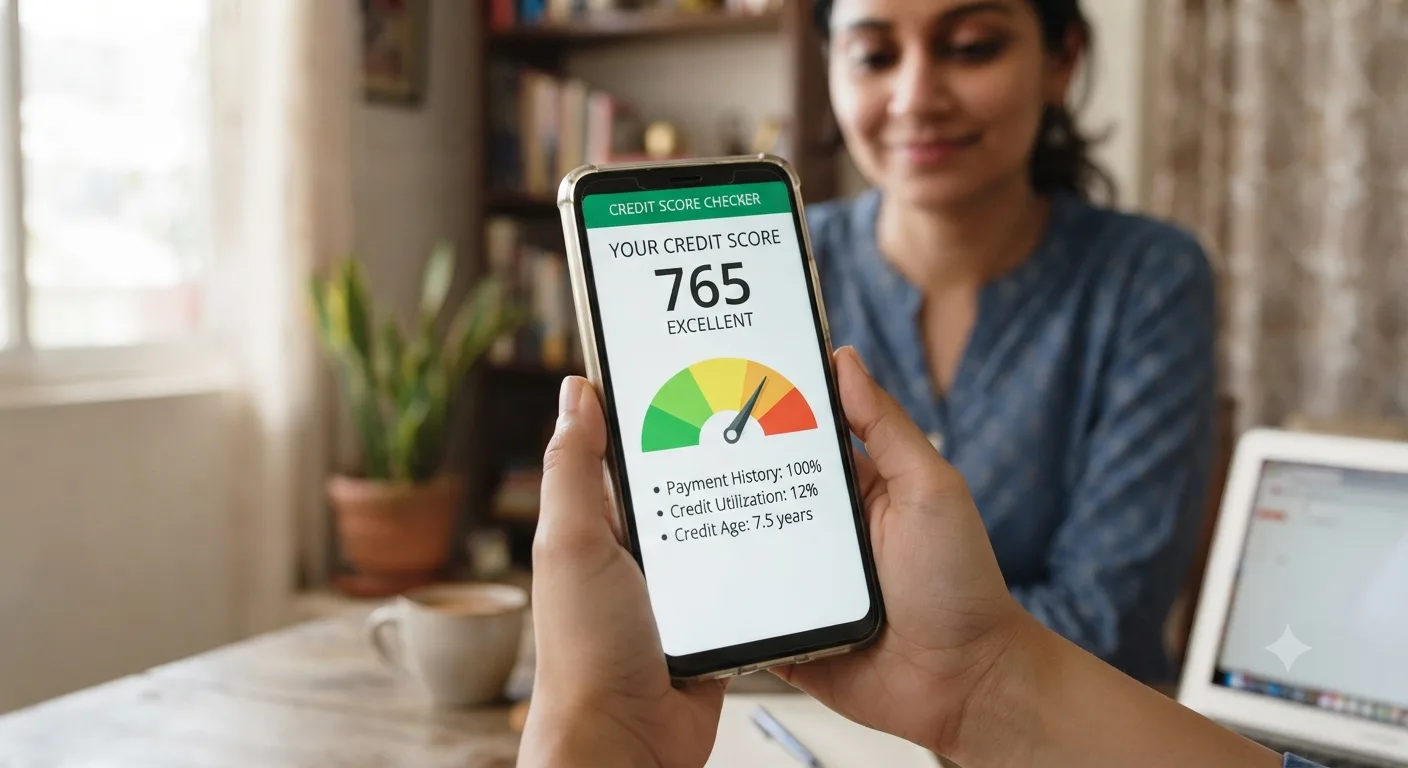
The second is the credit score impact: credit utilisation the percentage of total available credit being used is one of the most heavily weighted factors in the CIBIL score. A utilisation above 30% begins to suppress the score. A utilisation above 70% significantly suppresses it. A maxed-out card can reduce the CIBIL score by 50 to 100 points even without a single missed payment.
Keep credit card utilisation below 30% of the available limit. If regular spending consistently reaches 60% to 70% of the limit, request a credit limit increase which mechanically lowers the utilisation ratio even if spending stays the same.
Never 7: Apply for Multiple Cards at Once
Every credit card application triggers a hard enquiry on the CIBIL report. This is recorded and causes a small, temporary score reduction.
Multiple applications within a short period produce multiple hard enquiries which creates a visible pattern that signals financial stress to every lender who subsequently reviews the report. It suggests the applicant is urgently seeking credit, which is exactly the profile lenders want to avoid.
Apply for one card at a time. If rejected, wait at least three to six months before the next application using that time to understand why the rejection occurred and address the root cause. Multiple rejections in quick succession are both directly damaging (each rejection lowers the score slightly through the hard enquiry) and indirectly damaging (each rejection is noted in the inquiry history).
Never 8: Use It for EMI Without Reading the Terms
The festive season EMI offer. The "no cost EMI" on a new appliance. The "convert to EMI" option for a large purchase. These are legitimate features but they come with terms that most people do not read before clicking agree.
Processing fees are often included in "no cost EMI" arrangements. The EMI amount may include a fee that, when annualised, represents a significant interest rate even when the offer is marketed as interest-free.
Some EMI conversions carry foreclosure charges if you want to close the balance early. Some block the corresponding portion of the credit limit for the full EMI tenure, reducing available credit.
Before accepting any EMI conversion on a credit card purchase or a new purchase through an EMI offer read the specific terms. Ask: what is the processing fee? What is the effective interest rate? Can I close this early without penalty? These questions take two minutes and can save thousands of rupees.
Never 9: Miss the Payment Due Date
Missing the credit card payment due date has two consequences that most people know and one that many do not.
The known consequences: a late payment fee (typically Rs. 500 to Rs. 1,300 depending on the outstanding amount), and the loss of the interest-free grace period, meaning interest begins on all purchases from the transaction date rather than from the statement date.
The less-known consequence: a missed payment is reported to the credit bureau. It affects the CIBIL score. Consistently missing due dates even by a day or two produces a pattern of late payments that can reduce the score meaningfully over time.
Set up auto-pay for at least the minimum due amount. Process the full payment two to three days before the due date to account for bank processing time. Put the due date in a recurring phone calendar reminder a week before.
Are You in a Loan Trap? Quick Check
Move the slider to your total EMIs as a % of monthly salary. See your debt stress level instantly.
EMIs as % of Monthly Salary
Never 10: Carry Multiple Cards You Do Not Use Actively
Having several credit cards, each with its own annual fee, each generating a statement, each requiring monitoring for unauthorised transactions, is administratively complex and financially wasteful.
Annual fees on unused cards are charges without benefit. An unused card that is not actively monitored is more vulnerable to fraudulent use that goes unnoticed. And multiple card applications in the past, visible in the credit enquiry history, can affect how lenders assess a new application.
Carry and use only the cards that provide genuine value through rewards or features that match your actual spending pattern. Cancel cards that charge fees without providing equivalent benefit. Keep one or two older cards open (without annual fees) to preserve credit age and utilisation ratio.
What to Do If Card Habits Have Already Created Debt
Identifying the habits above is the preventive step. For many people reading this, some of these habits have already been running for months or years and the result is a credit card balance that has grown significantly.
If the balance is still manageable within what can be cleared within six to twelve months with disciplined above-minimum payments a structured repayment strategy (debt avalanche or snowball) is the appropriate path.
If the balance has grown to a level where even aggressive above-minimum payments produce almost no visible principal reduction because interest is consuming most of what is paid the debt structure needs to change. FREED can assess whether consolidation (one lower monthly payment) or resolution (settling for less than the full outstanding) is the appropriate approach.
The first consultation is free and honest about which situation applies.
Credit card habits already created debt you cannot manage?
FREED can help find the right way out. Talk to a FREED Expert Free, no pressure.
Connect Now
Mohit Juneja
Mohit Juneja writes educational content at FREED on debt management, credit scores, loan repayment, and borrowing best practices. His content is shaped by expert insights and industry knowledge, helping readers better understand their financial options and make informed decisions.
mohit.juneja@freed.care

FREED is India's trusted loan management platform. Founded in 2020 and headquartered in Gurugram, FREED has counselled 20 lakh+ people on personal loans, credit cards, and app loans. FREED charges fees only on successful settlement, not upfront. FREED does not handle secured loans (home loans, car loans, gold loans).
Media Mentions