Busting Myths About Credit Cards
Credit cards get a lot of blame and a lot of undeserved praise. Most people either fear them too much or trust them too much. Here's what's actually true.
Mohit Juneja
Reviewed by FREED India, Debt Resolution Specialists
 4.7/5
4.7/5 ₹3,200Cr+
 20,000+
 20,00,000+4.7/5₹3,200Cr+20,000+20,00,000+
Key Takeaways

A credit card is not free money, every unpaid rupee attracts 36–42% annual interest.
Paying only the minimum keeps you in debt for years and costs far more in interest.
Carrying a balance does NOT improve your CIBIL score, it can actually hurt it.
Used responsibly, credit cards can build credit and offer real benefits. The key word is "responsibly."
If credit card debt has already grown, FREED can help reduce the burden, legally and without harassment.
Why Credit Card Myths Are Dangerous
Most people in India learn about credit cards the wrong way from friends, from ads, or by trial and error.
The friend says "just pay the minimum." The ad says "enjoy now, pay later." The fine print says 3.5% per month, which is 42% per year.
By the time the truth is clear, the bill is already large.
Myths about credit cards are not just wrong. They're expensive. They lead to decisions that result in years of debt, damaged credit scores, and financial stress that could have been avoided.
Let's clear them up, one by one.
Myth 1: "A Credit Card Is Free Money"
The myth: I have a ₹1 lakh limit. That means I have ₹1 lakh to spend.
The truth: No. You have ₹1 lakh to borrow - and pay back. Every rupee you spend on a credit card is a loan. If you pay the full bill before the due date, it's an interest-free loan. If you don't - interest begins. And credit card interest in India is typically 3–3.5% per month. That's 36–42% per year. One of the highest interest rates on any financial product.
A ₹50,000 outstanding balance at 3.5% monthly interest costs ₹1,750 in interest in the very first month even if you didn't buy anything new.
The rule: Only spend what you can pay back in full this month. Treat the limit as a convenience, not an allowance.
Myth 2: "Paying the Minimum Is Enough"
The myth: As long as I pay the minimum due, I'm fine.
The truth: Paying the minimum keeps your account from going into default. That's all it does. It does not reduce your debt in any meaningful way.
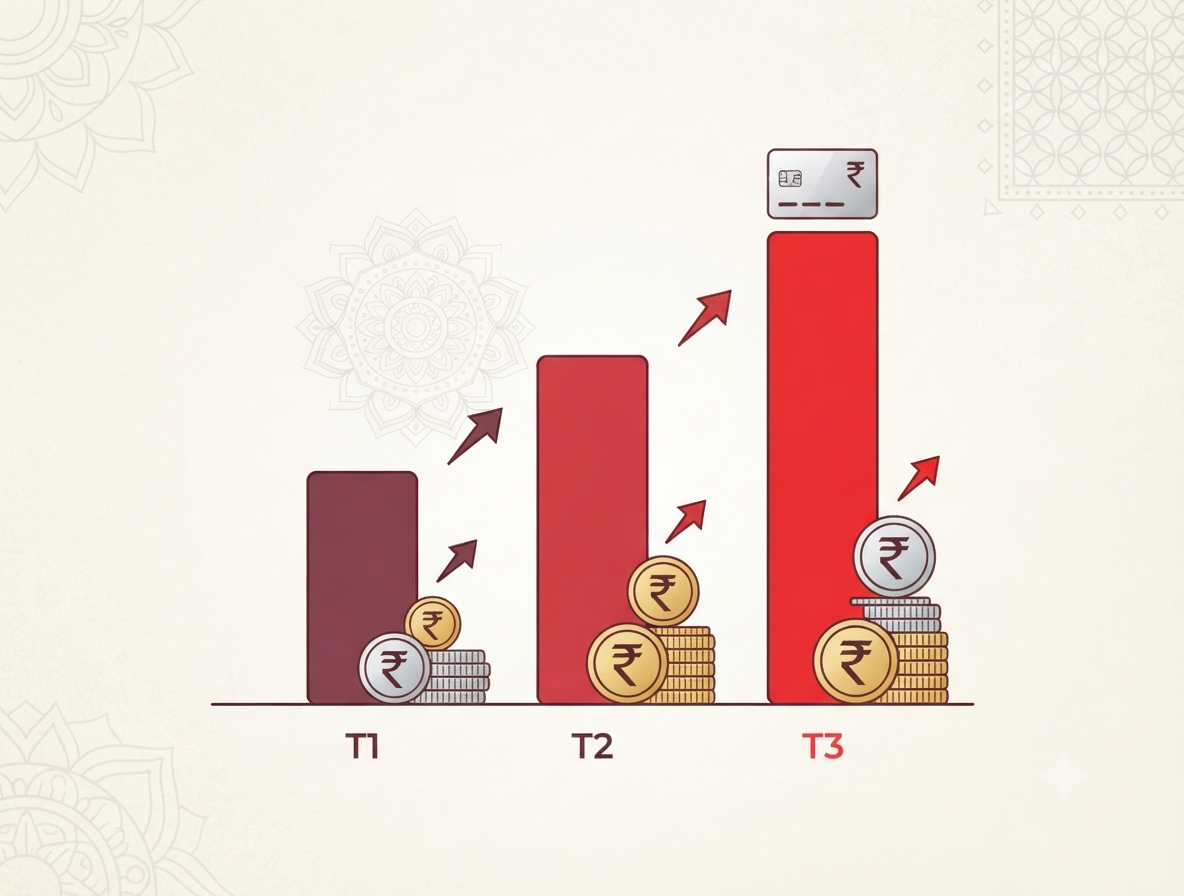
Here's why: the minimum due is usually 5% of the outstanding balance, or ₹200 - whichever is higher. On a ₹50,000 balance, that's ₹2,500. But the interest added that month is ₹1,750. So only ₹750 actually goes toward reducing the principal.
At that pace, clearing ₹50,000 by minimum payments alone takes years - and the total interest paid can exceed the original amount borrowed.
The rule: Always aim to pay the full statement balance. If you can't, pay as much above the minimum as possible. The more you pay, the faster the interest stops compounding.

FREED Expert Tip
If you can't pay the full bill this month, at least pay double the minimum. Even that small difference dramatically reduces how long you stay in debt and how much interest you pay overall.
Talk to FREEDMyth 3: "Carrying a Balance Improves Your CIBIL Score"
The myth: Keeping some balance on your card shows the bank you're "using credit", which helps your CIBIL score.
The truth: This is completely false and one of the most costly myths in circulation.
Your CIBIL score is affected by something called credit utilisation how much of your available credit limit you're using. Carrying a large balance means high utilisation, which lowers your score.
Paying your bill in full every month so your outstanding balance is zero is better for your CIBIL score than carrying any balance.
The rule: Pay the full bill. Your score will thank you. The bank will not penalise you for being responsible with credit.
Myth 4: "Credit Cards Are Only for Rich or Salaried People"
The myth: Credit cards are for people with high incomes. They're not for regular people.
The truth: Credit cards are available to a wide range of income brackets. Many banks in India offer entry-level or secured credit cards (against a fixed deposit) to people with modest incomes or no formal salary slip.
Used correctly for fixed monthly expenses like groceries or bills, paid in full every month, a credit card can actually help someone with a low income build a CIBIL score and access better loan terms later.
The rule: A credit card is a tool. Whether it helps or hurts depends entirely on how it's used, not on how much you earn.
Myth 5: "Having More Credit Cards Means More Debt Problems"
The myth: The more cards you have, the more likely you are to overspend and get into trouble.
The truth: The number of cards you hold is not the problem. The behaviour is.
Someone with four credit cards who pays every bill in full every month has a healthy credit profile, often better than someone with one card who carries a permanent balance.
Multiple cards, when managed well, can actually improve your credit utilisation ratio (because your total available limit is higher) and build a stronger credit history.
The rule: One poorly managed card causes more damage than four well-managed ones. The card count doesn't matter. The discipline does.

What the Law Says
RBI regulations require all credit card issuers to clearly display the annual percentage rate (APR) and all applicable charges before issuing a card. You have the right to a complete fee schedule including late payment fees, overlimit charges, and interest rates before signing up. If this was not provided, you can raise a complaint with the RBI Banking Ombudsman.
Know your rights as a credit card holderMyth 6: "Closing Old Credit Cards Improves Your Score"
The myth: Old cards I don't use are a liability. Better to close them and clean up.
The truth: Closing old credit cards can actually hurt your CIBIL score for two reasons.
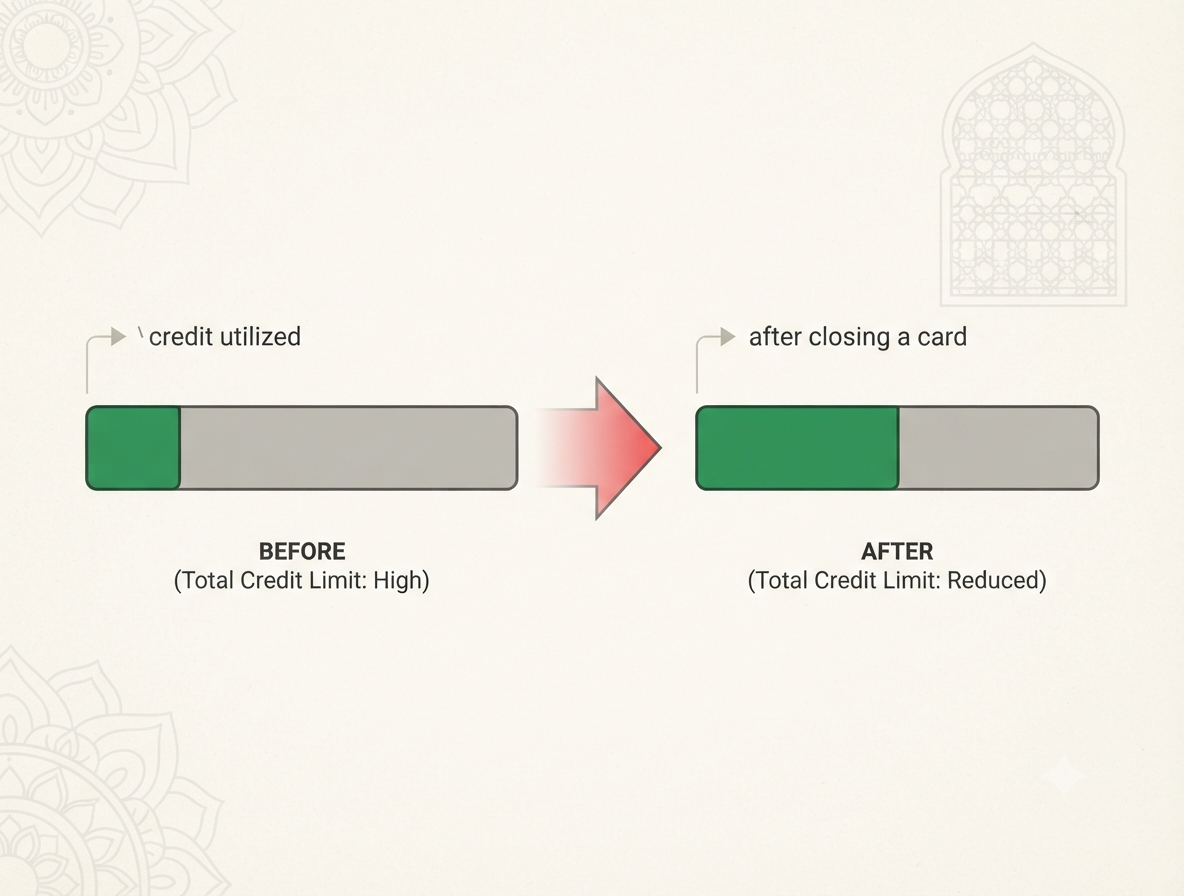
First, it reduces your total available credit limit. This increases your credit utilisation ratio (the percentage of available credit you're using), which can lower your score.
Second, CIBIL considers the age of your credit accounts. Older accounts with good payment history are valuable. Closing them removes that history from the equation.
The rule: Don't close old cards unless they have a high annual fee you can't justify. If they're free, keep them open - use them occasionally for a small purchase and pay it immediately. That keeps the account active and your score intact.
Myth 7: "Reward Points Make Credit Cards Always Worth It"
The myth: I use my card for everything because of the reward points and cashback. I'm actually saving money.
The truth: Reward points have real value but only if you're paying the full bill every month. The moment you carry a balance and pay interest, the math collapses entirely.
At 3.5% monthly interest, you're paying ₹3,500 in interest for every ₹1,00,000 outstanding. Most reward programs give 1–2% back. That's ₹1,000–₹2,000 in rewards versus ₹3,500+ in interest. A net loss every single month.
Reward points are a benefit for responsible users. They're an illusion for those carrying balances.
The rule: If you pay in full every month, maximise your rewards. If you carry a balance, stop thinking about rewards. The interest is cancelling them out many times over.
Myth 8: "Credit Card Debt Can Be Ignored or Settled Cheaply Later"
The myth: If things get bad, I'll just stop paying for a while. Banks eventually settle for much less. No big deal.
The truth: This approach has serious consequences and the "settle cheaply later" part is mostly wishful thinking without professional help.
When you stop paying a credit card bill, three things happen almost immediately:
Your CIBIL score drops sharply. Missed payments are reported to credit bureaus. Each missed payment makes future loans, house rentals, and even some jobs harder to access.
Interest and penalties compound. Late payment fees, over-limit charges, and compounding interest can grow the debt by 50–100% within 12–18 months of non-payment.
Recovery calls begin. Banks use recovery agents, and while there are legal limits on what they can do, the harassment is real and stressful.
Settlement is possible but it requires negotiation, and banks do not simply offer it unprompted. Without professional help, most people either settle badly (paying more than needed) or damage their credit record permanently.
The rule: Don't ignore it. Don't assume it goes away. Act early, the options are far better before a default than after.
Are You in a Loan Trap? Quick Check
Move the slider to your total EMIs as a % of monthly salary. See your debt stress level instantly.
EMIs as % of Monthly Salary
When Credit Card Debt Has Already Piled Up
Many people reading this already have credit card debt they're struggling with. The myths led them here to minimum payments, ignoring the balance, assuming the interest was manageable.
If that's you, you're not alone. Credit card debt is one of the most common financial problems FREED handles.
FREED looks at your full situation, the total outstanding, the interest rate, the number of cards and finds the right path out. For some, that's Debt Consolidation: combining multiple card dues into one lower monthly payment. For others, its Debt Resolution: negotiating a settlement for less than the full amount owed, legally and without the harassment continuing.
Over 10,000 Indians have used FREED to resolve credit card debt. The first conversation is free and it often changes how people see their situation entirely.

Mohit Juneja
Mohit Juneja writes educational content at FREED on debt management, credit scores, loan repayment, and borrowing best practices. His content is shaped by expert insights and industry knowledge, helping readers better understand their financial options and make informed decisions.
mohit.juneja@freed.care

FREED is India's trusted loan management platform. Founded in 2020 and headquartered in Gurugram, FREED has counselled 20 lakh+ people on personal loans, credit cards, and app loans. FREED charges fees only on successful settlement, not upfront. FREED does not handle secured loans (home loans, car loans, gold loans).
Media Mentions