3 Credit Card Facts That Can Change Your Life
The majority of citizens use credit cards without fully understanding how they work. You will never use your card the same way again after learning these three things.
Mohit Juneja
Reviewed by FREED India, Debt Resolution Specialists
 4.7/5
4.7/5 ₹3,200Cr+
 20,000+
 20,00,000+4.7/5₹3,200Cr+20,000+20,00,000+
Key Takeaways

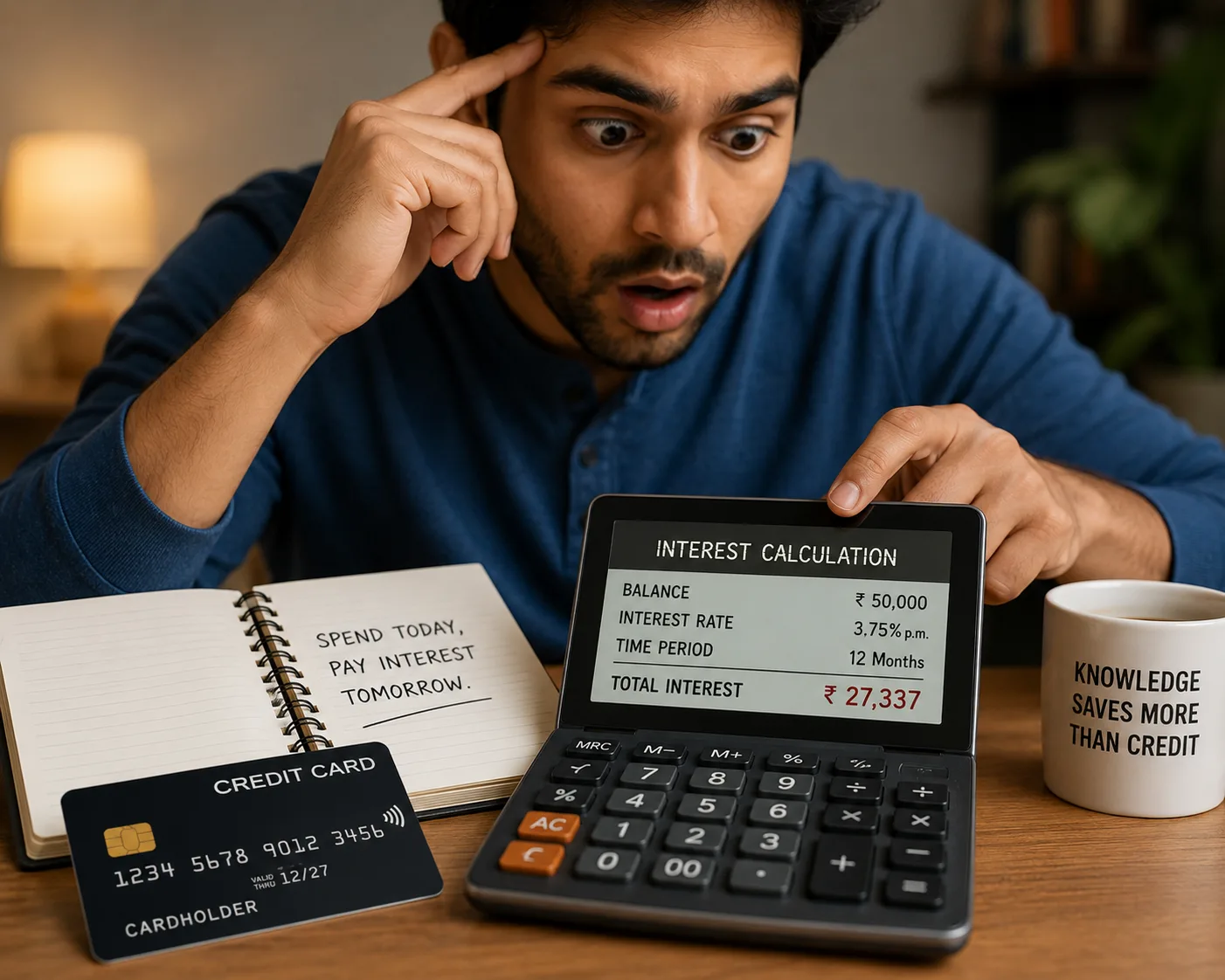
One of the most costly financial errors one may do is to merely pay the minimum amount owed on a credit card. While interest builds month after month, the outstanding amount hardly decreases at 36 to 42% yearly interest.
Every fifteen days, credit bureaus are notified of your outstanding credit card balance. Even if you make your payments on time, high utilization—using more than 30% of your limit—actively lowers your CIBIL score.
The grace period, which is a 50-day interest-free window, is only applicable if you have fully paid your previous month's bill. It is completely canceled after one month of partial payment.
Once these three truths are known, most people's credit card usage is altered, and most credit card debt crises are avoided.
FREED can assist with consolidation or settlement if credit card debt has become out of control.
Why Most People Misunderstand Credit Cards
Credit cards are made to be simple to use. The application is instant. The limit resembles money that is available. The minimum amount owed appears to be a reasonable monthly expense.
This is not an accident. Interest on unpaid amounts is how credit card issuers generate money. Interest is collected in proportion to how easy it is to use the card without having to pay it back in full.
One of the most important pieces of financial knowledge is knowing how credit cards actually function, not how they are advertised. And it boils down to three particular facts.
Fact 1: The Minimum Due is Not a Payment - It is a Trap
Every month your credit card statement shows two numbers.
What you truly need is known as the Total Amount Due. The minimum amount owed is usually five percent of the entire amount paid.
The majority of people believe they have done the right thing when they pay the bare minimum. They haven't. They have carried out precisely what the bank intended the minimum to promote.
When you merely pay the minimum, the following truly occurs:
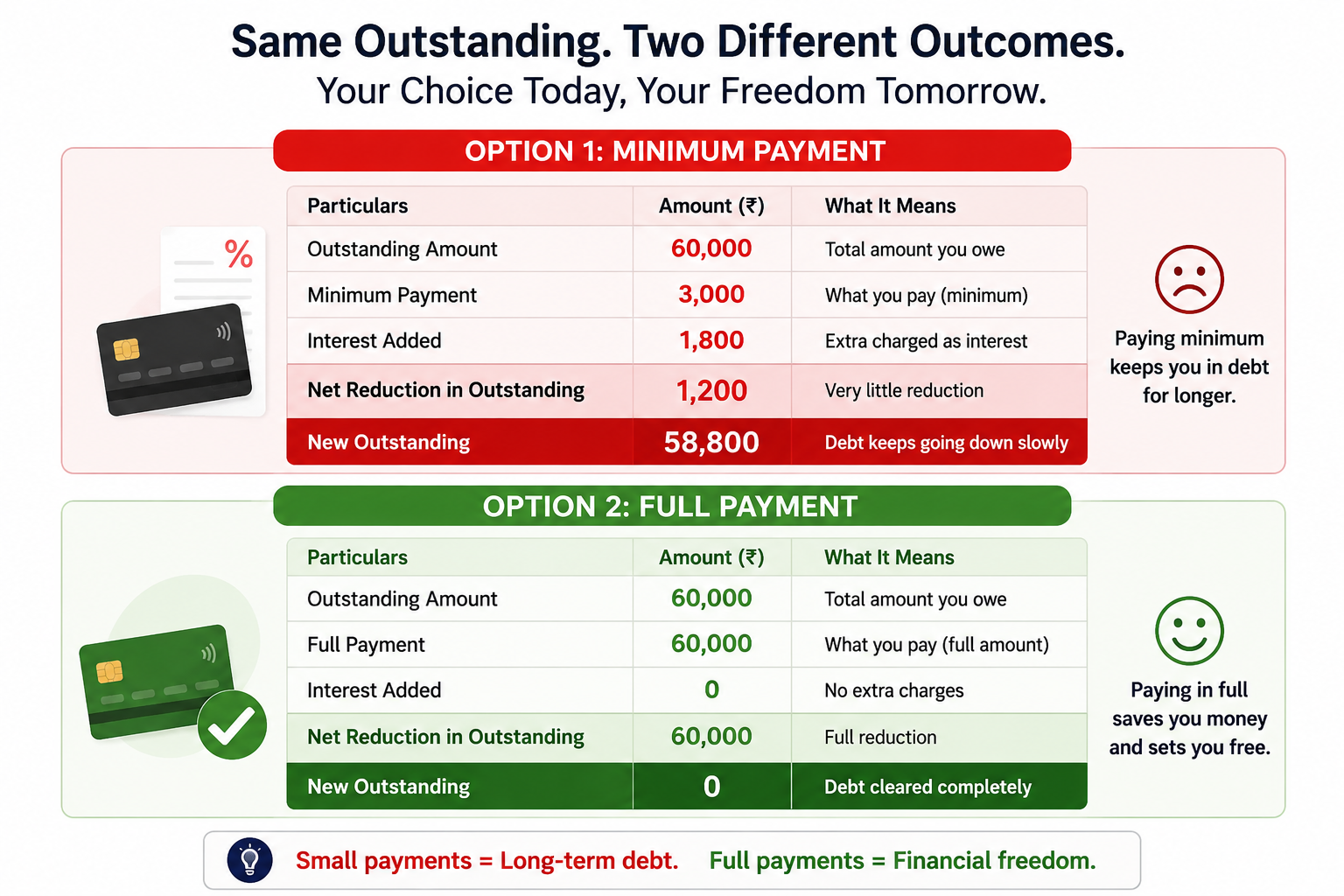
The remaining 95% of your debt is carried over at full interest, which is between 36 and 42% annually. That amounts to about Rs 1,800 in interest charged in a single month on an outstanding balance of Rs 60,000. Because the Rs 3,000 minimum you paid was nearly fully absorbed by the additional interest, your outstanding balance for the following month is Rs 59,800 before you even swipe the card again.
At this rate, it will take more than ten years to pay off Rs 60,000 in credit card debt with just the minimum. You ultimately pay about Rs 1,80,000, which is three times the amount you previously owing.
The minimum amount owed is necessary to maintain the activity of your account. It was never intended to assist you in paying off debt. Pay the entire amount paid at all times. each month. Without fail.
Fact 2: Your Credit Card Affects Your CIBIL Score Every Single Month
Many people believe that failing to make a payment on their credit card simply has an impact on their credit score. That is wrong.
According to current RBI regulation beginning 2025, your bank reports your credit card outstanding balance to credit bureaus every 15 days. This implies that your CIBIL report is updated twice a month with your credit utilization ratio, which shows how much of your credit limit you are using.
30% of your CIBIL score comes from credit utilization. After payment history, it is the second most important factor.
Your utilization is 75% if your credit card limit is Rs 1,00,000 and you have an outstanding balance of Rs 75,000. Even if you have never missed a payment in your life, it is actively lowering your score every reporting cycle.
Below 30% is the suggested range. This entails keeping your overdue balance below Rs 30,000 at the Rs 1,00,000 level.
Practically speaking, this means two things. First, rather than just managing the minimum, you should try to pay off your debt as soon as you can. Secondly, you should never allow your regular spending to get close to your credit card limit.
Your credit card debt is more than simply a financial burden. It is a CIBIL score cost that has long-term effects on your loan eligibility, interest rate, and terms.

FREED Expert Tip
Call your bank and ask for an increase in your credit limit if you want to swiftly lower your credit card usage without making additional payments. If accepted, your utilization ratio immediately decreases and your limit increases, but your outstanding balance remains same. Without spending an additional rupee, this can raise your CIBIL score in a single reporting cycle. Make strategic use of this; don't raise expenditure to meet the new cap.
Enroll NowFact 3: The Grace Period Only Works if You Paid Last Month's Bill in Full
The majority of Indian credit card users are unaware of this fact, which has a major monetary effect on them.
The interest-free window on your credit card is known as the grace period, and it usually lasts between 20 and 50 days from the end of your billing cycle to the due date. If you pay the entire amount due during this time, you won't be charged any interest on your purchases. You have essentially received free short-term credit from the bank.
The catch that most people overlook is that the grace period is only applicable if your prior month's bill was paid in full.
You completely break the grace period for the current month if you only paid the minimum amount paid last month or any amount below the whole amount paid. Every new purchase you make draws attention from the moment it is made. Not from the deadline. from the very beginning.
This implies that even if you intend to pay it off quickly, every future purchase becomes costly as soon as you start paying just the minimum. As soon as you swipe, the bank begins to charge interest.
Because of this, a single month's minimum payment can start a domino effect. First month: break the grace period and pay the minimum. In the second month, outstanding debt increases more quickly and new purchases are subject to day-one interest. In the third month, it is much more difficult to pay the entire cost. The cycle gets more intense.
Paying the entire amount owed is necessary to end this cycle, even if it takes a few challenging months. The grace period is extended and the card is once more free after complete payment.

What the Law Says
Credit card companies are required by the RBI's Fair Practices Code to clearly display on each monthly statement the entire interest cost, including the time it will take to pay the debt at that rate, if you just pay the minimum amount payable. Your bank is not adhering to the RBI's transparency rules if this information is missing from your credit card statement. At any time, you are entitled to a complete written explanation of how your interest is determined.
Enroll Now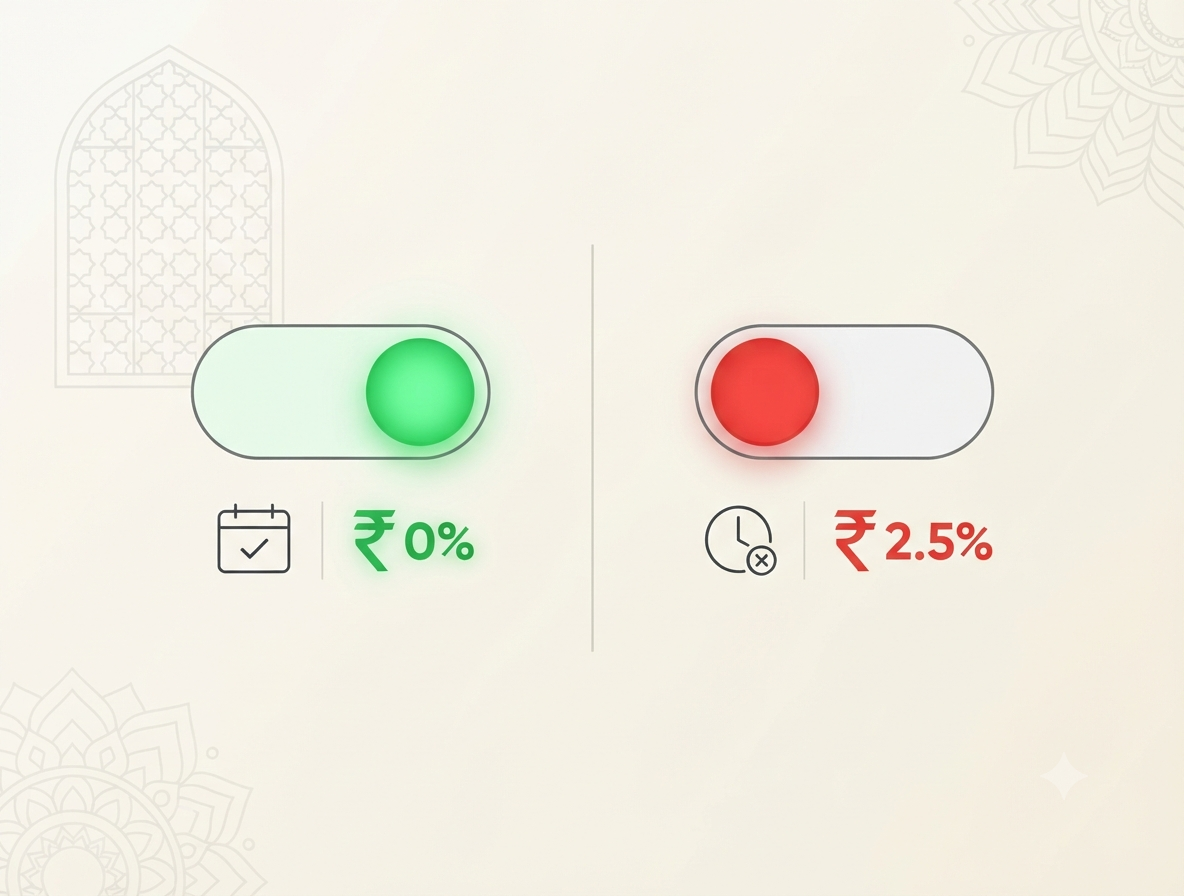
How to Use a Credit Card Correctly
Together, these three facts suggest a single, straightforward credit card operating concept.
Make scheduled purchases using the card that you have already budgeted for. Every month, pay the entire amount paid before the deadline. Maintain a balance that is regularly less than 30% of your credit limit.
That's it. If you follow these three guidelines, using a credit card will save you money on interest, improve your CIBIL score, and provide you a helpful 20–50 day float on your purchases.
Configure auto-debit for the entire amount on the statement. All three rules become automatic with this one action.
When Credit Card Debt Has Already Become Unmanageable
You are not alone if you are reading this and realize that your credit card problem has already progressed beyond the point at which these suggestions are applicable-for example, the amount owed has increased too much, the minimum payments are hardly making a dent, or the interest is growing more quickly than you can afford.
This is a relatively typical scenario. Additionally, there are actual, organized answers.
If the amount owed is substantial and increasing yet you are still able to pay: Your credit card balances are combined into a single personal loan through FREED's Debt Consolidation Program for 14 to 20% interest, which is significantly less than the 36 to 42% interest you are presently paying. Just one EMI. One deadline. The actual debt is decreased by more of each payment.
FREED's Debt Resolution Program works with your credit card company to settle your debt for less than you owe if you have already missed payments and are unable to pay back the entire amount. FREED clients often settle for 56% less than what was initially paid.
FREED Shield, which prevents recovery harassment as soon as you sign up, is a feature of both services.
Are You in a Loan Trap? Quick Check
Move the slider to your total EMIs as a % of monthly salary. See your debt stress level instantly.
EMIs as % of Monthly Salary

Mohit Juneja
Mohit Juneja writes educational content at FREED on debt management, credit scores, loan repayment, and borrowing best practices. His content is shaped by expert insights and industry knowledge, helping readers better understand their financial options and make informed decisions.
mohit.juneja@freed.care

FREED is India's trusted loan management platform. Founded in 2020 and headquartered in Gurugram, FREED has counselled 20 lakh+ people on personal loans, credit cards, and app loans. FREED charges fees only on successful settlement, not upfront. FREED does not handle secured loans (home loans, car loans, gold loans).
Media Mentions