Rights of the Creditor: What Banks and Lenders Can Legally Do in India
Knowing your rights as a borrower is essential. So is knowing what rights your creditor actually has. Understanding both sides creates clarity about what is legitimate, what is not, and how to respond to each.
FREED India
Reviewed by FREED India, Debt Resolution Specialists

 4.7/5
4.7/5 ₹3,200Cr+
 20,000+
 20,00,000+4.7/5₹3,200Cr+20,000+20,00,000+
Key Takeaways

Creditors in India have legitimate, legally defined rights to recover money owed. Understanding these rights helps borrowers distinguish lawful collection activity from prohibited harassment.
Creditors can contact borrowers during permitted hours, issue formal notices, report payment status to credit bureaus, initiate civil legal proceedings for recovery, and for secured debt, take possession of pledged assets under the SARFAESI Act.
Creditors cannot threaten arrest for unsecured debt, use abusive language, contact third parties to embarrass borrowers, or take possession of assets pledged for other loans without following the legally defined process.
Understanding creditor rights reduces the fear that prevents many borrowers from engaging proactively with their situation, and makes negotiation more informed and effective.
FREED helps borrowers navigate creditor relationships professionally, protecting borrower rights while facilitating resolution.
Why Understanding Creditor Rights Matters for Borrowers
The relationship between a borrower and a creditor is not only about what the borrower owes. It is also about what the creditor can legitimately do to recover it. Understanding creditor rights serves two practical purposes for borrowers.
First, it removes fear. Many borrowers who have missed payments live in a state of undefined anxiety about what the bank can do. Recovery agents exploit this anxiety by implying consequences that do not exist under Indian law. Knowing what creditors can and cannot do converts undefined anxiety into specific knowledge, which is manageable.
Second, it makes negotiation more effective. A borrower who understands what the creditor can legitimately pursue, including the legal timeline and the cost of that pursuit, understands why creditors often prefer negotiated settlement over legal action. This knowledge is a negotiating tool.
The sections below cover creditor rights comprehensively, in the Indian legal context.
What Creditors Can Legally Do: The Complete Picture
The rights of creditors in India are defined by the loan or credit agreement, the Reserve Bank of India guidelines, the SARFAESI Act (for secured lending), the Debt Recovery Tribunal framework, and Indian civil law. Within this framework, creditors have the following legitimate rights.
The right to demand repayment. A creditor has the fundamental right to demand repayment of money lent according to the terms agreed at disbursement. This right is unconditional and does not depend on the borrower's current circumstances.
The right to charge interest and penalties. As defined in the loan agreement, the creditor has the right to continue charging interest on outstanding balances and to apply late payment fees and penalty charges in accordance with the disclosed terms.
The right to contact the borrower. Creditors can contact borrowers to discuss repayment, send formal notices, and make collection calls during permitted hours (8 AM to 7 PM under RBI guidelines).
The right to report to credit bureaus. Creditors have a legal obligation and a right to accurately report payment status to credit bureaus. Late payments, defaults, and NPA classifications are all legitimately reported. This is not harassment. It is accurate recording of payment behaviour.
The right to initiate legal proceedings. For any unpaid debt, a creditor can initiate civil legal proceedings for recovery. This is always a civil matter for consumer debt. It involves filing a money recovery suit in the appropriate civil court, or approaching the Debt Recovery Tribunal for amounts above Rs. 20 lakh.
The right to use recovery agents. Creditors can engage third-party recovery agencies to assist with collection, within the boundaries defined by RBI's Master Circular on Recovery Agents.

FREED Expert Tip
The fact that a creditor has the right to do something does not mean the creditor will necessarily exercise it. Legal action for small consumer debt is expensive, slow, and uncertain. Most creditors prefer negotiated resolution. Understanding this balance, the creditor has the right but often prefers not to use it, is the foundation of effective settlement negotiation.
Enroll NowThe Collection Process: What Is Permitted at Each Stage
The collection process has defined stages, each with specific permitted activities.
Stage 1 (0 to 30 days past due): Automated reminders through SMS, email, and app notifications. Courtesy calls from customer service. All contacts must occur between 8 AM and 7 PM.
Stage 2 (30 to 90 days past due): More active collection. Recovery agent calls within permitted hours. Formal written demand notices. Home or workplace visits during reasonable hours after prior notification. All within the RBI Master Circular boundaries: professional language, clear identification, no abusive conduct.
Stage 3 (90 or more days, NPA classification): The account is classified as an NPA internally. More formal collection and recovery activity. Legal notices may be issued. For secured debt, SARFAESI Act process may begin (see below).
Stage 4 (Extended NPA): Potential initiation of legal recovery proceedings. For unsecured debt, filing a money recovery suit in civil court or approaching the Debt Recovery Tribunal for eligible amounts. These are civil proceedings, not criminal.
At every stage, the boundaries on conduct remain constant regardless of how long the default has continued. Extended default does not give recovery agents the right to harass, threaten, or use prohibited conduct.
What Creditors Can Do Through Legal Channels
For unsecured consumer debt (credit cards, personal loans), the legal recovery process in India is civil, not criminal.
Money Recovery Suit: A creditor can file a suit in the appropriate civil court seeking a decree for the amount owed. If the court grants the decree, the creditor can then seek execution of the decree against the borrower's assets. This process takes months to years in the Indian civil court system.
Debt Recovery Tribunal (DRT): For debts above Rs. 20 lakh, creditors can approach the DRT, which provides a faster adjudication process than regular civil courts. A DRT order or decree is enforceable.
Summary Suit under Order 37 of CPC: For debt backed by written contracts (which most loans and credit agreements are), creditors can file a summary suit which moves through the civil court process more quickly than a regular suit. The borrower must appear and demonstrate a genuine defence to avoid a summary decree.
For all of these, the process is civil. The outcome, in the worst case, is a court decree that allows the creditor to pursue execution against assets. For unsecured consumer debt, this does not mean immediate asset seizure. It means a legal order authorising the creditor to approach the court for attachment of specific assets identified by the creditor.

Legal Note
A borrower who receives a legal notice or court summons related to debt recovery has the right to file a written reply within the specified timeframe and to present their case. Ignoring a court notice is treated as non-contest and has serious consequences. If a legal notice or DRT summons arrives, engage a lawyer with experience in banking law immediately. Do not ignore it.
Know your rights as a borrowerWhat Creditors Can Do with Secured Versus Unsecured Debt
The distinction between secured and unsecured debt significantly affects what creditors can do when default occurs.
Secured debt (home loans, vehicle loans, gold loans): The lender holds a specific asset as collateral under the loan agreement. If the borrower defaults and does not respond to the cure process, the SARFAESI Act (Securitisation and Reconstruction of Financial Assets and Enforcement of Security Interests Act, 2002) allows the creditor to take possession of the secured asset without court intervention, subject to specific procedural requirements including:
A demand notice of 60 days giving the borrower time to repay and cure the default before any possession action is initiated. A formal possession notice before taking physical possession. The asset, if ultimately taken, must be sold through a public auction process with proceeds applied against the outstanding.
This is a specific right available only for secured lending. It does not apply to personal loans or credit card balances, which are unsecured.
Unsecured debt (personal loans, credit cards): No collateral is pledged. The creditor's recourse is through the civil court process described above. The creditor cannot seize any specific asset as a matter of right without first obtaining a court decree. The path from default to asset attachment for unsecured debt is significantly longer and more expensive than for secured debt.
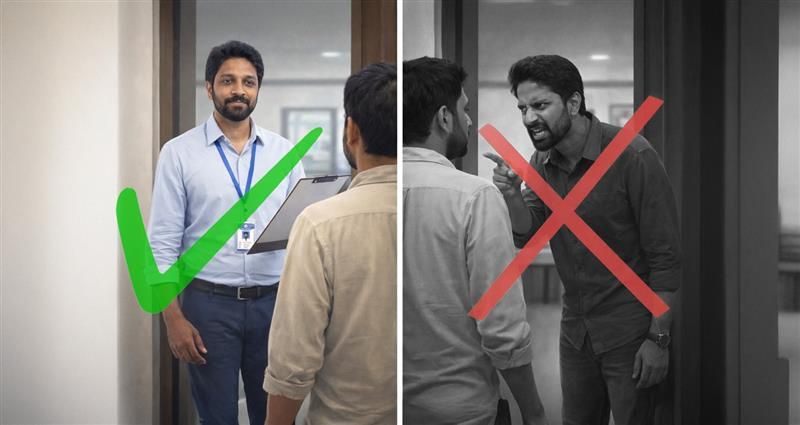
Where Creditor Rights End and Harassment Begins
This is the most practically important distinction for most borrowers dealing with recovery activity.
Creditors and their agents have the rights described above. They do not have:
The right to call before 8 AM or after 7 PM. The permitted window is strict.
The right to use abusive, threatening, or humiliating language in any communication. This is prohibited regardless of the amount owed or the duration of default.
The right to threaten arrest for unsecured consumer debt. Loan default is a civil matter. Recovery agents who threaten arrest are making a false representation and violating RBI guidelines.
The right to contact family members, employers, colleagues, or neighbours to disclose the debt or create social pressure on the borrower. This is specifically prohibited and is one of the most common violations in Indian debt recovery.
The right to visit in a manner designed to publicly humiliate. Any visit must be professional, during reasonable hours, and with prior notification.
The right to misrepresent their identity or authority. Agents must identify themselves and the institution they represent.
Any conduct falling outside the above limits is not a creditor's right. It is prohibited conduct that can be formally complained about through the bank's Grievance Redressal Officer, the Nodal Officer, and the RBI Banking Ombudsman at bankingombudsman.rbi.org.in.
How to Respond to Legitimate Creditor Action
Knowing what creditors can do legitimately enables a more effective response.
To collection calls: Respond to legitimate collection calls professionally. Acknowledge the outstanding. If genuine hardship exists, state it clearly and request the bank's hardship or restructuring department. Offer to provide documentation.
To formal demand notices: Do not ignore formal written notices. Respond in writing within the timeframe specified. A written response creates a record of engagement and good faith.
To legal notices: Engage a banking law specialist immediately. File a written response within the timeframe specified. Simultaneously assess whether a negotiated settlement can be reached before the legal process concludes.
To SARFAESI possession notices for secured debt: The 60-day demand notice period is an opportunity to repay and prevent possession. Use this window to approach the lender for restructuring or to arrange full or partial repayment. If restructuring is agreed within the notice period, possession action is typically stayed.
Understanding creditor rights in this way converts passive anxiety into active, informed response. The creditor has specific rights. The borrower also has specific rights. Both sets operate within the same legal framework, and knowing both is the foundation of navigating the relationship effectively.
Are You in a Loan Trap? Quick Check
Move the slider to your total EMIs as a % of monthly salary. See your debt stress level instantly.
EMIs as % of Monthly Salary
About FREED
FREED is India's leading debt resolution platform. We have helped over 60,000 Indians reduce, manage, and completely get out of debt, legally and without harassment.
FREED Shield protects every enrolled client from recovery harassment throughout the programme. Our team understands creditor rights as well as borrower rights, which is what makes negotiation effective.
Every first consultation is free.
Visit freed.care

India's leading debt resolution platform
FREED is India's leading platform for debt settlement and financial wellness. We have helped over 60,000 Indians reduce, manage, and get completely out of debt the right and legal way.
Media Mentions